
Key takeaways
Best dog hair conditioner for your dog depends on the format more than the brand, because a rinse-out cream, a leave-in spray and a deep treatment do three different jobs. This roundup explains what each format achieves, which ingredients matter, and how to apply them without weighing a coat down.
Our top picks


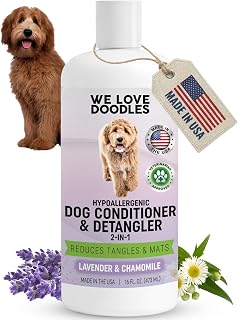


As an Amazon Associate we earn from qualifying purchases at no extra cost to you. Ratings are shown as listed on Amazon.
As an Amazon Associate we earn from qualifying purchases.
🛒 Best Price Today on Amazon
Prime members get fast, free shipping on everything above, plus member-only deals. New members get a 30-day free trial — cancel anytime.
How to Choose the Best Dog Hair Conditioner Format
Conditioner works by coating the hair shaft and reducing friction between individual hairs, which is why it matters so much on coats that tangle. The best dog hair conditioner for a household is whichever format fits the coat and the routine, and there are four worth understanding properly.
Rinse-Out Creams and Cream Rinses
This is the standard format and the one most people picture. Applied after shampoo, worked through the coat and left for a minute or two before rinsing, it deposits conditioning agents evenly and rinses away the excess, which keeps the finish light rather than greasy on most coats.
Rinsing matters more than the application does. Residue left in a dense undercoat stiffens the coat, attracts dirt and causes the flaking that owners then blame on the shampoo, so keep rinsing well past the point the water looks clear, particularly around the chest and the armpits.
Dilution helps enormously on thick coats. Mixing the conditioner with warm water in a bottle before it touches the dog spreads it far more evenly than squeezing it directly onto one spot, and it makes a bottle last two or three times longer on a large double-coated dog.
Leave-In Sprays and Daily Detanglers
For most coated breeds the best dog hair conditioner routine involves two products rather than one, and this is the second of them. A leave-in works on the days between baths, which is where most of the tangling actually happens, and it costs very little to add to an existing routine.
Leave-in products stay on the coat and work between baths rather than during them. A light mist over each section before line brushing is what stops hair snapping under a slicker, and on a doodle or a spaniel that single habit prevents more breakage than any brush upgrade does.
Use them sparingly, because too much product on a fine coat weighs it down and leaves it looking flat. One or two light passes over a section is plenty, and the coat should feel slightly slippery rather than damp when you start brushing it through from the skin outward.
Deep Treatments and Masks
Deep conditioners are thicker, stay on for five to ten minutes and are intended for coats that are genuinely dry, damaged or growing out after a short clip. They are a monthly or occasional product rather than a weekly one, since regular use flattens the texture of most coats.
They suit coated breeds recovering from matting, senior dogs whose coats have coarsened, and any dog whose hair has become brittle. On a short smooth coat they achieve almost nothing worth the time, so match the treatment to a coat that actually has length to condition.
Ingredients and What They Do
Once the format is settled, the ingredient list decides how the best dog hair conditioner behaves on your particular coat, because slip, moisture and weight all come from different components, and those components suit very different hair types once they are on the coat.
Silicones such as dimethicone coat the hair and give immediate slip, which is why they appear in most detangling products. They wash out readily with a decent shampoo, and the common concern about build-up applies mainly to dogs bathed with very mild products between treatments.
Humectants such as glycerin draw moisture into the hair, while oatmeal and aloe soothe skin and ceramides support the coat surface. Protein and keratin help brittle hair temporarily rather than permanently, and heavy oils suit coarse coats but flatten fine ones almost immediately.
Top Picks: Five Conditioners Across the Four Formats
The best dog hair conditioner for a household is usually two products rather than one, typically a rinse-out for bath day and a leave-in for the days in between. These five cover all four formats, and each entry names a genuine limitation alongside the particular coat type it suits.
| Product | Format | Notable feature | Best for |
|---|---|---|---|
| Bio-Groom Silk Creme Rinse | Rinse-out | Strong detangling slip | Coated and curly breeds |
| Earthbath Oatmeal and Aloe Conditioner | Rinse-out | Soap free, gentle | Dry or sensitive skin |
| Chris Christensen Ice on Ice | Leave-in spray | Detangling and static control | Daily line brushing |
| TropiClean Tangle Remover | Leave-in spray | Works on existing tangles | Mat-prone coats |
| Isle of Dogs Evening Primrose Oil | Deep treatment | Occasional intensive use | Dry, brittle or coarse coats |
Bio-Groom Silk Creme Rinse
For curly and coated breeds this is arguably the best dog hair conditioner on the list, because slip along the hair shaft matters more on those coats than any other property a bottle can offer, and this one delivers it more reliably than most bottles at the price.
On a coat that tangles, this is the rinse-out most groomers reach for. It leaves a genuine slip along the hair shaft, and the difference shows during the comb-out rather than in the bath itself, when a slicker travels through the coat instead of catching every few inches.
It needs thorough rinsing, because leftover product stiffens curl and attracts dirt within days. Used too generously it can also weigh down a soft wavy coat, so start with less than you expect to need and adjust after you have seen how the coat dries and behaves afterwards.
Earthbath Oatmeal and Aloe Conditioner
For dogs with dry or reactive skin, this is the sensible everyday choice. The soap-free formula rinses cleanly from thick coats, the oatmeal and aloe suit skin that flakes in winter, and it pairs naturally with the matching shampoo without layering two different fragrances.
Conditioning is moderate rather than intense, so a badly matted or genuinely brittle coat will want something heavier occasionally. The scent is also noticeable, which matters for dogs whose skin reacts to fragrance and for households that prefer a dog to smell of nothing at all.
Chris Christensen Ice on Ice Spray
Leave-in sprays earn their place on the days between baths, and this is the one most show groomers keep in the bag. A light mist before line brushing reduces friction, controls static in dry indoor air and lets a slicker pass through curl rather than dragging and snapping it.
It is easy to overuse, and a heavy hand leaves a fine coat looking flat and slightly sticky. It is also priced well above supermarket sprays, which makes it a considered purchase for people who brush regularly rather than something to reach for once a month at the very most.
TropiClean Tangle Remover Spray
Where a general leave-in prevents tangles, this is aimed at the ones already present. Sprayed directly onto a knot and worked with fingers and a comb from the outer edge inward, it loosens hair enough to separate a tangle that would otherwise have needed cutting out entirely.
It will not rescue a genuine mat felted flat against the skin, and forcing a comb through one is how skin gets torn. Used across a whole dog it is also an expensive way to condition, so keep it for spot work and let a rinse-out handle the general coat maintenance instead.
Isle of Dogs Evening Primrose Oil Conditioner
Deep treatments belong in the cupboard rather than in weekly use, and this is a sensible one to own. Left on for five to ten minutes it improves the feel of a coarse or brittle coat noticeably, which helps most on coats growing out after a short clip or a matting episode.
On fine or silky coats it flattens the texture, and on short smooth coats it achieves very little at all. The cost per use is high compared with an everyday rinse-out, so treat it as a monthly intervention rather than the product that lives beside the bath all year round.
Frequently Asked Questions
Four questions come up constantly once owners start using conditioner properly rather than occasionally. The best dog hair conditioner still depends on rinsing, dilution and how often it is actually applied, which is what these four answers between them are really about.
Does every dog need conditioner?
Short smooth coats generally manage without one, since there is little length to tangle and skin oils travel down the hair easily. Coated, curly and long-haired breeds benefit considerably, and any dog with dry or brittle hair will comb out more easily with one in the routine.
Can I use human conditioner on my dog?
It is formulated for a lower skin pH and often carries a heavier fragrance load, so regular use can leave a dog itchier and the coat duller. A dog-specific product costs little more and removes the guesswork, which matters most for dogs that already have sensitive skin.
How long should I leave conditioner on?
One to two minutes for a standard rinse-out, and five to ten for a deep treatment following the label. Longer is not better with a rinse-out formula, and the far more important step is rinsing thoroughly afterwards so nothing is left sitting against the skin underneath.
Will conditioner make my dog’s coat greasy?
Only if too much is used or it is not rinsed properly. Dilute rinse-out products in warm water first, apply in sections rather than in one place, rinse well past the point the water runs clear, and use leave-in sprays as a light mist rather than as a soaking application.
See More:
- Dog grooming shears best
- Best dog clippers for poodles
- Best dog clippers for doodles
- Best dog brush for poodle
- Best dog brush for great pyrenees
Final Thoughts
The best dog hair conditioner is chosen by format first: a diluted rinse-out for bath day, a light leave-in spray for brushing days, and a deep treatment held in reserve for coats that are dry or growing out. Rinse thoroughly, apply sparingly, and the coat combs out in half the time.




Write Your Review
No reviews yet. Be the first to share your experience!