
Key takeaways
Best way to remove dog hair from car interiors is to work in the order a detailer would rather than attacking the seats with whatever is nearest. Dislodge, gather, extract, then protect. Doing those four steps out of sequence is why most people clean a car twice and still find fur on the seats a day later.
Our top picks


As an Amazon Associate we earn from qualifying purchases at no extra cost to you. Ratings are shown as listed on Amazon.
As an Amazon Associate we earn from qualifying purchases.
🛒 Best Price Today on Amazon
Prime members get fast, free shipping on everything above, plus member-only deals. New members get a 30-day free trial — cancel anytime.
How to Choose the Best Way to Remove Dog Hair From Car Upholstery
Detailers treat this as a process rather than a product problem. The best way to remove dog hair from car seats is to loosen everything first, collect it before it resettles, deal with what has soaked into the foam, and then stop it coming back. Each stage needs a different tool.
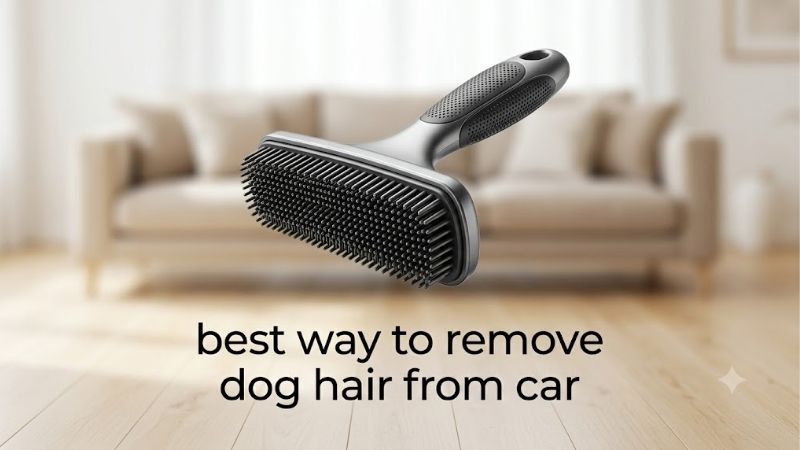
Stage One: Dislodge Before You Collect
Nothing gathers hair effectively while it is still gripped by the weave, so the first pass is purely about disturbing it. A damp rubber glove, a pumice-style block or a stiff rubber tool worked in short directional strokes brings embedded hair up to the surface where it can be picked up.
Work panel by panel with the doors open. Hair lifted out of a seat becomes airborne in a closed cabin and lands on the panel you have just finished, which is the single most common reason a car looks no better after an hour of work.
Direction matters as much as pressure. Consistent strokes pulled toward you peel hair out of the weave in rolls, while alternating back-and-forth passes push it deeper. Change direction only once a panel has stopped producing anything, then check it again from the opposite angle.
Stage Two: Collect It Before It Resettles
Once hair is on the surface it has a short window before static pulls it back down. Gathering it by hand into a bag is genuinely faster than vacuuming at this point, and it avoids blowing loose fur into the footwells with the exhaust of a small vacuum.
Seams, rails and the gap behind the backrest need attention immediately afterwards, because a good proportion of what you dislodged will have fallen straight into them. A narrow brush followed by a crevice tool clears those before they become the reason the car looks furry again.
Slide the front seats fully forward and then fully back as you work. The carpet underneath collects more hair than anywhere else in the cabin and is invisible in both positions, which is why it is the single most commonly missed area in a home interior clean.
Stage Three: Extract What Has Soaked In
If the interior smells of dog rather than simply looking hairy, no amount of raking fixes it. Oils and dander soak into automotive foam over months, and only a wet extractor or steam pulls those back out rather than covering them with fragrance.
Portable extractors are sized for exactly this job. They spray solution, agitate with a brush head and vacuum the liquid back, and a car interior is small enough that one tank often covers it. Allow proper drying time with the doors open rather than closing the car up damp.
Check your vehicle’s interior guidance before wetting anything. Some manufacturers specify solvent-only cleaning for particular trims, and alcantara and suede inserts are ruined by water regardless of what the rest of the seat tolerates. When in doubt, treat only the flat cloth panels.
Stage Four: Protect, and When to Do All This
The final step is the one that saves you repeating the first three. A washable cargo liner or seat cover means hair lands on something that goes in the machine, and it keeps fur out of the seams where removal is genuinely difficult.
Timing follows the travel calendar. The March to May window brings road trips, boarding runs and holiday journeys, which is when most owners notice the state of their interior. Doing the full sequence once in spring and again in autumn keeps it from ever becoming a project.
The cost comparison is straightforward. Professional interior detailing is priced per vehicle and pet hair removal is usually billed as an extra, so the tools below total less than a single appointment and protect resale value at the same time.
Top Tools: Best Way to Remove Dog Hair From Car
These six map onto the four stages rather than competing with each other. Each entry names a genuine drawback, and the order below is the order you would actually use them in.
| Tool | Stage | Best For |
|---|---|---|
| Smart Sheep Pumice Stone | Dislodge | Dense automotive cloth |
| Delomo Pet Grooming Glove | Dislodge | Bolsters and curved trim |
| Bissell Steam Shot 39N7A | Seams | Compacted hair in joins |
| Bissell Little Green | Extract | Odour and soiling |
| E-Cloth Microfibre Cloths | Leather | Smooth surfaces |
| 4Knines Dog Cargo Liner | Protect | Boot and cargo area |
Smart Sheep Pumice Stone Pet Hair Remover
A pumice-style block that rakes embedded hair out of dense automotive cloth using friction alone. It needs no power, refills or adhesive, costs very little, and on hard-wearing seat fabric it lifts material that rollers and vacuums pass straight over.
It is abrasive by design, so it must stay away from leather, vinyl, alcantara and soft-touch trim. It also crumbles slowly as you work, leaving grit that has to be vacuumed up afterwards, which is fine as long as you plan for it in the sequence.
Delomo Pet Grooming Glove
A grooming glove used damp is the most underrated car tool there is. The flexible nodules follow the curve of a bolster and get into the join between backrest and base where a rigid tool simply bridges over, and having it on your hand gives you far better feel for the fabric.
It is slow across a full three-seat bench, and the collected hair has to be peeled off the glove every few strokes. It also does less on very dense cloth than a pumice block, so it complements one rather than replacing it.
Bissell Steam Shot 39N7A
A handheld steam cleaner is what loosens compacted hair in seams and around seatbelt anchors without a hard edge touching the trim. Steam softens the felted mass so it lifts as a strip, and the narrow nozzle reaches places no brush fits into.
Not every automotive material tolerates steam, and some adhesives and headliner fabrics soften. Keep the nozzle moving, stay off the headliner entirely, and check your vehicle’s interior care guidance before using it on anything other than seat cloth.
Bissell Little Green Portable Cleaner
The extractor step, and the only tool here that addresses what has soaked into the foam rather than what sits in the weave. It sprays, agitates and vacuums the liquid back in one pass, and a car interior is small enough that a single tank usually covers the seats.
It is slow, and the upholstery needs several hours with the doors open before anyone sits on it. It also does very little for loose surface hair, so running it first rather than last wastes most of its capacity.
E-Cloth Microfibre Cloths
For leather and vinyl this is the whole answer. Used slightly damp, microfibre holds hair rather than smearing it, and a single directional wipe gathers it into a line you can lift off. They wash and reuse hundreds of times, so the running cost is effectively nothing.
They need to be genuinely clean to work, and a cloth previously used with detergent leaves residue that attracts dust straight back. On woven cloth seats they achieve very little, since the hair is held below the surface rather than resting on it.
4Knines Dog Cargo Liner
The protection step for owners whose dog travels in the boot rather than on a seat. A waterproof liner covers the floor and the side panels, which is where hair and mud actually accumulate, and it lifts out and goes in the washing machine.
Fit is vehicle-specific and a generic size never sits quite right, which leaves gaps at the wheel arches. It also has to be removed entirely when you need the full load space, so it suits regular dog transport rather than occasional trips.
Frequently Asked Questions
These come up most often from owners tackling the best way to remove dog hair from car interiors after a season of trips.
Should I vacuum first or last?
Last, or at least after the raking. Vacuuming a seat that still has hair locked into the weave achieves very little and blows loose fur into the footwells. Dislodge first, gather by hand, then vacuum the seams and carpets to finish.
Does compressed air help?
In a garage with the doors open, yes, for blowing hair out of seams and rails into the open where it can be collected. Inside a closed cabin it simply redistributes everything, so it is a step to do outdoors or not at all.
How do I clean perforated leather seats?
Work a soft detailing brush along the perforations first to lift hair out of the holes, then follow with a damp microfibre cloth. A cloth alone passes straight over the perforations, which is why those seats look clean and then shed hair the moment someone sits down.
Is professional detailing worth paying for?
For a one-off reset before selling a car, often yes. For a household that transports a dog weekly, the recurring cost adds up fast and the tools here cover the same ground for less than one appointment, provided you are willing to spend the time.
See More:
- Best nail grinder for big dogs
- Best nail grinder for large dogs
- Best vacuum for dog hair on rugs
- Best Roomba for dog hair
- Best dog hair broom
Final Thoughts
The best way to remove dog hair from car interiors is sequence before equipment: dislodge with friction, gather before it resettles, extract only if the smell has set in, and then put something washable down so the next clean is far shorter. Skip the order and you will be doing it twice.




Write Your Review
No reviews yet. Be the first to share your experience!