
Key takeaways
Best Roomba for dog hair depends far less on suction figures than the marketing suggests. Brush design decides whether long hair ends up in the bin or wrapped around a roller, and obstacle avoidance decides whether an accident becomes a five-minute clean-up or a very bad afternoon. Dock design settles how often you touch it at all.
Our top picks

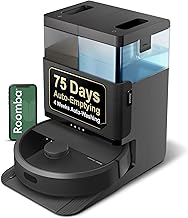


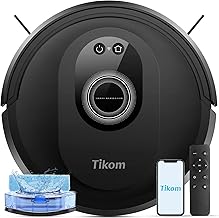


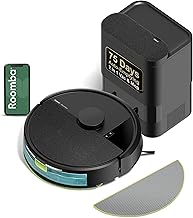
As an Amazon Associate we earn from qualifying purchases at no extra cost to you. Ratings are shown as listed on Amazon.
As an Amazon Associate we earn from qualifying purchases.
🛒 Best Price Today on Amazon
Prime members get fast, free shipping on everything above, plus member-only deals. New members get a 30-day free trial — cancel anytime.
How to Choose the Best Roomba for Dog Hair
iRobot’s lineup changed substantially with the 105, 205, 405, 505 and 705 series joining the older j-series machines, so older buying advice has aged badly. Four things still separate the best Roomba for dog hair from a robot that jams weekly in a shedding household.
Rubber Brushes vs. Bristle Rollers
Dual rubber extractor rollers are the single most important feature for pet hair. The fins are spaced so long strands pass through toward the airflow rather than winding around a shaft, and testers repeatedly find rollers nearly free of tangles after several runs on a hair-covered rug.
Bristle rollers still exist in the lineup. The 205 DustCompactor Vac uses a single bristled roller, which agitates carpet effectively but is more prone to wrapping. The 205 Combo, by contrast, uses a rubber main brush. Check the specific variant rather than the series number.
Whatever the design, budget a few minutes a week for maintenance. Even the best anti-tangle rollers accumulate hair at the end caps, and a robot that runs daily in a shedding home will need attention more often than the manual implies.
Obstacle Avoidance and Pet Accidents
This is the feature that justifies premium pricing in a dog household. The j-series machines use PrecisionVision navigation trained specifically to recognise and avoid pet waste, cords and toys, and iRobot has historically backed that with a specific pet-waste guarantee.
The newer 105, 405, 505 and 705 models moved to top-mounted LiDAR, while the 205 uses an internal half-LiDAR to keep the chassis slim enough for low furniture. LiDAR is excellent for mapping and efficiency but is not the same thing as camera-based recognition of what is on the floor.
Cameras and LiDAR are not mutually exclusive in principle, but the current lineup splits them. If your dog is reliably house-trained and toys get picked up before a run, LiDAR mapping alone is enough. If accidents are still a possibility, the camera-based j-series is what protects your carpet.
Dock Type and How Often You Touch It
A shedding dog fills a robot bin fast, which makes the dock the difference between a daily chore and a monthly one. AutoEmpty docks handle dust disposal; AutoWash docks on the 405, 505 and Combo 10 Max also clean and dry the mop pad, which matters on hard floors with muddy paws.
Dock footprint is worth measuring before you buy. Full AutoWash bases are substantially larger than a simple charging dock, and they need clear space either side. In a small apartment that can be the deciding factor regardless of cleaning performance.
Bag cost is the quiet running expense nobody budgets for. Self-emptying bases use proprietary bags, and a household with a heavy shedder gets through them faster than the rated interval suggests. Price a year of bags into the comparison before deciding a self-emptying dock is the cheaper option.
Buying Timing and the iRobot Ownership Change
iRobot filed for Chapter 11 in December 2025 and was acquired by Picea in February 2026. The company has stated it is operating as before with no changes to existing models or support, but it is still worth confirming warranty terms at the point of purchase rather than assuming them.
Practically, that transition has produced unusually aggressive discounting across the range, including large cuts on the 405 and 505 Combo models. Prime Day in June and July and Black Friday on 27 November remain the deepest discount windows for robot vacuums generally.
There is a seasonal angle too. August and September bring owners back to work and children back to school, and separation-related mess plus autumn coat blow arrive together. Buying before that stretch rather than during it is the difference between a scheduled purchase and a panicked one.
Top Picks: Best Roomba for Dog Hair
These six cover the current lineup plus the j-series machines still worth buying, and each makes a different case for being the best Roomba for dog hair in a particular kind of home. Prices in this category move constantly, so treat the tiers below as guidance rather than fixed figures.
| Model | Dock | Best For |
|---|---|---|
| Roomba Plus 505 Combo | AutoWash | Best overall for pet homes |
| Roomba Combo j9+ | AutoEmpty | Accident-prone dogs |
| Roomba Max 705 Vac | AutoEmpty | Carpet-heavy homes |
| Roomba 205 DustCompactor Combo | Compactor | Low-clearance furniture |
| Roomba 105 Vac | AutoEmpty | Budget entry point |
| Roomba Combo 10 Max | AutoWash | Hands-off maintenance |
Roomba Plus 505 Combo
The 505 Combo has become the default recommendation for pet households, combining the newer high-suction platform with LiDAR mapping and an AutoWash dock that cleans and dries the mop pad. On mixed hardwood and rug floors it handles both surfaces without you rearranging anything.
The dock is large, and the mopping function adds a maintenance layer that vacuum-only owners will not miss. If your home is entirely carpeted, you are paying for capability you will never use, and the Max 705 makes more sense.
Roomba Combo j9+
The j9+ remains the best obstacle avoidance in the range, with PrecisionVision trained to identify pet waste specifically. In independent testing it scored strongly on carpet, around 93 percent on pet hair, and it uses dual rubber brushes that resist wrapping.
Its weak point is pet hair on hard floors, where testers measured roughly 80 percent pickup and noted it tends to push hair into clumps. It is also an older platform now, so confirm warranty coverage given the ownership change before committing.
Roomba Max 705 Vac
A vacuum-only machine with an AutoEmpty dock and the newer high-suction platform, which makes it the sensible choice for homes that are mostly carpet and have no interest in mopping. Without the mop hardware there is less to maintain and the dock is smaller.
You lose the camera-based obstacle recognition of the j-series, relying on LiDAR instead. For a house-trained adult dog that is rarely an issue; for a puppy or a senior dog with accidents, the j9+ is the safer purchase.
Roomba 205 DustCompactor Combo
The 205 uses an internal half-LiDAR rather than a top-mounted turret, giving it the slimmest profile in the range and letting it get under sofas and beds where hair accumulates unseen. The DustCompactor packs debris in the onboard bin instead of using a self-empty base.
The compactor still needs emptying by hand, just less often, and the mop pad does not lift over carpet, so vacuum and mop passes have to run separately. Carpet detection prevents accidents, but it makes the routine less automatic than an AutoWash model.
Roomba 105 Vac with AutoEmpty Dock
The cheapest sensible entry into the current lineup, pairing LiDAR navigation with a self-emptying dock. For a single-dog apartment with mostly hard floors, this covers daily maintenance well and removes the bin-emptying chore that kills enthusiasm for cheap robots.
Suction and brush sophistication sit below the 405 and above the older entry models, so a heavy double-coated shedder on thick carpet will outpace it. It is a maintenance robot, not a replacement for a proper upright.
Roomba Combo 10 Max
The most hands-off option, with an AutoWash dock handling both debris and mop pad cleaning, dual rubber brushes and the strongest suction in iRobot’s combo range. In a large multi-pet home it genuinely reduces floor care to occasional dock maintenance.
It is the most expensive machine here and takes the largest dock footprint. Independent testing also places its carpet suction below the Roborock and Dreame flagships, so it is a convenience purchase rather than an outright performance one.
Frequently Asked Questions
The questions below come up most often from owners weighing up the best Roomba for dog hair against the simpler option of just vacuuming more frequently.
Can a Roomba really keep up with a heavy shedder?
It can keep floors presentable between deep cleans, which is the realistic goal. Running daily rather than weekly is the key, because a robot handles surface hair well and struggles with fur that has already been trodden into carpet pile. It supplements an upright rather than replacing one.
How often will I empty the base with a shedding dog?
iRobot rates most AutoEmpty bases at around 60 days, but that assumes an average household. With a double-coated dog running daily cleans, expect to change the bag noticeably more often, and check the robot’s own bin weekly since hair compacts differently from dust.
Will it actually avoid dog toys and accidents?
The j-series machines are the ones trained specifically for this, and their pet-waste recognition is the best iRobot has shipped. The LiDAR-based models navigate around solid obstacles well but do not identify what an object is, so pick up toys before a run either way.
Do I still need an upright vacuum?
Yes, in almost every pet household. Robots excel at frequency, uprights excel at depth. The practical setup most owners land on is a robot running daily on hard floors and low pile, plus a corded or cordless upright used weekly on rugs and upholstery.
See More:
- Best nail grinder for big dogs
- Best nail grinder for large dogs
- Best vacuum for dog hair on rugs
- Best dog hair broom
Final Thoughts
The best Roomba for dog hair is the one whose brush design and dock match your floors and your dog’s habits. Dual rubber rollers are non-negotiable in a shedding home, camera-based obstacle avoidance is worth paying for if accidents happen, and a self-emptying dock is what turns a robot from a gadget into a routine.




Write Your Review
No reviews yet. Be the first to share your experience!