
Key takeaways
Best way to get rid of dog hair in car interiors usually comes down to matching the tool to the surface, not buying the strongest vacuum on the shelf. Woven seat fabric, rubber floor mats and carpeted footwells all release hair differently, so this guide covers six tools, what each one actually does well, and where each falls short.
Our top picks


As an Amazon Associate we earn from qualifying purchases at no extra cost to you. Ratings are shown as listed on Amazon.
As an Amazon Associate we earn from qualifying purchases.
🛒 Best Price Today on Amazon
Prime members get fast, free shipping on everything above, plus member-only deals. New members get a 30-day free trial — cancel anytime.
How to Choose the Best Way to Get Rid of Dog Hair in Car Interiors
The best way to get rid of dog hair in car interiors starts by recognising that a car is not one surface. A single vehicle can hold woven cloth seats, molded rubber mats, low-pile carpet and a headliner, and hair anchors into each of them by a different mechanism. Sorting the options by surface first, then by power source, saves you from buying three tools that all do the same job.
Match the Tool to Each Surface in the Cabin
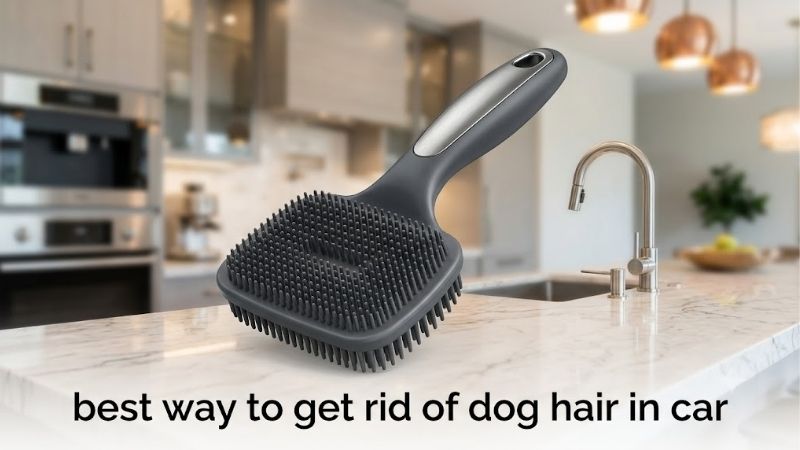
Woven cloth seats trap hair by friction between fibers, which is why rubber and silicone tools outperform suction there. Rubber creates static drag that lifts embedded strands to the surface, where a vacuum can finally collect them. On smooth vinyl, leather and rubber mats, suction alone is usually enough because nothing is gripping the hair.
Carpeted footwells sit in between. Hair works down into the pile along with road grit and sand, so a motorized brush head or a stiff rubber rake gives noticeably better recovery than a plain crevice nozzle. If your dog rides in a cargo area with a bed liner, treat that liner as upholstery rather than carpet. On pile, the best way to get rid of dog hair in car footwells is agitation first and suction second.
Suction Power, Cord Length and Real Reach
Reach matters more than raw watts in a vehicle. A corded handheld with a 16-foot cord will cover a sedan from a garage outlet, but a driveway or street parking space usually leaves you short unless you add an extension. Cordless sticks solve reach entirely and trade it for runtime that drops fast in boost mode.
Wet/dry shop vacuums sit at the powerful end. A 2 to 2.5-gallon unit with a 6-foot hose gives you enough suction to pull grit out of carpet seams, but the hose diameter is wide, which reduces velocity at the nozzle unless you fit a narrow tool. Look for a kit that includes a car detail nozzle rather than only a wide floor head.
Reusable Rubber and Silicone Versus Adhesive Rollers
Adhesive lint rollers are fast and cheap but consume sheets quickly on a hairy back seat, and they stop working the moment the sheet loads up. Reusable rubber rollers and bristle rakes have no consumables, work indefinitely and can be rinsed clean, though they demand more elbow grease and a directional stroke.
Copper-infused or stiff-bristle rakes are the aggressive option. They excavate hair that has been ground into fabric for months, but they can also pill delicate upholstery if you scrub hard on a loose weave. Test a hidden section of a seat bolster before you attack the whole bench.
Cleanup, Storage and How Often You Detail
The best way to get rid of dog hair in car interiors is the method you will actually repeat. A tool that lives in the trunk gets used weekly; a shop vacuum in the garage gets used twice a year. Emptying matters too, since a 0.78-liter cup fills fast with fluffy hair and loses airflow long before it looks full.
Timing your purchase helps as well. Handheld vacuums and cordless sticks are among the most heavily discounted categories during Prime Big Deal Days in early October, which lands right as most double-coated breeds finish their autumn coat change. Buying just before that shedding wave means the tool is in the car when you actually need it, rather than sitting in a cart while hair works into the seat weave.
Top Picks: 6 Tools for Removing Dog Hair From Your Car
These six cover the realistic range, from a no-battery roller you keep in the glovebox to a full cordless vacuum. Most owners end up with two of them: one dry mechanical tool for seats and one suction tool for footwells and crevices. That pairing is the best way to get rid of dog hair in car cabins without buying three overlapping gadgets.
| Tool | Type | Best Surface | Power Source |
|---|---|---|---|
| ChomChom Roller | Reusable roller | Cloth seats, headliner | None |
| Bissell Pet Hair Eraser 33A1 | Corded handheld vac | Footwells, crevices | 16 ft cord |
| Armor All AA255 Wet/Dry | Utility shop vac | Carpet, cargo area | 10 ft cord |
| Uproot Cleaner Pro | Bristle hair rake | Woven upholstery | None |
| FURemover Broom | Rubber broom + squeegee | Mats, cargo liners | None |
| Dyson V8 Cordless | Cordless stick/handheld | Whole cabin | Battery |
ChomChom Roller Reusable Pet Hair Remover
This is the pick for anyone who wants zero maintenance and zero consumables. It uses no batteries, no adhesive sheets and no power, relying instead on a directional fabric head that grabs hair on the forward stroke and dumps it into a hidden chamber inside the base. It works on cloth seats, headliners and fabric door cards.
The limitation is honest: it does nothing for sand, crumbs or grit, so it is a hair tool only. It also needs a firm push-pull rhythm, and on deep carpet pile it leaves the lower layer untouched. Treat it as your fast weekly seat pass rather than your only cleaning tool.
Bissell Pet Hair Eraser Corded Hand Vac (33A1)
Bissell rates this handheld at 4 amps with a cyclonic separation system, a multi-layer filter and a 0.78-liter dirt cup, and it weighs roughly 5 pounds. The 16-foot cord is the real advantage: constant, undiminished suction for as long as you want, which cordless handhelds cannot match once the battery sags.
The trade-offs are the cord itself and the cup size. Sixteen feet reaches most of a sedan from a garage outlet but not from a driveway, and a fluffy hair load fills that 0.78-liter cup faster than you expect. Plan on emptying it mid-job on a heavily shedding vehicle.
Armor All AA255 2.5-Gallon Wet/Dry Utility Vacuum
When the footwells hold sand, gravel and hair together, a small shop vacuum is the honest answer. The 2.5-gallon tank swallows far more than any handheld, the wet/dry capability handles muddy paw seasons, and a 6-foot hose plus a car detail nozzle reaches under seats without moving the unit.
It is loud, which matters if you clean with your dog nearby, and it needs storage space plus a wall outlet. The wide hose also loses nozzle velocity unless you fit the narrow crevice tool. This is a garage tool, not something you keep in the trunk.
Uproot Cleaner Pro Pet Hair Remover
The copper-infused bristle head on this rake is the most aggressive dry option here. It digs hair out of woven seat fabric that rollers glide straight over, and it works especially well on the compressed hair line where a dog habitually lies down on the back bench.
That aggression is also the drawback. On loose-weave or delicate upholstery it can pill the surface if you scrub instead of stroking in one direction, and the collected hair has to be pulled off the bristles by hand. Test an inconspicuous seat bolster before committing to a full pass.
FURemover Broom With Built-In Squeegee
A natural rubber broom head generates static that pulls hair up out of rubber mats, cargo liners and low-pile carpet, and the telescoping handle lets you work a cargo area without climbing in. The squeegee edge on the reverse side clears water after a wash, which makes it dual-purpose for wet dog seasons.
Rubber attracts everything, so the head itself needs rinsing regularly, and the handle length is awkward inside a sedan cabin. It is at its best on SUVs, wagons, truck beds and rubber floor liners rather than on tight footwells.
Dyson V8 Cordless Vacuum
If you want one tool that handles the entire cabin, a cordless stick that converts to a handheld is the most flexible answer. The V8 detaches into a handheld unit of well under 4 pounds, runs up to 40 minutes in its low setting, and the motorized brush head lifts hair from carpet in a way plain suction cannot.
Runtime is the honest limitation. In max mode the usable window shrinks dramatically, so heavy jobs need planning or a second battery. It is also the most expensive option here by a wide margin, which only makes sense if it doubles as your house vacuum.
Frequently Asked Questions About Dog Hair in Cars
These four questions come up constantly from owners hunting for the best way to get rid of dog hair in car interiors while living with a heavy shedder and a daily commute. The answers below focus on technique, because technique changes results more than the tool does.
Does a Damp Rubber Glove Really Work?
Yes, and it is the cheapest starting point. A lightly dampened rubber or latex glove wiped in one direction across cloth seats rolls hair into visible clumps you can pick up by hand. It is slow across a whole vehicle and it leaves fabric damp, but for a single seat or a headrest it genuinely competes with purpose-built tools.
Should I Vacuum Before or After Using a Rubber Tool?
Use the mechanical tool first, then vacuum. Rubber and bristle tools lift embedded hair to the surface but do not remove it from the vehicle, so vacuuming afterward collects everything at once. Reversing the order means you vacuum the easy surface layer and then loosen a second layer you now have to clean again.
How Do I Stop Hair Getting Into the Seats in the First Place?
Prevention beats removal. A fitted hammock-style seat cover, a bed liner in the cargo area or a simple washable blanket contains the majority of shed hair and goes straight into a washing machine. Brushing your dog outside before a ride removes loose undercoat before it ever reaches the upholstery.
What Is the Fastest Weekly Routine?
The best way to get rid of dog hair in car interiors on a weekly basis is a three-minute pass: one directional stroke over the seats with a reusable roller, a quick handheld vacuum of the footwells, and a shake-out of the floor mats. Deep cleaning with a rake or shop vacuum then only becomes necessary a few times a year.
See More:
- Best vacuum for hard floors and dog hair
- Best dog clippers for golden doodle
- Best small dog nail clipper
- Best dog clippers for yorkies
Final Thoughts
The best way to get rid of dog hair in car interiors is a two-tool system rather than a single purchase: one dry mechanical tool that lifts hair out of woven fabric, and one suction tool that collects it along with the grit underneath. Add a washable seat cover and the weekly job drops to a few minutes, which is the only realistic way to keep a shedding dog and a clean cabin at the same time.




Write Your Review
No reviews yet. Be the first to share your experience!