
Key takeaways
Best way to get dog hair out of car interiors depends on the surface, because hair woven into carpeted footwells behaves nothing like hair sitting on a leather seat. This roundup works surface by surface, covers the order to clean in, and compares five tools plus the prevention that saves the most work.
Our top picks


As an Amazon Associate we earn from qualifying purchases at no extra cost to you. Ratings are shown as listed on Amazon.
As an Amazon Associate we earn from qualifying purchases.
🛒 Best Price Today on Amazon
Prime members get fast, free shipping on everything above, plus member-only deals. New members get a 30-day free trial — cancel anytime.
The Best Way to Get Dog Hair Out of Car Interiors by Surface
A car contains four or five materials that each hold hair differently, and using one tool across all of them is why the job usually feels endless. Working surface by surface, in a sensible order, turns an hour of frustration into about twenty minutes of fairly satisfying progress.
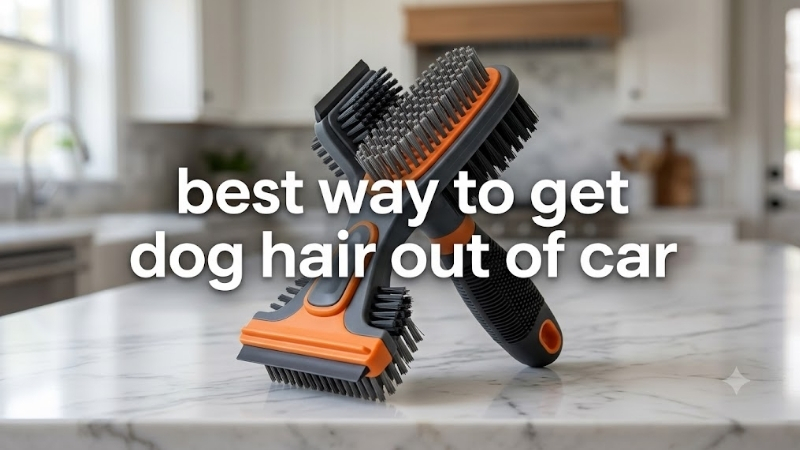
Fabric Seats and Upholstery
Woven and velour seats have a directional nap, which is exactly what reusable rollers are built to exploit. Sweeping in one consistent direction gathers hair into the internal chamber, while scrubbing back and forth simply pushes it deeper into the weave and achieves very little.
A rubber glove or a rubber-bristled brush works as a backup on stubborn patches. Dampening the glove slightly increases the friction that lifts embedded hair, and the hair gathers into visible clumps you can pick off by hand rather than chasing around the seat with a vacuum.
Do the seats before the footwells rather than after. Anything you dislodge from the upholstery falls downward, so cleaning in that order means the carpet only needs doing once, which sounds obvious and is the step that almost everybody gets wrong the first time around.
Carpeted Footwells and Boot Liners
Carpet is the surface people give up on, and the best way to get dog hair out of car footwells is mechanical rather than suction-based, which is why an expensive vacuum so often disappoints down there. Hair wraps around the fibres, and suction alone rarely breaks that grip on its own.
Carpet is where vacuums struggle most, because hair wraps around the fibres rather than sitting loose on top. A rubber squeegee or a stiff rubber brush pulled toward you in short strokes breaks that grip and gathers the hair into a ridge that lifts straight out by hand.
Only then does the vacuum earn its place, picking up what has already been loosened along with the grit and crumbs underneath. Running the vacuum first on an untreated footwell removes the loose surface layer and leaves the woven-in hair exactly where it was to begin with.
Leather, Vinyl and Hard Surfaces
Leather and vinyl need almost nothing, since hair sits on the surface rather than working into anything. A damp microfibre cloth wiped in one direction collects it in seconds, and a proper leather cleaner afterwards keeps the surface from drying out over repeated wipe-downs.
Air vents, seatbelt slots and the gap beside the seat rails are where hair accumulates unnoticed. A soft detailing brush paired with a crevice tool clears these, and doing it two or three times a year prevents the slow build-up that eventually blows hair back out of the vents.
Prevention: Covers, Barriers and Brushing
Cleaning is only half the answer, and arguably the best way to get dog hair out of car interiors is to stop most of it arriving in the first place, which costs considerably less effort over a year than any removal method on this list does.
The most effective approach is stopping the hair reaching the car at all. A fitted seat cover or a hammock-style protector takes the whole load and goes in the washing machine, which converts a difficult cleaning job into an ordinary laundry one every few weeks instead.
Brushing the dog before travel matters just as much. Ten minutes with a deshedding tool in the garden before a long journey removes an enormous amount of loose coat, and during the spring and autumn moults that single habit halves what ends up in the car across a whole season.
Top Picks: Five Tools for Car Interiors
The best way to get dog hair out of car interiors usually needs two or three tools rather than one, plus something to stop the problem recurring. These five cover seats, carpet, crevices and prevention, and each entry names a genuine limitation alongside where it performs well.
| Tool | Type | Surface it suits | Limitation |
|---|---|---|---|
| ChomChom Roller | Reusable roller | Fabric seats, boot liners | Poor on deep carpet |
| FURemover Rubber Broom | Rubber bristles | Footwells, boot carpet | Bulky to store in a car |
| ThisWorx Car Vacuum | Handheld 12V vacuum | Crevices, loosened hair | Limited suction on woven hair |
| Armor All Wet Dry Vac | Utility vacuum | Deep cleaning sessions | Needs mains power |
| 4Knines Dog Seat Cover | Washable cover | Prevention on rear seats | Fit varies by vehicle |
ChomChom Roller
On fabric seats this remains the quickest tool available, and the lack of consumables is what makes it stick around. Rolling back and forth sweeps hair into an internal chamber that pops open to empty, and a whole rear bench takes a couple of minutes rather than a whole afternoon.
It needs a nap to work with, so it performs well on velour and woven seats and poorly on smooth or very tightly woven fabrics. It also does almost nothing on carpeted footwells where hair has been trodden in, which is a job for rubber rather than for a roller of any kind.
FURemover Rubber Broom
For footwells specifically this is the best way to get dog hair out of car carpet, and the transformation on a badly matted footwell is usually the moment people stop reaching for the vacuum first. The hair gathers into a ridge you lift out by hand.
Carpeted footwells and boot liners are where a rubber broom earns its keep. Short pulls toward you gather trodden-in hair into a visible ridge, and the difference between a footwell before and after this treatment is the moment most people become converts to the method.
The telescoping handle means the work happens standing outside the car rather than crouched inside it, though the size makes it awkward to keep in the vehicle. The squeegee edge on the reverse is useful for wet messes, which is a genuinely handy second job for a dog owner.
ThisWorx Car Vacuum
A 12V handheld plugged into the car socket handles the jobs the other tools cannot reach. Crevice attachments clear the seat rails, the gaps beside the console and the tracks where hair collects invisibly, and it picks up whatever the rubber tools have already loosened.
Suction on a small handheld is limited, so expecting it to pull woven-in hair out of carpet leads to disappointment. Use it after the rubber work rather than instead of it, and empty the filter frequently, since a filter clogged with hair loses what little power the unit has.
Armor All Wet Dry Utility Vacuum
For a proper seasonal clean, a mains-powered utility vacuum is a considerable step up. Real suction combined with a wide hose clears loosened hair from carpet and boot liners quickly, and the wet function handles the muddy paw prints that usually accompany all the hair.
It needs an extension lead and somewhere to work, which rules it out for a quick tidy in a car park. The bulk also means it lives in a garage rather than a vehicle, so most households pair it with a handheld for the routine jobs in between the bigger cleaning sessions.
4Knines Dog Seat Cover
Prevention beats removal every time, and a fitted cover is the single most effective purchase in this whole category. The hammock style protects the seat backs and the footwell edges as well as the seat itself, and it stops a dog sliding into the footwell during braking.
Fit varies considerably by vehicle, so measuring before ordering avoids a cover that bunches or slides. It also needs washing every few weeks to be worth having, which is straightforward but does mean the hair problem becomes a laundry problem rather than disappearing entirely.
Frequently Asked Questions
Four questions come up constantly from owners who travel with a dog regularly. The best way to get dog hair out of car interiors is usually a combination of methods rather than a single miracle product, and these four answers cover the ones people most often get backwards.
Does a damp rubber glove really work?
It works very well on fabric, and it is the cheapest option available. Slight dampness increases friction so the hair gathers into clumps you can lift by hand, and for a quick job on one seat it often beats fetching any dedicated tool from the house or from the garage.
Should I vacuum before or after using a rubber tool?
After. Vacuuming an untreated footwell removes the loose surface hair and leaves the woven-in hair behind, whereas breaking that grip with rubber first means the vacuum picks up everything in one pass rather than leaving you convinced that the machine is not working.
How do I stop hair getting into the air vents?
Clean the vents with a soft detailing brush and a crevice tool two or three times a year, and change the cabin air filter on schedule. Most vent hair arrives through the recirculation intake, so keeping the footwells clear reduces how much of it reaches the system at all.
Is a seat cover worth it for occasional trips?
Even for occasional journeys a cover saves more time than it costs, and it protects the upholstery from claws and mud as well as hair. For a dog travelling weekly it is close to essential, since the alternative is repeating the whole cleaning routine after every single trip.
See More:
- Dog grooming shears best
- Best dog clippers for poodles
- Best dog clippers for doodles
- Best dog brush for poodle
- Best dog brush for great pyrenees
Final Thoughts
The best way to get dog hair out of car interiors is to work in order: reusable roller on the seats, rubber broom on the footwells, vacuum afterwards, then a damp cloth on leather and a detailing brush in the crevices. Add a washable seat cover and a pre-journey brush, and the job stops repeating itself weekly.




Write Your Review
No reviews yet. Be the first to share your experience!