
Key takeaways
Best dog hair broom models all work on the same principle: natural rubber bristles build a static charge as they drag across a surface, and that charge pulls fur out of carpet fibers instead of pushing it around. It is a low-tech tool that regularly outperforms expensive vacuums on hair embedded deep in carpet and rugs.
Our top picks


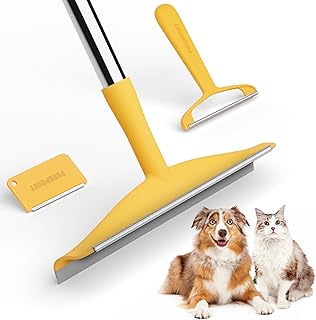

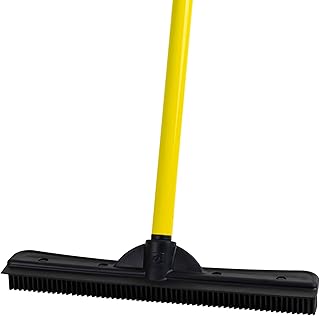

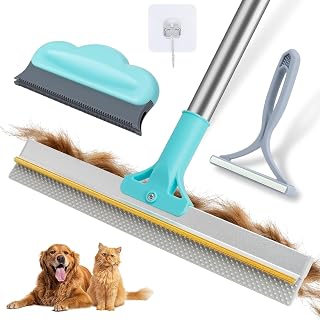
As an Amazon Associate we earn from qualifying purchases at no extra cost to you. Ratings are shown as listed on Amazon.
As an Amazon Associate we earn from qualifying purchases.
🛒 Best Price Today on Amazon
Prime members get fast, free shipping on everything above, plus member-only deals. New members get a 30-day free trial — cancel anytime.
How to Choose the Best Dog Hair Broom
Rubber brooms look interchangeable in product photos, but handle design, bristle material and head width change the experience substantially. These four factors decide whether the best dog hair broom for your home lives by the back door in daily use or gets forgotten in the garage.
Rubber Type and Bristle Density
Natural rubber generates a stronger static charge than synthetic alternatives, which is why the long-standing options in this category all specify it. The bristles should flex under moderate pressure rather than staying rigid, since flex is what lets them reach down between carpet fibers.
Density matters as much as material. Hundreds of closely spaced bristles gather hair into rolls you can lift in one piece; sparse bristles smear it across the floor. On hard surfaces the same density traps fine dust that nylon bristles would flick into the air instead.
Natural rubber is also water resistant and quick drying, so the head rinses clean under a tap rather than needing to be picked clean by hand. That single property is why groomers keep these in salons where a wrapped vacuum brushroll would cost them time all day.
Handle Length and Ergonomics
Carpet raking takes real effort, so handle length is an ergonomic issue rather than a convenience one. Telescopic handles in this category typically adjust between roughly 34 and 58 inches, with longer versions reaching 61 inches, which lets taller users work without stooping.
Check how the telescoping mechanism locks. A handle that creeps shorter under pressure is the most common complaint about cheap versions, and it shows up exactly when you are pushing hardest on a rug. A twist-lock collar that holds position is worth more than an extra few inches of reach.
Head width is the other ergonomic variable. Narrow heads are precise around furniture legs and stair treads but slow across open floor, while wider heads clear a room faster and steer badly into corners. For most homes a mid-width head is the better daily compromise between the two.
Squeegee Edge and Multi-Surface Use
Most heads carry a solid rubber squeegee on the reverse side, and it earns its place faster than expected in a dog household. Tipped water bowls, muddy paw prints and wet hair clumps all clear in one pass, and the same edge works on windows and windshields.
Because natural rubber will not scratch finished wood, one tool covers hardwood, tile, vinyl, low-pile carpet, area rugs, concrete and upholstery. For apartments where storage is limited, replacing three cleaning tools with one is a genuine argument for the format.
Outdoor use is worth thinking through before you commit one broom to everything. Patio decking and concrete grind grit into the bristles, and that trapped grit is what eventually marks an interior floor. Plenty of owners end up keeping a second head purely for outside work.
When a Broom Beats a Vacuum on Cost
Pet spending keeps growing while household budgets tighten, and this is one of the few categories where the cheap option genuinely competes with the expensive one. A rubber broom costs a fraction of a pet vacuum and needs no filters, bags or replacement batteries.
It also fits the moments a vacuum does not. Spring shedding from March through May and the autumn coat change in September and October produce daily fur that does not justify hauling out an upright, and a broom parked by the door handles it in two minutes.
Small urban dogs are the fastest-growing segment of ownership, and apartment living is where a quiet, storable, plug-free tool makes the most sense. There is no motor noise to upset a nervous dog, which matters when the alternative sends them under the bed twice a week.
Top Picks: Best Dog Hair Broom Options
All six below are rubber-bristle brooms with squeegee edges, and any of them is a fair answer to the best dog hair broom question for an average household. The differences come down to handle length, head width and whether extras such as a lint brush or microfiber cloth are included.
| Model | Handle | Best For |
|---|---|---|
| FURemover Original | 34-58 in telescopic | Best overall |
| FURemover 61-inch | 35-61 in telescopic | Taller users |
| MR.SIGA 3-in-1 | 61 in adjustable | Includes microfiber cloth |
| CLEANHOME Rubber Broom | Adjustable | Stairs and edges |
| TidyBliss 55-inch | 55 in | Compact storage |
| Sweepa Rubber Broom | Standard handle | Salon-grade durability |
FURemover Original Rubber Broom
The long-standing benchmark in this category, with a 100 percent natural rubber head, a built-in squeegee on the reverse and a telescopic handle adjusting from 34 to 58 inches. Short sharp pulling strokes bring embedded fur to the carpet surface where it gathers into liftable rolls.
The head is not the widest available, so large open floors take longer than they would with a conventional broom. Some users also find the handle needs re-tightening periodically, though the twist collar holds well under normal pressure.
FURemover 61-Inch Telescopic Broom
The same head and squeegee on a longer handle adjusting from roughly 35 to 61 inches. If you are over six feet tall or have back issues, this version removes the stooping that makes carpet raking unpleasant, and the extra reach helps under low furniture.
The longer handle is slightly more awkward to store in a narrow closet, and the extra leverage makes it easy to apply more pressure than a delicate rug needs. On high-pile or wool rugs, ease off rather than using the full reach.
MR.SIGA Pet Hair Removal Rubber Broom
MR.SIGA’s version is a 3-in-1 tool with a 61-inch adjustable handle, a built-in squeegee and an included microfiber cloth for floor dusting. The cloth attachment makes it more useful on hard floors than the pure rubber options, effectively covering sweeping, raking and dry mopping.
The microfiber cloth is a consumable and needs regular washing, which adds a step. The head design is slightly less aggressive than the FURemover on deep carpet, so it favors homes with more hard floor than rug.
CLEANHOME Rubber Broom for Pet Hair
CLEANHOME’s design targets the places other brooms miss, with an adjustable handle and a head shaped to work stairs and edges where hair collects heaviest. For homes with carpeted stairs, that is the single most annoying surface to clean and the one vacuums handle worst.
It is less refined than the established brands, and the handle assembly feels lighter in the hand. On large flat areas it offers no advantage over a standard rubber broom, so it works best as a stair-specific tool rather than a whole-house solution.
TidyBliss Pet Hair Removal Broom
A 55-inch rubber broom bundled with a microfiber cloth, aimed at smaller homes where storage matters. The shorter handle stores easily behind a door, and the rubber head performs the same static-charge trick as the longer options on rugs, tile and hardwood.
The fixed shorter length is a genuine limitation for taller users, who will find themselves bending more than they would like during a long session. Bristle density is good but not quite at the level of the salon-grade options.
Sweepa Rubber Broom
Sweepa is the option groomers and shops reach for, with a dense natural rubber head built for daily commercial use. If your household generates salon-level fur volumes, the durability difference over years of use is where the extra cost is recovered.
The handle is conventional rather than telescopic on most configurations, so it does not adjust to the user. It is also the least widely stocked of the group, which can make replacement heads harder to source than the mainstream alternatives.
Frequently Asked Questions
Owners new to rubber brooms tend to ask the same four practical questions before committing to the best dog hair broom for their own floors.
Does a rubber broom really work on carpet?
Yes, and it is where these tools most clearly beat a vacuum. The technique matters though: use short, sharp pulling strokes toward yourself rather than long sweeping passes. That motion lifts embedded hair to the surface of the pile, where it clumps into rolls you can pick up by hand.
How do I clean a dog hair broom?
Rinse the head under warm water with a little dish soap and let it air dry. Natural rubber is water resistant and dries quickly, so it can go back into use within minutes. Unlike a vacuum brushroll, there is no cutting hair free with scissors.
Will it scratch hardwood floors?
Natural rubber bristles are soft enough not to mark finished wood, which is why the format is recommended for hardwood, tile and vinyl as well as carpet. Grit trapped in the bristles is the real risk, so rinse the head if you have been sweeping outdoors or on concrete.
Should I use the broom before or after vacuuming?
Before. Raking first brings embedded hair to the surface, and the vacuum then removes it along with the fine dust the broom leaves behind. Doing it the other way round means the vacuum works hard on hair it cannot reach, then the broom exposes more of it afterward.
See More:
- Best nail grinder for big dogs
- Best nail grinder for large dogs
- Best vacuum for dog hair on rugs
- Best Roomba for dog hair
Final Thoughts
The best dog hair broom is a genuinely unglamorous purchase that outperforms its price in almost every shedding household. Prioritise natural rubber bristles, a telescopic handle that locks properly at your height, and a squeegee edge you will use more than you expect. Keep it by the door and it will do more work than the vacuum in the closet.




Write Your Review
No reviews yet. Be the first to share your experience!