
Best cat brush for ragdolls is rarely the aggressive deshedding blade the marketing pushes. Ragdolls carry a silky semi-long coat with comparatively little dense undercoat, so the tools that work are gentle ones used often. These six tools cover routine coat care, the mat-prone zones behind the ears and in the britches, and the spring shed.
Our top picks
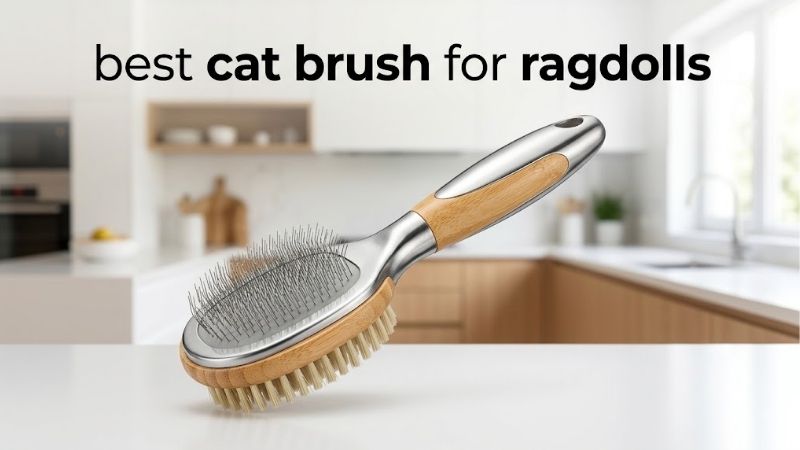
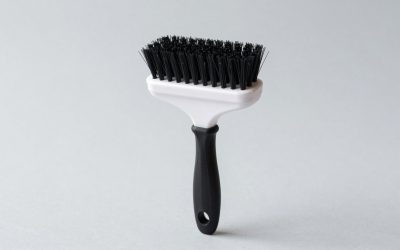
 Aumuca Cat Brush for Shedding
- Hair Type: All
- Item Dimensions L x W x H: 4.05"L x 1.54"W x 9.64"H
- Bristle Material: Stainless Steel

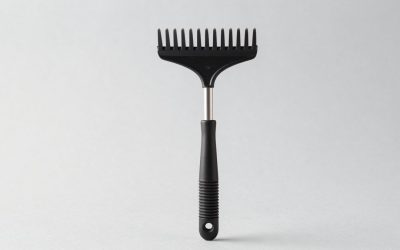
 Docrok Pet Grooming Combo
2-in-1 rake and comb combo covers dematting and deshedding in one set
Soft, protective edges are designed to avoid hurting the pet
Stainless steel teeth and TPR handle add durability and comfort
Geared toward medium and long-haired coats, less so short fur
Combo tools need periodic cleaning to clear trapped hair



As an Amazon Associate we earn from qualifying purchases at no extra cost to you.
As an Amazon Associate we earn from qualifying purchases.
By Laura Simmons
🛒 Best Price Today on Amazon
Prime members get fast, free shipping on everything above, plus member-only deals. New members get a 30-day free trial — cancel anytime.
Start 30-Day Prime Free Trial →See Today’s Amazon DealsHow to Choose the Best Cat Brush for Ragdolls
A Ragdoll is a large cat, typically 10 to 20 pounds, wearing a plush rabbit-soft coat that mats in predictable places rather than uniformly. Choosing the best cat brush for ragdolls means building around that pattern, which matters far more than buying whichever tool has the highest review count.
Work With a Silky, Low-Undercoat Coat
Unlike a Persian or a Maine Coon, a Ragdoll’s coat is soft and relatively free of woolly undercoat, which is why it does not felt as readily but does tangle where limbs move. The best cat brush for ragdolls therefore glides rather than digs: fine steel combs and pin brushes suit that texture, while stiff wire used with pressure snaps guard hairs.
Coat texture also changes with age. Kittens carry a lighter coat that fills in over roughly the first two to three years, so a brush that seemed perfect at six months may be too gentle by the second winter. Reassess the tools as the ruff and britches develop.
Target the Zones That Actually Mat
Mats form behind the ears, in the armpits, along the britches at the back legs, under the ruff, and at the base of the tail. Those are all places a broad brush passes over without ever reaching skin. A fine-toothed steel comb is the only reliable way to confirm whether a tangle is starting underneath.
Check by combing rather than by looking. A Ragdoll coat sits so smoothly that a mat the size of a grape can hide completely under the top layer until it tightens against the skin and starts pulling. Two minutes with a comb every few days prevents almost all of them.
Be Cautious With Deshedding Blades
Blade-style deshedding tools are designed to pull dead undercoat out from beneath guard hairs on dense double coats. Used weekly on a Ragdoll they will happily remove coat the cat still needs, thinning the britches and dulling the topline. Occasional light use during a heavy spring shed is defensible; routine use is not.
Never cut a tight mat out with scissors. Cat skin is thin and lifts with the mat, and this is one of the most common reasons cats arrive at a clinic with a laceration. Tight mats against the skin are a job for a groomer or vet with clippers, not for household scissors.
Match Grooming Frequency to the Season
Indoor Ragdolls still shed on a light-driven cycle, with the heaviest turnover through spring and a lighter second one in autumn. Brushing frequency should roughly double in those windows, from a couple of times a week to daily, which also cuts down on hairballs while the cat is swallowing the most loose hair.
Buying ahead of those peaks is worth doing. Owners who wait until the shed is in full swing tend to pay full price mid-season, and they start work on a coat that has already begun to tangle behind the ears and under the ruff, which turns a maintenance job into a recovery job.
Top Picks: Best Cat Brush for Ragdolls
The best cat brush for ragdolls is usually two or three tools rather than one, so treat this list as a small kit instead of a set of competing options. A comb finds the problem, a pin brush or slicker handles the routine, and a dematting tool waits in the drawer.
| Tool | Best For | Type | Key Feature |
|---|---|---|---|
| Andis Steel Pet Comb | Daily tangle checks | Greyhound-style comb | Fine and coarse teeth |
| Chris Christensen Oval Pin Brush | Finishing the coat | 20 mm pin brush | Polished pins, gentle |
| Hertzko Self-Cleaning Slicker | Loose hair removal | Retractable slicker | One-button hair release |
| Safari Cat Shedding Comb | Spring shedding | Rotating-tooth comb | Teeth turn to reduce pull |
| GoPets Dematting Comb | Early tangles | Double-sided rake | Rounded blade edges |
| FURminator Long Hair Cat | Occasional heavy shed | Deshedding blade | Use sparingly on Ragdolls |
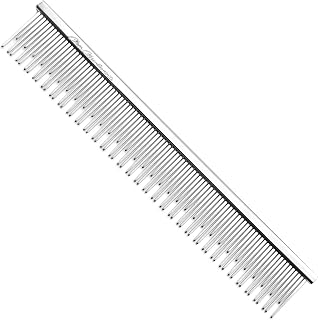
Andis Steel Pet Comb
If you buy one tool, buy this. A greyhound-style steel comb with fine teeth at one end and wider spacing at the other is how you find tangles before they become mats, and it is the only item here that reliably tells you what is happening at skin level in the armpits and behind the ears.
It demands patience and technique, because dragging it through a knot hurts and teaches a cat to avoid grooming. Work in small sections from the tips inward, holding the hair at the root. There is also no comfort padding on the metal, so long sessions are harder on your hand than a brush.
Chris Christensen Oval Pin Brush
A show-quality pin brush with long polished pins that pass through a Ragdoll’s silky coat without snagging or breaking guard hairs. Used as the finishing step after combing, it lifts and separates the coat, which is what gives that characteristic soft, open look.
It is expensive for what it visibly does, and it will not remove significant loose undercoat or break a tangle. Owners hoping for a single do-everything brush will be disappointed. As a daily maintenance and finishing tool on a well-kept coat, it is superb.
Hertzko Self-Cleaning Slicker Brush
Used lightly, this clears loose surface hair quickly and the retraction button makes emptying it painless, which matters when a large cat is only granting you a few minutes. It is the most efficient of these tools for reducing the amount of shed hair on furniture.
Pressure is the risk. Wire pins on thin cat skin cause irritation fast, so let the head float and stop as soon as the cat’s skin twitches. It is also the wrong tool for mats, and pushing it into one will pull hard enough that most Ragdolls will refuse the brush afterward.
Safari Cat Shedding Comb
The teeth rotate as the comb moves, which reduces the tug on a silky coat and makes it noticeably kinder than a fixed-tooth shedding comb during the spring turnover. It lifts a satisfying amount of loose hair without the coat-thinning effect that a blade-style deshedding tool has.
Coverage is slow on a cat this size, since the head is small and the rotating teeth work best in short strokes rather than long sweeps. It is also less useful outside the shedding season, when a plain steel comb does the same job more directly and in half the time.
GoPets Dematting Comb
A double-sided rake with rounded blade edges, sized for working the early tangles that form in the britches and under the ruff. The wider side opens a loose tangle and the narrower side finishes it, which resolves most knots at the stage where they are still soft rather than felted.
These are still blades, and on a tight mat sitting against the skin they can catch. Always slide a finger between the mat and the body, work from the outer edge inwards, and stop immediately if the skin lifts with the hair. For anything solid or close to the skin, book a groomer instead.
FURminator for Long Hair Cats
Effective at pulling dead hair during a heavy seasonal shed, and for many owners the fastest way to reduce hairballs through April and May. Used a few times a season on a Ragdoll that is visibly blowing coat, it does a job in minutes that the softer tools cannot match at all.
The clear caveat is frequency. Because Ragdolls carry limited undercoat, weekly use removes coat the cat still needs and can leave the britches and ruff looking sparse by midsummer. Keep the strokes short, skip the belly and legs entirely, and put it away once the shed has passed.
Frequently Asked Questions
These come up constantly from owners working out the best cat brush for ragdolls for the first time, usually around the first big spring shed. They cover brushing frequency, how badly the breed mats, whether dog tools are safe, and what to do with a mat you cannot clear.
How often should I brush a Ragdoll?
Two or three times a week keeps a healthy adult coat in order, moving to daily during spring and autumn shedding. Short frequent sessions beat long weekly ones, both for coat condition and because most cats will tolerate five focused minutes far better than twenty.
Do Ragdolls mat badly?
Less than Persians, more than shorthairs. The silky texture resists felting, but the length and the friction points behind the ears, in the armpits, and along the britches mean tangles appear reliably if grooming lapses for a couple of weeks. Regular combing is the whole prevention strategy.
Can I use a dog brush on my Ragdoll?
Sometimes, with judgement. A soft pin brush or fine steel comb marketed for dogs is functionally identical to the cat version. Firm dog slickers and undercoat rakes built for double-coated breeds are too harsh for cat skin and the low-undercoat Ragdoll coat.
What should I do about a mat I cannot brush out?
Leave it and call a professional. Scissors near a mat carry a real risk of cutting skin, because the skin tents up into the mat. A groomer or veterinary nurse can clip it out safely in seconds, and if mats keep forming, a hygiene trim of the britches is worth discussing.
See More:
- Best dog shampoo for Australian Shepherds
- Best natural dog shampoo
- Best slicker brush for dogs
- Best toothbrush for small dog
Final Thoughts
The best cat brush for ragdolls is really a small kit: a fine steel comb for finding tangles, a soft pin brush or gentle slicker for daily coat care, and a dematting tool held in reserve. Keep deshedding blades for the peak of the seasonal shed only, brush little and often, and hand any tight mat to a professional rather than reaching for scissors.



Write Your Review
No reviews yet. Be the first to share your experience!