
Best natural dog shampoo is a label with no legal definition, so the useful question is what is actually in the bottle. Soap-free coconut cleansers, colloidal oatmeal, and a short preservative list do more for a sensitive dog than a leaf on the front of the pack. Here are six that hold up when you read the ingredients.
Our top picks


 Wahl USA Dry Skin & Itch Relief
Oatmeal formula targets dry skin and itch relief in one wash
pH-balanced formula is alcohol, paraben, and PEG-80 free
Higher-concentrate cleanser means less product used per wash
Coconut lime verbena scent may not suit unscented preferences
24oz bottle may run out quickly with frequent bathing

 earthbath Oatmeal & Aloe Dog Shampoo
- This pH-balanced conditioner with colloidal oatmeal detangles coats…
- Blended with only the finest ingredients, like renewable…
- Our pet shampoos are designed with the health…

 Burts Bees for Pets Oatmeal Dog Shampoo
- COLLOIDAL OAT FLOUR SOOTHES ITCHY, DRY SKIN: Colloidal…
- Honey naturally conditions the coat during shampooing, helping…
- Formulated for dogs' higher skin pH rather than…
 Wahl USA Dry Skin & Itch Relief
64oz size cuts down on how often you need to reorder
Oatmeal formula targets moisturizing and itch relief together
pH-balanced, alcohol and paraben-free formula suits regular bathing
Large bottle size is bulkier to store than smaller sizes
Coconut lime verbena scent may not suit unscented preferences
As an Amazon Associate we earn from qualifying purchases at no extra cost to you.
As an Amazon Associate we earn from qualifying purchases.
By Laura Simmons
🛒 Best Price Today on Amazon
Prime members get fast, free shipping on everything above, plus member-only deals. New members get a 30-day free trial — cancel anytime.
Start 30-Day Prime Free Trial →See Today’s Amazon DealsHow to Choose the Best Natural Dog Shampoo
Natural is a marketing word, while certified organic, sulfate-free, and soap-free are claims you can actually check. Before comparing brands, decide which of those the best natural dog shampoo for your household really needs, because the gentlest formula on the shelf is useless if it cannot shift mud off a working coat.
Understand What the Claims Mean
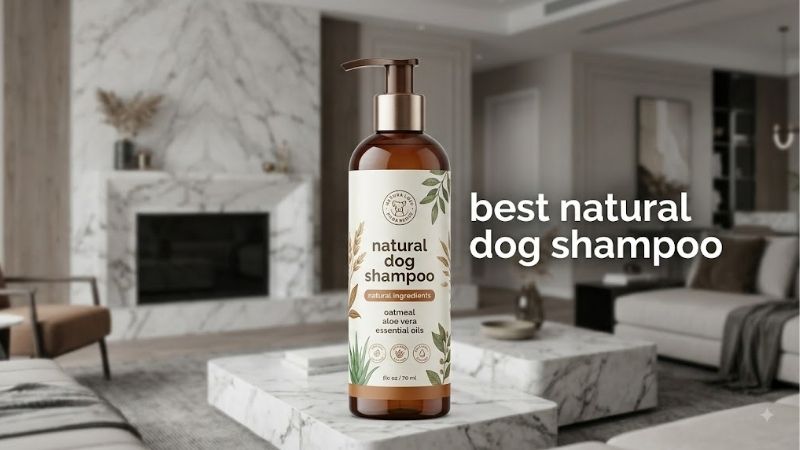
USDA certified organic is the only claim on this list backed by third-party audit, and it applies to the ingredients rather than the finished product’s performance. Sulfate-free means no SLS or SLES detergents. Soap-free means the cleansers are synthetic or coconut-derived surfactants rather than saponified oils, which rinse more easily from a thick coat.
Terms with no standing include hypoallergenic, chemical-free, and vet-formulated. They are not lies, but they are not verifiable either. Read the ingredient panel: a short list you can mostly pronounce, with aloe, glycerin, and oat derivatives near the top, tells you more than any badge on the label.
Match the Cleanser to Skin and Coat
Dogs with reactive skin do best on soap-free, fragrance-free formulas with colloidal oatmeal and aloe. Heavy-coated breeds need something that dilutes and rinses well, because true soap bases can leave a film in dense undercoat. Short-coated dogs tolerate almost anything, so the natural choice there is mostly about scent and preservatives.
Puppies and cats need their own products. Many plant-based dog shampoos contain essential oils at concentrations that are fine for adult dogs but unsuitable for cats, whose liver metabolism handles some of those compounds poorly. Check the label states the species and life stage before using one bottle across the household.
Weigh Concentrate Against Ready-to-Use
Ready-to-use 16 oz bottles are simpler and suit occasional bathers. If the best natural dog shampoo for your household is a concentrate, the same size stretches across many more baths once diluted and works through a dense coat more easily. The catch is that undiluted concentrate on a dog is harsh and wasteful.
Whatever you buy, a cheap applicator bottle changes the experience more than the shampoo itself does. Pre-mixing the bath dose with warm water means the product reaches the skin instead of sitting on the top of the coat, and it cuts rinse time noticeably on longer, denser coats.
Buy Ahead of Allergy and Sale Season
Demand for gentle formulas climbs from March through May as pollen counts rise and dogs come back indoors dusty from longer walks. That is also the stretch when bath frequency goes up, so a bottle that comfortably lasted all winter suddenly empties inside a month and needs replacing at short notice.
Buying a larger size during the spring sale events, rather than a small one in the middle of a flare, usually costs less per bath. It also stops you switching products during an itchy week, which is the surest way to make it impossible to tell what actually helped the skin settle.
Top Picks: Best Natural Dog Shampoo
The best natural dog shampoo looks different for a puppy, a sensitive rescue, and three retrievers in one house, so these six span certified organic, soap-free everyday washing, and diluted concentrates. Each entry includes an honest note on where the formula falls short.
| Shampoo | Best For | Typical Size | Key Feature |
|---|---|---|---|
| 4-Legger Certified Organic | Strictest ingredient standards | 16 oz | USDA certified organic |
| Earthbath Oatmeal & Aloe | Everyday washing | 16 oz | Soap-free, biodegradable |
| Burt’s Bees Oatmeal | Budget natural option | 16 oz | Colloidal oat flour, honey |
| Wahl Pet-Friendly Oatmeal | Large or multi-dog homes | 24 oz | Plant-derived, concentrated |
| TropiClean Hypo-Allergenic | Fragrance-sensitive dogs | 20 oz | Gentle coconut cleansers |
| Bodhi Dog Natural Oatmeal | Itch-prone coats | 16 oz | Oatmeal and aloe blend |
4-Legger Certified Organic Shampoo
If certification is the point, this is the bottle. It is USDA certified organic, saponified from coconut oil, and free of synthetic fragrance, sulfates, and artificial preservatives, which makes it a clean baseline when you are trying to work out whether a shampoo is contributing to a dog’s skin trouble.
Being a genuine soap base, it behaves differently from detergent shampoos: less foam, and a tendency to leave a slight film on dense coats if you rush the rinse. The lemongrass scent is strong in the bottle though it fades fast on the dog. Dilute it and rinse twice and the result is excellent.
Earthbath Oatmeal & Aloe Shampoo
The most broadly useful bottle here. Soap-free, pH-balanced for dogs, biodegradable, and built on colloidal oatmeal and aloe, it handles routine bathing on almost any coat type without stripping natural oils, and it rinses out cleanly enough for thick double coats.
It is not the cheapest per ounce, and the modest lather leads new users to pour too much. It also will not do anything special for shedding or brightening. As an all-purpose gentle shampoo that most dogs tolerate, though, it is the safest single recommendation on this page.
Burt’s Bees Oatmeal Shampoo
A genuinely inexpensive way into plant-based grooming. Colloidal oat flour and honey in a pH-balanced, sulfate-free base cover ordinary dirt without fuss, and the low price means you will not hesitate to bathe a dog that has just found the one muddy puddle on an otherwise dry walk.
The ingredient list is longer than 4-Legger’s and includes conventional preservatives, so it will not satisfy owners chasing a certified organic standard. Scent is very light and cleaning power is average rather than strong, so a properly muddy dog may need a second pass. For a healthy-skinned dog on a budget, those are acceptable trade-offs.
Wahl Pet-Friendly Oatmeal Shampoo
Sold in a 24 oz bottle and formulated as a concentrate, this is the practical choice for multi-dog households and big breeds. Plant-derived cleansers with oatmeal and aloe, no alcohol or parabens, and enough volume that a single bottle covers a season of regular bathing.
Its weakness is scent: the fragrance is more noticeable than the boutique options and lingers a day or two, which owners of scent-sensitive dogs dislike. Because it is concentrated, using it straight from the bottle wastes product and makes rinsing harder, so pre-dilution is not optional here.
TropiClean Hypo-Allergenic Gentle Coconut Shampoo
Aimed at dogs that react to fragrance, this uses a mild coconut-based cleansing system with minimal added scent and no dyes. It suits puppies over the minimum age stated on the label and adult dogs with quietly grumpy skin that flares after strongly perfumed products.
Hypo-allergenic is not a regulated term, so this is best understood as a low-irritant formula rather than a guarantee. Cleaning power is deliberately mild, which means a genuinely filthy dog may need two passes. That is the expected trade for a gentler wash.
Bodhi Dog Natural Oatmeal Shampoo
A well-rounded itch-focused option combining oatmeal and aloe in a soap-free base, useful for dogs that get flaky in winter or scratchy in pollen season. It lathers a little more readily than the certified organic options, which makes it easier to work through medium coats.
The limitation is the same as every soothing shampoo: it manages surface irritation and nothing deeper. Dogs with hair loss, sores, or an odour from the skin need a veterinary assessment. Some owners also find the bottle’s pump-free cap awkward when handling a wet dog one-handed.
Frequently Asked Questions
A few points come up repeatedly once owners start hunting for the best natural dog shampoo rather than grabbing whatever sits on the supermarket shelf. The four answers below cover sensitive skin, whether these bottles are safe for cats, flea claims, and how much product one bath really needs.
Is natural shampoo better for sensitive skin?
Often, but not automatically. What helps sensitive skin is a short ingredient list without sulfates, dyes, or heavy fragrance, and plenty of plant-based shampoos still contain strong essential oils. Judge the panel, not the packaging, and introduce one new product at a time so you can tell what is working.
Can I use these shampoos on my cat?
Only if the label explicitly names cats. Several botanical ingredients that are safe for dogs, including certain essential oils, are poorly tolerated by cats. Cats also groom themselves immediately after a bath and ingest whatever residue is left, so species-specific products matter more than they do for dogs.
Do plant-based shampoos kill fleas?
No, and any that hint otherwise should be treated carefully. A bath will drown some adult fleas mechanically, but it does not break the life cycle or treat the home. Flea control belongs to a veterinary-recommended preventive, with the shampoo simply cleaning the coat afterward.
How much shampoo does one bath need?
Far less than most people pour. A small breed usually needs a tablespoon or two diluted in warm water; a large double-coated dog might use a quarter cup diluted. Starting with a pre-mixed bottle rather than pouring onto the coat cuts consumption and rinse time substantially.
See More:
- Best dog shampoo for Australian Shepherds
- Best slicker brush for dogs
- Best toothbrush for small dog
- Best cat brush for ragdolls
Final Thoughts
The best natural dog shampoo for your dog is the one whose ingredient list you can read and whose cleaning power matches the coat you are washing. A certified organic bottle is worth it if you are troubleshooting skin reactions; a soap-free oatmeal formula covers most dogs the rest of the year. Dilute it, rinse thoroughly, and change one variable at a time.



Write Your Review
No reviews yet. Be the first to share your experience!