
Our Top Picks
 Best Budget-Friendly Large CapacityMimfam Automatic Self Cleaning Litter BoxOne Size22 poundsCheck on Amazon
The highest rated automatic litter box for most homes is the Whisker Litter-Robot 4, because it pairs a sealed waste drawer, a carbon filter and multi-cat capacity with a long record in the category. The runner-up is the PETLIBRO Luma, which is the pick if you want an open-top design and per-cat tracking. We do not print star scores or review counts here, because those numbers change daily and are easy to misread. Instead this guide explains what the models that earn the best reputations have in common, then shows six automatic litter boxes that match those traits, plus three more to consider.
Because this is a pet grooming and care site, the angle is hygiene and household practicality: how much handling of waste each box removes, how it behaves around a cat that is nervous or old, and what you will keep buying afterwards. This guide is research-based. We compared manufacturer spec sheets, retailer listing details and independent reviews, and we did not personally use these products. Where a spec could not be confirmed we write “not listed.”
Mimfam Automatic Self Cleaning Litter Box, with 4 Pairs Infrared Senor, Open-Top Design for Multi-Cat Homes, Comes with Liner Bags and Cat Litter Mat, Grey
Chosen because it specifies with 4 Pairs Infrared Senor and Open-Top Design for Multi-Cat Homes.
View on Amazon
Automatic Self Cleaning Cat Litter Box, Large Capacity for Multiple Cat | App Controlled, Odor Control, Infrared Safety Sensors, Quiet Operation, Adjustable Entry Height, with Garbage Bags
Chosen because it specifies Large Capacity for Multiple Cat and App Controlled.
View on Amazon
Fumoi Automatic Litter Box,Safety Sensor,App Control,Washable Litter Tray | 86L Large Capacity,Safety Protection,Self cleaning litter box for Multiple Cats,2 Roll Garbage Bags,Grey
Chosen because it specifies Safety Sensor and App Control.
View on Amazon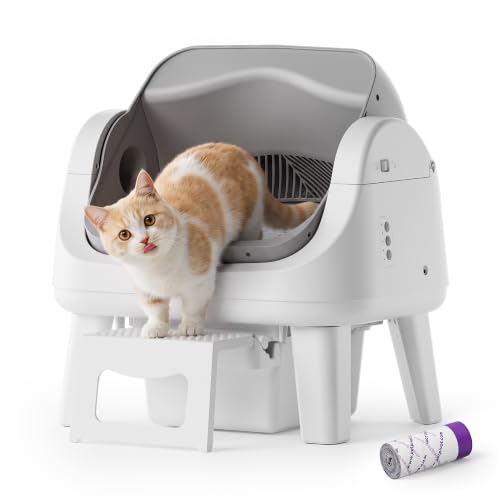
Automatic Litter Box, Self Cleaning Litter Box with Safety Sensors | Three layers of protection—infrared sensing, front-step response, and a half-gear limit—support safer automatic cleaning.
Chosen because it specifies Self Cleaning Litter Box with Safety Sensors and Three layers of protection—infrared sensing.
View on AmazonTop Picks at a Glance
- Best Overall: Whisker Litter-Robot 4, for sealed waste, carbon filtering and up to four cats.
- Best for Tech and Multi-Cat Tracking: PETLIBRO Luma, an open-top box with AI waste analysis and cat recognition.
- Best Premium No-Litter-Buying Option: CatGenie A.I., which washes reusable granules instead of using clumping litter.
- Best Established Mid-Range Pick: PetSafe ScoopFree Crystal Pro, a rake-and-tray system with a 30-day tray claim.
- Best for Senior Cats: PetPivot Open Top Self Cleaning Litter Box, with an easy-access step and seven pairs of safety sensors listed.
- Best Budget-Friendly Large Capacity: Garvee Automatic Self Cleaning Cat Litter Box, with adjustable entry height and a large waste capacity.
What Do the Highest Rated Automatic Litter Boxes Have in Common?
When you read independent reviews of automatic litter boxes, the same handful of qualities shows up in the models people praise and the same handful of faults shows up in the ones people return. Knowing them lets you judge any box, including ones not listed here.
- Redundant safety sensing. Good boxes combine at least two methods, such as infrared beams plus a weight sensor, and then add a cycle delay so the unit waits after the cat leaves. A single sensor type is the most common source of complaints about missed detection.
- A sealed waste container. Odor stays down when waste drops into a closed drawer or bin instead of an open tray. Carbon filters help, but the seal matters more.
- Works with the litter you already buy. Boxes that need a proprietary tray or granules lock you into ongoing purchases. Boxes that accept ordinary clumping litter give you more freedom, but they are fussier about litter quality.
- A realistic cat-size range. Weight limits quoted by makers are limits for the sensors, not a measure of comfort. A 15-pound cat can fit in a box rated to 25 pounds and still dislike the tight space.
- Support and warranty. A mechanical product with motors and sensors will eventually need help. A stated warranty period and available replacement parts are part of the value.
Each pick below is judged against those five points. If a pick falls short on one, we say which.
Comparison Table
| Product | Best for | Key specs | Watch for | Price tier |
|---|---|---|---|---|
| Whisker Litter-Robot 4 | Most homes, up to 4 cats | Sealed drawer, carbon filter, Wi-Fi app, any clumping litter | Large footprint, around 24 lb empty | Premium |
| PETLIBRO Luma | Multi-cat tracking | Open top, AI camera, 2.2-22 lb cats, 11 L sealed drawer | AI features need a paid cloud plan | Premium |
| CatGenie A.I. | No-litter-buying households | Washable granules, cycle about 34 minutes, water and drain hoses | Needs plumbing access, not for kittens under 6 months | Premium |
| PetSafe ScoopFree Crystal Pro | Simple, proven design | Disposable crystal tray, up to 30 days claimed, health counter | Proprietary trays, 20 lb pet limit on one legacy version | Mid-range |
| PetPivot Open Top | Senior and shy cats | 7 pairs of sensors, anti-pinch, access step | Weight range not listed | Mid-range |
| Garvee Automatic Box | Bigger homes on a budget | Large capacity, adjustable entry height, app | Newer brand with a shorter track record | Budget |
1. Whisker Litter-Robot 4: Best Overall
- Cat weight: Whisker’s product page says 3-25 lb, while its support answers say there is no upper limit and 3 lb is the minimum for automatic mode.
- Households: suitable for up to four cats per the maker.
- Waste drawer: about 9-11 gallons of liner capacity; Whisker says up to 8 days between emptying with one cat.
- Odor: sealed drawer plus carbon filter.
- Footprint: about 22 by 27 inches, 29.5 inches tall, 24 lb empty.
Best for: households that want the category leader and have floor space. Skip if: you live in a studio, or you want the lowest ongoing spend.
The Litter-Robot 4 uses a rotating globe. When the cat leaves, the globe turns, sifting clumps into the waste drawer below. In practice that design keeps the waste out of sight and sealed, which is the single biggest factor in odor. It works with ordinary clumping litter, so you are not locked to a proprietary refill.
The drawer numbers matter for planning. With one cat, Whisker quotes up to eight days between emptying. Support guidance for larger households is much tighter: about twice a week for two cats, every other day for three, and daily for four. Treat the “four cats” claim as the maximum the sensors can recognize, not a promise of relaxed upkeep.
For grooming-minded owners, the practical gain is cleaner paws and a cleaner floor beside the box, since less scooping means less waste on hands and tools. Keep a mat in front, because any enclosed or semi-enclosed design still lets some litter travel out on paws.
Pros: sealed drawer and carbon filter; works with clumping litter you choose; app reporting; large household capacity. Cons: large and heavy; premium price; the globe entry suits some cats better than others.
2. PETLIBRO Luma: Best for Tracking Several Cats
- Design: open top with a removable step.
- Cat weight: 2.2-22 lb per the maker; kittens and nursing cats should use manual clean.
- Drawer: sealed, about 2.9 gallons (11 L); the maker says about seven days for two cats.
- Camera: AI waste analysis and multi-cat recognition; live view is free, deeper analysis needs a cloud subscription.
- Litter: clumping clay, tofu and mixed litter.
Best for: owners who like data and want an open entry. Skip if: you dislike a camera in the home or do not want a subscription.
The open top avoids the enclosed feeling that makes some cats refuse a globe. The built-in camera labels which cat used the box and tracks weight trends, which is useful when two cats share the space and one starts visiting more often. Treat any alerts as a reason to call your veterinarian, not as a diagnosis.
The key caveat is cost over time: live streaming is free, but analysis, event recording and playback are part of a paid plan. Decide whether you would actually use those before paying for the model.
Pros: open entry; multi-cat recognition; sealed drawer; wide litter compatibility. Cons: cloud features cost extra; maximum cat weight is lower than some rivals; camera privacy considerations.
3. CatGenie A.I.: Best If You Never Want to Buy Litter
- Method: scoops solids, liquefies and flushes them, then washes and dries reusable granules.
- Cycle length: about 34 minutes.
- Consumables: SaniSolution cartridges, roughly 240 cycles each in cat-activated mode per reviews.
- Requirements: cold water line, drain, GFCI outlet; 8-foot supply hose and 10-foot drain hose are supplied.
- Kittens: not recommended under about 6 months.
Best for: owners who can place a unit near a toilet or washer. Skip if: you rent and cannot connect plumbing, or your cat is a kitten.
CatGenie is the outlier because it removes litter entirely. Waste goes down the drain, so there is no waste bag, no drawer and no litter purchase. The tradeoff is installation and maintenance: you are tying the box to your home’s plumbing and replacing cartridges. It only works with its own washable granules, not clay, crystal or tofu litter.
Pros: no litter hauling; no waste drawer; app control. Cons: needs plumbing; some reviewers mention a noisy cycle; only its own granules work.
4. PetSafe ScoopFree Crystal Pro: Best Established Mid-Range Option
- Method: a rake moves waste into a covered section of a disposable crystal-litter tray.
- Tray life: PetSafe claims up to 30 days of hands-free use; one reviewer says that is a best case for one average cat.
- Features: motion and safety sensors, health counter display.
- Litter: PetSafe’s own disposable trays or its reusable tray.
- One legacy top-entry listing states a 20 lb pet limit.
Best for: a single average-size cat and a simple routine. Skip if: you have a large cat or multiple cats.
The appeal is simplicity: slide in a fresh tray, plug in, and swap the whole tray when the indicator light says so. Crystal litter absorbs urine and dries waste, so the box does not need clumping to function. The cost is that trays are a recurring purchase and are tied to the system, and your cat must accept crystal under its paws. If your cat is picky, buy a small bag of crystal litter first and see.
Pros: easy tray swap; no scooping; established brand. Cons: proprietary trays; weight limits on some versions; less suited to multi-cat homes.
5. PetPivot Open Top Self Cleaning Litter Box: Best for Senior Cats
- Design: open top with an easy-access step for senior cats.
- Sensors: seven pairs of safety sensors with anti-pinch protection, per the listing.
- Cat weight range, drawer size and warranty: not listed in the listing summary.
Best for: older cats that dislike climbing into high or enclosed boxes. Skip if: you need documented weight limits before you buy.
An open design with a step lowers the barrier for a cat with stiff joints. Seven sensor pairs is a generous number on paper, though the number alone does not tell you how well they are positioned. Ask the seller about the warranty before buying, since this is a newer name.
Pros: access step; many sensors; open entry. Cons: limited published detail; shorter track record.
6. Garvee Automatic Self Cleaning Cat Litter Box: Best Budget-Friendly Large Capacity
- Capacity: listed as large capacity for multiple cats.
- Entry: adjustable height.
- Safety: infrared sensors; quiet operation is claimed in the listing.
- Control: app, with garbage bags included.
Best for: shoppers who want multi-cat capacity at a lower tier. Skip if: long-term support matters more than price.
The adjustable entry height is useful when a kitten and an older cat share a box. The usual budget caveat applies: confirm warranty terms, and check that replacement bags and parts will remain available.
Pros: large capacity; adjustable entry; budget tier. Cons: specifications such as cat weight range are not listed; less independent coverage.
Also Consider
- Fumoi Automatic Litter Box: listed with an 86 L capacity, app control and a washable litter tray for multiple cats.
- Cumrige Automatic Litter Box: listed at 95 L with detachable waste trays and app control.
- FEELNEEDY Automatic Litter Box: a 65 L robot-style box with a cat-ears design, app monitoring and safety sensors.
How We Chose
We started from the product store’s current listings, then narrowed to boxes with stated safety sensing, a waste container and an app or clear manual mode. We cross-checked specs against manufacturer pages and independent reviewers such as Cats.com and Technomeow where available. We did not personally use these products, and we do not claim lab measurements. We use price tiers rather than numbers because prices move often. Models whose weight range, warranty or drawer size could not be confirmed carry “not listed.”
Buying Guide
Match the mechanism to your cat
Rotating-globe boxes sift litter into a drawer. Rake boxes comb through the litter or tray. Open-top boxes move a scooping arm across the surface. Wash systems rinse granules. Shy cats usually prefer open entries; cats that dig enthusiastically may fling litter out of open designs. If your cat has never used anything but a plain pan, start with an open-top model.
Check size against your cat, not just weight
Measure your cat from nose to base of tail and compare to the interior. Aim for an interior at least one and a half times your cat’s body length. A box can accept a 20-pound cat and still feel cramped, and cramped boxes are the ones cats start avoiding.
Plan the waste volume
One cat typically fills a standard drawer in about a week. Two cats halve that. Add a third cat and you will empty it every other day. If you cannot manage that, choose a larger bin or a model that takes big bags.
Add up consumables
List what you buy each month: liners, carbon filters, trays or cartridges, litter. A cheaper box with proprietary trays can cost more over a year than a premium box that uses ordinary litter. Count the number of trays or bags per year, then multiply by the current price where you shop.
Plan the transition
Place the new box next to the old one with the automatic mode off for several days. Let the cat use it as a plain box, then switch on automatic cleaning with a long delay. Never force a cat into an unfamiliar box. Some cats need two to three weeks to accept the sound.
Decision Matrix: Which Situation Points to Which Box
| Your situation | Lean toward | Why | Trade-off |
|---|---|---|---|
| One adult cat, simple routine | PetSafe ScoopFree Crystal Pro | Swap one tray roughly monthly | Recurring tray purchases |
| Two or three cats of different ages | Litter-Robot 4 or PETLIBRO Luma | Larger drawers, multi-cat support | Higher spend, more floor space |
| Senior or arthritic cat | PetPivot Open Top | Access step and open entry | Specs not fully listed |
| Rental with no plumbing access | Any non-plumbed pick | CatGenie needs water and drain lines | You still empty a drawer or swap trays |
| You want to track habits | PETLIBRO Luma | Per-cat recognition and weight trends | Cloud plan for deeper analysis |
| Tight budget, bigger household | Garvee | Large capacity at a lower tier | Support history is short |
Ownership Realities: What Wears and What You Keep Buying
The purchase price is only the first line of the budget. The recurring items fall into four groups, and it helps to count them in units rather than guess at prices.
- Waste liners or bags. If you empty the drawer once a week, that is about 52 liners a year for one cat. Two cats can push the count to roughly 100. Check that your model accepts generic liners; some brands sell only their own.
- Carbon filters. These are usually replaced every few weeks to a couple of months, depending on the maker. A box that lists “two carbon filters” in its bundle is handing you only the start of that supply.
- Trays and cartridges. A ScoopFree-style tray monthly equals twelve trays a year. CatGenie cartridges last much longer per unit, around 240 cycles each when set to cat-activated mode according to reviews, but you also buy granules and pay for water.
- Litter. Globe and open-top boxes consume ordinary clumping litter, so the cost is whatever you already pay, though some owners find they use less because waste is removed quickly.
The parts that wear first are the ones that move: the drive motor, gears, and the sensors that sit closest to the litter. Dust is the enemy, so a monthly wipe of sensors with a dry or barely damp cloth, following the maker’s cleaning page, is cheap insurance. Never submerge electronics and always unplug before cleaning.
A Simple First-Week Setup Plan
- Day 1-2: assemble the box in the same room as the old one. Leave it unplugged or in manual mode. Add the litter depth the maker recommends so the sensors read correctly.
- Day 3-4: move a little used litter from the old box into the new one, so it smells familiar. Praise your cat for investigating.
- Day 5-6: plug it in with the longest cleaning delay available. Stay nearby the first time the cycle runs so you can respond to any alarm sensors.
- Day 7: remove the old box only when the cat has used the new one consistently for several days. If the cat avoids it, go back a step.
This order matters because cats judge a litter box by smell and by predictability. A box that starts moving unprompted breaks the second rule. Going slowly protects the first rule.
Common Mistakes
- Switching on automatic mode on day one. Many cats avoid a box that moves.
- Using the wrong litter. Rotating boxes jam on dusty or soft-clumping litter.
- Ignoring floor space and the power outlet. Heavy boxes are awkward to move once filled.
- Skipping manual checks. Look at the waste yourself weekly, and talk to your veterinarian about any change in your cat’s habits.
Frequently Asked Questions
What is the highest rated automatic litter box?
The Whisker Litter-Robot 4 is the model most often named as the benchmark in independent roundups, but there is no single ranking everyone agrees on. We avoid quoting review scores because they shift. Choose by your cat’s size, your household size and your upkeep tolerance.
Are automatic litter boxes worth it?
They are worth it if scooping is the chore you dislike most and you accept a higher purchase price. They do not remove all work, because you still empty the drawer and clean the unit regularly.
Do automatic litter boxes control odor better than a regular box?
Often, yes, because waste moves to a sealed container soon after use. Odor control still depends on emptying the drawer on time and using good litter.
Can kittens use an automatic litter box?
Only at the weight the maker states. Several models require about 2.2 to 3 pounds before automatic mode, and CatGenie advises against kittens under around six months. Use manual mode for small kittens.
How often should I empty an automatic litter box?
A single cat can often go close to a week with a large drawer, while multiple cats may need emptying every few days. Follow the maker’s guidance for your model.
Will my cat be afraid of the motor?
Some cats are. Run the box manually while the cat is away, keep automatic mode off for the first days and add a delay so cleaning only starts after the cat leaves.
Should I worry if the app shows changes in my cat’s habits?
Treat a change in frequency, weight or straining as a reason to call your veterinarian. The app is a prompt, not a diagnosis.
Which One Should You Buy?
Pick the Litter-Robot 4 if you want the reliable category benchmark and have the floor space. Choose the PETLIBRO Luma if you share the home with several cats and want an open top and tracking. Choose CatGenie A.I. only if you can connect plumbing and want to stop buying litter. The PetSafe ScoopFree Crystal Pro suits one average cat and a simple routine. The PetPivot is a sensible choice for an older cat, and the Garvee covers budget multi-cat needs.
Sources
- Whisker Litter-Robot 4 product page and support FAQ
- PETLIBRO Luma product page and manual
- CatGenie A.I. overview page
- PetSafe ScoopFree Crystal Pro product page
- Cats.com and Technomeow independent product reviews
Last updated: October 2026






Write Your Review
No reviews yet. Be the first to share your experience!