
Best toothbrush for small dog mouths is a question of millimetres. Toy and small breeds carry the same 42 adult teeth as a Labrador in a jaw a fraction of the size, which is exactly why they crowd, trap plaque, and develop dental disease early. The right brush reaches the back molars without a fight.
Our top picks



As an Amazon Associate we earn from qualifying purchases at no extra cost to you.
As an Amazon Associate we earn from qualifying purchases.
By Laura Simmons
🛒 Best Price Today on Amazon
Prime members get fast, free shipping on everything above, plus member-only deals. New members get a 30-day free trial — cancel anytime.
Start 30-Day Prime Free Trial →See Today’s Amazon DealsHow to Choose the Best Toothbrush for Small Dog Breeds
Small-breed dental care usually fails for practical reasons rather than motivational ones: the brush is too big, the angle is wrong, or the dog objects to a handle in its mouth. The best toothbrush for small dog jaws solves those three problems, and it costs a fraction of one professional cleaning under anaesthetic.
Head Size and Bristle Softness
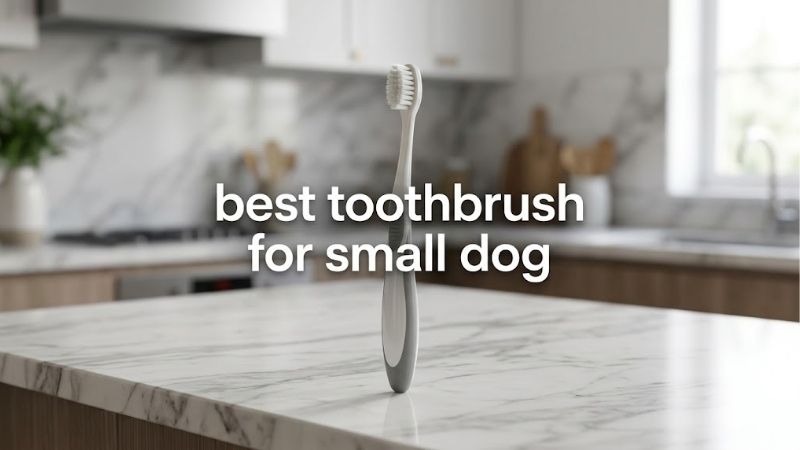
A head wider than roughly a centimetre cannot sit flat against the cheek teeth of a Chihuahua or Yorkie, so the best toothbrush for small dog jaws is narrower than most owners expect. A wide head brushes the canines and nothing else, while plaque accumulates fastest on the upper premolars and molars at the back.
Bristles should be soft. Small breeds are the group most likely to already have gum recession by middle age, and firm bristles on an inflamed gum line cause bleeding that makes the dog refuse the next session. Soft bristles with light pressure at a 45-degree angle to the gum line remove plaque perfectly well.
Handle Angle and Reach
Straight handles force you to open the mouth wide, which most small dogs resist. Angled or curved handles let you slide the head under the lip on a closed or nearly closed mouth, brushing the outer surfaces without prying the jaw apart. That single design difference is often what turns a struggle into a thirty-second routine.
Length matters too. A very short handle puts your fingers close to the teeth of a wriggling dog, while an overly long one costs control. Something in the range of a human toothbrush handle, with a grippy section near the head, gives the best balance for tiny mouths.
Finger Brushes Versus Handled Brushes
Silicone finger brushes are excellent for introducing the process. The dog feels a familiar hand rather than a foreign object, and you can gauge pressure directly, which makes them the standard recommendation for puppies and for dogs that have never been brushed before.
They are a starting point rather than a destination. The nubs are shorter and blunter than bristles, so they polish the outer surfaces but do not clean along the gum margin as effectively, and reaching the back molars means putting your finger where the carnassial teeth are. Most owners graduate to a small handled brush within a few weeks.
Pair It with the Right Toothpaste
Never use human toothpaste. Fluoride is not meant to be swallowed, and some formulas contain xylitol, which is seriously toxic to dogs even in small quantities. Use an enzymatic canine paste instead, and where you want reassurance on the claims, look for products carrying the Veterinary Oral Health Council seal.
February is promoted as pet dental health month across the United States, so brushes and pastes are routinely bundled and discounted then, which makes it a sensible restocking point. With veterinary costs climbing, the arithmetic is simple: brushing most days delays the stage at which a small dog needs a scale and polish under general anaesthetic.
Top Picks: Best Toothbrush for Small Dog Breeds
The best toothbrush for small dog mouths changes as the dog gets used to the routine, so these six cover every stage from a puppy’s first session to daily maintenance on an adult with crowded teeth. Head sizes and handle shapes reflect what is commonly sold on Amazon.
| Toothbrush | Best For | Type | Key Feature |
|---|---|---|---|
| Jasper Small Breed Toothbrush | Daily brushing | Angled handle | Narrow head, soft bristles |
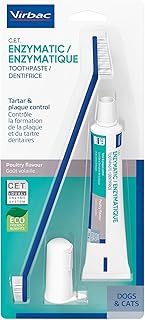
| Virbac C.E.T. Dual-Ended | Reaching back molars | Two head sizes | Long handle, vet standard |
| H&H Pets Finger Brushes | Puppies and beginners | Silicone finger | Food-grade, multi-pack |
| Vet’s Best Dental Care Kit | Starting from scratch | Brush plus paste | Enzymatic gel included |
| Woobamboo Petite Brush | Low-waste households | Bamboo handle | Compostable handle |
| Arm & Hammer 360 | Fast sessions | Multi-sided head | Bristles surround tooth |
Jasper Small Breed Toothbrush
Designed around the problem rather than scaled down from a dog brush, this has a narrow head and a pronounced angle that slides under the lip of a Yorkie or Pomeranian without forcing the jaw open. Soft bristles and a grippy handle make it the easiest daily brush on this list to actually use.
It is a single-purpose tool, so you are paying small-breed prices for a small-breed brush that will be useless if your next dog is a Rottweiler. The bristles also soften with use and need replacing every few months, roughly the same interval as a human brush.
Virbac C.E.T. Dual-Ended Toothbrush
The brush many veterinary practices hand out, and a fair benchmark for everything else. One end carries a small head for tight mouths and the other a larger head, on a handle long enough to reach the upper molars at the back of the cheek, which is exactly where plaque and tartar start to accumulate.
The handle is straight rather than angled, so it takes more cooperation from the dog than the Jasper does, and the larger end is redundant if you only own toy breeds. For owners who want one brush that works on the whole household, that redundancy becomes an advantage.
H&H Pets Silicone Finger Toothbrushes
A multi-pack of food-grade silicone sleeves that fit over your index finger. They are the gentlest possible introduction for a puppy or a rescue that has never had hands in its mouth, and the tactile feedback makes it easy to keep the pressure appropriately light.
The trade-off is reach and cleaning power: short silicone nubs cannot follow the gum line the way bristles do, and getting your finger back to the molars of a defensive dog is not always wise. Treat them as training wheels for the first few weeks rather than as the long-term answer.
Vet’s Best Dental Care Kit
A sensible bundle for owners starting from zero, pairing a dual-head brush with an enzymatic gel formulated for dogs, so there is no risk of reaching for a human tube by mistake. The enzymatic paste also keeps working briefly after brushing, which helps on days when the session is short.
The brush itself is average rather than excellent, and the head is a little broad for the smallest toy breeds, so a four-pound Chihuahua may still need something narrower. Many owners keep the paste and upgrade the brush later, which is a perfectly reasonable way to use a starter kit.
Woobamboo Petite Toothbrush
A bamboo-handled brush in a genuinely small size, aimed at households trying to cut down on single-use plastic. The angled head and soft bristles perform comparably to the plastic equivalents, and the handle can be composted once the bristles have worn past the point of being useful.
Bamboo needs drying between uses or the handle discolours, and it will not last as long as a moulded plastic handle in a permanently damp bathroom. Availability is patchier than the mainstream brands too, so buying two at a time is sensible if you find them in stock.
Arm & Hammer 360 Dog Toothbrush
The multi-sided head wraps bristles around the tooth so several surfaces are cleaned per stroke, which suits dogs that will only tolerate a very short session. For a wriggly small dog that gives you fifteen seconds of goodwill, covering more ground per second is a genuine advantage.
The bulkier head is the cost of that geometry, and in the tightest toy-breed mouths it feels crowded, particularly around the back molars. Bristle firmness is moderate rather than genuinely soft, so keep the pressure light on any dog with visibly receding or inflamed gums.
Frequently Asked Questions
Owners looking for the best toothbrush for small dog breeds tend to ask the same four questions once the brush arrives and the first attempt does not go to plan. The answers below cover brushing frequency, dogs that resist, whether dental chews count, and when to involve a veterinarian.
How often should I brush my small dog’s teeth?
Daily is the target, and most of the benefit comes from consistency rather than duration. Plaque begins mineralising into tartar within a couple of days, so brushing three times a week is meaningfully better than nothing but noticeably less effective than a short daily pass along the outer surfaces.
What if my dog refuses to let me brush?
Build up over a week or two. Start by letting the dog lick paste from your finger, then rub a finger along the outer gums, then introduce the finger brush, then the handled brush. Rushing the sequence is the usual reason dogs become permanently resistant to having their mouth handled.
Do dental chews replace brushing?
They help and they do not replace it. Chews and water additives reduce plaque accumulation on the surfaces they contact, but nothing reaches the gum margin like bristles do. Use them as a supplement, and check the calorie content, which matters on a dog that only eats a cup of food a day.
When does my dog need a veterinary dental exam?
At least annually, and sooner if you see red gums, brown tartar, bleeding, a dropped appetite, or notably bad breath. Home brushing slows disease; it does not remove existing tartar or treat an infected tooth. Small breeds in particular benefit from being assessed early rather than at the point of pain.
See More:
- Best dog shampoo for Australian Shepherds
- Best natural dog shampoo
- Best slicker brush for dogs
- Best cat brush for ragdolls
Final Thoughts
The best toothbrush for small dog breeds is simply the one you will pick up every evening: a narrow, soft, angled head that reaches the back teeth without a wrestling match. Start with a finger brush if your dog is new to it, move to a small handled brush, and always pair it with a canine enzymatic paste rather than anything from your own bathroom cabinet.






Write Your Review
No reviews yet. Be the first to share your experience!