
Key takeaways
- Unspecified dimensions: If the listing does not provide head width, handle length, or tooth spacing, comparison is difficult.
- Needles described as “gentle” without detail: Look for rounded or polished tips rather than relying on marketing language.
- Loose or uneven teeth: Rattling, crooked, or visibly inconsistent teeth indicate poor construction or shipping damage.
- Extreme performance claims: Statements such as a guaranteed percentage reduction in shedding are not a substitute for construction details or safe technique.
- One tool promised for every job: A rake cannot safely remove every mat, replace an undercoat brush, or perform professional stripping on every breed.
- No care instructions: The product should explain how to clean and dry the metal teeth, especially if the tool has a wooden handle.
Double-coated dogs can shed enough loose fur to fill a vacuum in a day, but the wrong rake can make grooming harder, not easier. Common mistakes include choosing the longest or sharpest teeth, assuming every “deshedding” tool works the same way, and buying a wide rake that cannot navigate a dog’s legs, tail, or collar area. Some owners also rake too aggressively, use the tool on a tangled coat, or judge value by blade count alone.
This undercoat rake buying guide for double coats focuses on what matters in real use: safe tooth design, appropriate width, comfortable handling, and a price that matches how often you groom. A rake is intended to lift loose undercoat and work through minor tangles—not to replace clipping, bathing, or professional dematting when a coat is severely matted.
Our top picks


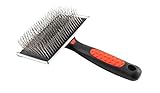
 Maxpower Planet Hair Brush
- Product Group: Pet Products
- Binding: Health and Beauty

As an Amazon Associate we earn from qualifying purchases at no extra cost to you. Ratings are shown as listed on Amazon.
Decide These 3 Things First
- Your dog’s coat density: A thick, plush double coat needs more coverage and often benefits from two rows of teeth. A medium double coat may be easier to control with a narrower single- or double-row rake.
- Your dog’s body size: A large, broad-backed dog can tolerate a rake measuring roughly 4 to 5 inches wide. For a small dog, a head closer to 2.5 to 3.5 inches is easier to control around the ribs and legs.
- Whether you need deshedding or dematting: Rounded, moderately spaced teeth are mainly for removing loose undercoat. A stripping or dematting tool with more aggressive teeth can cut through minor knots but requires slower, gentler handling.
Size and Tooth Spacing
Rake size affects both grooming speed and precision. A head around 2.5 to 3 inches wide is a practical starting point for small dogs, puppies, narrow chests, and detail work. Medium and large dogs generally benefit from a 3.5- to 5-inch head because it covers more of the back and sides with each pass.
Tooth spacing is equally important. Closely spaced teeth collect more fine, loose fur and can be useful on dense undercoats, but they may clog quickly. Wider spacing moves through thicker or longer fur with less resistance and is less likely to pull, although it may leave some fine undercoat behind.
Look for a rake with teeth approximately 0.1 to 0.25 inches apart for general double-coat grooming, depending on coat length and density. Very tight spacing is not automatically better. If the teeth snag before reaching the undercoat, the tool is either too dense for the coat or being used too quickly.
Double-row designs can increase coverage without requiring a very wide head. The Coastal Pet Safari Double Row Undercoat Rake, listed around $15, and the JW Pet GripSoft Double Row Undercoat Rake, around $15, are examples of the basic format. Compare the actual head width and tooth spacing rather than assuming two rows will suit every dog.
Material and Tooth Shape
Stainless steel teeth are the usual choice because they resist rust and are easy to wipe clean. For a tool used weekly or several times during shedding season, stainless steel is preferable to uncoated metal. Check that the teeth feel smooth and consistently finished. A burr or sharp corner can scrape skin, especially behind the ears, in the armpits, or along the belly.
Rounded tips are generally safer for routine deshedding. They should still separate loose fur, but they should not feel needle-sharp when you lightly run a fingertip across the tips. Aggressive dematting rakes may use tapered or hooked teeth. These can be useful for small knots, but they demand short strokes and a light grip.
Handle materials vary. Plastic is light and inexpensive, while rubberized plastic can improve grip when your hand is damp. Wood can feel warm and substantial, but inspect the finish for cracks, rough edges, or areas where moisture could collect. The Mars Coat King Double Wide Dematting Undercoat Grooming Rake, a stainless-steel 23-blade tool with a wooden handle, is a premium-style example listed around $40.
Construction and Tooth Security
A good rake should feel rigid when you apply moderate pressure. The head should not flex dramatically, twist in its housing, or rattle when shaken. Tooth security matters more than decorative details: loose teeth can snag fur unevenly and may eventually fall out.
Examine how the teeth attach to the head. A molded, firmly enclosed base is usually easier to maintain than a design with exposed gaps that trap hair. If the rake has replaceable blades or a removable head, confirm that replacement parts are actually available before buying. A tool that costs $20 but cannot be repaired may be less economical than a $35 to $45 model with a durable head.
Head angle also affects control. A slight angle—roughly 10 to 30 degrees from the handle—can help the teeth follow the body’s curve. However, too much angle may cause the rake to dig in. A fixed head is simple and sturdy; an adjustable head can be useful but introduces another joint that may loosen over time.
Comfort and Performance
Grooming sessions can last 10 to 30 minutes, so handle comfort is not a minor feature. Look for a grip roughly 4.5 to 6 inches long, with enough room for an adult hand without forcing the wrist into an awkward bend. A textured or rubberized grip is helpful for dogs with heavy coats because it reduces the temptation to squeeze the handle tightly.
Weight should be balanced rather than simply minimized. A hand rake weighing approximately 3 to 8 ounces is light enough for routine use. A heavier metal tool may feel more controlled on a large dog, but excess weight can cause hand fatigue during seasonal shedding. The head should not feel dramatically heavier than the handle.
Performance depends on technique as much as the tool. Brush a dry, reasonably clean coat in short strokes, following the direction of hair growth. Start with light pressure and lift the tool frequently to remove collected fur. Do not rake repeatedly over one irritated patch. For a knot, hold the hair near the skin to reduce pulling, work from the outer edge, and stop if the dog shows discomfort.
Price Tiers and Realistic Value
Budget undercoat rakes typically cost about $10 to $18. At this level, expect a basic plastic or simple rubberized handle, a fixed head, and stainless or coated metal teeth. The Maxpower Planet Hair Brush, a double-sided shedding and dematting tool listed around $15, falls into this general category. Budget tools can work well for occasional grooming, smaller dogs, or owners who want a backup rake.
Mid-range models generally cost $18 to $30. They may offer a more comfortable grip, sturdier tooth mounting, a better-finished head, or a more useful combination of tooth spacing. This is often the best value for a household with one or two double-coated dogs that are groomed regularly.
Premium rakes usually cost about $30 to $55, with specialized stripping tools sometimes higher. You are paying for materials, construction, a more substantial handle, or a professional-style blade arrangement—not a guarantee that every coat will shed faster. A premium tool is worthwhile if it will be used weekly, needs to withstand heavy seasonal shedding, or replaces several cheaper tools.
Warranty and Replacement Support
Hand grooming tools commonly have limited warranties ranging from 30 days to one year, although coverage varies by retailer and manufacturer. A warranty should address manufacturing defects such as a cracked handle, detached head, or missing teeth. It generally will not cover damage from dropping the tool, rust caused by improper storage, or normal tooth wear.
Before purchasing, check whether the manufacturer provides a clear contact method and whether replacement heads, blades, or screws are sold separately. For a $13 rake, replacement support may not be important. For a $40 tool, it is reasonable to expect better documentation and a path to service or replacement.
Delivery and Assembly
Most undercoat rakes arrive fully assembled and require no tools. Confirm this if the listing shows a detachable blade, adjustable head, or multiple attachments. Assembly should involve no more than inserting a head or tightening a supplied screw; avoid products that require improvised hardware.
For delivery, compare the final price rather than the headline price. A $15 rake with $8 shipping costs more than a $20 rake with free delivery. Inspect the tool promptly after arrival for bent teeth, chipped plastic, loose fasteners, or a damaged handle. Do not use a rake with a warped head, because uneven teeth can pull the coat and make pressure difficult to judge.
Spec Checklist
| Spec | Budget | Mid | Premium |
|---|---|---|---|
| Typical price | $10–$18 | $18–$30 | $30–$55+ |
| Head width | 2.5–4 inches | 3–5 inches | 3.5–5 inches |
| Handle length | 4–5.5 inches | 4.5–6 inches | 5–7 inches |
| Approximate weight | 3–6 ounces | 4–8 ounces | 5–10 ounces |
| Teeth | Fixed metal teeth | Stainless steel, often double row | Stainless steel, specialized or replaceable blade |
| Best use | Occasional deshedding | Routine double-coat grooming | Dense coats and minor dematting |
Red Flags
- Unspecified dimensions: If the listing does not provide head width, handle length, or tooth spacing, comparison is difficult.
- Needles described as “gentle” without detail: Look for rounded or polished tips rather than relying on marketing language.
- Loose or uneven teeth: Rattling, crooked, or visibly inconsistent teeth indicate poor construction or shipping damage.
- Extreme performance claims: Statements such as a guaranteed percentage reduction in shedding are not a substitute for construction details or safe technique.
- One tool promised for every job: A rake cannot safely remove every mat, replace an undercoat brush, or perform professional stripping on every breed.
- No care instructions: The product should explain how to clean and dry the metal teeth, especially if the tool has a wooden handle.
FAQ
How often should I use an undercoat rake?
For most double-coated dogs, one session per week is a sensible starting point. During heavy seasonal shedding, two or three shorter sessions may be more comfortable than one long session. Stop if the skin becomes pink, the dog resists, or the rake begins pulling instead of gliding.
Is a double-row rake better than a single-row rake?
Not automatically. A double-row rake can collect more loose fur per pass and suit dense coats, but it may be too aggressive for a fine or lightly packed undercoat. Choose based on tooth spacing, tip finish, head width, and your dog’s tolerance.
Can I use an undercoat rake on mats?
Use it only for small, loose tangles. Never force a rake through a tight mat close to the skin. Severe mats should be assessed by a professional groomer, since pulling can injure the skin and cause significant distress.
What is the best choice for a first-time buyer?
A 3- to 4-inch stainless-steel rake with rounded teeth, a nonslip handle, and a moderate double-row design is a practical starting point for many medium and large dogs. Choose a narrower head for small dogs, and prioritize comfort and tooth security over the highest blade count.




Write Your Review
No reviews yet. Be the first to share your experience!