
Key takeaways
- Teeth are described only as “fine” or “professional” with no spacing, length, or head measurements.
- Tips feel sharp, rough, hooked, or unfinished.
- The head flexes, rattles, or separates from the handle with light pressure.
- The product promises to remove mats without mentioning safe detangling technique.
- There is no clear information about the pet size or coat type the rake suits.
- A very dense coat is paired with extremely close spacing under 2 millimeters without a clear explanation.
- The listing shows multiple sizes but does not identify which dimensions apply to the selected option.
Choosing an undercoat rake is less about finding the most teeth and more about matching tooth spacing to your pet’s coat, size, and tolerance for grooming. A common mistake is assuming that a fine-tooth rake always removes more loose fur. It may collect surface shedding effectively, but closely spaced teeth can snag dense, packed undercoats, pull healthy hair, or clog quickly. Another mistake is buying a large rake for a small dog, or selecting an inexpensive tool with teeth that are too short to reach through a long double coat.
To answer the question of how to choose undercoat rake tooth spacing, start with the coat rather than the product label. A Siberian Husky, Golden Retriever, German Shepherd, and short-coated double-coated dog may all need different spacing. Use the measurements below as practical starting points, then adjust based on whether the rake glides smoothly and removes loose undercoat without scraping the skin.
Our top picks
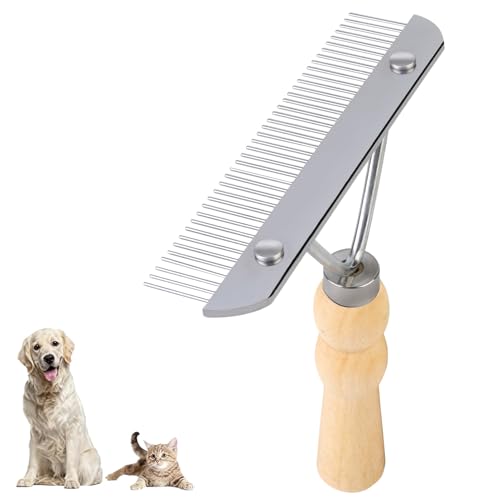


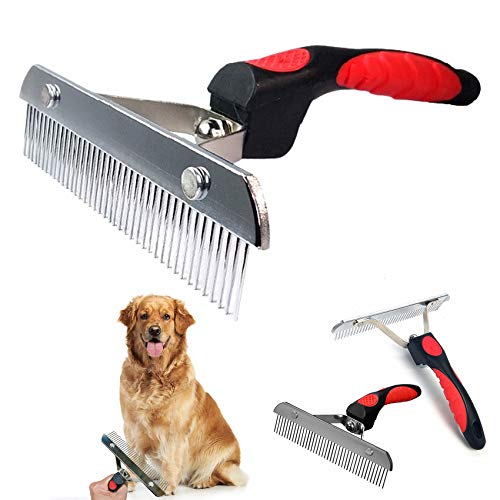 Dog Brushes for Grooming Large Dogs
- Product Group: Pet Products
- Binding: Health and Beauty
As an Amazon Associate we earn from qualifying purchases at no extra cost to you. Ratings are shown as listed on Amazon.
Decide These 3 Things First
- Coat density: Determine whether your pet has a light, medium, or very dense undercoat. Thick, compact fur generally needs wider teeth to enter the coat without clogging.
- Hair length: Measure or estimate the longest coat around the body, not just the hair on the head. Long coats usually need teeth at least 1.5 to 2 inches long.
- Pet size and sensitivity: A rake for a 70-pound dog may be too large and aggressive for a 12-pound dog. Sensitive pets also benefit from rounded tips, fewer passes, and a smaller working head.
As a general guide, tooth spacing of about 2 to 4 millimeters suits many short-to-medium double coats and lighter shedding. Spacing of 4 to 6 millimeters is a versatile choice for medium or dense coats. Very dense, long undercoats may work better with 6 to 10 millimeters between teeth, provided the tool is used gently and does not pull.
Size: Match the Rake to the Pet and Coat
The rake head should cover enough fur to be efficient without becoming difficult to control. For small dogs and cats, look for a head approximately 2 to 3 inches wide and a handle-to-head length of roughly 5 to 7 inches. A compact head is easier to maneuver around legs, shoulders, and the base of the tail.
Medium and large dogs typically benefit from a 3 to 5-inch head. For a Golden Retriever, German Shepherd, or similar dog, teeth around 1.5 to 2.25 inches long can reach through a substantial coat. Giant breeds may use a wider 4 to 6-inch head, but width should not replace control. A very broad rake can be awkward around the rib cage and may encourage you to apply too much pressure.
Tooth count matters alongside spacing. A 3-inch head with 12 widely spaced teeth behaves very differently from a 3-inch head with 30 fine teeth. For dense coats, prioritize teeth that reach the undercoat and remain separated by at least 4 millimeters. For lighter or finer double coats, 2 to 4 millimeters may be adequate.
Material: Look for Durable Teeth and Skin-Friendly Tips
Most undercoat rakes use stainless steel or plated steel teeth. Stainless steel is usually the better choice for frequent grooming because it resists rust and is easy to wipe clean. Steel teeth should feel rigid rather than springy, with no visible burrs, sharp corners, or rough welds.
Rounded or polished tips are important. They should be smooth enough to pass over the skin without scratching, while still being narrow enough to enter the coat. “Blunt” does not necessarily mean comfortable if the tips are poorly finished. Run a clean fingertip over the ends before using a new rake; any snagging or sharp edge is a reason to return it.
Wooden handles can be comfortable and attractive, while molded plastic or rubber handles are often easier to sanitize. A tool weighing approximately 3 to 8 ounces is manageable for most home grooming. Heavier metal construction may feel substantial, but extra weight is not a benefit if it causes hand fatigue or makes you press harder.
Construction: Check How the Teeth Are Secured
Inspect the connection between the teeth and the head. Teeth that are individually mounted or firmly embedded in a metal bar are generally preferable to thin teeth held loosely in soft plastic. The head should not flex noticeably when you apply light hand pressure.
Look for a tooth row that is straight and evenly spaced. Uneven gaps can create snagging points and make the rake pull inconsistently. A rake with 15 to 25 teeth may suit a wide, dense-coat tool, while a fine-tooth design may have 25 to 40 or more teeth across a similar head. Neither count is automatically better: the usable spacing and tooth length are what determine performance.
Double-sided rakes can offer one wider-spaced row for loosening packed undercoat and one finer row for collecting it. They can be useful, but only if each side is clearly labeled or visually distinct. A reversible tool should also have a secure head and a handle that remains comfortable when you change sides.
Comfort and Performance: Favor a Smooth, Low-Pressure Pass
The right rake should move through the coat with moderate hand pressure. You should not need to force it, repeatedly rake the same patch, or hear the teeth scraping against the skin. Test a small area behind the shoulder or along the side of the body. If the rake stops at the top layer, choose longer teeth. If it catches and pulls, choose wider spacing, shorter passes, or a less dense tooth configuration.
A handle between 4 and 6 inches long suits many users. Anti-slip rubber or textured plastic is useful when grooming for 10 to 20 minutes at a time, especially if the coat is damp from humidity or your hands are wet. A narrow handle may offer precision, but a grip about 1 to 1.25 inches in diameter is often easier to hold without squeezing tightly.
Start with five to ten gentle strokes in one area, then inspect what the rake removes. Stop if the skin becomes red, your pet shows discomfort, or the tool begins to pull healthy topcoat. Undercoat rakes are not intended to replace bathing, drying, mat removal, or professional grooming when severe tangles are present.
Price Tiers: Pay for Control, Not Just Tooth Count
Budget undercoat rakes commonly cost about $8 to $18. Examples in this range include simple wooden-handle or anti-slip models priced around $15 to under $20 and basic regular-tooth designs near under $20. These can be perfectly serviceable when the teeth are smooth, the spacing suits the coat, and the handle feels secure.
Mid-range models generally cost $18 to $35. This tier may offer better finishing, a more rigid head, a contoured grip, or two spacing options. It is a sensible range for owners grooming a large double-coated dog weekly or during seasonal shedding.
Premium rakes often cost $35 to $60 or more. A fine-tooth deshedding rake priced around $45 may provide more consistent construction and a refined grip, but a higher price does not make close spacing appropriate for every coat. Buy premium construction when you need durability, frequent use, or better control—not simply because the product removes a large amount of hair in one pass.
Warranty: Prefer Clear Coverage Over Vague Promises
Many grooming tools have limited warranties of 30 days to one year. Check whether coverage applies to broken handles, detached heads, or defective teeth, and whether normal wear, rust, and accidental damage are excluded. A clear one-year warranty is a useful quality signal, particularly for a rake costing more than $30.
Keep the receipt and product packaging until you have inspected every tooth. Warranty service may require photos, an order number, or return shipping. A warranty cannot compensate for an unsuitable spacing choice, so confirm the dimensions and return window before opening or using the tool.
Delivery and Assembly: Confirm What Arrives in the Package
Most undercoat rakes arrive fully assembled and should be ready to use immediately. If the handle, head, or blade must be attached, assembly should require no more than one to three pieces and a basic screwdriver. Avoid designs with small exposed screws that can loosen against the coat or require frequent tightening.
Before ordering, confirm the package includes the complete rake rather than a replacement head or a single attachment. Check the stated head width, tooth length, and shipping time. For seasonal shedding, allow at least seven days for delivery so you can inspect the tool and make a return if the teeth are too close or too short.
Spec Checklist
| Spec | Budget | Mid | Premium |
|---|---|---|---|
| Typical price | $8–$18 | $18–$35 | $35–$60+ |
| Head width | 2.5–4 inches | 3–5 inches | 3–6 inches |
| Tooth spacing | 3–8 mm | 3–7 mm | 2–8 mm or adjustable sides |
| Tooth length | 1–2 inches | 1.5–2.25 inches | 1.5–2.5 inches |
| Approximate weight | 3–8 ounces | 4–9 ounces | 4–10 ounces |
| Best use | Occasional grooming and lighter coats | Weekly grooming of medium or dense coats | Frequent grooming and demanding double coats |
Red Flags
- Teeth are described only as “fine” or “professional” with no spacing, length, or head measurements.
- Tips feel sharp, rough, hooked, or unfinished.
- The head flexes, rattles, or separates from the handle with light pressure.
- The product promises to remove mats without mentioning safe detangling technique.
- There is no clear information about the pet size or coat type the rake suits.
- A very dense coat is paired with extremely close spacing under 2 millimeters without a clear explanation.
- The listing shows multiple sizes but does not identify which dimensions apply to the selected option.
FAQ
What tooth spacing is best for a Husky?
Start with approximately 4 to 7 millimeters between teeth and teeth about 1.5 to 2.25 inches long. A very dense or long Husky coat may need wider spacing, while a lighter coat may respond to 3 to 5 millimeters. Use light strokes and avoid repeatedly working the same area.
Is a fine-tooth undercoat rake better?
Not automatically. Fine teeth, generally around 2 to 4 millimeters apart, can collect loose undercoat from finer or less compact coats. On thick, packed fur, they may clog or pull. Wider teeth are often the better first choice for dense double coats.
Can I use an undercoat rake on a short-haired dog?
Yes, if the dog has a double coat and the teeth are short enough to avoid scraping the skin. Choose a compact head, rounded tips, and spacing around 3 to 5 millimeters. A single-coated short-haired dog may need only a rubber grooming brush or soft bristle brush.
How often should I use an undercoat rake?
Once weekly is a practical starting point for many double-coated pets. During heavy seasonal shedding, sessions may increase to two or three times weekly, with each session lasting about 5 to 15 minutes. Stop when the rake is no longer collecting loose fur easily, and never use it aggressively to remove tight mats.




Write Your Review
No reviews yet. Be the first to share your experience!