
Key takeaways
- Efficient for thick coats. A rake can remove a significant amount of loose undercoat in fewer passes than a basic bristle brush.
- Affordable entry point. Common options cost about $10 to $20, making them relatively inexpensive to try.
- Useful during heavy shedding. Regular sessions can reduce loose fur before it spreads around the home.
- Simple to use. Most models do not require batteries, charging, replacement heads, or special settings.
- Helpful between professional grooms. Owners of long-haired or double-coated pets can use one for routine maintenance at home.
- Available in different tooth patterns. Single-row, double-row, wide-tooth, and rotating designs provide options for different coat textures.
- Less likely to cut the coat than a blade-style deshedder. A conventional rake pulls out loose hair rather than trimming it, although it still must be used gently.
The Short Answer
Yes—if your dog or cat has a thick, double-layered coat and regularly sheds a dense undercoat. An undercoat rake can remove loose fluff before it lands on your furniture, clothing, and floors.
But you do not automatically need one just because your pet sheds. The one important condition is coat type: an undercoat rake is most useful for pets with a substantial underlayer, such as huskies, German shepherds, golden retrievers, Labrador retrievers, malamutes, collies, and many other double-coated breeds. It is usually unnecessary for short-haired pets, single-coated breeds, or animals whose hair is already easy to manage with a rubber brush or grooming mitt.
Our top picks
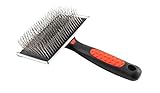
 Maxpower Planet Dog Grooming Rake
- Product Group: Pet Products
- Binding: Misc.
 DOGI Deshedding Brush
- Product Group: Pet Products
- Binding: Health and Beauty
As an Amazon Associate we earn from qualifying purchases at no extra cost to you. Ratings are shown as listed on Amazon.
The honest answer in 2026 is that an undercoat rake is a useful specialty tool, not a universal replacement for brushing. It can make grooming faster, but the wrong rake—or too much pressure—can irritate skin, pull healthy hair, and make an already unpleasant grooming session worse.
What You Actually Get
An undercoat rake is a hand-held grooming tool with a row or rows of metal teeth, pins, or rotating blades designed to reach through the longer outer coat and lift loose undercoat. Unlike a surface brush, it is intended to work deeper in the coat without cutting the hair.
In practical terms, you get a way to remove loose, dead undercoat in handfuls rather than collecting it gradually with a standard brush. That can be particularly helpful during spring and fall shedding seasons, when a double-coated pet may release much more fur than usual. It can also reduce the amount of loose hair transferred to upholstery, bedding, and rugs, although no grooming tool stops shedding completely.
Product designs vary. Some rakes have a single row of widely spaced teeth for thick, long coats. Others use two rows of stainless-steel pins to collect more loose hair in each pass. The right choice depends on the coat’s density, length, and sensitivity—not simply the number of teeth.
For example, the Maxpower Planet Dog Grooming Rake is listed for under $20 and is marketed for dogs and cats. The DOGI Deshedding Brush is listed for under $10 and uses double-row stainless-steel pins. Those prices place both products in the inexpensive grooming-tool category, so the decision is less about a major financial commitment and more about whether the tool suits your pet’s coat.
An undercoat rake should not be treated as a dematting tool for tight, painful mats. A rake may loosen small tangles, but pulling it through a solid mat can hurt your pet and tug unnecessarily on the skin. Severe mats are better handled by a professional groomer or a veterinarian, especially when they are close to the skin.
Pros
- Efficient for thick coats. A rake can remove a significant amount of loose undercoat in fewer passes than a basic bristle brush.
- Affordable entry point. Common options cost about $10 to $20, making them relatively inexpensive to try.
- Useful during heavy shedding. Regular sessions can reduce loose fur before it spreads around the home.
- Simple to use. Most models do not require batteries, charging, replacement heads, or special settings.
- Helpful between professional grooms. Owners of long-haired or double-coated pets can use one for routine maintenance at home.
- Available in different tooth patterns. Single-row, double-row, wide-tooth, and rotating designs provide options for different coat textures.
- Less likely to cut the coat than a blade-style deshedder. A conventional rake pulls out loose hair rather than trimming it, although it still must be used gently.
Cons
- Not suitable for every pet. Short-coated and single-coated animals may receive little benefit from a deep-reaching rake.
- Can irritate skin. Pressing down, brushing the same area repeatedly, or using a sharp tool on sensitive skin can cause redness and discomfort.
- May pull healthy hair. If the teeth are too close together or the coat is not loose enough, the rake can snag hair that does not need to be removed.
- Does not replace all grooming tools. You may still need a slicker brush for tangles, a comb for checking the coat, nail clippers, or professional help for mats.
- Can be messy. The rake gathers loose fur, but you still need to collect and dispose of the hair after brushing.
- Results depend on cooperation. A nervous, painful, or highly reactive pet may not tolerate the longer grooming session a rake can encourage.
- Overuse can make shedding management worse. Daily aggressive brushing is not automatically better. Most pets need gentle, limited sessions rather than repeated scraping.
Who Should Buy It
Buy an undercoat rake if your pet has a visibly dense undercoat and you routinely find loose tufts of fur around the house. It is especially worth considering for medium- and long-haired double-coated dogs, large dogs that shed heavily, and cats with thick coats that tolerate handling.
It is also a good choice if a regular brush seems to glide over the top of the coat without collecting much hair. A rake is designed to reach farther into dense fur, so it can complement—not necessarily replace—a surface brush.
Look for a tool your hand can control comfortably. A handle that allows a relaxed grip is more important than an unusually wide head. If your pet has sensitive skin, choose a design with smooth, rounded teeth and start with very light pressure. A under-$10 tool such as the DOGI double-row brush may be enough for occasional home grooming, while the under-$20 Maxpower Planet rake is another budget-level option to compare.
Before buying, check whether the product is recommended for your pet’s coat length and whether the teeth are appropriate for the density. If the listing gives a head width or tooth spacing, compare those measurements with your pet’s coat rather than assuming one size fits all. Avoid choosing solely on claims such as “reduce shedding by 90%”; those results depend heavily on the pet, coat condition, grooming schedule, and starting amount of loose hair.
Who Should Skip It
Skip an undercoat rake if your pet has a short, smooth coat with little undercoat. A rubber grooming mitt, soft bristle brush, or damp microfiber cloth may collect surface hair more comfortably and with less risk of over-brushing.
You should also skip it—or ask a groomer first—if your pet has irritated skin, open sores, a skin infection, unexplained hair loss, or painful mats. Grooming tools can worsen an existing problem and may hide symptoms that need veterinary attention.
Do not buy one simply because your pet sheds. Shedding is normal, and an undercoat rake will not eliminate it. If your pet dislikes brushing, a shorter session with a softer tool may be more productive than forcing a deep rake through the coat. A groomer can also demonstrate the correct technique before you use one at home.
Cheaper Alternatives
| Option | Cost | Trade-off |
|---|---|---|
| Rubber grooming mitt | About $5–$15 | Gentle and easy for short coats, but it usually cannot reach a dense undercoat. |
| Basic bristle brush | About $5–$12 | Good for surface dirt and loose topcoat hair; less effective for heavy seasonal shedding. |
| Wide-tooth comb | About $6–$15 | Useful for checking tangles and separating long hair, but slower for removing large amounts of undercoat. |
| Used or basic slicker brush | About $8–$20 | Better for small tangles and fluffy coats, though fine pins can feel scratchy if used with pressure. |
| Professional grooming session | About $40–$150 or more | Costs much more, but a groomer can handle dense coats, difficult behavior, and serious tangles more safely. |
FAQ
How often should I use an undercoat rake?
Start with one short session per week and adjust based on your pet’s coat and shedding. During a heavy shedding period, some pets may benefit from two or three gentle sessions weekly. Stop when the loose undercoat is coming out easily, rather than brushing until no hair remains. A session of about 5 to 15 minutes is often enough for a manageable coat.
Can I use an undercoat rake on a cat?
Yes, but only if the cat has a suitable thick or double-layered coat and accepts grooming. Use very light pressure, avoid sensitive areas such as the belly and inside of the legs, and keep sessions brief. Never drag a rake through a tight mat. Cats with painful tangles may need a veterinarian or experienced cat groomer.
Will an undercoat rake damage my dog’s coat?
It can cause discomfort or breakage if used aggressively, too frequently, or on a coat that does not need deep deshedding. Keep the tool moving in the direction of hair growth, use minimal pressure, and avoid repeated passes over the same patch of skin. Check for redness afterward. If your dog flinches, tries to escape, or shows other signs of pain, stop.
Is an undercoat rake better than a deshedding brush?
Neither is universally better. An undercoat rake is often preferable for a very dense, thick undercoat, while a deshedding brush may be easier to control on a medium coat. Compare tooth spacing, handle comfort, and your pet’s response. For many homes, the best setup is a gentle surface brush for regular grooming plus an undercoat rake used occasionally during heavier shedding.




Write Your Review
No reviews yet. Be the first to share your experience!