
Key takeaways
What's inside
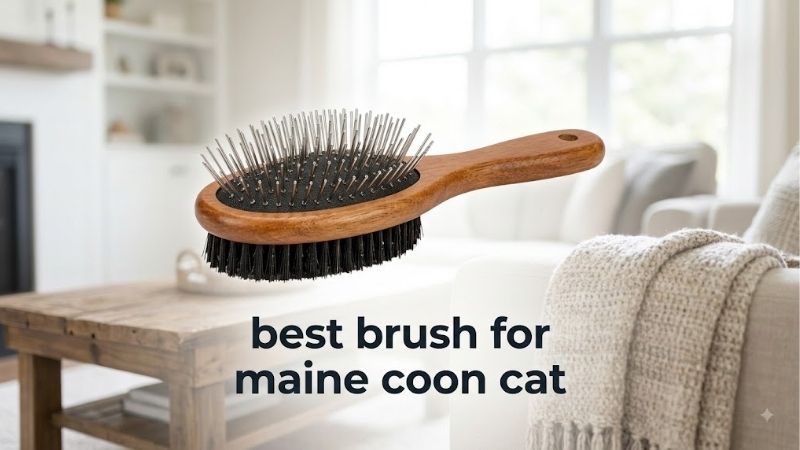
Best brush for maine coon cat coats has to answer a harder question than most cat grooming guides. This is a big cat with a dense, water-resistant coat that felts if neglected, so the tools have to reach the undercoat rather than skim the surface. These six do exactly that, with honest notes on where each one stops being useful.
As an Amazon Associate we earn from qualifying purchases.
By Laura Simmons
How to Choose the Best Brush for Maine Coon Cat Coats
Maine Coons commonly weigh 12 to 20 pounds and carry a shaggy, uneven coat, short at the shoulders and long through the britches, belly, and ruff. The best brush for maine coon cat grooming has to handle that variation, which is why almost no owner gets away with one tool.
Respect the Density of the Undercoat
Unlike a Ragdoll, a Maine Coon carries a substantial woolly undercoat beneath the guard hairs. That layer is what mats, and it is invisible from above, which is why the best brush for maine coon cat coats must work below the surface. A brush that only strokes the topcoat leaves a felted plate forming against the skin.
This is why undercoat rakes and wide-toothed combs matter more here than pretty pin brushes. The test is simple: after brushing, run a comb through the britches and behind the ears. If it stops or snags anywhere, the brush was not reaching the layer that actually matters, however much hair came off.
Focus on the Britches, Ruff, and Armpits
Mats form where hair is longest and friction is highest. On a Maine Coon that means the trousers at the back legs, the base of the tail, the deep ruff, and the armpits, plus the belly on cats that dislike being turned over. Those areas cause most grooming emergencies.
Approach them in short sessions with the cat standing or on its side rather than flipped onto its back. A cat that feels trapped starts refusing the whole routine, and the belly is where losing cooperation costs most, since it is also where mats are hardest to reach.
Use Deshedding Blades With Restraint
Blade-style deshedding tools genuinely work on this coat, since there is real undercoat to remove. During the spring turnover they can halve the amount of hair a cat swallows while self-grooming. The catch is that they also cut guard hairs if used repeatedly, and an over-groomed Maine Coon loses the shaggy outline entirely.
Keep them to a handful of sessions during peak shed, use short strokes along the back and flanks only, and stay off the britches and belly. Between sheds, a comb and a rake handle the maintenance perfectly well without touching any of the coat the cat still needs for insulation.
Never Cut a Mat Out With Scissors
Cat skin lifts into a tight mat, which is why scissor injuries are a routine reason for clinic visits. If a mat will not open with a dematting tool and patient finger work, it needs clippers in the hands of a groomer or a vet rather than anything from your own drawer.
Cats that mat repeatedly often benefit from a hygiene trim of the britches, kept short enough that hair cannot felt but long enough to protect the skin. Booking that before the spring shed rather than during it usually means a shorter wait and a much calmer appointment.
Prevention costs far less than any of that. Ten minutes of combing twice a week through the high-friction areas keeps almost every Maine Coon out of the situation entirely, even during a heavy seasonal turnover when the undercoat is coming out in handfuls.
Top Picks: Best Brush for Maine Coon Cat Grooming
The list below runs from everyday maintenance to the heavy work of a spring shed. Most owners end up with three of these, and the combination matters far more than any single purchase when you are choosing the best brush for maine coon cat coats to keep on the shelf.
| Tool | Best For | Type | Key Feature |
|---|---|---|---|
| Andis Steel Pet Comb | Checking and finishing | Greyhound comb | Fine and coarse ends |
| FURminator Long Hair Cat | Peak spring shed | Deshedding blade | Reaches loose undercoat |
| Hertzko Self-Cleaning Slicker | Weekly maintenance | Retractable slicker | One-button hair release |
| Mars Coat King 12-Blade | Dense ruff and back | Undercoat rake | Strips wool, keeps guard hair |
| Safari Cat Shedding Comb | Gentler shedding work | Rotating-tooth comb | Less pull on the coat |
| Pat Your Pet Dematting Rake | Early tangles | Double-sided rake | Rounded blade edges |
Andis Steel Pet Comb
The tool that tells you the truth about the coat. Fine teeth at one end and wider spacing at the other let you check the britches and ruff for felting before it shows, and it doubles as the finishing tool once the heavier work is done. It is the step most owners skip.
It is slow across a cat this large, and bare steel gives no cushioning for your hand. It also cannot break an established mat on its own. Used as the diagnostic step before and after every session, though, it is the single most useful item on this list.
FURminator for Long Hair Cats
During the spring turnover this pulls loose undercoat faster than anything else on the list, and on a Maine Coon there is plenty of it to remove. Owners typically see a marked drop in hairballs and in the amount of hair on furniture within a couple of sessions.
Frequency is the whole risk. Used weekly year-round it thins the coat and shortens guard hairs, which changes the look of the cat and takes months to grow back. Keep it to peak shed, avoid the britches and belly, and stop as soon as the yield drops off.
Hertzko Self-Cleaning Slicker Brush
Good weekly maintenance for the back, sides, and tail, and the retraction button makes clearing a full pad of hair painless, which matters when a large cat is only granting you a few minutes at a time. It also lifts and separates the coat nicely after rake work, so the finish looks even rather than flattened.
Wire pins on cat skin need a light hand, so let the head float rather than pressing. The plastic body flexes under load and the mechanism can develop play over years of heavy use. It is also the wrong tool for a formed mat, and forcing it into one will end the session.
Mars Coat King 12-Blade Rake
A professional stripping rake that pulls dense wool out from beneath the guard coat with very few passes. On a heavily coated Maine Coon back and ruff it does in five minutes what a slicker takes twenty to approximate, which is why groomers keep one on the bench.
It is genuinely sharp and unforgiving. Used with pressure, on thin-coated areas, or on a squirming cat, it takes far too much coat and can nick skin. Start with a wider blade count than you think you need, keep strokes short, and stay away from the belly and legs.
Safari Cat Shedding Comb
The rotating teeth reduce drag, making this the gentler way to move loose undercoat on a cat that objects to a blade tool. It is a sensible middle option for owners who want real shedding help without the risk of over-thinning the coat, and it suits cats that flinch at anything with a blade edge.
Coverage is slow on a 15 pound cat because the head is small, and it works best in short strokes rather than long sweeps. Outside the shedding season a plain steel comb does the same job more directly, so it is a seasonal purchase rather than a year-round one.
Pat Your Pet Dematting Rake
Double-sided with rounded blade edges, this opens the early tangles that form in the britches and behind the ears before they ever need clipping out. The wider side breaks the tangle apart and the narrower side finishes it, usually in under a minute.
These are still blades. On a mat sitting tight against the skin they can catch, so always slide a finger between the mat and the body and stop if the skin lifts with the hair. Anything solid or close to the skin is a job for a groomer, not for a home tool.
Frequently Asked Questions
These questions come up constantly from owners working out the best brush for maine coon cat coats, usually after the first spring shed catches them by surprise. The answers below cover brushing frequency, why mats keep forming, whether deshedding tools are safe, and where trimming genuinely helps.
How often should I brush a Maine Coon?
Two to three times a week as a baseline, moving to daily through the spring shed. The britches, ruff, and armpits need attention every session even if the back does not. Skipping a fortnight is usually all it takes for the first felted patch to appear.
Why does my Maine Coon still mat despite brushing?
Almost always because the brush is not reaching the undercoat. A slicker passing over the top of a dense coat feels productive but leaves the woolly layer untouched. Follow every brushing session with a comb through the high-friction areas to check what is actually happening at skin level.
Is a deshedding tool safe for this breed?
Yes, in moderation. There is enough undercoat that occasional use during peak shed is beneficial. Weekly year-round use is what causes trouble, thinning the coat and shortening guard hairs. Treat it as a seasonal tool rather than part of the regular routine.
Should I trim a Maine Coon’s coat?
A hygiene trim of the britches and around the rear is reasonable for cats that mat repeatedly or struggle to keep themselves clean. Full body shaving is not recommended, since the coat provides insulation and sun protection, and regrowth after a shave is often uneven.
See More:
- Best dog shampoo for Australian Shepherds
- Best natural dog shampoo
- Best slicker brush for dogs
- Best toothbrush for small dog
- Best cat brush for ragdolls
Final Thoughts
Choosing the best brush for maine coon cat coats means accepting that one tool cannot cover a triple-layer coat on a cat this size. A comb to check, a rake or slicker for the weekly work, and a deshedding tool kept for spring is what keeps mats away. Hand anything felted to a groomer.

Write Your Review
No reviews yet. Be the first to share your experience!