
Key takeaways
What's inside
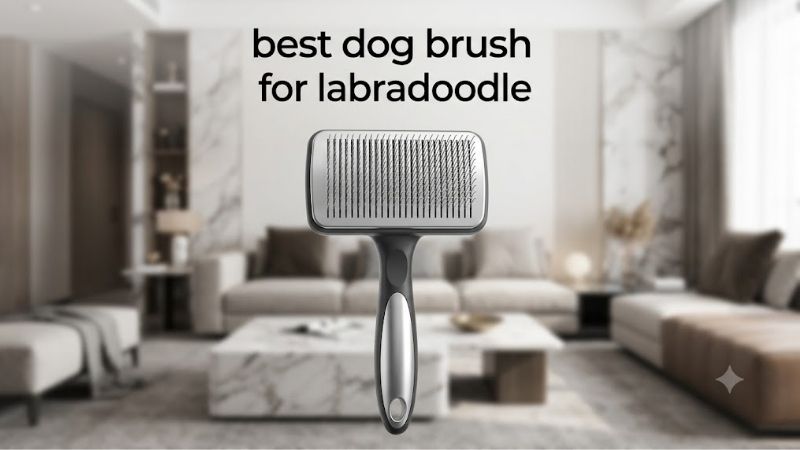
Best dog brush for labradoodle coats has to solve matting rather than shedding. A labradoodle coat grows continuously and traps loose hair against the skin instead of dropping it, so the brush that suits a Labrador is exactly wrong here. This guide covers what works and what damages the coat.
As an Amazon Associate we earn from qualifying purchases.


As an Amazon Associate we earn from qualifying purchases.
🛒 Best Price Today on Amazon
Prime members get fast, free shipping on everything above, plus member-only deals. New members get a 30-day free trial — cancel anytime.
How to Choose the Best Dog Brush for Labradoodle Coats
The best dog brush for labradoodle coats is chosen around a single fact: a labradoodle does not shed in the ordinary sense. Hair that would fall from a Labrador stays trapped in the curl, and if it is not brushed out it felts against the skin. Brushing is therefore removal rather than tidying.
Three Coat Types, Three Levels of Difficulty
Straight or flat coats are the easiest, behaving closest to a retriever coat and tolerating a wider range of tools. Wavy fleece is the most common, mats at friction points but parts cleanly when brushed, and responds well to a slicker followed by a comb.
Curly wool coats are the hardest work. Dense curl packs tightly against the skin, holds moisture after rain and swimming, and felts within days if brushing lapses. For that coat the best dog brush for labradoodle work is a quality slicker used with proper line brushing, not a faster tool.
Line Brushing Is the Technique That Matters
Brushing over the top of a doodle coat achieves almost nothing. The surface looks brushed while the layer against the skin continues felting, which is how owners arrive at a groomer convinced the dog was brushed daily and are told it needs shaving.
Line brushing means parting the coat with one hand, brushing outward from the skin in a horizontal line, then moving the parting up a couple of centimetres and repeating. It is slower and it is the only method that reaches the layer where mats actually form. Technique matters more here than equipment, and the best dog brush for labradoodle coats still fails if it only ever travels across the surface.
Where Mats Form First
Friction points, every time: behind the ears, in the armpits, under the collar, between the back legs, around the harness line and at the base of the tail. Those areas need attention two or three times a week even if the rest of the coat gets brushed weekly.
Moisture accelerates everything. A doodle that swims, gets rained on or is bathed without being fully dried will mat far faster than a dry one, and a coat brushed before a bath but not after drying often comes out worse than it went in.
What Not to Use on This Coat
Undercoat rakes and blade-edged deshedding tools are designed for double coats and do nothing useful here except cut hair. On a continuously growing coat that damage does not grow out for months, and the tool cannot reach a mat in any case.
Cheap slickers with stiff pins in a hard backing are the other common mistake. They scratch skin and snap the hair shaft, which on a coat you are trying to keep long is exactly the wrong outcome. Pin flexibility and rounded tips matter more here than on any other coat type. Those are the specifications to compare when shortlisting the best dog brush for labradoodle coats, rather than head size or brand.
Top Picks: 6 Brushes and Combs for Labradoodle Coats
The best dog brush for labradoodle coats is a pairing rather than a single tool, so these six cover two slickers, a pin brush, two combs and one dematting tool. A typical labradoodle household uses a slicker and a comb daily and reaches for the dematting tool only when something has been missed.
| Tool | Type | Role | Frequency |
|---|---|---|---|
| Chris Christensen Big G Slicker | Slicker | Primary brushing | Daily to weekly |
| Andis Steel Pet Comb | Steel comb | Checking to the skin | Every session |
| Hertzko Self-Cleaning Slicker | Slicker | Budget primary | Daily to weekly |
| Chris Christensen Oval Pin Brush | Pin brush | Longer, straighter coats | Daily |
| Safari Dematting Comb | Dematting blade | Splitting small mats | As needed |
| Mars Coat King | Stripping rake | Severe tangling only | Rarely |
Chris Christensen Big G Slicker Brush
The professional standard for doodle coats and worth the money on a curly wool coat. Long flexible pins in a soft cushion reach through a deep coat to the skin without the tips digging in, and the wide head covers a standard-sized dog considerably faster than a small slicker.
It is expensive for a brush and clumsy on small doodles or in detail areas, where a smaller slicker works better. The flexible pins also bend permanently if you force them through a genuine mat rather than splitting the mat first.
Andis Steel Pet Comb
The most important tool on this list and the cheapest. A comb is how you verify that line brushing actually reached the skin: if the comb passes freely from root to tip everywhere, the coat is genuinely brushed, and if it snags, it is not.
It removes coat slowly and is frustrating used as a primary brush. Steel teeth catch painfully if you drag through a tangle rather than working in short sections, so it belongs at the end of each area rather than at the start.
Hertzko Self-Cleaning Slicker Brush
The accessible everyday option, and the retracting pin mechanism genuinely increases how often it gets used, which on this coat matters more than pin quality. For a wavy fleece coat it does most of what a premium slicker does at a fraction of the price.
The bristles are stiffer than premium slickers, so pressure has to stay light or it scratches skin and breaks hair. On a dense curly wool coat it reaches less deeply than a long-pinned professional slicker, which shows over months as the coat grows out.
Chris Christensen Oval Pin Brush
The right tool for straighter, longer doodle coats where preserving length matters. Polished pins in a flexible cushion move through coat without snapping the shaft, which is the difference between a coat that grows and one that stays the same length permanently.
On a curly wool coat it lifts the surface without reaching the felting layer, so it cannot be the only brush. It is also expensive relative to its role, which for most doodles is a finishing tool rather than the workhorse.
Safari Dematting Comb
For mats you have already found, a dematting tool with spaced blades splits the mat into sections so a slicker can work it out, rather than pulling the whole mat against the skin. Working from the outer edge inward is what makes it tolerable for the dog.
The blades are sharp and skin tents up into a mat invisibly, so this tool causes lacerations if used carelessly. It is a rescue tool for small mats, not a routine brush, and a coat matted to the skin needs a professional rather than a dematting comb.
Mars Coat King
Included with a caution. Spaced stainless blades split severe tangling faster than anything else, which occasionally makes it the difference between a partial clip and a full shave-down on a neglected coat.
It cuts coat, which on a continuously growing coat means months of regrowth, and it is far too aggressive for routine use on a labradoodle. Reach for it only when the alternative is clipping, and use short gentle strokes rather than force.
Frequently Asked Questions
These four cover what owners ask after their first groomer conversation about matting, which is usually where the education starts.
How Often Should I Brush a Labradoodle?
Every day or two for a curly wool coat and two or three times a week for wavy fleece, with friction points checked more often than that. The interval matters more than session length, because mats form in days rather than weeks.
Why Did My Groomer Say the Coat Must Be Shaved?
Because a coat felted to the skin cannot be brushed out without real pain, and cutting mats out with scissors risks serious lacerations. A shave-down underneath the mat is the humane option, and it usually reflects surface brushing rather than no brushing at all.
Should I Brush a Wet Coat?
Never while it is wet with existing tangles, since water tightens them into felt. Brush and comb through to the skin before bathing, dry the coat fully with a force dryer or considerable patience, then brush again once it is completely dry.
Do I Need an Undercoat Rake?
No. Rakes are designed for double coats that shed, and a labradoodle coat neither sheds in that way nor has the undercoat structure a rake targets. The best dog brush for labradoodle coats is a quality slicker paired with a steel comb, and the rake stays on the shelf.
See More:
- Best way to get rid of dog hair in car
- Best vacuum for hard floors and dog hair
- Best dog clippers for golden doodle
- Best small dog nail clipper
- Best dog clippers for yorkies
Final Thoughts
The best dog brush for labradoodle coats is a long-pinned flexible slicker used with proper line brushing, verified every session with a steel comb that must pass freely from root to tip. Add a dematting comb for the occasional missed spot, keep undercoat rakes and blade deshedders away from the coat entirely, and check the friction points more often than everything else combined.




Write Your Review
No reviews yet. Be the first to share your experience!