
Key takeaways
What's inside
Best dog brush for Pitbull coats is a shorter list than for most breeds, because a short smooth single coat rules out most of the grooming aisle. There is no undercoat to rake and nothing to detangle, so the job becomes loosening dead hair at the skin and lifting it off before it lands on your sofa.
As an Amazon Associate we earn from qualifying purchases.


As an Amazon Associate we earn from qualifying purchases.
🛒 Best Price Today on Amazon
Prime members get fast, free shipping on everything above, plus member-only deals. New members get a 30-day free trial — cancel anytime.
How to Choose the Best Dog Brush for Pitbull Coats
Short coats need pressure and contact rather than reach, which inverts most brush advice. The best dog brush for Pitbull grooming works against the skin to loosen hair still held in the follicle, then a second tool sweeps that loosened hair away before it drifts around the house. Curry first, bristle second.
Short Coats Shed Constantly, Not Seasonally
A single short coat does not blow twice a year the way a double coat does; it sheds a steady, low-level amount all year round. That changes the routine, because there is no peak season to prepare for and no quiet period where brushing can be skipped.
The upside is that the volume per session is small. Ten minutes twice a week is enough to keep most of it off the furniture, which is far less commitment than a double or drop coat demands and makes the habit easy to keep.
Short hair is also the hardest to remove from fabric once it lands, because the stiff bristly strands weave into upholstery rather than sitting on top. That is the real argument for regular brushing with this breed: the fur you catch at source is fur you never have to extract from a cushion.
Rubber Curry First, Bristle Brush Second
Rubber curry combs and grooming mitts are the primary tool here. Soft nubs reach right down to the skin without poking, and the circular motion both loosens dead hair and stimulates the skin, which most Pitbulls actively enjoy rather than merely tolerate.
A bristle brush is the finishing step. Short firm strokes sweep the loosened hair off the coat and distribute natural oils along it, which is what produces the glossy finish the breed is known for. Curry to loosen, bristle to remove, in that order.
Skin Sensitivity and the Wrong Tools
Skin issues are common in the breed, and the wrong tool makes them worse. Wire slicker pins, undercoat rakes and aggressive deshedding blades are all designed for coats this breed does not have, and on bare short hair they scratch skin rather than lifting fur.
Deshedding blades can be used, but with a light hand and short passes only. A short-hair specific tool is the right version, and even then it belongs to occasional use rather than a weekly routine. If you notice redness or scratching after a session, stop and speak to your vet.
Bath-Time Brushing, Cost, and Seasonal Notes
Rubber tools work wet as well as dry, which is the trick most owners miss. Using a curry with shampoo during a bath loosens far more dead hair than dry brushing does, and it goes down the drain rather than into the air.
Allergy season from March through May is when short-coated dogs are most likely to show skin irritation, and it is worth switching to the gentlest tool you own during that window rather than pushing on with a routine that suddenly seems to bother them.
This is a cheap category, which is unusual in pet grooming. A curry, a mitt and a bristle brush together cost less than a single premium slicker, and they last for years because there are no fine pins to bend. Discounts around Prime Day in June and July are a bonus rather than a necessity.
Top Picks: Best Dog Brush for Pitbull
These six cover the whole realistic toolkit for a short smooth coat, and each has a claim to being the best dog brush for Pitbull grooming in a particular situation. Every entry names a real drawback.
| Tool | Type | Best For |
|---|---|---|
| KONG ZoomGroom | Rubber curry | Best overall, wet or dry |
| HandsOn Grooming Gloves | Grooming gloves | Nervous or wriggly dogs |
| Safari Bristle Brush | Bristle brush | Finishing and shine |
| FURminator Short Hair Tool | Deshedding edge | Occasional heavy shed |
| Frisco Rubber Curry Comb | Rubber curry | Budget pick |
| JW Pet Gripsoft Soft Slicker | Soft slicker | Ears and problem spots |
KONG ZoomGroom
The default recommendation for short smooth coats. Firm rubber teeth reach through to the skin, loosening dead hair and massaging as they go, and the whole thing works equally well dry or lathered with shampoo in the bath. Most dogs treat a session with it as attention rather than grooming.
It collects hair on the tool rather than into a chamber, so you are pulling clumps off it every few strokes. It also does nothing to remove the loosened hair from the coat, which means you still need a bristle brush or a mitt to finish.
HandsOn Grooming Gloves
Gloves change the dynamic with a dog that dislikes being brushed, because the session feels like being stroked. The nodules loosen and collect hair at the same time, and having both hands free makes it far easier to work around a dog that will not stand still.
They are less effective than a firm curry at loosening deeply held hair, so a heavy shedder needs both. Sizing matters more than the listings suggest, and a loose glove slides around and loses most of its contact with the coat.
Safari Bristle Brush for Dogs
The finishing tool. Short firm strokes sweep loosened hair off the coat and spread natural oils along the hair shaft, which is what gives a short coat its shine. It is also the safest brush here for a dog with sensitive skin, since nothing sharp touches them.
On its own it barely removes anything, because it does not reach the skin to loosen hair in the first place. Used without a curry beforehand, it mostly redistributes fur rather than collecting it.
FURminator Short Hair deShedding Tool
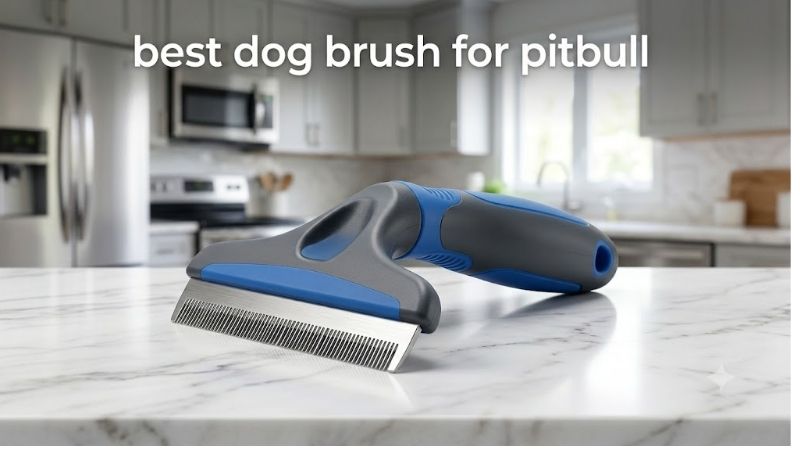
The version designed specifically for short coats, with a closely spaced metal edge sized so it does not dig into skin the way a long-coat tool would. Used with light pressure and short passes, it removes noticeably more hair per session than any rubber tool.
It is the easiest tool here to overuse, and pressing hard or repeating passes over the same area causes irritation on thin skin. Treat it as an occasional tool during a heavier shed rather than part of a weekly routine.
Frisco Rubber Curry Comb
The budget rubber option, with bendy nubs that get down to the skin without poking. It does most of what a premium curry does at a fraction of the price, and because there is nothing to bend or snap it will last for years of regular use.
The nubs are shorter and softer than the ZoomGroom’s, which means less grip on a dense short coat and more passes to achieve the same result. The flat shape is also less comfortable to hold across a long session.
JW Pet Gripsoft Soft Slicker Brush
The exception to the no-slickers rule, kept for the few places a short coat genuinely tangles: behind the ears, around the collar and occasionally on the back of the legs. The softer pins and protective tips make it far safer on bare skin than a standard slicker.
It has no role on the body of a short-coated dog, so it is a spot tool. Even the soft version can mark skin if used with pressure, so it should be reserved for the specific areas that need it rather than used as a general brush.
Frequently Asked Questions
These come up most often from owners deciding which is the best dog brush for Pitbull coats that seem to shed constantly.
How often should I brush a short-coated dog?
Twice a week is enough for most, rising to every other day if shedding is bothering you. There is no seasonal peak to plan around, so the aim is a steady habit rather than an intensive session every few weeks.
Why does my Pitbull still shed after brushing?
Because a single short coat sheds continuously rather than in bursts. Brushing removes what is currently loose, not what will be loose tomorrow. Regular short sessions manage the volume; nothing eliminates it, and any sudden increase in shedding is worth mentioning to your vet.
Can I use a slicker brush on a Pitbull?
Only a soft one, and only on the few areas that actually tangle. A standard wire slicker across a short coat contacts skin rather than hair, which is uncomfortable at best and causes scratches at worst. A rubber curry does the job that slickers do on other breeds.
Does bathing more often reduce shedding?
Bathing with a rubber curry does help, because it loosens dead hair while it is wet. Bathing too frequently strips the coat and can dry the skin, so every four to eight weeks is a reasonable rhythm unless your vet has advised otherwise.
See More:
- Best nail grinder for big dogs
- Best nail grinder for large dogs
- Best vacuum for dog hair on rugs
- Best Roomba for dog hair
- Best dog hair broom
Final Thoughts
The best dog brush for Pitbull coats is a rubber curry used firmly against the skin, followed by a bristle brush to lift what it loosened. Skip the wire slickers and undercoat rakes designed for other coat types, use the curry in the bath as well as out of it, and keep any deshedding blade for occasional use only.




Write Your Review
No reviews yet. Be the first to share your experience!