
Best undercoat rake shopping usually starts the week your double-coated dog begins to blow coat and tumbleweeds of fluff drift across the floor. The right rake reaches past the guard hairs to pull dead undercoat before it sheds everywhere, easing seasonal shedding and preventing the packed, matted underlayer that ordinary brushes leave behind.
As an Amazon Associate we earn from qualifying purchases.
By Laura Simmons
🛒 Best Price Today on Amazon
Prime members get fast, free shipping on everything above, plus member-only deals. New members get a 30-day free trial — cancel anytime.
Start 30-Day Prime Free Trial →See Today’s Amazon DealsHow to Choose the Best Undercoat Rake
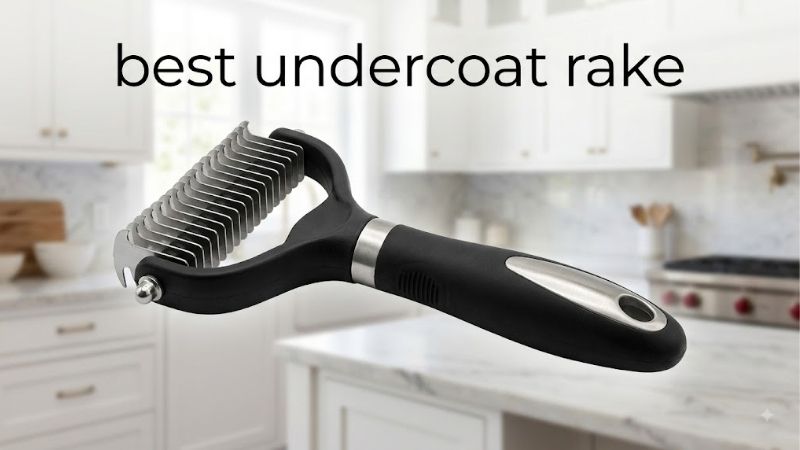
Double coats trap loose fluff deep beneath the surface, so the best undercoat rake must reach that layer without tearing the coat or scratching skin. Focus on four things: single versus double rows of teeth, tooth spacing for your dog’s coat, rounded or rotating tips for safety, and a handle you can control.
Single vs. Double Row of Teeth
A single-row rake has one line of pins and gives you precise, gentle control, which suits thinner double coats and owners new to raking. It removes loose undercoat steadily without pulling too much at once, making it a safe, forgiving everyday choice.
A double-row rake covers more coat per stroke and clears heavy shedders faster, but it is more aggressive and demands a lighter hand. For thick breeds like Malamutes or Chows during a full blow, the extra speed helps; for lighter coats, single-row control is usually plenty.
Tooth Spacing and Coat Density
Tooth spacing should match coat density. Wider-spaced teeth glide through long, thick coats such as those on Golden Retrievers or Bernese Mountain Dogs without clogging, while closer teeth suit denser, shorter double coats like a Corgi’s or a Husky’s plush layer.
Get the spacing wrong and the rake either skims the surface or drags painfully. When in doubt, choose slightly wider spacing and make more passes, since a rake that flows through the coat is gentler and more effective than one that fights every stroke.
Rounded or Rotating Teeth for Safety
Because a rake works close to the skin, tooth-tip design is a safety feature. Rounded or ball-tipped teeth glide against skin instead of scratching, and some rakes use rotating teeth that spin as they meet a tangle, reducing pulling and making the process more comfortable.
Rotating-tooth rakes are especially kind on sensitive dogs and around thinner-skinned areas like the belly and legs. Whichever style you pick, work in the direction of hair growth with light pressure, and never dig a rake straight down into the skin.
Handle Comfort and Coverage
Seasonal coat blows take time, so an ergonomic, non-slip handle spares your wrist across a long session. A comfortable grip also gives you the feedback to feel resistance and ease off before you pull, which matters more than raw power on a wriggling dog.
Head width affects coverage. A wider head clears a big dog’s back and flanks quickly, while a narrower head is easier to steer around legs, the tail base, and behind the ears where undercoat packs in. Many owners keep a wide rake and a slicker for detail work.
Top Picks: Best Undercoat Rake for Dogs
These picks span gentle single-row rakes, faster double-row tools, and pro-grade stripping rakes for the heaviest coats. The table compares rows, teeth, and best use, then each review below helps you match the best undercoat rake to your dog’s coat, size, and shedding season.
| Rake | Rows | Teeth | Best For | Price Tier |
|---|---|---|---|---|
| Safari Undercoat Rake | Single | Rounded pins | Everyday control | Budget-Mid |
| Pat Your Pet Double Row | Double | Serrated | Deshedding plus mats | Budget |
| FURminator Undercoat Rake | Single | Rotating | Sensitive dogs | Mid |
| GoPets Dematting Rake | Double | Rounded blades | Tangles and undercoat | Mid |
| Mars Coat King | Multi | Fine rounded blades | Heavy pro coats | Premium |
| Maxpower Planet Rake | Double | Serrated | Budget heavy shedders | Budget |
Safari Undercoat Rake
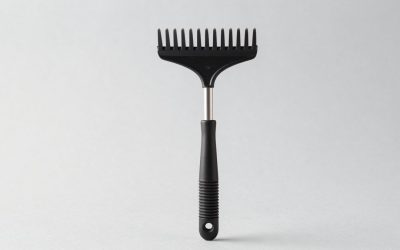
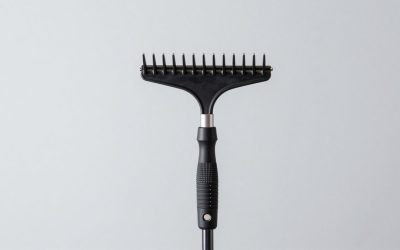
A longtime favorite, the Safari rake uses a single row of rounded pins on a sturdy handle to lift loose undercoat with gentle, controllable strokes. It is an excellent first rake for most double coats and forgiving enough that beginners rarely overdo it.
Being single-row, it is slower on a Malamute in full blow than a wide double-row tool, and the fixed pins pull if you rush. Worked patiently, though, it clears undercoat cleanly and is one of the best undercoat rake choices for everyday seasonal upkeep.
Pat Your Pet Double Row Undercoat Rake
This popular two-sided tool offers a coarse side to open the coat and a finer side to clear loose fur, giving good value for owners tackling both shedding and light tangles. The double row covers ground quickly on medium and heavy coats.
The serrated blades are effective but sharper than rounded pins, so caution near skin is essential and it is not for a solidly pelted coat. For routine deshedding plus the occasional knot, its versatility makes it an easy budget recommendation.
FURminator Undercoat Rake
FURminator’s rake uses rotating teeth that spin as they meet tangles, reducing the pulling that makes some dogs dread grooming. That gentler action suits sensitive dogs and thinner-skinned areas, while still reaching deep to pull dead undercoat during a heavy shed.
It costs more than a basic rake and the moving teeth feel less rugged than a solid-pin tool to some owners. For a dog that fusses at ordinary rakes, though, the reduced tug is well worth it and keeps sessions calm and cooperative.
GoPets Dematting Rake
The GoPets rake pairs double-sided, rounded-end blades with a comfort grip, working as both a light dematter and an undercoat clearer. The skin-safe tips give confidence around legs and belly, and the dual density lets you open knots then thin loose fur.
The head is narrower than a dedicated wide rake, so it covers a big dog more slowly, and truly heavy blows still favor a stripping tool. For medium coats that both tangle and shed, its combination of jobs earns its place in the kit.
Mars Coat King Stripping Rake
A groomer favorite, the Mars Coat King uses rows of fine, rounded blades to strip and card out dense undercoat astonishingly fast on thick, heavy coats. Choosing the right blade count for your breed makes it a powerful tool for serious seasonal deshedding.
It is aggressive by design, so it is easy to remove too much or damage a coat if you overwork one spot, and it carries a premium price. In experienced hands on a very thick coat, however, few tools clear undercoat as efficiently.
Maxpower Planet Undercoat Rake
This budget double-row rake targets owners of heavy shedders who want coverage without a big outlay. The wide head and serrated teeth make quick work of routine deshedding across large, thick-coated dogs during peak shedding season.
The build feels less refined than premium rakes and the sharper teeth need a gentle hand near skin. As an affordable tool for regular at-home undercoat clearing on a big dog, though, it delivers solid results for the price.
Frequently Asked Questions
Owners of fluffy, double-coated dogs ask the same practical questions about raking. These answers about the best undercoat rake cover which breeds need one, how it differs from a deshedding tool, frequency, and safety.
What breeds need an undercoat rake?
Double-coated breeds benefit most: Huskies, Malamutes, German Shepherds, Golden Retrievers, Corgis, Chows, Australian Shepherds, and similar dogs with a soft underlayer beneath coarser guard hairs. Single-coated breeds like Poodles do not have that undercoat and need a slicker or comb instead.
What is the difference between an undercoat rake and a deshedding tool?
A rake pulls loose undercoat with rounded pins or blades and does not cut hair. Many deshedding tools use a fine edge that can shave some guard hair, working faster but risking coat damage if overused. A rake is generally the gentler long-term choice.
How often should I use an undercoat rake?
Once or twice a week keeps a double coat healthy most of the year, rising to daily during spring and fall coat blows. Short, regular sessions remove undercoat before it packs down and prevent the dense mats that form close to the skin.
Can an undercoat rake hurt my dog?
It can if you press hard, dig straight down, or overwork one area, which causes rake burn or breaks the coat. Use light strokes in the direction of growth, choose rounded or rotating teeth, and never shave a double coat, since shaving can permanently damage regrowth.
See More:
- Best slicker brush for poodles
- Best cat hair remover brush
- Best cat steam brush
- Best brush for matted cat hair
- Best natural dog ear cleaner
Final Thoughts
The best undercoat rake is the one matched to your dog’s coat density and used with a gentle, patient hand: single-row for control, double-row or a stripping rake for heavy blows, and rounded or rotating teeth for comfort. Rake in the direction of growth, step up frequency during shedding season, and pair the rake with a slicker for finishing. Done right, regular raking keeps a double coat healthy, tangle-free, and far less prone to coating your home in fluff.
Our top picks

 DOGI Deshedding Brush
- One of the best dog brushes on the…
- Our undercoat Rake dramatically reduces shedding by up…
- Our professional grooming brushes can be used on…
 Coastal Pet Safari Double Row Undercoat Rake
- Safari Undercoat Rake: This deshedding rake deeply penetrates…
- Dematting Comb for Dogs: Our dog undercoat brush…
- Grooming Comb for Dogs: The precision tapered pins…


As an Amazon Associate we earn from qualifying purchases at no extra cost to you.



Write Your Review
No reviews yet. Be the first to share your experience!