
Key takeaways
What's inside
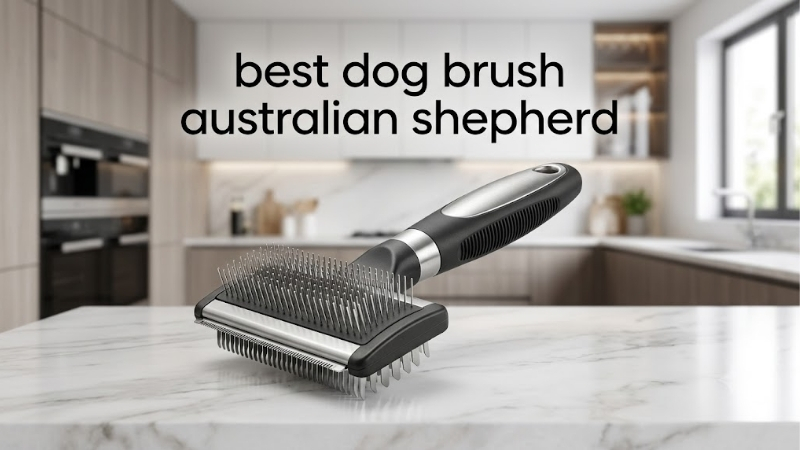
Best dog brush australian shepherd coats need is rarely one tool, because an aussie carries a medium double coat with heavy feathering that mats in predictable places. This roundup covers coat structure, the tools that suit each area and safe technique, then compares five picks.
As an Amazon Associate we earn from qualifying purchases.


As an Amazon Associate we earn from qualifying purchases.
🛒 Best Price Today on Amazon
Prime members get fast, free shipping on everything above, plus member-only deals. New members get a 30-day free trial — cancel anytime.
How to Choose the Best Dog Brush Australian Shepherd Owners Need
An australian shepherd has a weather-resistant outer coat over a soft undercoat, plus feathering on the legs, the britches and behind the ears. Those feathered areas are where every mat starts, and they need a different tool from the flat body coat that most brushes are designed for.
Coat Structure and Where Mats Form
The body coat is medium length and lies fairly flat, which makes it the easy part of the job. Undercoat sits beneath it and thickens through the cooler months, then releases in large quantities during the spring and autumn moults, when brushing frequency has to rise quite sharply.
Feathering behind the front legs, in the britches and around the ears is the problem area. The hair there is finer, it moves more, and it collects debris from long grass and undergrowth, so mats form there weeks before anything appears on the flat coat across the back and sides.
Working aussies collect more than pet ones. Burrs, seeds and mud all work their way into feathering during summer walks, and checking those areas after any walk through long grass takes a minute and prevents the felted patches that would otherwise need clipping out entirely.
Undercoat Rakes Versus Slickers
Two tools cover almost the whole dog here, and the best dog brush australian shepherd routines use both of them rather than asking either one to do a job it was never designed for. Neither is a substitute for the other at any point in the year, and owning only one of them is the usual reason a coat gets away from people.
An undercoat rake handles the seasonal moult. Widely spaced rounded teeth pass through the guard coat and pull loose wool from underneath without cutting the outer hair, which is what you want on a breed whose weather-resistant coat should never be shaved or thinned aggressively.
A slicker does the feathering and finishes the body. Fine pins clear the small tangles a rake steps straight over, particularly on the britches and the ear feathering, and it is what makes the finished coat lie properly rather than merely being free of loose undercoat underneath.
Combs, Dematting and Line Brushing
The steel comb is the audit. Run it from the skin outward after brushing a section and it either passes cleanly or catches, and that single habit catches the mats forming deep in feathering long before they become visible from across the room on a coat of this particular length.
Line brushing is what makes any of it work. Part the coat with one hand, brush the exposed line from the skin outward, then move the part along and repeat, which reaches the base of the coat instead of skimming the surface and leaving the undercoat still packed underneath.
Frequency, Seasons and What to Avoid
Twice a week keeps a pet aussie comfortable through most of the year, rising to daily sessions during the two coat blows. Starting that daily routine a few weeks before the shed peaks, rather than after it arrives, makes the whole period considerably less work for everybody involved.
Never shave an australian shepherd for summer. The double coat insulates against heat as well as cold, shaving exposes skin to sunburn and regrowth is often patchy or altered in texture. Thinning the undercoat with a rake achieves everything shaving is supposed to and none of the harm.
Top Picks: Five Brushes for an Aussie Coat
The best dog brush australian shepherd households need is usually a rake plus a slicker plus a comb rather than any single purchase. These five cover the body, the feathering and the seasonal moult, and each entry carries a genuine limitation alongside whatever it does well.
| Tool | Type | Area it suits | Frequency |
|---|---|---|---|
| Safari Undercoat Rake | Rake | Body coat, seasonal moult | Weekly, daily in season |
| Hertzko Self-Cleaning Slicker | Slicker | Feathering and finishing | Two or three times weekly |
| Master Grooming Tools Comb | Steel comb | Checking, ears, britches | Every session |
| Safari Dematting Comb | Dematting blade | Isolated mats only | As needed |
| Bass Brushes A19 Pin Brush | Pin brush | Finishing the outer coat | Weekly |
Safari Undercoat Rake
During the two coat blows this is the best dog brush australian shepherd owners can have in their hands, purely on the volume of undercoat that it clears in a single session. Nothing else in the kit comes anywhere close during those few weeks, and the difference in what lands on the floor is immediately obvious.
During a coat blow this does more than anything else in the kit. Rounded teeth pass through the guard hair and lift loose undercoat away in handfuls across the flanks and the britches, and because it separates rather than cuts, the weather-resistant outer coat stays entirely intact.
The double-row versions pull harder and are too aggressive for the belly and the inside of the hind legs, so keep pressure light in those areas or use a single-row tool instead. It also steps over the fine tangles in feathering, which is exactly why a slicker belongs alongside it.
Hertzko Self-Cleaning Slicker Brush
For the feathering behind the legs and around the ears, fine pins are what clear the small tangles before they consolidate. The self-cleaning pad matters more on an aussie than on most breeds, because the volume of hair coming out during a moult clogs an ordinary slicker quickly.
Pin length is modest, which is fine on a medium coat like this but means pressure has to stay light on the flat body coat where the pins meet more resistance. Check the pins periodically as well, since a bent pin will scratch and should be removed well before the next session.
Master Grooming Tools Steel Comb
A long steel comb with coarse and fine spacing is the tool that tells the truth about the rest of your work. It finds mats forming in the britches, works the fine hair behind the ears, and confirms whether a raked section is genuinely clear the whole way down to the skin.
Rigid steel matters because a flexible comb flexes over a dense patch and reports a false pass. Nobody combs an entire aussie, though, so treat it as the checking and detailing tool at the end of each section rather than as something that will remove much loose hair by itself.
Safari Dematting Comb
Every aussie household eventually meets a mat behind an ear or in the britches that a slicker will not open. Serrated blades cut through it from the outer edge inward in short strokes, with the mat held at the base so the skin underneath is never pulled or lifted during the process.
It removes coat rather than detangling it, so overuse leaves visible thin patches in feathering that take months to grow back. Keep it for isolated mats, and if an entire area is felted against the skin, a groomer clipping it out is the kinder and much safer option for the dog.
Bass Brushes A19 Pin Brush
A pin brush finishes the coat once the rake and slicker have done the removal. Longer, widely spaced pins lift the outer coat and settle it into place, which is what gives a well-kept aussie that full, sitting-properly look rather than merely a clean and detangled coat.
It removes very little loose hair on its own, so anyone expecting it to help during a moult will be disappointed. It is also a premium purchase for what is essentially a finishing tool, which makes it the last item most owners add rather than one of the first things they buy.
Frequently Asked Questions
Four questions come up constantly from aussie owners, usually during their first spring coat blow. Choosing the best dog brush australian shepherd coats need gets much simpler once these are settled, because frequency and technique decide the outcome as much as the tools in the drawer do.
How often should an australian shepherd be brushed?
Twice a week with the best dog brush australian shepherd coats need suits most pets through the year, rising to daily during the spring and autumn moults. Skipping weeks during a coat blow is what turns loose undercoat into felted patches in the britches, which usually end up being clipped out rather than brushed apart later.
Can I use a FURminator on an aussie?
Blade deshedders work on the body coat if used with restraint, in short light passes with no repeated work over one area. They should be kept away from feathering entirely, since the edge cuts the finer hair there and leaves thin patches that take many months to recover.
Should I shave my aussie in summer?
No. The double coat provides insulation against heat, shaving exposes the skin to sunburn and regrowth is frequently patchy or changed in texture afterwards. Thinning the undercoat with a rake, plus shade and water, does far more for summer comfort than removing the coat ever will.
How do I deal with mats behind the ears?
Work them apart with fingers and a fine comb from the outer edge inward, holding the base so the skin is never pulled. If a mat sits felted flat against the skin, have it clipped out instead, because the skin in that area is thin and tears more easily than most owners expect.
See More:
- Dog grooming shears best
- Best dog clippers for poodles
- Best dog clippers for doodles
- Best dog brush for poodle
- Best dog brush for great pyrenees
Final Thoughts
The best dog brush australian shepherd coats need is a small kit rather than one purchase: an undercoat rake for the moult, a slicker for the feathering, a steel comb to check the work and a dematting tool held in reserve. Line brush twice a week, leave the clippers alone, and the coat stays healthy year round.




Write Your Review
No reviews yet. Be the first to share your experience!