
Key takeaways
What's inside
Best dog brush for golden doodle coats changes as the dog grows, which catches most owners out. The soft puppy fluff that needed almost nothing at four months becomes a dense curly coat that mats in days, and the brush that worked before simply stops reaching the skin.
As an Amazon Associate we earn from qualifying purchases.


As an Amazon Associate we earn from qualifying purchases.
🛒 Best Price Today on Amazon
Prime members get fast, free shipping on everything above, plus member-only deals. New members get a 30-day free trial — cancel anytime.
How to Choose the Best Dog Brush for Golden Doodle Life Stages
The best dog brush for golden doodle coats differs at eight weeks, at twelve months and at six years old, and buying for the coat in front of you today is how owners end up with a drawer of brushes that no longer work. Matching the tool to the stage saves both money and matting.
The Puppy Coat: Building the Habit
Puppy coats mat very little, which makes the first few months misleadingly easy. The real purpose of brushing at this stage is not hair removal at all, it is teaching the dog that being handled, having its feet lifted and standing still for ten minutes are all completely normal.
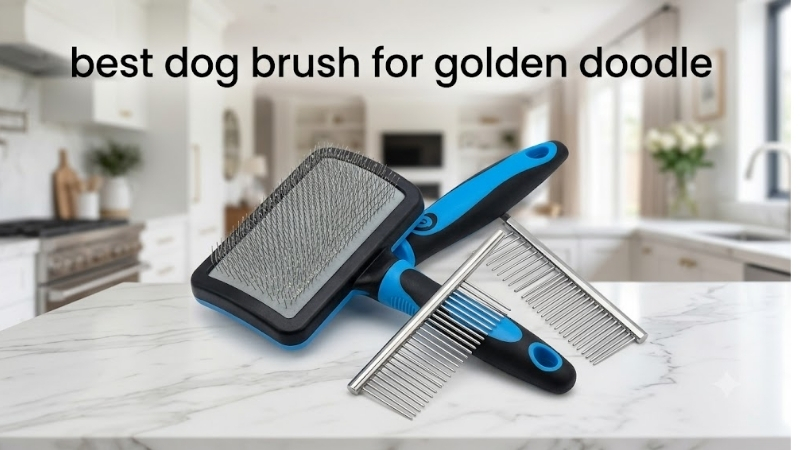
A soft slicker is all the tool you need here. It clears the small amount of loose fluff without pulling, it costs little enough that replacing it after the coat changes is no loss, and it lets you practise the technique before the coat starts genuinely testing you.
Two short sessions a week is plenty at this age, ideally ending with something the puppy enjoys. Owners who skip this stage often find their doodle resents grooming for life, which becomes a serious problem once the adult coat needs attention every other day.
The Coat Transition at Eight to Fourteen Months
This is where doodle owners get caught out badly. Somewhere between roughly eight and fourteen months the puppy coat is replaced by the adult one, and for those weeks the two coats sit on the dog at once, which produces matting at a speed nobody is prepared for.
The kit needs upgrading before it starts, not after. A proper slicker with long flexible pins and a steel comb are both necessary by this point, because the short-pinned puppy brush will slide across the surface while mats form quietly at the base of the coat.
Frequency has to rise too, to daily or every other day through the transition. Many dogs arrive at their groomer badly matted during these months, and the honest outcome in that situation is usually a short clip rather than hours of uncomfortable dematting.
The Adult Curly Coat
Once the adult coat settles, the routine stabilises but does not get easier. Curly coats hold every shed hair inside the coat rather than dropping it, so brushing to the skin every other day is what keeps a doodle comfortable between professional grooming appointments.
Line brushing is the only method that genuinely works on this coat. Part the hair, brush the exposed layer outwards from the skin, move the parting up an inch and repeat, then check each section with a comb before moving on to the next area of the body.
Consistency beats intensity at this stage. Fifteen minutes every other day keeps an adult coat comfortable, while an hour once a fortnight leaves mats forming in between, which is why the best dog brush for golden doodle routines are built around short frequent sessions.
Senior Dogs and Shorter Clips
Older doodles often do better in a shorter trim. Standing for long grooming sessions becomes uncomfortable with stiff joints, and keeping the coat clipped shorter reduces both the brushing time and the risk of mats forming in the areas the dog no longer reaches.
Tool choice softens accordingly. A gentler slicker and a comb are usually enough on a shorter coat, sessions can be split into two or three short ones through the day, and any dog that becomes reluctant to be handled deserves a veterinary check rather than more persistence.
Watch the areas the dog stops maintaining. Older dogs groom themselves less, so the base of the tail, the hindquarters and the area around the back legs need more attention from you than they did when the dog was younger and more flexible.
Top Picks: Best Dog Brush for Golden Doodle Owners at Each Stage
Every tool in this best dog brush for golden doodle lineup maps onto one of the stages above rather than competing with the others. Most doodle owners will buy two or three of them across the dog’s first two years, starting cheap and upgrading as the adult coat arrives and the sessions get longer.
| Tool | Type | Stage | Tier |
|---|---|---|---|
| Chris Christensen Big K | Slicker | Puppy and small areas | Premium |
| Andis Premium Large Slicker | Slicker | Coat transition onwards | Mid |
| Andis Steel Pet Comb | Steel comb | All stages | Mid |
| Wahl Curved Slicker Brush | Curved slicker | Adult coat | Budget |
| Safari Dematting Comb | Dematting tool | Early tangles | Budget |
Chris Christensen Big K Slicker Brush
The smaller sibling of the brush most doodle owners eventually buy, this suits puppies and detail work. The pin quality is the same as the full-size version, so it reaches the skin properly, while the compact head handles faces, ears and legs where a large brush is clumsy.
It is expensive for a puppy brush, which is difficult to justify if you are not yet sure how much grooming you will do yourself. The smaller head also means covering an adult doodle’s body takes noticeably longer than with a full-size slicker.
Andis Premium Large Slicker Brush
Once the coat transition begins, this is the sensible workhorse. Long flexible pins reach through a thickening coat to the skin, the wide head covers a large dog quickly, and the price sits well below professional show brushes while performing the same essential job.
Flexible pins still demand a light touch, since pressing hard scratches the skin underneath rather than removing more hair. The handle also suits medium hands better than large ones, which matters during the fifteen-minute sessions this coat needs every other day.
Andis Steel Pet Comb
A comb is not optional on any doodle coat, at any age. Steel teeth are the only honest test of whether you have actually brushed to the skin, and finding a tangle with a comb takes two seconds while finding it with your eyes takes about three weeks.
It removes very little loose hair on its own, so it works alongside a slicker rather than replacing one. The teeth also catch painfully on established mats, which need working loose gently or handing over to a groomer with clippers instead.
Wahl Curved Slicker Brush
The curved head follows the shape of a dog’s body, which helps on the chest, shoulders and hindquarters where a flat brush lifts away from the skin. It is comfortable for longer sessions and priced low enough to keep a second one in the car or at a relative’s house.
Pin length is shorter than a professional slicker, so it works better on a maintained coat than a thick or neglected one. It is a good everyday brush between deeper sessions rather than the tool that will rescue a coat that has been left too long.
Safari Dematting Comb
Small tangles caught early can be split apart rather than cut out. The curved blades work through a developing knot in a few strokes, saving that section before it becomes a proper mat, and the handle gives enough control to work carefully near the body.
Blades near a moving dog always carry risk, so this is strictly for small tangles rather than established mats. Anything sitting tight against the skin should go to a groomer, since pulling at a serious mat hurts and can tear the skin beneath it.
Frequently Asked Questions
Doodle owners ask the same questions as the coat changes, usually about when the transition actually starts, why matting suddenly appears despite apparently regular brushing, and how much of the work can realistically be done at home between appointments.
When does the coat transition happen?
Usually between eight and fourteen months, though it varies by individual. The signs are matting appearing faster than before, a coat that feels denser near the skin, and more loose hair coming out on the brush than the dog has ever produced previously.
Do I need to change brushes as the dog grows?
Most owners do. The best dog brush for golden doodle puppies is a soft slicker that would be useless on a mature curly coat, so budget for an upgrade to a longer-pinned slicker and a steel comb before the transition begins rather than after.
How long should each session take?
Around fifteen minutes for an adult coat done properly, split into shorter sessions if the dog will not settle. Speed comes from technique rather than rushing, and a systematic pass with line brushing beats twice as long spent brushing the surface.
Can I skip brushing if the dog is clipped short?
Not entirely, though a shorter coat is far more forgiving of a missed session. Mats still form behind the ears, under the collar and in the armpits, so a quick comb through those areas twice a week keeps a clipped doodle comfortable between appointments.
See More:
- Best robot vacuum dog hair
- Best robot vacuum cleaner for dog hair
- Best robotic vacuum cleaner for dog hair
- Best dog deshedding shampoo
Final Thoughts
The best dog brush for golden doodle coats depends on the dog’s age as much as the coat type. Start cheap and build the handling habit as a puppy, upgrade to a proper slicker and steel comb before the coat transition, then commit to line brushing every other day.




Write Your Review
No reviews yet. Be the first to share your experience!