
Key takeaways
Best way to get dog hair off couch depends almost entirely on what your couch is made of. Hair sits on top of tight-weave polyester and can be lifted with a roller, but it works itself into microfibre and chenille where it needs to be raked out. One tool rarely covers both, so match the mechanism to the weave first.
Our top picks


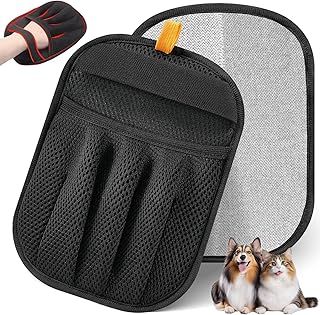


As an Amazon Associate we earn from qualifying purchases at no extra cost to you. Ratings are shown as listed on Amazon.
As an Amazon Associate we earn from qualifying purchases.
🛒 Best Price Today on Amazon
Prime members get fast, free shipping on everything above, plus member-only deals. New members get a 30-day free trial — cancel anytime.
How to Choose the Best Way to Get Dog Hair Off Couch Cushions
Before buying anything, work out which of two problems you actually have. Surface hair sitting on taut upholstery is a five-minute job for the right roller. Hair embedded in loose or napped fabric needs a different mechanism entirely, and the wrong tool on delicate fabric can damage the pile.
Fabric Type Decides the Tool
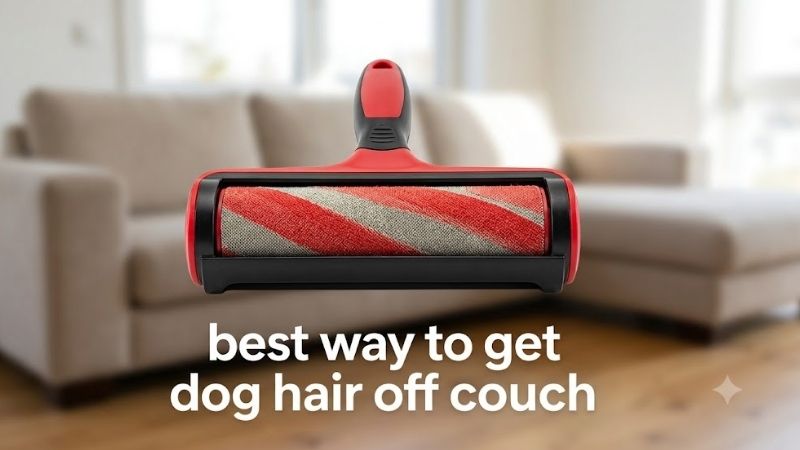
Taut, sturdy upholstery is where reusable rollers excel. On a polyester couch, testers have cleared a full cushion in around thirty seconds of back-and-forth rolling, and the mechanism gets into seams that a flat lint roller skims over entirely.
Loose weaves, blankets and throws are where the same rollers fail. They need a surface with enough tension to work against, so on a draped fabric they push hair around instead of lifting it. For those, a rubber tool or a vacuum upholstery head is the correct answer.
Leather and faux leather need neither. A damp microfibre cloth removes hair from a smooth surface in one pass, and any rubber or metal-edged tool risks marking the finish. Match the aggression of the tool to the delicacy of the fabric rather than buying the strongest option available.
Reusable Chamber vs. Disposable Sheets
Reusable rollers collect hair in a built-in chamber that you empty by hand, with no sheets, batteries or refills. Over a year with a shedding dog that is a meaningful saving, and it removes the recurring annoyance of running out of sticky sheets mid-clean.
The trade-off is capacity. Testers report the chamber on a standard reusable roller filling after roughly one cushion in a heavy-shedding home, and emptying it means opening the lid and pulling the clump out by hand. Disposable sheets are faster for large areas, just more wasteful.
There is a hygiene angle worth noting as well. Emptying a chamber by hand puts you in direct contact with collected dander every time, which matters in a household where somebody reacts to it. Rinsing a rubber tool under a tap avoids that contact almost entirely.
Static, Rubber, and Mechanical Raking
Rubber and silicone tools work by friction rather than adhesion, generating a static charge that pulls hair out of the weave. This is what makes them effective on fabric where a sticky sheet only lifts the top layer, and they rinse clean under a tap in seconds.
Metal-edged rakes and scrapers are the most aggressive option. They dig hair out of dense cushions effectively, but they will pill or snag delicate weaves. Test on a hidden section of the couch before running one across a cushion face, particularly on velvet or boucle.
Direction of stroke changes results more than most people expect. Working against the nap lifts embedded hair, while working with it simply smooths the fur back down into the weave. Short strokes in one consistent direction beat long passes back and forth on almost every fabric.
Cost, Gifting Season, and Doing It Before Guests Arrive
This is one of the few pet categories where the cheap answer genuinely beats the expensive one. A reusable roller costs a fraction of a handheld vacuum and needs no power, which matters when household budgets are tighter even as overall pet spending keeps rising.
Demand is sharply seasonal. December is the strongest month of the year for gift-for-dog-lovers searches, and it is also when people notice their furniture for the first time in months because guests are coming. Small, useful tools like these sell heavily as stocking fillers.
The other spike is spring. Coat changes from March through May put more hair on furniture than any other period, and it coincides with the point at which people start opening windows and looking properly at their sofas. Buying ahead of that is cheaper than buying during it.
Top Tools: Best Way to Get Dog Hair Off Couch
These six cover every fabric and budget, and each represents a different mechanism rather than six versions of the same thing. Whichever is the best way to get dog hair off couch fabric in your house will depend on the upholstery you are working with.
| Tool | Mechanism | Best For |
|---|---|---|
| ChomChom Roller | Reusable roller, no batteries | Taut upholstery |
| ChomChom Roller & Rake | Roller plus rake head | Mixed fabric types |
| Delomo Pet Hair Remover Roller | Reusable, large fur bin | Heavy shedders |
| Bissell Pet Hair Eraser 2390 | Handheld vacuum | Deep cushion cleaning |
| Uproot Cleaner Pro | Metal-edged rake | Dense, durable fabric |
| FURemover Lint Brush | Natural rubber | Delicate weaves |
ChomChom Roller
The default recommendation, and deservedly so on the right surface. Measuring roughly 7.5 by 7.5 by 2.25 inches, it needs no batteries, sheets or refills, and the back-and-forth motion reaches into cushion seams where a flat roller cannot. On taut polyester it clears a cushion in about half a minute.
The collection chamber is small enough to fill after a single cushion in a heavy-shedding home, and emptying it means opening the lid and pulling the clump out by hand. It also performs poorly on clothing, blankets and loose fabric, so treat it as an upholstery tool specifically.
ChomChom Roller & Rake
The same roller mechanism with a rake attachment, which extends it to the surfaces the original struggles with. The rake loosens hair bedded into a napped fabric, then the roller collects it, which is the two-step process most people end up improvising anyway.
It costs more than the standard version and the rake still needs care on delicate fabric. If your couch is entirely tight-weave polyester you are paying for an attachment you will never use, so buy this only if you have a mix of surfaces.
Delomo Pet Hair Remover Roller
Delomo’s version follows the same reusable principle but with a larger fur bin, which addresses the single most common complaint about this category. In a household with a heavy shedder, fewer stops to empty the chamber makes a real difference across a three-seat sofa.
Build quality is a step below the market leader and the larger body is less comfortable in the hand on smaller surfaces such as dining chairs. It shares the same weakness on loose fabric, since the mechanism is fundamentally the same.
Bissell Pet Hair Eraser 2390
When hair has gone past the surface, a handheld vacuum is the only thing that reaches it. This is the model most often named as the best handheld for pet hair, with a motorised upholstery tool that agitates fabric rather than just applying suction to it.
It is corded on most configurations, which limits reach, and it is noticeably loud in a small room. It is also overkill for a quick tidy before guests arrive, so most households end up using it monthly rather than daily.
Uproot Cleaner Pro
A manual rake with a metal edge, designed to dig hair out of dense cushions and carpet without batteries or adhesive. On tough, hard-wearing fabric it pulls out material that rollers and vacuums leave behind, and it revitalises flattened pile as a side effect.
It is the most likely tool here to damage upholstery. On velvet, boucle, linen or any loose weave it can pill or snag, so test on a hidden panel first. It also demands real physical effort compared with a roller.
FURemover Lint Brush
The gentlest option, a handheld natural rubber brush that lifts hair by static charge without any hard edge touching the fabric. It is the safe choice for velvet and delicate weaves where you would not risk a metal rake, and it rinses clean under a tap.
It is slow across large areas, so cleaning a full three-seater takes patience. It also collects hair on the brush face rather than into a chamber, which means pulling it off between passes rather than emptying it once at the end.
Frequently Asked Questions
These come up constantly from owners trying to work out the best way to get dog hair off couch fabric without ruining it.
Does dampening the fabric first actually help?
On many fabrics it does. Lightly misting with water or wiping with a damp rubber glove clumps loose hair so it lifts in sheets rather than strands. Test on a hidden area first, avoid soaking anything, and skip this entirely on fabrics labelled dry-clean only.
Why does hair come straight back after cleaning?
Because static holds it there. Fabric that has been dry-cleaned or vacuumed carries a charge that attracts airborne fur, which is why a couch can look furry again within a day. Regular shorter sessions manage this better than one long clean per week.
Do washable couch covers solve the problem?
They shift it rather than solve it, which is often enough. A cover that goes in the machine turns a difficult upholstery job into laundry, and tight-weave covers release hair far more easily than napped upholstery. Add dryer time before washing to loosen the fur first.
Is a lint roller or a rubber tool better overall?
Rubber wins on embedded hair and reusability, lint rollers win on speed over large flat areas. Most households with a shedding dog end up owning both, using the roller for a fast tidy and the rubber tool when the cushions genuinely need it.
See More:
- Best nail grinder for big dogs
- Best nail grinder for large dogs
- Best vacuum for dog hair on rugs
- Best Roomba for dog hair
- Best dog hair broom
Final Thoughts
The best way to get dog hair off couch cushions is to match the mechanism to the fabric rather than buying the most aggressive tool available. A reusable roller handles taut upholstery, rubber handles delicate weaves, a metal rake handles dense hard-wearing fabric, and a handheld vacuum handles anything that has gone deep.




Write Your Review
No reviews yet. Be the first to share your experience!