
Key takeaways
- Choosing by dog weight alone: Two dogs with the same weight can have very different body lengths and widths. Measure the dog, not just the scale number.
- Buying the smallest table that technically fits: A dog may fit on a 24-inch top but still lack room to turn or stand comfortably. Extra length is especially valuable for drying and brushing.
- Forgetting the grooming arm: An arm can add several inches to the table’s overall height and may need space behind or beside the tabletop.
- Confusing static capacity with safe working size: A 330-pound rating does not mean every dog should use a narrow table. Stability, width, and restraint hardware matter.
- Ignoring the handler’s height: A low, fixed table can cause back strain. Adjustable legs or a height-adjustable arm may be worth paying for.
- Measuring only the room: Include the table’s legs, arm, storage drawer, and the space you need to stand and move.
- Skipping the surface check: A slick tabletop encourages slipping and can make a dog anxious. Choose a textured, non-slip, washable mat.
The Short Answer
For most dogs, the right grooming table is 30 to 36 inches long and 18 to 24 inches wide. Small dogs usually need a 24- to 30-inch table, while medium dogs are more comfortable on a 36- to 46-inch model. Choose a tabletop that is at least 4 to 6 inches longer than your dog’s body, measured from the base of the neck to the base of the tail.
Width matters just as much. Your dog should be able to stand, turn around, and shift position without stepping off the edge. As a practical rule, the tabletop should be at least 6 inches wider than your dog’s shoulder-to-shoulder measurement. A grooming arm, secure loop, and non-slip surface are also important, but they do not replace adequate tabletop space.
Our top picks
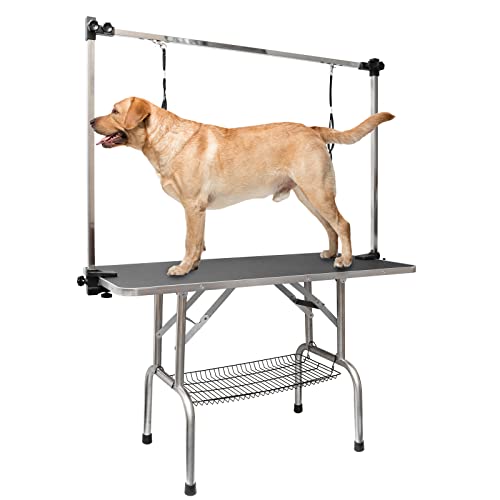 ROOMTEC 46" Dog Grooming Table
- Product Group: Pet Products
- Binding: Target
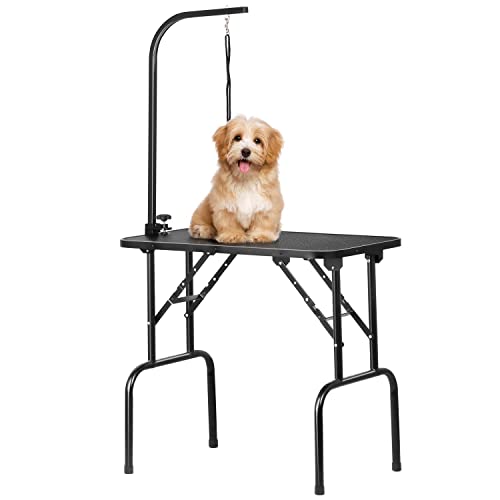
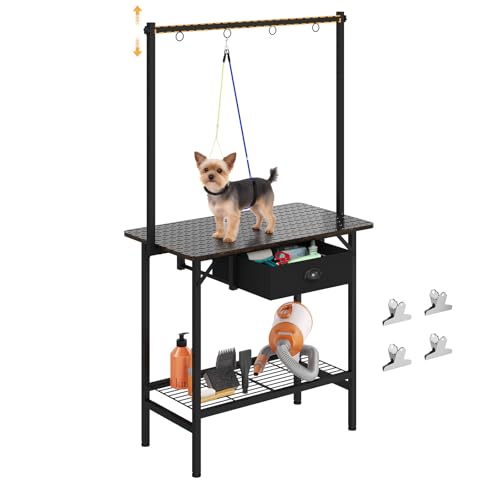

As an Amazon Associate we earn from qualifying purchases at no extra cost to you. Ratings are shown as listed on Amazon.
For home grooming, a folding 32-inch table is a versatile choice for many small and medium dogs. A 46-inch table is better for larger breeds or anyone who wants more room for brushing, drying, and repositioning. In this 2026 guide, the listed tabletop dimensions refer to the usable grooming surface, not the folded storage size.
Standard Sizes
Grooming tables are commonly sold by tabletop length. Widths vary by brand, so check the full product dimensions before ordering. The table below shows useful size ranges rather than a strict industry standard.
| Table size | Top dimensions | Top dimensions in centimeters | Best for | Typical weight capacity |
|---|---|---|---|---|
| 24-inch small | 24 x 18 inches | 61 x 46 cm | Toy breeds and small puppies | Up to 100 lb |
| 30-inch compact | 30 x 18 to 20 inches | 76 x 46 to 51 cm | Small dogs and compact home use | Up to 150 lb |
| 32-inch standard | 32 x 20 to 22 inches | 81 x 51 to 56 cm | Small and medium dogs | Up to 200 lb |
| 36-inch medium | 36 x 22 to 24 inches | 91 x 56 to 61 cm | Medium dogs and long-bodied breeds | Up to 250 lb |
| 46-inch large | 46 x 24 to 26 inches | 117 x 61 to 66 cm | Large dogs and extra grooming room | Up to 330 lb |
These weight ratings are maximum static capacities, not recommendations for placing an oversized dog on a small tabletop. The dog’s weight, movement, and the force used while brushing can all affect stability. A 70-pound dog that shifts suddenly may place more stress on a table than a still 90-pound dog.
Table height is another sizing factor. Many folding models adjust from roughly 28 to 40 inches high, or about 71 to 102 cm. The ideal height lets you groom with your elbows slightly bent and your back relatively straight. For most adults, a tabletop around 30 to 36 inches high is comfortable. Adjustable legs or an adjustable grooming arm can make a table more useful for people of different heights.
A 32-inch table such as the Yaheetech model is a common home size, with example prices in the $60 to $80 range. A 46-inch model, such as the ROOMTEC or VEVOR options, generally costs about $100 to $140. Tables with drawers, extra arms, mesh trays, or more substantial frames may cost more, but features should not outweigh a suitable tabletop.
How to Measure Your Space
- Measure your dog’s body length. Have your dog stand naturally. Measure from the base of the neck to the base of the tail, rather than including the head or tail. Add 4 to 6 inches to determine the minimum tabletop length.
- Measure shoulder width. Measure across the widest part of the shoulders or rib cage. Add at least 6 inches to find a practical minimum table width. Add more for a nervous, heavy-coated, or very active dog.
- Check the grooming arm clearance. The arm may extend 20 to 36 inches above the tabletop. Measure upward from the floor and make sure it will not hit shelves, cabinets, ceiling fans, or low windows.
- Allow standing room. Leave at least 24 inches of clear space on the working side of the table. About 30 to 36 inches is more comfortable if you will use a dryer, brush, clippers, or storage cart.
- Measure doors and storage routes. A table that fits the grooming area may not fit through a closet door. Check the folded dimensions, usually around 36 to 48 inches long for a folding table, along with doorways and stair turns.
- Account for wet grooming. If you will bathe or blow-dry your dog nearby, choose a space with a water-resistant floor. Keep electrical outlets, power strips, and cords away from splashing water.
- Check the floor. A level, hard floor is safer than thick carpet. Place the table where all feet can sit flat, and use the manufacturer’s locking pins or braces before putting your dog on top.
By Room or Use Case
Small apartment or bedroom
A 24- or 30-inch table usually works best where floor space is limited. Look for a folding frame with a tabletop about 18 to 20 inches wide. A table with a removable mesh tray can help collect loose hair without requiring a permanent grooming station. Store it vertically in a closet, but verify the folded depth and weight. Many compact tables weigh about 20 to 35 pounds, which is manageable for one person.
Bathroom or laundry room
A 32-inch table is a practical middle ground for routine brushing, nail trimming, and drying. Keep it far enough from the bathtub or sink that the legs will not sit in standing water. A waterproof or washable mat is preferable, and metal hardware should be dried after wet grooming. For a small dog, a drawer-equipped 32-inch table may provide convenient storage for combs, towels, and nail tools.
Garage or dedicated grooming area
If you have a permanent work area, consider a 36- or 46-inch table. The extra length is helpful for medium dogs, long-backed breeds, and dogs that need frequent coat maintenance. A 46-inch model can also give you space for a dryer hose or grooming supplies, but it needs more clearance around every side. Check that the garage floor is level and that temperature and ventilation are safe for your dog.
Large or restless dogs
Choose the largest suitable tabletop rather than relying on a short table and a tight restraint. A 46-inch table measuring about 46 x 24 inches provides substantially more standing room than a 32-inch model. Look for a reinforced frame, non-slip mat, two adjustable arms, and a rated capacity comfortably above your dog’s weight. Never leave a dog unattended on a grooming table, regardless of its size or weight rating.
Travel or occasional grooming
Prioritize folded size and carrying weight. A table weighing 20 to 30 pounds is easier to move than a heavy professional model, but make sure its locking legs cannot fold accidentally. For travel, a 24- or 30-inch top is often adequate for small dogs. Medium and large dogs generally need a longer table, even if that makes transport less convenient.
Common Sizing Mistakes
- Choosing by dog weight alone: Two dogs with the same weight can have very different body lengths and widths. Measure the dog, not just the scale number.
- Buying the smallest table that technically fits: A dog may fit on a 24-inch top but still lack room to turn or stand comfortably. Extra length is especially valuable for drying and brushing.
- Forgetting the grooming arm: An arm can add several inches to the table’s overall height and may need space behind or beside the tabletop.
- Confusing static capacity with safe working size: A 330-pound rating does not mean every dog should use a narrow table. Stability, width, and restraint hardware matter.
- Ignoring the handler’s height: A low, fixed table can cause back strain. Adjustable legs or a height-adjustable arm may be worth paying for.
- Measuring only the room: Include the table’s legs, arm, storage drawer, and the space you need to stand and move.
- Skipping the surface check: A slick tabletop encourages slipping and can make a dog anxious. Choose a textured, non-slip, washable mat.
FAQ
What size grooming table do I need for a 10-pound dog?
A 24-inch table with an 18-inch width is usually sufficient, provided your dog’s body length is no more than about 18 to 20 inches. A 30-inch table offers more room for brushing and may be the better choice for a long-bodied dog or a puppy expected to grow.
Is a 32-inch grooming table big enough for a medium dog?
It depends on the dog’s body length and width. A 32-inch table can work for a compact medium dog, especially one under about 35 pounds. For a long-backed or broad dog, a 36- or 46-inch table is more comfortable and easier to use safely.
How wide should a dog grooming table be?
Plan for at least 6 inches more width than your dog’s shoulder measurement. Most home tables are 18 to 24 inches wide. Choose 24 inches or more for a large, fluffy, or restless dog, as long as the surrounding room allows safe access.
Can a grooming table be too big for a dog?
Yes, although a little extra space is usually helpful. A very large tabletop can make a small dog feel exposed and may make it harder to reach the dog while grooming. Use a secure, correctly adjusted grooming loop, keep the surface non-slip, and choose a size that gives the dog room to stand without leaving excessive empty space.




Write Your Review
No reviews yet. Be the first to share your experience!