
Key takeaways
- Gentle cleansers: Ingredients such as decyl glucoside, coco-glucoside, sodium cocoyl isethionate, and other coconut- or sugar-derived surfactants are commonly used in milder formulas. Their source alone does not guarantee that every dog will tolerate them, but they may be preferable to harsh, heavily degreasing cleansers.
- Moisturizers and conditioners: Glycerin helps attract moisture. Panthenol, aloe, colloidal oatmeal, sunflower oil, jojoba oil, and certain plant-derived conditioners can support a softer-feeling coat. These ingredients are helpful, but their position on the ingredient list matters: ingredients near the end may be present in relatively small amounts.
- Colloidal oatmeal: This is a familiar choice for dry or mildly irritated skin. It can soothe some dogs, but an oatmeal formula is not automatically appropriate for every allergy-prone dog.
- Fragrance and essential oils: Fragrance can be a problem for sensitive dogs even when a product smells mild to people. Tea tree, peppermint, eucalyptus, citrus, and other essential oils deserve special caution. Never apply concentrated essential oils directly to a dog.
- Preservatives: Preservatives are necessary in many water-based products to control microbial growth. Avoiding every preservative is not automatically safer; instead, watch for a known individual sensitivity and use products with intact packaging and clear labeling.
Choosing dog shampoo by scent, bottle size, or a “natural” badge is easy—and often misleading. A shampoo can smell pleasant while irritating sensitive skin, or promise soothing relief without containing much of the ingredient named on the front label. The best way to shop is to read the ingredient panel first, then match the formula to your dog’s coat, skin condition, bathing routine, and veterinarian’s advice.
This guide explains what to look for in dog shampoo ingredients in 2026, including which ingredients are useful, which claims deserve scrutiny, and how to compare inexpensive everyday formulas with premium sensitive-skin products. Product prices below are typical examples from the supplied options and can change by retailer or package size.
Our top picks
 Wahl USA Dry Skin & Itch Relief
- Product Group: Pet Products
- Binding: Target
| Product | Key specs | Amazon rating | |
|---|---|---|---|
| Wahl USA Dry Skin & Itch Relief | Product Group: Pet Products Binding: Target | 4.0★ | Check price |
 Earth Rated Deshedding Hypoallergenic Dog Shampoo & Earth Rated Deshedding Hypoallergenic Dog Shampoo & | – | Check price | |
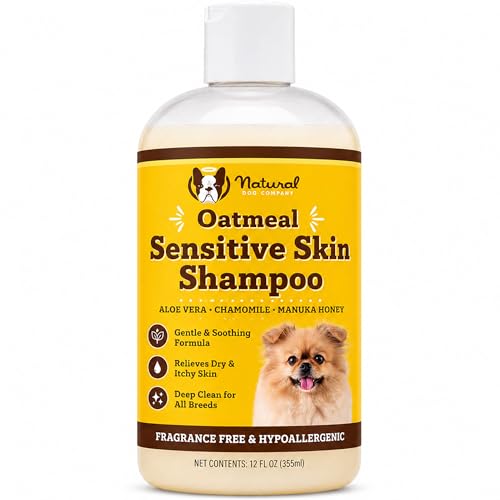 Natural Dog Company Sensitive Skin Dog Shampoo Natural Dog Company Sensitive Skin Dog Shampoo | – | Check price | |
 Wahl USA Dry Skin & Itch Relief Wahl USA Dry Skin & Itch Relief | Product Group: Pet Products Binding: Target | 4.6★ | Check price |
As an Amazon Associate we earn from qualifying purchases at no extra cost to you. Ratings are shown as listed on Amazon.
Decide These 3 Things First
- Is your dog healthy, dry-skinned, itchy, or medically affected? Mild dryness may call for a moisturizing shampoo, while persistent itching, odor, redness, hair loss, sores, or recurring infections warrant veterinary guidance. A cosmetic shampoo cannot replace treatment for allergies, parasites, yeast, or bacterial disease.
- How often will you bathe? Occasional bathing gives you more flexibility. Dogs bathed weekly or after frequent outdoor activities benefit from a gentle, soap-free formula with fewer potential irritants.
- What can your dog tolerate? Decide whether fragrance, essential oils, plant extracts, oatmeal, coconut-derived cleansers, or preservatives have caused problems before. “Natural” does not automatically mean hypoallergenic.
Size: Choose the Bottle for Your Bathing Schedule
In dog shampoo, size means both the bottle volume and the amount used per bath. Common packages range from 12 to 24 ounces, while refill or household-size bottles reach 64 ounces. A 12-ounce bottle is practical for a small dog bathed every few months; a 64-ounce bottle can make more sense for a large, muddy dog or a multi-pet household.
Do not compare price by bottle alone. Calculate the cost per ounce. The 12-ounce Natural Dog Company Sensitive Skin Dog Shampoo for under $20 works out to about $1.25 per ounce. The 16-ounce Earth Rated Deshedding Hypoallergenic Dog Shampoo & Conditioner for under $20 is about $1.06 per ounce. Wahl’s 24-ounce oatmeal formula for under $10 is about $0.33 per ounce, while its 64-ounce version for under $20 is about $0.31 per ounce.
Large bottles are economical, but they are not always the best choice for a dog with a suspected sensitivity. Buy the smallest reasonable size first if you are testing a new formula. Check whether the pump or cap can be closed securely; repeated exposure to water can dilute shampoo and encourage contamination.
Material: Read the Ingredient Families, Not Just the Front Label
“Material” is best understood as the formula’s ingredient system. Look for a mild cleansing base, useful conditioning ingredients, and a short list of unnecessary extras.
- Gentle cleansers: Ingredients such as decyl glucoside, coco-glucoside, sodium cocoyl isethionate, and other coconut- or sugar-derived surfactants are commonly used in milder formulas. Their source alone does not guarantee that every dog will tolerate them, but they may be preferable to harsh, heavily degreasing cleansers.
- Moisturizers and conditioners: Glycerin helps attract moisture. Panthenol, aloe, colloidal oatmeal, sunflower oil, jojoba oil, and certain plant-derived conditioners can support a softer-feeling coat. These ingredients are helpful, but their position on the ingredient list matters: ingredients near the end may be present in relatively small amounts.
- Colloidal oatmeal: This is a familiar choice for dry or mildly irritated skin. It can soothe some dogs, but an oatmeal formula is not automatically appropriate for every allergy-prone dog.
- Fragrance and essential oils: Fragrance can be a problem for sensitive dogs even when a product smells mild to people. Tea tree, peppermint, eucalyptus, citrus, and other essential oils deserve special caution. Never apply concentrated essential oils directly to a dog.
- Preservatives: Preservatives are necessary in many water-based products to control microbial growth. Avoiding every preservative is not automatically safer; instead, watch for a known individual sensitivity and use products with intact packaging and clear labeling.
Look for a complete ingredient list rather than relying on phrases such as “pet friendly,” “botanical,” or “chemical-free.” Everything in a shampoo is a chemical substance, including water and plant extracts.
Construction: Evaluate How the Formula Is Built
A well-constructed dog shampoo balances cleaning power with skin comfort. A product that removes heavy grease may leave a dry coat if used too often, while a very rich conditioner may weigh down a fine coat or leave residue.
Soap-free formulas are often a sensible starting point because traditional soap can be drying and may perform poorly in hard water. A dog-specific formula should also be designed for canine skin rather than simply repackaged human shampoo. Human products can have different fragrance systems, cleansing strength, and pH targets.
Check the label for dilution instructions. Some professional shampoos are designed to be diluted, such as 1 part shampoo to 10 or 20 parts water. Do not assume that a concentrated product is cheaper until you account for the final usable volume. A ready-to-use 24-ounce bottle may be simpler for occasional home bathing, while a concentrate may suit frequent washing when the instructions are clear.
Be wary of “2-in-1” claims if your dog has a sensitive coat. Combining shampoo and conditioner can be convenient, but a separate, fragrance-free conditioner may offer more control. For a deshedding product, confirm that it is intended for routine bathing and does not rely on aggressive stripping to remove loose hair.
Comfort and Performance: Match Ingredients to the Problem
For routine cleaning, prioritize a mild cleanser, easy rinsing, and no strong lingering fragrance. The shampoo should remove dirt without leaving the coat squeaky, waxy, or greasy. A dog that scratches more after bathing is giving you useful feedback, even if the product was marketed for sensitive skin.
For dry skin, consider glycerin, panthenol, aloe, or colloidal oatmeal, and reduce bathing frequency if your veterinarian agrees. Use lukewarm—not hot—water, rinse for at least 2 to 3 minutes, and dry the coat thoroughly without overheating the skin.
For shedding, shampoo can loosen some dead coat, but it cannot replace brushing. A rubber curry, slicker brush, or undercoat rake used appropriately for the coat type usually has a larger effect. Avoid products that promise to stop shedding entirely.
For odor, determine the cause instead of masking it with perfume. Persistent odor from the ears, skin folds, paws, or entire coat may need veterinary evaluation. A heavily fragranced shampoo can make it harder to notice whether the underlying problem is improving.
Keep shampoo away from the eyes, mouth, and inside of the ears. Even a gentle ingredient can sting in the wrong location. Patch-testing a small area is reasonable for a dog with a history of reactions, but stop using the product if redness, swelling, hives, vomiting, or unusual distress appears.
Price Tiers: Compare Value, Not Just “Natural” Claims
- Budget: about $0.25 to $0.60 per ounce. These formulas are often practical for regular cleaning and larger households. Wahl’s 24-ounce oatmeal shampoo is listed for under $10, and the 64-ounce size for under $20. Check the full ingredient list and fragrance level rather than assuming a low price means poor quality.
- Mid-range: about $0.75 to $1.25 per ounce. The Earth Rated 16-ounce shampoo and conditioner is listed for under $20, or about $1.06 per ounce. This tier often emphasizes hypoallergenic positioning, coat conditioning, or specialty uses.
- Premium: about $1.25 per ounce and up. The Natural Dog Company 12-ounce sensitive-skin shampoo is listed for under $20, or about $1.25 per ounce. A higher price may reflect packaging, specialty ingredients, or smaller-batch positioning, but it does not prove the formula will suit your dog.
For the best value, compare cost per ounce, dilution instructions, rinse time, and whether you will actually use the entire bottle before the formula expires or changes in smell and texture.
Warranty: Focus on the Return and Reaction Policy
Dog shampoo rarely has a conventional warranty. Instead, check the retailer’s return window, damaged-package policy, and satisfaction guarantee before opening the bottle. A 30-day return period is common, but opened personal-care products may be excluded.
Save the receipt and photograph the label if your dog develops a reaction. Record the product name, lot or batch code, bath date, and symptoms. That information can help your veterinarian and the manufacturer investigate a possible sensitivity. Do not keep using a product simply because it was expensive or labeled hypoallergenic.
Delivery and Assembly: Packaging Matters More Than Setup
There is no assembly, but shipping can affect the product. Select a bottle with a sealed cap, shrink band, or leak-resistant pump. Inspect the package on arrival for cracks, loose caps, separation, an off odor, or a major change in color. Do not use a product that arrived hot, leaking, or visibly contaminated.
Store shampoo upright at normal indoor temperatures, away from direct sun and freezing conditions. A 64-ounce bottle may be economical, but divide it into smaller clean containers only if the manufacturer permits it; transferring products can introduce contamination and remove important labeling.
Spec Checklist
| Spec | Budget | Mid | Premium |
|---|---|---|---|
| Typical size | 24–64 oz | 16–24 oz | 12–16 oz |
| Typical price | $8–$20 | $15–$25 | $15–$30+ |
| Best use | Routine cleaning and multi-pet homes | Conditioning, deshedding, or frequent bathing | Targeted sensitive-skin routines |
| Ingredient priorities | Mild cleanser, oatmeal or glycerin | Gentle cleanser plus conditioning ingredients | Shorter ingredient list and fragrance-free options |
| Cost per ounce | $0.25–$0.60 | $0.75–$1.25 | $1.25+ |
| What to verify | Fragrance, rinseability, complete label | Coat-specific claims and dilution instructions | Return policy and known sensitivities |
Red Flags
- “Chemical-free” or “100% safe” claims with no complete ingredient list.
- Strong perfume used to cover persistent skin or coat odor.
- Undiluted essential oils, especially tea tree, eucalyptus, peppermint, or citrus oils.
- Human shampoo presented as suitable for dogs without canine-specific directions.
- Promises to cure allergies, infections, hot spots, or parasites without veterinary oversight.
- No manufacturer name, lot code, contact information, or usage instructions.
- Packaging that is leaking, swollen, separated, or noticeably different from the product description.
FAQ
What ingredients should I avoid in dog shampoo?
There is no universal avoid list for every dog, but be cautious with heavy fragrance, concentrated essential oils, harsh degreasers, and formulas that have previously caused a reaction. Ask your veterinarian about specific ingredients if your dog has allergies or chronic skin disease.
Is oatmeal dog shampoo good for itchy skin?
Colloidal oatmeal can help soothe mild dryness or irritation for some dogs. It will not treat every cause of itching, including fleas, food reactions, yeast, bacteria, or environmental allergies. Persistent itching needs a professional diagnosis.
Is fragrance-free better than scented shampoo?
Fragrance-free is often the safer starting point for dogs with sensitive skin or a history of reactions. A scented shampoo is not automatically harmful, but fragrance can irritate some dogs and may hide an underlying odor problem.
How often should I bathe my dog?
Many healthy dogs do well with bathing every 4 to 8 weeks, adjusted for coat type, activity, and veterinary advice. Dogs bathed more often should generally use a mild, moisturizing formula and be rinsed thoroughly. If frequent bathing is needed because of a medical condition, follow the treatment schedule supplied by your veterinarian.






Write Your Review
No reviews yet. Be the first to share your experience!