
Our Top Picks
Pros & cons
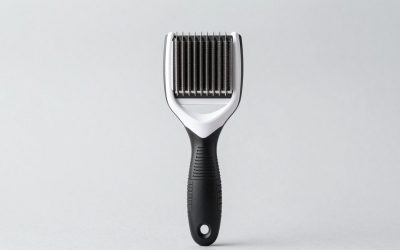
- Dual-sided design pairs a 9-tooth and 17-tooth comb in one tool
- Rounded teeth are designed to reduce irritation while deshedding
- Non-slip rubber base helps keep the brush steady during use
- Dense double coats may require repeated passes for full deshedding
- Metal teeth need periodic cleaning to clear trapped hair
For most owners with medium to long coats, the Coastal Pet Safari De-Matting Comb is the best overall dematting comb on this list: it is a serrated stainless steel tool made for dogs with medium to long hair. Owners of curly or wavy coats will like the serrated mat remover built for those coat types, and the rake-style combs suit thick undercoats. A dematting comb is a grooming tool with blunt or serrated teeth that cut into small knots and mats so you can work them apart, ideally before they tighten against the skin.
Quick List
- Coastal Pet Safari De-Matting Comb – best for medium to long coats
- Poodle Dematting Fur Rake with 2.5-Inch Blades – best for matted or knotted undercoat
- Serrated Mat Remover for Curly Coats – best for wavy and curly coats
- Professional 3-Piece Slicker, Rake and Flea Comb Set – best as a multi-tool grooming kit (set, not a single comb)
- Serrated Dematting Comb for Dogs and Cats – best for a straightforward serrated comb for light to moderate mats
- Maxpower Planet Grooming Rake – best for deshedding plus gentle dematting on long coats
Which One Is Right for You?
| If you… | Choose |
|---|---|
| Brush a golden, Shih Tzu or other medium to long coat | Coastal Pet Safari De-Matting Comb |
| Need to break up tangles in a thick undercoat | Poodle Dematting Fur Rake |
| Have a poodle, doodle or other curly coat | Serrated Mat Remover for Curly Coats |
| Want a slicker, a rake and a flea comb in one purchase | Professional 3-Piece Set |
| Want a simple serrated comb for dogs and cats | Serrated Dematting Comb for Dogs and Cats |
| Need to remove shedding undercoat as well as tangles | Maxpower Planet Grooming Rake |
The right comb depends on the coat more than the brand. Short, tightly curled coats mat differently from silky long coats, and a double coat sheds in clumps that can look like mats. Start with a comb that matches your dog’s coat type, and learn to spot the difference between a true mat, which is a tight felted knot, and simple loose undercoat, which a rake will lift out.

Coastal Pet Safari Dog De-Matting Comb - Serrated Stainless Steel Grooming Tool for Dogs with Medium to Long Hair - Keeps Coats Smooth & Soft - One Size
Chosen because it specifies Keeps Coats Smooth & Soft and One Size.
View on Amazon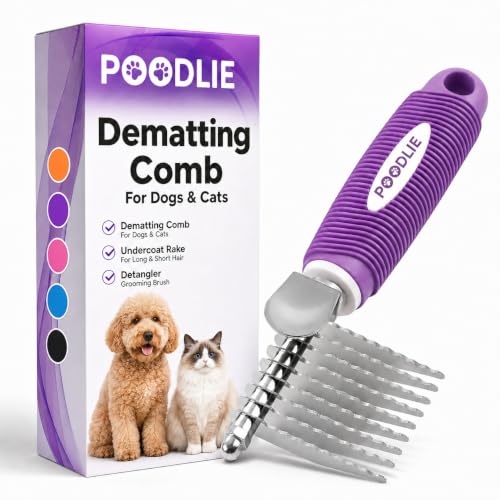
Poodle Dematting Fur Rake Comb Brush for Dogs and Cats - Long 2.5" Steel Safety Blades Metal Comb for Detangling Matted or Knotted Undercoat Hair
Picked as a relevant option in this category.
View on Amazon
Dematting Comb for Dogs - Serrated Mat Remover for Curly Coats | Dog Matting Grooming Tool for Wavy and Curly Coats; Helps Remove Knots, Mats, and Tangles with Serrated Teeth
Chosen because it specifies Serrated Mat Remover for Curly Coats and Mats.
View on Amazon
Professional 3PCS Self Cleaning Slicker Brush & Pet Grooming Rake & Flea Comb for Dogs,Cats and Horses | Double-Sided Dematting Comb & Skin Friendly Deshedding Grooming Tool | Pet Supplies
Chosen because it specifies Cats and Horses and Pet Supplies.
View on Amazon
Dematting Comb for Dogs, Dematting Tool for Dogs & Cats - Serrated Matted Hair Removal Brush - Easily Remove Knots, Mats and Tangles - Designed for Wavy & Curly Coats
Chosen because it specifies Dematting Tool for Dogs & Cats and Serrated Matted Hair Removal Brush.
View on Amazon
Maxpower Planet Dog Grooming Rake, Deshedding Undercoat Brush, Dogs & Cats | Blue Deshedding & Dematting, Extra-Wide Double-Sided Comb, Long-Haired Coats, Reduces Shedding, Original Design
Chosen because it specifies Deshedding Undercoat Brush and Dogs & Cats.
View on AmazonBe realistic about the job. A dematting comb handles small to medium mats in an otherwise healthy coat. It is not a rescue tool for a dog that has been left to mat for months. If you are starting from a badly tangled coat, plan on short sessions over several days or a visit to a groomer, and then use one of these tools to keep the coat under control afterward.
All 6 Picks in Detail
1. Coastal Pet Safari De-Matting Comb – Best for Medium to Long Coats
As an Amazon Associate we earn from qualifying purchases at no extra cost to you.

The Safari De-Matting Comb is a serrated stainless steel grooming tool for dogs with medium to long hair, and the listing says it helps keep coats smooth and soft. The serrated blades are designed to slice through small mats and tangles as you pull, and the stainless steel body resists rust. It suits owners of golden retrievers, spaniels, Shih Tzus and similar breeds who want one sturdy comb for routine tangle patrol. The listing text is cut off, so confirm the tooth spacing and the handle material on the product page.
- Type: serrated de-matting comb
- Material: stainless steel per the listing
- Coat fit: medium to long hair per the listing
- Tooth count and spacing: confirm on listing
- Handle material: confirm on listing
Pros:
- Stainless steel holds up well to repeated use
- Designed for the long coats that mat most often
Cons:
- Serrated edges need a gentle hand near the skin
- Not intended for tight, curly coats
Compared with the curly-coat mat remover, it is the better all-rounder for straighter, longer hair.
2. Poodle Dematting Fur Rake – Best for Knotted Undercoat
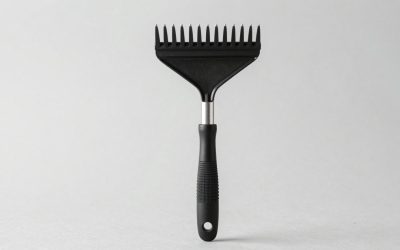
This rake-style tool uses long steel safety blades of about 2.5 inches, according to the listing, and is sold for dogs and cats with matted or knotted undercoat. A rake reaches deep into the coat, where an ordinary comb cannot go, and it is useful for thick coats that mat underneath while the top looks fine. It suits owners of poodles, doodles, double-coated breeds and long-haired cats. Check the blade spacing and handle on the product page, since the listing name does not say how many teeth it has.
- Type: dematting rake
- Blade length: about 2.5 inches per the listing
- Material: steel per the listing
- Use: dogs and cats, matted or knotted undercoat
- Tooth count and handle: confirm on listing
Pros:
- Long blades reach down into dense undercoat
- Works on both dogs and cats
Cons:
- Can feel aggressive on sensitive skin if used too firmly
- Bulkier than a simple comb in small hands
It is the deeper-reaching alternative to the Safari comb for thick coats.
3. Serrated Mat Remover for Curly Coats – Best for Wavy and Curly Coats

This serrated dematting comb is marketed for wavy and curly coats and for removing knots and mats. Curly coats mat faster than straight ones because the hair twists into itself, and the tool is designed to cut into those tangles rather than drag across them. It suits owners of poodles, bichons, doodles and similar breeds that need frequent maintenance. The listing is truncated, so confirm the number of teeth, blade length and handle design before ordering.
- Type: serrated mat remover comb
- Target coat: wavy and curly per the listing
- Function: helps remove knots and mats per the listing
- Material: confirm on listing
- Tooth spacing and length: confirm on listing
Pros:
- Made with curly coats in mind
- Serrated edge helps break apart tight knots
Cons:
- Not the right choice for a smooth, straight coat
- Material details are not in the listing name
Choose it over the Safari comb when your dog’s coat curls tightly.
4. Professional 3-Piece Slicker, Rake and Flea Comb Set – Best as a Multi-Tool Kit (Set, Not a Single Comb)

This listing is a three-piece grooming set: a self-cleaning slicker brush, a pet grooming rake and a flea comb, sold for dogs, cats and horses, with a double-sided dematting comb mentioned in the title. It is placed here as a kit rather than a dedicated dematting comb, since only part of the set is aimed at mats. A set suits owners who want one purchase that covers daily brushing, tangle work and flea checks. The listing name is truncated, so confirm exactly which pieces are included and how the dematting side is built.
- Contents: self-cleaning slicker brush, grooming rake and flea comb per the listing
- Dematting feature: double-sided dematting comb per the listing
- Animals: dogs, cats and horses per the listing
- Self-cleaning mechanism: described in the listing; confirm how it works
- Materials and tooth spacing: confirm on listing
Pros:
- Several tools cover multiple grooming jobs
- Self-cleaning slicker saves time during brushing
Cons:
- Each piece may be less specialized than a single dedicated tool
- Slicker brushes can irritate sensitive skin if pressed hard
It is the most versatile pick here, but the Safari comb is the more focused dematting tool.
5. Serrated Dematting Comb for Dogs and Cats – Best Simple Serrated Comb

This is a straightforward serrated dematting tool for dogs and cats, described as removing matted hair, knots and tangles easily. It is the plainest option on the list, a comb you can keep in a grooming drawer and use on light to moderate mats. It suits owners with a mixed household of dogs and cats who want one simple tool. The listing is truncated, so confirm the size, tooth count and handle material on the product page.
- Type: serrated dematting comb
- Use: dogs and cats, matted hair, knots and tangles per the listing
- Design: serrated teeth, as the listing states
- Material: confirm on listing
- Size and tooth spacing: confirm on listing
Pros:
- Simple design that is easy to learn
- Works for both dogs and cats
Cons:
- Few specifics in the listing name
- May not reach deep undercoat mats
It sits between the Safari comb and the rake on depth and is closest in function to the Safari.
6. Maxpower Planet Grooming Rake – Best for Deshedding Plus Gentle Dematting

The Maxpower Planet rake is a double-sided, extra-wide grooming tool described as a deshedding undercoat brush for dogs and cats that also helps with dematting. Because it lifts loose undercoat in big sweeps, it suits double-coated breeds such as huskies, shepherds and retrievers during seasonal shedding. It is a rake, not a dedicated serrated mat cutter, so it is best for light mats and general tangle prevention. The listing is truncated, so confirm tooth length and the handle on the product page.
- Type: double-sided grooming rake
- Width: extra-wide per the listing
- Function: deshedding and dematting per the listing
- Use: dogs and cats
- Tooth length and handle: confirm on listing
Pros:
- Wide head covers more coat per stroke
- Helps with seasonal shedding as well as tangles
Cons:
- Less precise on small, tight mats
- Too wide for small dogs and cats’ delicate areas
It is the best of the group for shedding control, while the serrated combs do better on tight knots.
Specs Compared
| Model | Type | Material | Best coat | Pets | Notes |
|---|---|---|---|---|---|
| Coastal Pet Safari | Serrated comb | Stainless steel | Medium to long | Dogs | Tooth count: confirm on listing |
| Poodle Dematting Rake | Rake, about 2.5 in blades | Steel | Thick undercoat | Dogs and cats | Safety blades per listing |
| Curly-Coat Mat Remover | Serrated comb | Confirm on listing | Wavy and curly | Dogs | Tooth count: confirm on listing |
| 3-Piece Professional Set | Slicker, rake and flea comb | Confirm on listing | Varies by piece | Dogs, cats, horses | Self-cleaning slicker |
| Serrated Dematting Comb | Serrated comb | Confirm on listing | Light to moderate mats | Dogs and cats | Size: confirm on listing |
| Maxpower Planet Rake | Double-sided rake | Confirm on listing | Shedding undercoat | Dogs and cats | Extra-wide head |
How We Chose These
This guide is built from desk research, not from grooming trials. We started with the six listings supplied for the topic and compared what each lists about tool type, material, blade length, intended coat and intended animal. Where a listing leaves out a detail, the article says to confirm it on the product page. We organized the picks by coat type and by how aggressively each tool works, because a serrated comb, a rake and a slicker brush solve different problems. One listing is a multi-piece set rather than a single comb, so we labeled it as such.
What to Look For
Serrated Comb, Rake or Slicker: What Each Does
A serrated dematting comb has teeth with a notched or sharpened edge that saws gently through the base of a mat as you pull. A dematting rake has longer teeth, often with a curved row of blades, and reaches into thick undercoat to split mats from the inside. A slicker brush has fine bent wires that smooth the topcoat and pull out loose hair, but it is not meant to attack a tight mat. Most groomers start with a slicker for routine care, then use a comb or rake only on knots that a slicker cannot loosen.
Match the Tool to the Coat
Straight, silky, long coats such as those on Yorkies or Shih Tzus mat close to the skin behind the ears, under the legs and along the belly, and a serrated comb works well there. Curly coats mat all over, so a comb made for curls and frequent short sessions beat occasional marathon brushing. Double coats mat underneath where you can barely see it, so a rake with longer teeth makes sense. If the coat is very short and smooth, a dematting tool is rarely needed, and a rubber brush is a better fit.
Worked example: a doodle with a 3-inch coat will usually need combing every 2 or 3 days. Five minutes on the high-mat zones, behind the ears, in the armpits and along the inner thighs, prevents most knots from forming in the first place.
Technique and Safety
Always work on a dry coat, since water tightens mats. Hold the hair at the base with one hand, near the skin, so the pull never tugs on your dog’s skin, and use short strokes from the tip of the mat toward the root. A light dusting of a coat-safe detangling spray or cornstarch can help the tool glide. Never force a comb through a mat, and stop if your dog yelps or pulls away. Serrated edges can nick the skin if you press hard or if the dog moves suddenly, so keep the dog calm and take breaks.
Large mats that sit tight against the skin, or mats that cover a big part of the body, are a job for a professional groomer or a veterinarian. Trying to cut or comb these out at home can hurt the dog, and skin under heavy matting can be sore or inflamed. If you see redness, sores or a bad smell under a mat, get professional advice rather than continuing to work on it yourself.
Keeping Tools Clean and Sharp
Rinse hair out of the teeth after each session, wipe stainless steel dry to prevent rust and store the tool with a cover over the teeth. Replace a comb that has bent, chipped or dull teeth, because a damaged edge snags rather than slices. For set tools with a self-cleaning feature, press the release after each stroke series so hair does not pack in.
Preventing Mats in the First Place
Dematting tools are a fix, and the best strategy is to stop mats from forming. Brush or comb your dog on a regular schedule that fits the coat, with extra attention to friction zones: behind the ears, under the collar or harness, in the armpits, along the inner thighs and around the tail base. Check the coat after swims, muddy walks or baths, because damp hair tangles quickly, and always dry thoroughly after bathing, brushing as you dry. Collars, harnesses and clothing rub the coat and speed up matting, so loosen or remove them when you can and check the hair beneath them every day.
Line-brushing is a technique worth learning: part the coat in layers and brush from the skin outward one section at a time, rather than skimming the top. It takes a few extra minutes, but it finds small tangles before they become mats. Pair it with a light leave-in conditioning spray made for dogs, and keep the coat trimmed to a length you can maintain. If you cannot keep up with daily care, a shorter clip is kinder to the dog than a long coat that mats and has to be shaved out.
Comb Size, Tooth Spacing and Handle Comfort
Tooth spacing decides what a tool can do. Wide-spaced teeth pass through thick coats and tackle large tangles, while closely spaced teeth give finer control on small knots and silky hair. A short comb is easier to use on small dogs and in tight spots such as the face and paws, while a long rake covers a big body faster. Handle comfort is easy to ignore until your wrist aches halfway through a session. Look for a rounded or cushioned handle that fits your grip, and make sure the head is firmly attached with no wobble, because a loose head makes the cut unpredictable.
Questions
Do dematting combs hurt dogs?
Used correctly, they should not. Work gently on a dry coat, hold the hair near the skin and stop at the first sign of discomfort. Persistent pain or heavy matting is a reason to see a groomer.
How often should I use a dematting comb?
Use it as needed on small knots, and make regular brushing the main routine. Dogs with long or curly coats may need combing every few days, while short-coated breeds may never need a dematting tool.
Is a dematting rake better than a comb?
A rake reaches deeper into thick undercoat, while a comb gives more control on small mats. Many owners keep both and choose based on the coat and the size of the knot.
Can I use the same dematting comb on a cat?
Some listings state they are designed for dogs and cats, but cat skin is thin and delicate. Use light pressure, short sessions and ask a vet or groomer if the cat resists or the mats are tight.
Should I bathe my dog before dematting?
No. Bathing a matted coat tightens the mats and makes them harder to remove. Work out the mats while the coat is dry, then bathe once the coat is tangle-free.
When should I see a professional groomer?
See a groomer if the mats are large, close to the skin or widespread, or if your dog resists handling. A professional can clip out severe mats safely.
Can a dematting comb replace a regular brush?
No. A dematting comb is for knots and mats, while a regular brush or slicker handles everyday grooming. Using a serrated tool on a healthy, tangle-free coat is unnecessary and can pull hair.
What is the difference between dematting and deshedding?
Dematting breaks apart tangled, felted hair, while deshedding removes the loose undercoat that is about to fall out. Some tools, like wide rakes, do a little of both, but the techniques and tools are different.
Are serrated blades safe for sensitive areas?
Avoid using serrated tools on the face, genitals, armpits with thin skin and any irritated spot. For those areas use your fingers, a small blunt comb and plenty of patience, or ask a groomer to handle them.
Update History
- October 20, 2026 – Initial publication; product set drawn from current catalog listings.
- Check the product page for current specifications and availability before buying.
Sources
- Retailer listing titles and specification fields for all six products
- General dog-grooming practice on dematting technique and coat care






Write Your Review
No reviews yet. Be the first to share your experience!