
Key takeaways
What's inside
Best dog conditioner is not a single product so much as the right answer to a specific coat problem. Dryness, matting, static, breakage and post-clip regrowth all respond to different formulas, so this roundup works problem by problem and matches five products to the situations they suit.
As an Amazon Associate we earn from qualifying purchases.


As an Amazon Associate we earn from qualifying purchases.
🛒 Best Price Today on Amazon
Prime members get fast, free shipping on everything above, plus member-only deals. New members get a 30-day free trial — cancel anytime.
Matching the Best Dog Conditioner to Your Coat Problem
Owners usually buy conditioner because something specific is going wrong rather than out of general interest. Identifying which of five common problems you actually have narrows the shelf immediately, and it prevents the familiar situation of three half-used bottles and no improvement.
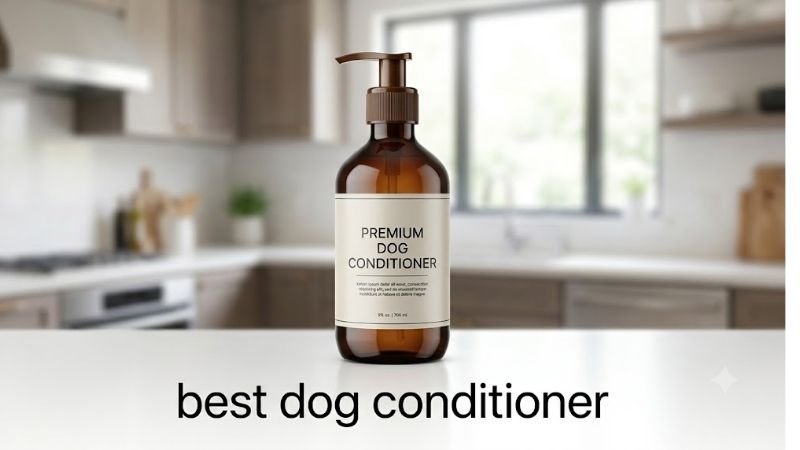
Dry, Dull Coats and Winter Skin
Indoor heating drops humidity sharply between November and March, and coats respond by looking flat and feeling rough. A humectant-based conditioner containing glycerin draws moisture back into the hair, and oatmeal or aloe in the same formula settles the skin underneath at the same time.
Bathing frequency is usually part of the problem here. Washing more often than every four weeks strips the oils that keep a coat supple, so stretching the interval and adding a conditioner does more than either change achieves on its own across the course of an entire winter.
Diet plays a role as well, and a coat that stays dull despite a sensible routine is worth mentioning at your next veterinary appointment. Skin and coat condition reflect what is happening internally, so persistent dullness is occasionally the first visible sign of something else.
Matting and Tangle-Prone Coats
This is the problem that sends most people looking for a conditioner in the first place, and the best dog conditioner for a mat-prone coat is judged almost entirely on slip rather than on moisture or fragrance, because separated hairs cannot lock together into a mat in the first place.
Curly and wavy coats trap shed hair rather than releasing it, which is what turns tangles into mats within days. A conditioner with strong slip is what keeps the individual hairs separated, and on a doodle or a poodle it is close to essential rather than a pleasant extra.
The routine matters as much as the bottle. Comb the coat to the skin before bathing, condition after shampooing, rinse thoroughly, then dry with airflow rather than rubbing, because a curly coat left to air dry sets in whatever tangled position it happened to dry into.
Static, Breakage and Coats Growing Out
Static is a winter problem and a fine-coat problem, and it causes real breakage as hair snaps under a brush. A leave-in spray applied before each brushing session is the practical answer, and it works far better than any change of brush that owners typically try first.
Coats growing out after a short clip need patience and slip. The new growth is fragile and tangles against the older hair still present, so a light leave-in used every brushing session prevents the breakage that otherwise makes the growing-out phase last considerably longer.
Sensitive Skin and Fragrance Reactions
Where skin is the issue rather than the coat, the best dog conditioner is the one with the fewest ingredients rather than the most, because every additional component is one more thing that could be causing the reaction, and narrowing that list down is the whole point of the exercise.
Dogs that react to products usually react to fragrance rather than to the conditioning agents themselves. A fragrance-free, soap-free formula removes the most likely culprit, and it is the sensible baseline while you and your veterinarian work out what is actually going on.
Rinsing becomes more important rather than less on these dogs. Product left sitting against inflamed skin is an obvious irritant, so rinse for considerably longer than feels necessary and skip leave-in products entirely on any area that is currently red, broken or sore.
Top Picks: Five Conditioners Matched to Each Problem
The best dog conditioner for your situation depends on which of the problems above you recognise. These five map onto them directly, and each entry names the coat issue it addresses alongside a genuine limitation, because none of them is useful across every possible situation.
| Product | Problem it targets | Format | Limitation |
|---|---|---|---|
| Burt’s Bees Hydrating Conditioner | Dry winter coats | Rinse-out | Modest on heavy matting |
| Nature’s Specialties Quick Cream Rinse | Matting and tangles | Rinse-out concentrate | Needs diluting properly |
| Chris Christensen Ice on Ice | Static and breakage | Leave-in spray | Easy to overuse |
| Earthbath Hypo-Allergenic Conditioner | Sensitive or reactive skin | Rinse-out | No detangling strength |
| Bio-Groom Protein Lanolin | Coats growing out | Rinse-out | Flattens fine coats |
Burt’s Bees Hydrating Conditioner
For the winter dryness problem this is the straightforward answer. It is pH appropriate, free of sulfates and added colourants, and mild enough to use at every bath through the cold months without adding to the dryness that prompted the purchase in the first place at all.
Detangling strength is modest, so a genuinely matted coat needs something with more slip. It is a maintenance product rather than a rescue one, which is exactly right for a smooth or medium coat that has simply lost its shine across a few months of indoor heating.
Nature’s Specialties Quick Cream Rinse
For a doodle or a poodle carried long, this is the best dog conditioner on the list by a comfortable margin, purely because of how much easier it makes the comb-out afterwards, which is the part of grooming a doodle that owners genuinely dread most weeks.
Curly and coated breeds need slip above everything else, and this concentrate delivers it. Diluted properly and worked through after shampooing, it separates the hairs enough that a comb travels from skin to tip, which is the difference between a ten-minute comb-out and an hour.
Being a concentrate, skipping the dilution step wastes product and leaves patchy coverage. It is priced above supermarket bottles too, though the cost per bath works out lower than it first appears once you account for how far a properly diluted concentrate actually goes.
Chris Christensen Ice on Ice Spray
Static and breakage respond to a leave-in rather than to anything used in the bath, and this is the one most groomers carry. A light mist before line brushing reduces friction so the slicker passes through the coat instead of catching, snapping and thinning it over time.
A heavy hand leaves fine coats flat and faintly sticky, so one or two passes per section is genuinely enough. The price is well above a supermarket detangler, which makes sense for someone brushing several times a week, and rather less sense for occasional grooming sessions.
Earthbath Hypo-Allergenic Conditioner
When skin is the problem, removing variables beats adding ingredients. This is soap free and fragrance free, which takes the most common irritant out of the equation, and it is mild enough to use frequently on a dog being bathed weekly right through an allergy season.
It conditions gently and detangles very little, so a coated breed will need something with more slip alongside it. Persistent itching, redness or hair loss also needs a veterinary assessment rather than another bottle, since no conditioner treats an underlying skin condition.
Bio-Groom Protein Lanolin Conditioner
Coats growing out after a clip benefit from a heavier formula, and the protein and lanolin combination gives the new growth enough weight and slip to stop it tangling against the older hair. It also improves the feel of coarse coats on breeds with a naturally harsher texture.
On fine or silky coats it flattens the texture noticeably, which is the trade-off for the conditioning it provides. Rinse it thoroughly as well, because a heavy conditioner left in a dense coat stiffens as it dries and undoes most of the benefit that you were paying for.
Frequently Asked Questions
Four questions cover most of what owners want to know once they start choosing by problem rather than by brand. The best dog conditioner still needs the right bathing interval and a thorough rinse behind it, which is what these four answers between them keep coming back to in one form or another.
Can I leave conditioner in instead of rinsing it out?
Only if the product is designed as a leave-in. Rinse-out formulas left in the coat stiffen as they dry, attract dirt and irritate skin, so check the label rather than assuming. Leave-in sprays are formulated at a much lighter concentration for precisely this reason.
How often should I condition my dog?
At every bath for coated, curly and long-haired breeds, and as needed for short coats that are looking dry. Leave-in sprays are used per brushing session rather than per bath, and deep treatments suit roughly once a month rather than as part of any weekly routine.
Will conditioner help with shedding?
Indirectly. A conditioned coat releases loose undercoat more readily during drying and brushing, which is why deshedding routines include one. It does not change how much a dog sheds overall, and a single-coated breed gains nothing from a deshedding formula whatever it claims.
My dog’s coat feels sticky after conditioning. Why?
Almost always too much product or an incomplete rinse. Dilute rinse-out conditioners in warm water before applying, work them through in sections, and rinse well past the point the water runs clear, particularly around the chest, the armpits and behind the front legs.
See More:
- Dog grooming shears best
- Best dog clippers for poodles
- Best dog clippers for doodles
- Best dog brush for poodle
- Best dog brush for great pyrenees
Final Thoughts
The best dog conditioner is whichever one matches the problem in front of you: a hydrating rinse-out for winter dryness, a high-slip concentrate for matting, a leave-in for static and breakage, and a fragrance-free formula for reactive skin. Identify the problem first, and the shelf becomes far easier to navigate.




Write Your Review
No reviews yet. Be the first to share your experience!