
Key takeaways
What's inside
Best dog brush for poodles depends on coat stage far more than on brand, because a puppy coat, a coat change and a mature adult coat each need a different pin length. This buying guide explains how to match the tool to the stage, then compares five brushes across three budget tiers, from first puppy coat through to adult.
As an Amazon Associate we earn from qualifying purchases.




As an Amazon Associate we earn from qualifying purchases.
🛒 Best Price Today on Amazon
Prime members get fast, free shipping on everything above, plus member-only deals. New members get a 30-day free trial — cancel anytime.
How to Choose the Best Dog Brush for Poodles at Any Coat Stage
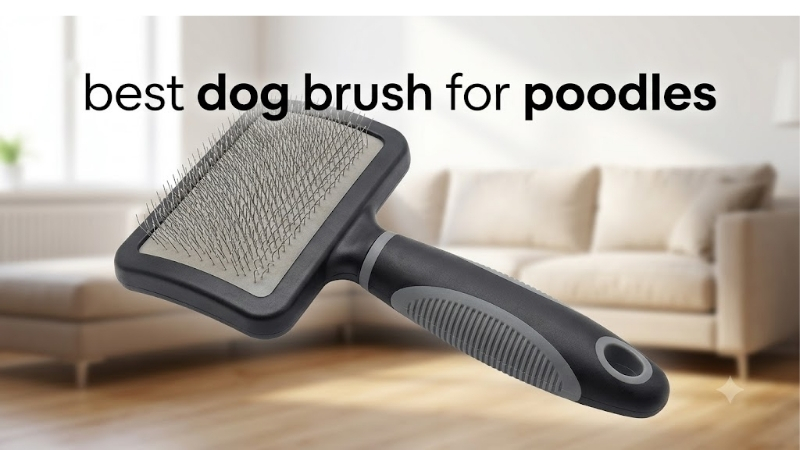
Toy, miniature and standard poodles all carry the same single continuously growing coat, but density and curl tighten as the dog matures. Buying one brush for the whole life of the dog is the mistake that leads to matting, so match the pin bed to the coat in front of you. Coat stage decides the best dog brush for poodles, not the size of the dog.
Puppy Coat Versus Adult Coat
Puppy coat is soft, open and forgiving, and a medium slicker with pins around 12 mm to 16 mm handles it easily. This is the stage to build tolerance for handling, because a dog that accepts a brush calmly at four months is very much easier to maintain at four years old. Short daily sessions build that tolerance fastest.
The coat change usually begins somewhere between nine and eighteen months and it is the hardest period a poodle owner faces. Adult curl pushes through while puppy hair is still present, and the two layers felt together at the skin within days if the brushing routine lapses even briefly.
Mature coat is dense and tightly curled and needs a long-pin slicker of roughly 20 mm or more to reach the base. Owners who never upgrade from the original puppy brush are usually the ones asking the groomer for a short clip twice a year to reset a coat they lost control of. The upgrade is cheaper than repeated resets.
Pad Size and Multi-Dog Households
Households with more than one poodle benefit from owning two pad sizes rather than two identical brushes. A full pad covers a standard’s body efficiently, while a slim or small pad reaches the face, pasterns and ears on a toy without pressing the pins into noticeably thinner skin. Keep the small pad for faces and feet only.
Sharing one brush across several dogs is fine mechanically but not hygienically if any of them has a skin problem. Rinse pads in warm water with a drop of pet shampoo every few weeks and dry the pins fully, since damp metal pins will corrode where they seat into a wooden pad. Air-dry pads pin side down to speed that along.
Budget Tiers and What They Buy
Under fifteen dollars buys a functional short-pin slicker suited to puppies and short trims. It will do the job for a year and then stop reaching the coat, which is less a defect than a limit built into the pin length you paid for when you chose the cheapest option available. There is no shame at all in starting there.
The premium tier buys long pins, a hand-set pad that spreads pressure and a tool that stays usable for a decade. Prices on grooming tools move most around the mid-year and early-October deal events, both of which fall conveniently before the autumn season when coats thicken and brushing time increases.
Comb Checking and Safe Technique
A brush is only half the routine. Line brush each section from the skin outward, then run a steel comb through it: free passage means finished, a snag means repeat that section. Skipping the comb check is exactly why coats that look well brushed still mat quietly down at the base. The comb is the only honest check you have.
Keep the pressure light throughout. Slicker pins should be drawn through coat rather than pushed into skin, and repeated hard strokes over one spot cause the red irritated patch known as slicker burn. Short sessions on a calm dog beat long sessions on a dog that is struggling to stand still.
Top Picks: Five Brushes Covering Every Poodle Coat Stage
The list below runs from a premium long-pin slicker down to an inexpensive everyday brush, with a steel comb included because no poodle routine is complete without one. Choosing the best dog brush for poodles means matching this list to the coat stage your dog is currently in. Prices across these three tiers vary widely.
| Brush | Type | Coat stage | Price tier |
|---|---|---|---|
| Chris Christensen Big G (20 mm) | Long-pin slicker | Adult, coat carried long | Premium |
| Wahl Curved Slicker Brush | Curved slicker | Adult, medium trim | Mid |
| ConairPRO Dog Slicker Brush | Slicker | Puppy and short trims | Budget |
| Hertzko Self-Cleaning Slicker | Self-cleaning slicker | Puppy, daily quick work | Budget |
| Master Grooming Tools Comb | Steel comb | All stages, checking work | Mid |
Chris Christensen Big G 20 mm Slicker
The 20 mm version of the Big G is the sweet spot for a poodle in a working trim rather than a full show coat. The pins reach the skin through dense curl and the flexible pad spreads pressure, so the tool does the work instead of your forearm carrying it through the session. That flex is what the premium buys.
The cost is significant and the pad is large, so it is awkward on a toy poodle’s face and legs. If you own a small poodle, either choose the slim pad version or keep a smaller brush alongside it for the detail areas that a full-size pad simply cannot reach cleanly. Two brushes are normal in a poodle household.
Wahl Curved Slicker Brush
The curved pad is designed to follow the shape of a leg, a chest or a rounded rear, which means more pins stay in contact with the coat through each stroke. On a poodle carried in a medium trim that translates directly into fewer passes needed to clear each section properly. Fewer passes also means less coat breakage.
Pin length sits in the middle of the range, making it a sensible bridge for a dog somewhere between puppy coat and full adult density. That same middling length is the limitation: on a coat carried genuinely long it stops short of the skin and a longer-pinned slicker becomes necessary.
ConairPRO Dog Slicker Brush
This is the sensible first brush. It is inexpensive, the pins are fine enough to catch loose puppy coat, and losing it or wearing it out during the teething and chewing months costs almost nothing, which matters more in practice than most buying guides admit. The best dog brush for poodles early on is the one you can replace cheaply.
Used correctly on a puppy or a short trim it does everything that is needed. Its ceiling arrives with the coat change, when the pins can no longer reach the base of the curl, and at that point it quietly becomes the face and paw brush rather than the main tool, and there is nothing wrong with that second career.
Hertzko Self-Cleaning Slicker
The retracting pin bed is the selling point and it earns its place in a multi-dog household. Press the button, the collected hair lifts free, and you move on to the next dog without picking coat out of the pad with a comb between sections. Cleanup speed is the whole point of the design.
The mechanism adds bulk and limits pin length, so this is a quick daily tool rather than a coat-change tool. It is also worth checking the pin tips periodically, since bent pins on any slicker will scratch skin and should be removed carefully before the next brushing session begins.
Master Grooming Tools Steel Comb
A long steel comb with coarse and fine spacing is the tool that tells the truth about your brushing. Rigid teeth either pass to the skin or catch, and unlike a flexible comb they will not skip over a dense patch and let you believe a section is finished. That honesty is why groomers never skip it.
It also handles the jobs a slicker cannot: separating the topknot before a band goes in, working the fine hair beneath the eyes and lifting ear feathering. Choose the length to suit your dog, since a long comb is genuinely unwieldy on a toy poodle’s muzzle. A seven inch comb suits most household needs.
Frequently Asked Questions
Four questions cover most of what owners need to know before buying, particularly with a first poodle in the house. The best dog brush for poodles still depends on getting these fundamentals right first. Pin length, pad size and the comb check between them explain almost every matting problem.
Do poodles shed and does that change the brush?
Poodles shed very little into the environment because loose hair stays trapped inside the curl, which is precisely why brushing matters so much. That trapped hair is what felts into mats, so the brush needs to lift it out rather than strip undercoat the way a deshedding tool does. Lifting, not stripping, is the goal here.
Can I use a rubber curry brush on a poodle?
Rubber curries are made for short flat coats and do almost nothing on curl. They cannot reach the base of a poodle coat and they rough up the curl pattern on the surface. A slicker paired with a steel comb remains the correct combination at every coat stage. The best dog brush for poodles is never a rubber tool.
How long should a brushing session take?
Twenty to thirty minutes for a thorough line brushing on a standard poodle in a medium trim, and ten to fifteen minutes on a toy. If sessions are taking considerably longer than that, the interval between brushings is too long rather than the technique being wrong. Stretching it always costs more time later.
What causes slicker burn and how do I avoid it?
It comes from pressing pins into skin or repeating strokes over one spot, and it shows as pink irritated skin, often on the pasterns and the belly. Keep strokes light and moving, work in small sections, and stop immediately the moment a dog reacts to a particular area. Irritated skin heals, but trust takes far longer.
Final Thoughts
The best dog brush for poodles changes as the dog does: a modest slicker for the puppy stage, a longer-pinned one through the coat change, and a steel comb throughout to confirm the work is finished. Buy for the coat you have now, upgrade when the pins stop reaching skin, and line brushing will keep the coat comfortable between grooms.




Write Your Review
No reviews yet. Be the first to share your experience!