
Key takeaways
What's inside
Best brush dog hair control comes down to capturing loose coat before it reaches your floor rather than cleaning it up afterwards. A tool that collects hair into a chamber beats one that flicks it into the air. This roundup ranks six on how much they actually capture.
As an Amazon Associate we earn from qualifying purchases.


As an Amazon Associate we earn from qualifying purchases.
🛒 Best Price Today on Amazon
Prime members get fast, free shipping on everything above, plus member-only deals. New members get a 30-day free trial — cancel anytime.
How the Best Brush Dog Hair Tools Actually Reduce Mess
The best brush dog hair tools do not reduce how much a dog sheds. What they change is where the hair ends up: in a collection surface you empty, or on your sofa over the following week. Judged that way, capture rate and how easily you clear the tool matter as much as how deep it reaches.
Capture Rate Versus Airborne Hair
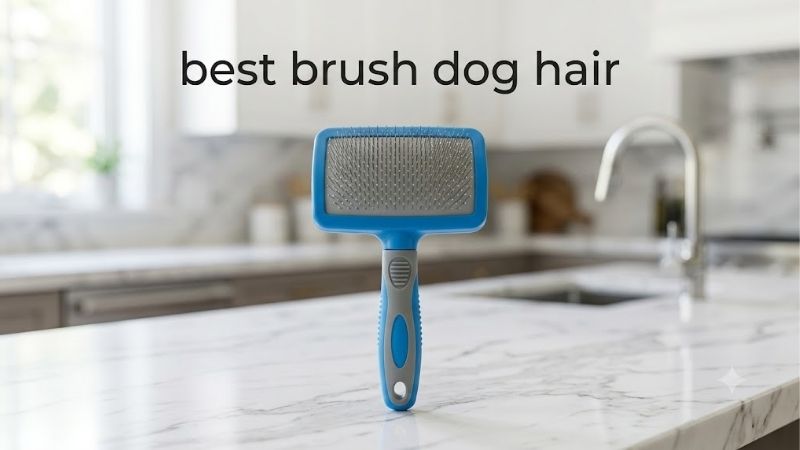
Tools differ enormously in what happens to the hair they lift. Slickers hold it in the pin bed, deshedding tools pack it against the blade, and rubber curries let it cling to the surface, all of which are containment. Bristle brushes and gloves tend to release more into the air.
Working outdoors or over a hard floor solves most of the difference. Brushing on carpet means everything the tool drops works into the pile immediately, whereas a hard floor lets you sweep once at the end. That single change reduces household hair more than upgrading the brush does. Where you brush matters as much as which of the best brush dog hair tools you happen to be holding.
Reaching the Undercoat Rather Than the Surface
Surface hair is not the problem. On a double-coated dog the hair that ends up on furniture is loose undercoat working its way out over weeks, and a tool that only lifts the outer layer leaves the reservoir untouched no matter how much it appears to collect.
Rakes and deshedding tools reach that layer; bristle brushes and gloves do not. If you brush daily and the house is still full of hair, the tool is almost certainly working at the wrong depth rather than being used too infrequently.
Self-Cleaning Mechanisms and Session Frequency
A tool you can empty in one press gets used daily; one you pick clean by hand gets used weekly. That practical difference drives results more than pin quality does, because shedding is a continuous process and the only effective response is a continuous one.
Ejector buttons on deshedding tools and retracting pins on slickers both solve this. Rubber curries and gloves do not, since collected hair has to be peeled off, which is fine outdoors and messy on a living room floor. How quickly a tool empties is an underrated part of what makes the best brush dog hair routine survive a busy week.
Frequency, Season and Realistic Expectations
Double-coated breeds blow coat heavily twice a year, in spring and again through September and October, and during those windows daily brushing is the only thing that keeps ahead of it. Outside them, two or three sessions a week is usually enough.
Set expectations honestly. The best brush dog hair routine reduces what reaches your home substantially, but a heavy shedder will still shed. Anyone promising to eliminate it is selling something, and aggressive tools used daily to chase that promise thin the guard coat instead.
Top Picks: 6 Tools Ranked by What They Capture
The best brush dog hair options fall into four mechanisms, and these six span blade-edged deshedders, rakes, slickers and rubber tools. Most households need two: one that reaches the undercoat and one gentle enough for daily use.
| Tool | Depth Reached | Capture | Clearing |
|---|---|---|---|
| FURminator deShedding Tool | Undercoat | Very high | Ejector button |
| Coastal Safari Undercoat Rake | Undercoat | High | By hand |
| Andis Premium Pet Slicker Brush | Mid coat | High | By hand |
| KONG ZoomGroom | Surface | Medium | Peel off |
| DELOMO Grooming Glove | Surface | Medium | Peel off |
| Andis Steel Pet Comb | To the skin | Low | By hand |
FURminator Undercoat deShedding Tool
Nothing else here removes as much per minute. A stainless edge reaches beneath the topcoat, the curved head resists digging in at the corners, and the ejector button clears a packed head in a single press, which matters enormously when the volume is this high.
Sizing is by dog weight and coat length, and buyers get it wrong constantly. The genuine drawback is that the edge cuts guard hairs as well as collecting undercoat, so weekly during shedding season is appropriate and daily year-round visibly thins the coat over time.
Coastal Safari Undercoat Rake
The safe workhorse for regular use, because nothing on it cuts. Tapered rounded pins pull loose undercoat out rather than shearing it, which means you can use it as often as the dog will tolerate without any risk to the guard coat.
It is slower than a blade-edged tool and needs several passes during a heavy shed. Hair also has to be pulled off the pins by hand, and pins bend if you force the rake through a tangle rather than working it loose first.
Andis Premium Pet Slicker Brush
The everyday tool for most coats. Fine angled pins lift loose hair and light tangles from the mid layer of the coat and hold it in the pin bed rather than releasing it, which is the containment that keeps hair off furniture.
It reaches the mid coat rather than deep undercoat, so on a dense double coat it supports a rake rather than replacing one. Clearing it means picking hair out by hand, and pressure has to stay light on thin-skinned or fine-coated dogs.
KONG ZoomGroom
The best tool for short single coats and the best one to use in the bath. Soft rubber nubs generate enough static to pull loose hair from a short coat, and used on a shampooed dog they release a surprising quantity before the dog is even dry.
It reaches no depth, so on a double coat it manages surface hair only. Collected hair clings to the rubber and has to be peeled off repeatedly, which is easy outdoors and messy indoors on carpet.
DELOMO Pet Grooming Glove
For dogs that leave the room when a brush appears, a glove is often the only thing that gets used at all. Soft silicone tips lift surface hair while the dog experiences being petted, and the collected hair peels off the palm in a sheet.
It captures the least of anything here relative to how much hair it appears to collect, because surface hair was going to come off anyway. It cannot touch undercoat, so it manages the symptom rather than the source.
Andis Steel Pet Comb
Included because it tells you whether the rest worked. Fine teeth confirm you have reached the skin rather than tidied the surface, and if a comb still pulls out clumps after a full brushing session, the brush you used is not reaching deep enough.
It collects very little and is slow as a shedding tool. Steel teeth also catch painfully if you drag rather than working in short sections, so it belongs at the end of a session as the check rather than as the main tool.
Frequently Asked Questions
These four cover what owners ask when the house is full of hair and the current brush does not seem to be helping.
Which Tool Removes the Most Hair?
Blade-edged deshedding tools, by a wide margin, on double-coated breeds. That is also why they carry the most risk of thinning the guard coat with overuse. The best brush dog hair strategy pairs one of those used weekly in season with a gentler rake or slicker for everything else.
Does Diet Affect Shedding?
Coat condition is influenced by nutrition, but shedding volume is largely determined by breed, daylight and season. Sudden changes in shedding, bald patches, scabs or itching are worth raising with your veterinarian rather than treating as a grooming or diet problem.
Should I Brush Before or After a Bath?
Both. A pass beforehand removes the bulk, bathing and drying releases considerably more undercoat, and a second pass afterwards clears it. Never work an aggressive tool through a wet coat, since wet hair stretches and breaks far more easily than dry.
Why Is There More Hair Indoors in Winter?
Steady heating and artificial light blur the seasonal cues that concentrate shedding, so indoor dogs tend to shed moderately all year instead of heavily twice a year. The total is similar; it is simply spread across more weeks.
See More:
- Best way to get rid of dog hair in car
- Best vacuum for hard floors and dog hair
- Best dog clippers for golden doodle
- Best small dog nail clipper
- Best dog clippers for yorkies
Final Thoughts
The best brush dog hair routine is a tool that reaches the undercoat used weekly during the two annual coat changes, a gentler slicker or rake for the rest of the year, and the discipline to brush over a hard floor or outdoors. Capture rate and how easily you empty the tool matter more than any specification, because the only routine that works is the one you keep up.




Write Your Review
No reviews yet. Be the first to share your experience!