
Key takeaways
What's inside
Best cat brush for shedding short hair is a narrower question than it looks. Cat skin is thinner and looser than a dog’s, tolerance for handling is lower, and a tool that works on a Labrador will hurt a domestic shorthair. This guide covers what genuinely suits a short-coated cat.
As an Amazon Associate we earn from qualifying purchases.





As an Amazon Associate we earn from qualifying purchases.
🛒 Best Price Today on Amazon
Prime members get fast, free shipping on everything above, plus member-only deals. New members get a 30-day free trial — cancel anytime.
How to Choose the Best Cat Brush for Shedding Short Hair
The best cat brush for shedding short hair has to suit a coat that sheds constantly rather than seasonally, and most of that hair ends up either on furniture or swallowed during self-grooming. The goal is to intercept it, which means a tool the cat will actually tolerate for two minutes rather than the most efficient one on paper.
Why Short-Haired Cats Still Shed Heavily
A domestic shorthair carries a dense coat, just a short one, and many carry a light undercoat as well. Indoor cats under artificial light and steady heating lose the seasonal cue that concentrates shedding, so the coat turns over gradually all year instead of in two defined windows.
The hair that is not collected gets swallowed. Regular brushing measurably reduces how much loose hair a cat ingests during self-grooming, which is the practical argument for the best cat brush for shedding short hair being one you use often rather than one you use hard.
Bristle Type and Feline Skin Sensitivity
Cat skin is thin and mobile, and it tents easily under a brush, which is how scratches happen. Silicone and soft rubber tips are the safest starting point, fine flexible pins with rounded tips are the next step, and stiff wire slickers designed for dogs are usually too harsh.
Blade-edged deshedding tools do exist in cat-specific versions and they work, but they demand light pressure and short sessions. On a short coat there is very little topcoat between the edge and the skin, so the margin for a heavy hand is much smaller than on a dog. The best cat brush for shedding short hair is rarely the most aggressive one available.
Handling Tolerance and Session Length
Two minutes with a willing cat beats ten with an unwilling one. Most cats tolerate the head, cheeks and along the spine long before they accept the belly, hindquarters or tail base, so start where the cat leans into it and expand from there over weeks rather than in one session.
Stop before the cat asks you to. Tail flicking, skin rippling along the back and a turned head are all signals that come before a bite, and ending the session at that point is what makes the next one easier. Grooming a cat is a tolerance-building exercise more than a technical one.
Cleaning, Hairballs and Grooming Frequency
Self-cleaning mechanisms matter more with cats than dogs, because the sessions are short and frequent rather than long and occasional. A brush you can clear in one press gets picked up daily; one that needs picking clean by hand tends to get used weekly at best.
Two to three short sessions a week is a reasonable baseline for a shorthair, rising if you notice more hair around the house. Persistent excessive shedding, bald patches, scabs or overgrooming are worth raising with your veterinarian rather than treating as a brushing problem.
Top Picks: 6 Brushes for Short-Haired Cats
The best cat brush for shedding short hair varies by temperament, so these six run from a rubber brush most cats accept immediately to a blade-edged tool for heavy shedders, plus a steel comb for checking. Start at the gentle end and only move up if the volume genuinely requires it.
| Tool | Mechanism | Best For | Tolerance |
|---|---|---|---|
| KONG ZoomGroom Cat Brush | Rubber nubs | First brush, nervous cats | Highest |
| DELOMO Grooming Glove | Silicone tips | Cats that hate brushes | Highest |
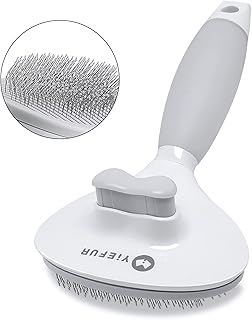
| JW Pet GripSoft Cat Slicker | Soft-tipped pins | Everyday loose hair | Good |
| Safari Cat Shedding Comb | Alternating steel teeth | Loose undercoat | Moderate |
| Andis Steel Pet Comb | Fine and coarse teeth | Checking, fleas, tangles | Moderate |
| FURminator for Cats, Short Hair | Blade edge | Heavy shedders | Lowest |
KONG ZoomGroom Cat Brush
The brush most cats accept on the first attempt. Soft rubber nubs feel closer to being stroked than brushed, they generate enough static to pull loose hair off a short coat, and there is no hard edge anywhere on the tool to catch thin skin.
It only collects surface hair, so on a genuinely heavy shedder it will not keep up on its own. Hair also clings to the rubber and needs peeling off repeatedly during a session, which is more fiddly than a brush with a proper collection surface.
DELOMO Pet Grooming Glove
For a cat that leaves the room when a brush appears, a glove is often the only thing that works. Soft silicone tips on a five-finger design mean the cat experiences petting, and the loose hair comes away on the palm to be peeled off in a sheet afterwards.
It cannot reach any depth, so it manages surface shed rather than reducing it meaningfully on a dense coat. Sizing is one-size-fits-most, which means people with small hands find the fit loose enough to reduce control around the face and legs.
JW Pet GripSoft Cat Slicker Brush
A slicker built specifically for cats, with softer, finer pins than any dog equivalent and rounded tips that reduce the risk of scratching. It reaches slightly deeper than rubber and is the sensible everyday choice once a cat accepts being brushed at all.
It still has pins, which means pressure matters: pushed hard it will scratch, and cats remember. Cleaning it means picking hair out by hand, since there is no self-cleaning mechanism, and that discourages the daily use that makes it worthwhile.
Safari Cat Shedding Comb
Alternating long and short stainless teeth let this comb pull loose undercoat while the longer teeth part the topcoat, which is genuinely effective on a short coat with a dense underlayer. It is the middle ground between a slicker and a blade-edged tool.
Steel teeth are unforgiving of a dragging stroke and will catch a tangle painfully, so short sections and light pressure are essential. Cats that dislike the feeling of metal on skin object to it more than to rubber or soft pins.
Andis Steel Pet Comb
Every cat household should own a steel comb even if it is not the primary brush. Fine teeth at one end confirm you have reached the skin and find flea dirt early; coarse teeth at the other work through the light tangles that form behind the ears and under the front legs.
It is slow as a shedding tool and does not collect hair efficiently. Used as a primary brush on a heavy shedder it is frustrating, and its real value is diagnostic and finishing rather than volume removal.
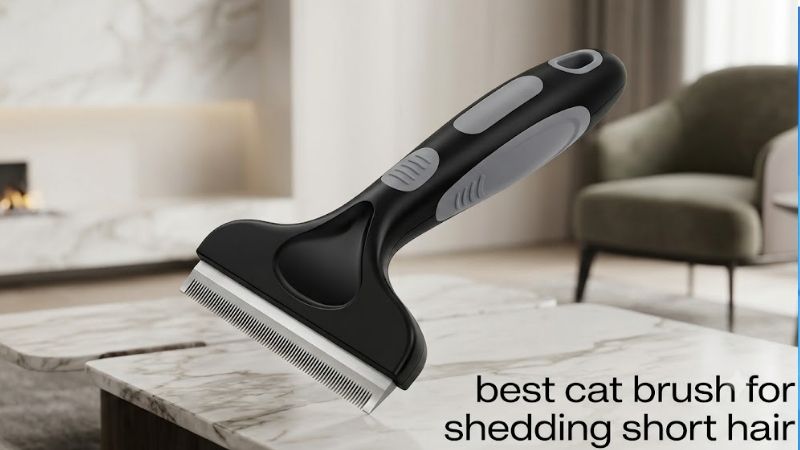
FURminator Undercoat deShedding Tool for Cats, Short Hair
The heavy-shedder option, sized for cats rather than adapted from a dog tool, with small options for cats under 10 pounds and larger ones above that. The stainless edge removes noticeably more loose hair per stroke than anything else here, and the ejector button clears it in one press.
It carries the most risk of the six. The edge cuts as well as collects, so overuse thins the coat and heavy pressure irritates thin cat skin. Use it briefly, weekly at most, and stop entirely if you see any redness or the cat starts avoiding you when it appears.
Frequently Asked Questions
These four cover what owners ask once they have chosen the best cat brush for shedding short hair and realised the hair is not going to stop on its own.
How Often Should I Brush a Short-Haired Cat?
Two or three short sessions a week suits most cats, and daily is fine if the cat enjoys it. Short-haired cats shed year-round rather than seasonally, so consistency matters more than intensity, and two focused minutes achieves more than a struggle.
Will Brushing Actually Reduce Hairballs?
It reduces how much loose hair the cat swallows while self-grooming, which is the main source. It is not a treatment for hairballs, and frequent vomiting, retching without production or loss of appetite are reasons to speak to your veterinarian rather than to brush more.
Can I Use a Dog Brush on My Cat?
Only if the pins are genuinely soft and fine. Most dog slickers use stiffer wire in a harder backing than cat skin tolerates, and dog-sized blade-edged tools are too aggressive for a short cat coat. The best cat brush for shedding short hair is nearly always a cat-specific tool.
My Cat Hates Being Brushed. What Now?
Start with a glove and pair it with something the cat already likes, such as a meal or a favourite spot. Work only where the cat leans in, stop before it protests, and expand the area over weeks. Forcing a session sets tolerance back further than skipping one ever does.
See More:
- Best way to get rid of dog hair in car
- Best vacuum for hard floors and dog hair
- Best dog clippers for golden doodle
- Best small dog nail clipper
- Best dog clippers for yorkies
Final Thoughts
The best cat brush for shedding short hair is the gentlest tool that keeps up with the volume, which for most households is a rubber brush or soft slicker used several times a week, with a steel comb for checking and a cat-specific deshedding tool held in reserve. Tolerance is the real constraint, so build it slowly and let the cat set the pace.




Write Your Review
No reviews yet. Be the first to share your experience!