
Key takeaways
What's inside
Best way to get dog hair off furniture is really several questions wearing one coat. Fur behaves completely differently on finished wood, on leather, on a woven dining chair and on a bed frame, and a tool that excels on one of those will smear, scratch or simply miss on another. Buying three cheap tools usually beats buying one expensive one.
As an Amazon Associate we earn from qualifying purchases.


As an Amazon Associate we earn from qualifying purchases.
🛒 Best Price Today on Amazon
Prime members get fast, free shipping on everything above, plus member-only deals. New members get a 30-day free trial — cancel anytime.
How to Choose the Best Way to Get Dog Hair Off Furniture
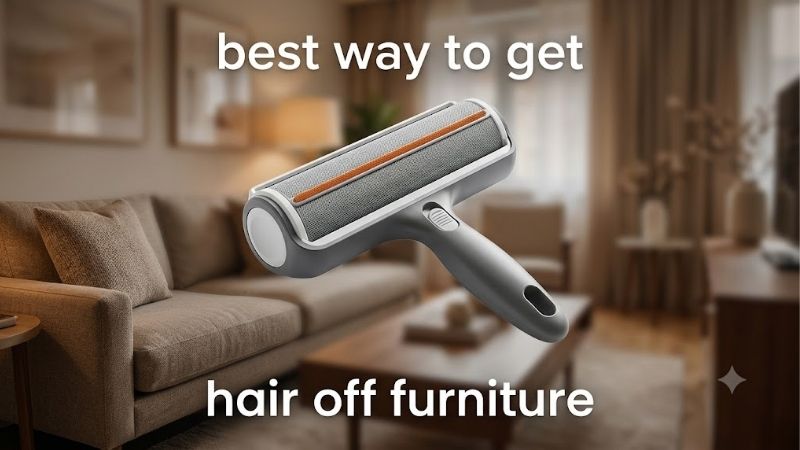
Work surface by surface rather than room by room. The best way to get dog hair off furniture in a house with mixed materials is usually two or three cheap tools rather than one expensive one, because the mechanism that lifts fur from fabric is the wrong one for a polished tabletop.
Hard Surfaces: Wood, Glass, and Painted Finishes
On finished wood, fur sits on top held by static, which is why a dry cloth pushes it into the air and it lands again ten seconds later. Electrostatic dusters trap it instead of displacing it, which is the difference between cleaning a sideboard and redistributing it.
Microfibre is the other reliable answer. A slightly damp microfibre cloth holds fur through capillary action rather than adhesion, so it clears skirting boards, bed frames and table legs without leaving streaks on a polished surface or lint behind on a matte one.
Avoid anything abrasive on a finish you care about. Rubber tools are safe on wood, but metal-edged rakes designed for carpet will mark lacquer and wax immediately, and there is no reason to reach for one when a cloth does the job better.
Upholstered Chairs, Headboards, and Awkward Shapes
Dining chairs and headboards are where most tools fail, because they combine fabric with edges, buttons and piping. A brush with a narrow head reaches into those transitions where a full-size roller simply bridges across and misses the fur collecting in the seam.
Adhesive rollers still have a place here. On a fixed upholstered panel that cannot be moved or beaten, a wide sticky sheet is faster than any reusable tool, and the disposal is instant. The waste is the trade-off, and it is a fair one for occasional use.
Do not forget the underside and the back. Fur drifts under dining chairs and settles on the rail beneath the seat, and on a headboard it collects along the top edge where nobody looks. Those are the surfaces that quietly refill a room with airborne hair after you clean.
Leather, Vinyl, and Anything With a Coating
Smooth coated surfaces are the easiest of all and the ones people most often over-tool. A damp microfibre cloth wiped in one direction gathers fur into a line you can pick up, and that is the entire technique. Rubber gloves work equally well if you already own a pair.
What to avoid matters more here. Any tool with a hard edge, a metal blade or stiff bristles can scuff leather or vinyl, and the damage is permanent. Test anything new on the back or underside of a piece before running it across a visible panel.
Seams are the exception on leather furniture. Stitched channels and the join between cushion and frame collect fur that a flat cloth passes straight over, so a soft brush or a crevice tool run along those lines finishes the job the cloth started.
Whole-House Timing, Cost, and Guest Season
Furniture is where people notice fur when their routine slips, and the trigger is almost always visitors. December brings the year’s heaviest hosting load and the strongest gift-for-dog-lovers search volume, so small cleaning tools sell in volume through the whole month.
The second spike is the spring coat change from March through May, which coincides with people opening windows and seeing their furniture in daylight for the first time in months. Buying tools ahead of either window is cheaper than buying during them.
This is a category where budget-conscious buying genuinely works. A duster, a pack of microfibre cloths and a lint roller together cost less than one specialist gadget and cover more surfaces, which matters while household spending stays tight even as pet ownership grows.
Top Picks: Best Way to Get Dog Hair Off Furniture
These six are chosen to cover every surface in a normal house rather than to compete with each other. Each is the best way to get dog hair off furniture of one particular kind, and each entry names its real weakness.
| Tool | Surface | Best For |
|---|---|---|
| OXO Good Grips FurLifter | Upholstery | Chairs and headboards |
| Swiffer 360 Dusters | Wood, glass, ledges | Hard surfaces |
| E-Cloth Microfibre Cloths | Leather, vinyl, wood | Smooth finishes |
| Scotch-Brite Lint Roller | Fixed upholstery | Speed over waste |
| Black+Decker dustbuster Furbuster | All fabric | Deeper pickup |
| Uproot Cleaner Pro | Dense fabric only | Embedded fur |
OXO Good Grips FurLifter
A dual-sided furniture brush with a self-cleaning base, designed for exactly the awkward upholstered pieces that defeat rollers. The narrow head gets into the join between seat and back on a dining chair, and pressing it into the base strips the collected fur off in one motion.
It is slow across large areas, so a three-seat sofa is not what it is for. The self-cleaning base also needs emptying regularly, and the brush face loses some grip after heavy use as the fibres flatten.
Swiffer 360 Dusters
The right tool for hard surfaces, using an electrostatic head that traps fur rather than pushing it into the air. On bed frames, sideboards, shelf edges and table legs it collects in one pass what a dry cloth would simply relocate to the floor.
The refills are a recurring cost and a recurring waste, which is the main argument against them. They are also useless on upholstery, so this is strictly a hard-surface tool despite being sold as general household cleaning.
E-Cloth Microfibre Cloths
The cheapest and most versatile item on this list. Used slightly damp, microfibre holds fur rather than smearing it, and it is safe on leather, vinyl, lacquered wood and glass alike. They wash and reuse hundreds of times, which makes the running cost effectively zero.
They need to be genuinely clean to work, and a cloth that has been used with detergent leaves residue that attracts more dust. They are also ineffective on woven upholstery, where fur is held in the weave rather than sitting on the surface.
Scotch-Brite Lint Roller
Fast, cheap and universally available, which counts for a lot when guests are due in ten minutes. On fixed upholstered panels that cannot be moved or vacuumed easily, a wide adhesive sheet lifts surface fur more quickly than any reusable alternative.
Every sheet is disposable, so the waste and the recurring cost add up in a shedding household. Adhesive also only lifts what sits on top, so anything worked into the weave stays exactly where it is.
Black+Decker dustbuster Furbuster
The handheld option, small enough to keep in a cupboard near the furniture it cleans. The motorised pet tool agitates fabric rather than just pulling air across it, which is what reaches fur that has started to settle into a chair seat or a headboard.
Runtime is short and the dust cup is small, so it suits spot work rather than a whole room. Suction sits well below a full-size vacuum, which shows on anything deeper than a light accumulation.
Uproot Cleaner Pro
The most aggressive tool here, using a metal edge to rake fur out of dense fabric that other tools skim over. On hard-wearing upholstery it pulls out material rollers and vacuums leave behind, and it lifts flattened pile as a side effect.
It is also the tool most likely to cause damage. On velvet, boucle, linen, leather or any loose weave it can pill, snag or scuff, so test on a hidden panel first and keep it away from anything delicate entirely.
Frequently Asked Questions
These come up most often from owners working out the best way to get dog hair off furniture without buying six separate gadgets.
Why does fur come straight back after I clean?
Static. Cleaning a surface dry leaves it charged, and airborne fur is attracted straight back to it within hours. Using a slightly damp cloth or an electrostatic duster breaks that cycle far more effectively than cleaning more often with a dry one.
What order should I clean a room in?
Top down and hard surfaces first. Dusting a shelf after vacuuming simply drops fur onto clean carpet. Work from high ledges to furniture to floor, and leave the vacuum until last so it collects everything the earlier passes dislodged.
Are rubber gloves really as good as a dedicated tool?
On smooth surfaces and light upholstery, yes. Dampened rubber gloves generate the same friction and static a purpose-made tool does, and they cost almost nothing. Where they fall short is dense woven fabric, which needs a stiffer edge to release the fur.
How do I clean fur out of carved or detailed wood?
Use a soft dry paintbrush to sweep fur out of the detail first, then follow with an electrostatic duster to collect it. Trying to wipe carved wood with a cloth pushes fur deeper into the recesses rather than lifting it out.
See More:
- Best nail grinder for big dogs
- Best nail grinder for large dogs
- Best vacuum for dog hair on rugs
- Best Roomba for dog hair
- Best dog hair broom
Final Thoughts
The best way to get dog hair off furniture is to stop looking for one tool and start matching the mechanism to the surface. Electrostatic for hard finishes, damp microfibre for leather and wood, a narrow brush for upholstered edges, and something more aggressive reserved only for fabric tough enough to take it.




Write Your Review
No reviews yet. Be the first to share your experience!