
Key takeaways
What's inside
Best deshedding dog brush for your household is decided by the breed standing in front of you rather than by the tool with the best reviews. A husky, a labrador and a beagle all shed heavily and all need something different, so this roundup works breed by breed before comparing five tools.
As an Amazon Associate we earn from qualifying purchases.




As an Amazon Associate we earn from qualifying purchases.
🛒 Best Price Today on Amazon
Prime members get fast, free shipping on everything above, plus member-only deals. New members get a 30-day free trial — cancel anytime.
How to Match the Best Deshedding Dog Brush to Your Breed
Shedding volume tells you very little on its own. What matters is whether the hair coming out is soft undercoat trapped beneath guard hairs, or short guard hair falling directly from a single-layer coat, because those two situations call for tools that work in completely different ways.
Heavy Double Coats: Huskies, Malamutes and Pyrenees
These breeds carry the densest undercoat in the dog world, and during a coat blow they release it in sheets rather than strands. A wide undercoat rake with rounded teeth is the right tool, because it separates and pulls without cutting the weather-resistant guard coat above it.
Blade-style deshedders work here too, but the narrow head turns a full malamute into a very long afternoon. Most owners of arctic breeds end up using a rake for bulk removal and keeping a blade tool for the finishing pass, which is a sensible division of labour on a coat this deep.
Never shave one of these breeds for summer. The double coat insulates against heat as much as cold, shaving exposes skin to sunburn and regrowth is frequently patchy afterwards, so thinning the undercoat with a rake is the only sensible approach to summer comfort for them.
Medium Double Coats: Labradors, Retrievers and Shepherds
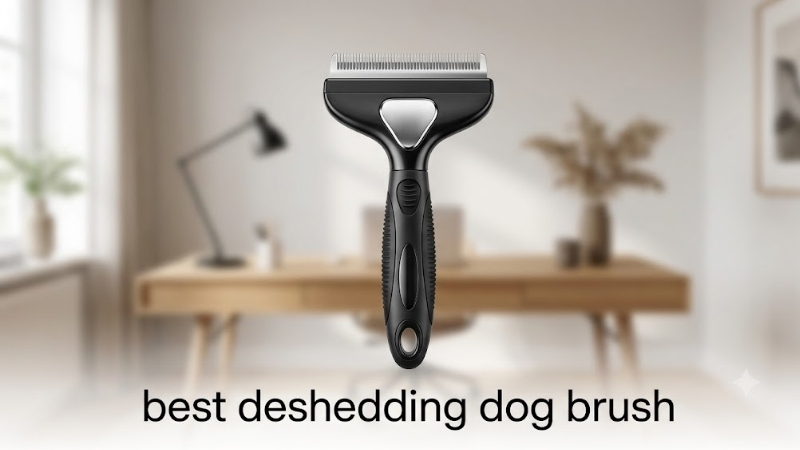
This is the largest group of dogs by some distance, and it is also where the best deshedding dog brush question gets asked most often. Guard hair is short enough for a blade tool to reach past, and the undercoat underneath is dense without being enormous, which is exactly the situation these tools were built around in the first place.
This is the group blade deshedders were designed around, and on a labrador in April the results are genuinely dramatic. The fine edge reaches past the short guard hairs, catches the loose undercoat underneath and pulls it clear in volumes that surprise most first-time users.
Golden retrievers and australian shepherds add feathering to the equation, and blade tools should stay away from it entirely. Those areas need a slicker, since the finer hair on legs, britches and ears is cut rather than cleared by an edge and takes months to grow back properly.
Smooth and Short Coats: Beagles, Boxers and Staffies
Short-coated dogs shed constantly and have almost no undercoat to rake out, which makes aggressive tools both unnecessary and risky. A rubber curry or a grooming glove lifts the loose hair by friction and static, and most dogs enjoy the sensation rather than tolerating it.
The volume these dogs produce still surprises people, particularly with a boxer or a staffie against dark furniture. Daily work with a mitt takes two minutes and removes more over a week than a weekly session with something sharper, and there is no risk of thinning the coat.
Technique, Timing and Coats to Avoid Entirely
Technique matters more than the tool, and most complaints about the best deshedding dog brush category trace back to pressure rather than design. The tool should glide across the coat rather than dig into it at any point, and if you find yourself leaning on it to get results, something else in the routine has gone wrong first.
Bathe and dry first whenever you can, because a high-velocity dryer pushes loose undercoat clear before any tool touches the dog. Work in the direction of hair growth, use short light passes, and stop as soon as the yield drops rather than working to a fixed number of minutes.
Single-coated breeds should never meet a deshedding edge at all. Poodles, doodles, maltese, shih tzus and yorkies grow hair continuously with no undercoat to remove, so the tool simply cuts the coat, wrecks the curl pattern and leaves a patchy outline that takes months to recover.
Top Picks: Five Deshedding Tools by Coat Type
The best deshedding dog brush for a household usually turns out to be two tools rather than one. These five cover heavy doubles, medium doubles, feathering and smooth coats, and each entry names the breeds it suits alongside a genuine limitation worth knowing about first.
| Tool | Type | Suits | Watch out for |
|---|---|---|---|
| Pat Your Pet Undercoat Rake | Double-sided rake | Huskies, pyrenees, malamutes | Too firm for thin skin |
| DakPets Deshedding Brush | Blade edge | Labradors, shepherds | Cuts if overworked |
| FURminator for Long Hair | Blade edge | Retrievers, aussies, collies | Keep off feathering |
| JW Pet Gripsoft Slicker | Slicker | Feathering and finishing | Low yield on undercoat |
| Delomo Grooming Glove | Silicone mitt | Beagles, boxers, staffies | Surface hair only |
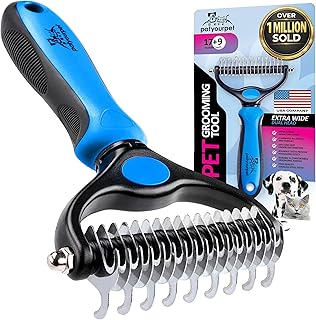
Pat Your Pet Double-Sided Undercoat Rake
Two heads on one handle covers the two jobs an arctic coat needs, with wider teeth for bulk undercoat and closer spacing for the finishing pass. On a husky in full blow it clears more per stroke than any blade tool here, and the guard coat comes through the process untouched.
The teeth are firm, which is exactly why it works and exactly why it needs care. Keep pressure light around the belly, the groin and the inside of the hind legs where skin is thin, and never force it through a felted patch, since the teeth will tear rather than separate.
DakPets Deshedding Brush
For households working to a budget this is arguably the best deshedding dog brush available, because it does much the same job as the premium blade tools for a fraction of the money and lasts perfectly well on a single dog groomed seasonally rather than daily.
For a labrador, a german shepherd or any medium double coat, this covers the job at a sensible price. The stainless edge reaches the undercoat, the handle stays comfortable across a twenty-minute session, and the release button clears collected hair without you picking at the blade.
It cuts as well as collects, like every blade tool, so short passes and light pressure are not optional. The edge dulls sooner than premium options under heavy weekly use, which is the trade-off for the price and rarely matters for a household grooming one dog seasonally.
FURminator deShedding Tool for Long Hair
The long-hair version has deeper teeth suited to retrievers, collies and australian shepherds, where guard hair sits longer over the undercoat. Yield during a moult is the highest on this list, which is why it remains the tool most groomers reach for on a golden in April.
It must stay off feathering, and it must never pass repeatedly over the same patch. Used carelessly it thins the guard coat visibly, and the damage takes months to grow out. Match the size and tooth length to your dog rather than simply buying whichever version happens to be discounted.
JW Pet Gripsoft Slicker Brush
Every double-coated dog with feathering needs a slicker alongside whatever removes the undercoat. Fine pins clear the small tangles that form behind the legs, in the britches and around the ears, and they do it without cutting the finer hair that blade tools damage so easily.
It removes very little bulk undercoat, so nobody should expect it to handle a coat blow on its own. The rubberised handle helps across longer sessions, and the pins should be checked periodically since a bent pin will scratch the skin and needs removing before the next session.
Delomo Pet Grooming Glove
For a smooth-coated dog the glove is the right answer rather than a gentle compromise. Silicone tips collect a striking volume of loose hair from a beagle or a boxer while the dog experiences the whole thing as being petted, which makes daily sessions genuinely easy to maintain.
Hair peels off the palm in one sheet, so cleanup takes seconds. It works only at the surface, though, so households with a husky or a pyrenees should treat it as a bonding tool rather than a deshedding one, then buy a proper undercoat rake for the actual seasonal work each spring and autumn.
Frequently Asked Questions
Four questions come up constantly once owners start comparing tools rather than brands. The best deshedding dog brush depends on the coat, and using the wrong one causes damage that takes months to grow out, so the answers below are worth reading before anything is added to a basket.
How often should I use a deshedding tool?
Once or twice a week outside the moult, rising to short daily sessions during the spring and autumn coat blows. Year-round daily use with a blade tool thins the guard coat over time, so ease off once the heavy shedding period has clearly passed for that particular season.
Which tool suits a golden retriever best?
A long-hair blade deshedder or an undercoat rake for the body, paired with a slicker for the feathering on the legs, britches and ears. Keeping the blade tool away from feathered areas entirely is the single most important rule with this breed and the one people ignore.
Can deshedding tools irritate the skin?
Yes, if pressure is heavy or the same area is worked repeatedly. Pink skin, flinching or a dog that suddenly avoids the brush all mean stopping for several days. Never use any deshedding tool over a scab, a lump or a lesion, and never over a damp or a dirty coat either.
Does deshedding reduce how much a dog sheds?
It does not change the shedding cycle, but it moves the hair into a bin instead of onto your sofa. It also lets air circulate through a double coat, which supports the insulation the dog relies on in hot weather as much as in cold, so the benefit is not purely cosmetic.
See More:
- Dog grooming shears best
- Best dog clippers for poodles
- Best dog clippers for doodles
- Best dog brush for poodle
- Best dog brush for great pyrenees
Final Thoughts
The best deshedding dog brush is chosen by coat rather than by brand: a rake for heavy doubles, a blade tool for medium doubles, a slicker for feathering and a mitt for smooth coats. Bathe and dry first, work in short light passes, keep blades away from single coats entirely, and the coat stays healthy.




Write Your Review
No reviews yet. Be the first to share your experience!