
Key takeaways
- It reaches loose hair that surface brushes miss. Double-coated breeds such as huskies, German shepherds, golden retrievers, Australian shepherds, corgis, and many spitz-type dogs can shed heavily from the undercoat. A rake can reach that layer more effectively than a basic bristle brush.
- It is inexpensive to try. Many useful models cost between $10 and $20, so you do not need to make a major investment to find out whether your pet benefits from one.
- It does not require batteries or electricity. There is no motor, noise, charging time, or wattage to consider. That makes a rake practical for nervous pets that dislike a high-velocity dryer.
- It can reduce loose fur around the home. Regular grooming removes hair before it falls onto upholstery, rugs, bedding, and car seats. It will not stop shedding entirely, but it can make seasonal shedding more manageable.
- It is easy to clean. Most loose hair can be pulled from the teeth by hand after each pass. There are no filters, blades, or replacement bags.
- It helps during seasonal coat blows. Many double-coated pets shed more heavily in spring and fall. Short, frequent sessions can remove loose undercoat without the frustration of trying to groom a large amount of fur at once.
- It is portable. A small rake fits in a grooming kit, suitcase, or vehicle and can be used without a table or other equipment.
What's inside
The Short Answer
Yes—an undercoat rake is worth it if your dog or cat has a thick, double-layered coat and you use it gently on a regular schedule. It is not a universal shedding brush, however. On a short-haired, single-coated, curly, or easily irritated pet, a rubber curry brush, slicker brush, comb, or professional grooming may be more useful.
An undercoat rake is a relatively inexpensive tool, usually costing about $10 to $25, that removes loose undercoat before it ends up on your furniture, clothing, and floors. The value comes less from the tool itself than from matching its teeth to the coat and using light pressure. A rake cannot replace bathing, clipping, brushing out mats, or veterinary care for skin problems.
As an Amazon Associate we earn from qualifying purchases at no extra cost to you. Product prices and availability are accurate as of the date shown and are subject to change.

What You Actually Get
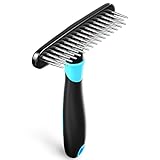
An undercoat rake is a handheld grooming tool with one or two rows of metal pins or teeth. The teeth are designed to pass through the longer outer coat and pull out loose, dead hairs from the dense layer underneath. Some models have widely spaced teeth for thick coats; others use narrower rows to collect finer undercoat.
Most are simple, non-powered tools. They do not trim healthy hair, blow-dry the coat, or collect fur automatically. You pull the rake through a small section of coat, remove the hair from the teeth, and repeat. A typical session may take 5 to 20 minutes, depending on the animal’s size, coat density, and tolerance.
Budget options can be found for roughly $9 to $15. For example, a Maxpower Planet Dog Grooming Rake is commonly listed around $13.99, while a DOGI double-row stainless-steel-pin rake is around $9.99. At this price level, expect a basic plastic or rubberized handle and metal teeth rather than premium ergonomics. More expensive rakes may have a stronger handle, smoother-finished pins, or interchangeable tooth spacing, but higher cost does not automatically mean better grooming.
The most important detail is tooth design. Wide teeth are generally better for a thick, woolly undercoat and are less likely to snag when used correctly. Closely spaced teeth can collect more loose fur but may drag on dense coats or pull at tangles. A rake with sharp, pointed teeth can scratch skin if you press down, move too quickly, or use it over a mat.
Pros
- It reaches loose hair that surface brushes miss. Double-coated breeds such as huskies, German shepherds, golden retrievers, Australian shepherds, corgis, and many spitz-type dogs can shed heavily from the undercoat. A rake can reach that layer more effectively than a basic bristle brush.
- It is inexpensive to try. Many useful models cost between $10 and $20, so you do not need to make a major investment to find out whether your pet benefits from one.
- It does not require batteries or electricity. There is no motor, noise, charging time, or wattage to consider. That makes a rake practical for nervous pets that dislike a high-velocity dryer.
- It can reduce loose fur around the home. Regular grooming removes hair before it falls onto upholstery, rugs, bedding, and car seats. It will not stop shedding entirely, but it can make seasonal shedding more manageable.
- It is easy to clean. Most loose hair can be pulled from the teeth by hand after each pass. There are no filters, blades, or replacement bags.
- It helps during seasonal coat blows. Many double-coated pets shed more heavily in spring and fall. Short, frequent sessions can remove loose undercoat without the frustration of trying to groom a large amount of fur at once.
- It is portable. A small rake fits in a grooming kit, suitcase, or vehicle and can be used without a table or other equipment.
Cons
- It is easy to overuse. Repeatedly raking the same area can cause redness, discomfort, or broken hair. Start with five minutes and inspect the skin instead of assuming more brushing is better.
- It can hurt if used on mats. A rake is not a dematting tool. Pulling it through a tight mat can tug the skin underneath. Small tangles may need a comb or slicker brush first; severe mats should be handled by a professional groomer or veterinarian.
- It is not suitable for every coat. Short-haired dogs may have too little undercoat for the rake to do much. Curly coats can snag, and fine or fragile coats may be better served by a soft brush or comb.
- Some designs feel scratchy. Poorly finished metal pins can have rough tips or sharp edges. Run the tool over your own forearm with light pressure before using it on your pet. If it feels sharp to you, it can irritate the animal.
- It may not remove the hair you expect. A rake removes loose undercoat, not every strand of shedding hair. A slicker brush or deshedding tool may still be needed to finish the coat.
- Pets may dislike the sensation. Dense undercoat can make grooming feel like pulling, especially if the coat is already tangled. Introducing the tool gradually is essential.
- It cannot diagnose skin issues. Excessive shedding, bald patches, scabs, persistent itching, odor, or inflamed skin can signal allergies, parasites, infection, or another health concern. A rake is not a treatment.
Who Should Buy It
Buy an undercoat rake if your pet has a dense double coat, sheds visibly, and tolerates gentle brushing. It is particularly useful for medium- and long-haired dogs that produce a noticeable seasonal undercoat. It can also help some long-haired cats, provided the cat is comfortable with handling and the teeth do not catch on tangles.
Choose a model with smooth, rounded pins and a comfortable handle. If the coat is thick, look for wider-spaced teeth rather than a very fine row. Use the rake once or twice a week during ordinary shedding and more frequently during a coat blow only if the skin remains comfortable. Always brush in the direction of hair growth, use light strokes, and stop when the tool begins catching.
Who Should Skip It
Skip an undercoat rake if your pet has a smooth, short coat with little undercoat, or if brushing consistently causes fear, pain, or aggression. It is also the wrong first tool for a coat covered in tight mats. A professional groomer can remove serious tangles more safely than repeated home pulling.
Do not use one over open wounds, hot spots, irritated skin, recent surgical areas, or unexplained bald patches. If your pet suddenly sheds much more than usual or scratches constantly, address the underlying problem before buying another grooming tool.
Cheaper Alternatives
| Option | Cost | Trade-off |
|---|---|---|
| Rubber curry brush | $5–$12 | Gentle and useful for short coats, but it usually cannot reach a thick undercoat. |
| Basic metal comb | $4–$10 | Good for checking tangles and finishing the coat, but slow for removing large amounts of loose fur. |
| Soft slicker brush | $8–$18 | Versatile for many medium and long coats, though the fine pins can irritate skin if pressed too hard. |
| Grooming glove | $6–$15 | Comfortable for nervous pets and surface shedding, but less effective on dense, packed undercoat. |
| Professional grooming session | $40–$120+ | More expensive, but safer for severe shedding, difficult coats, bathing, drying, and mats. |
For many owners, the best setup is not one brush but two: an undercoat rake for loose dense fur and a comb or slicker brush for finishing. If you are deciding between a roughly $10 DOGI rake and a roughly $14 Maxpower Planet option, focus on pin smoothness, tooth spacing, handle comfort, and your pet’s coat—not on a percentage claim printed on the package. A modestly priced tool that your pet accepts is more valuable than an expensive brush that stays in a drawer.
FAQ
How often should I use an undercoat rake?
Start with once a week for five to 10 minutes. During heavy seasonal shedding, you may increase that to two or three short sessions per week if the skin stays normal and your pet remains relaxed. Stop if you see redness, flakes, sensitivity, or repeated attempts to escape.
Can an undercoat rake remove mats?
It can help with loose, shallow tangles, but it should not be used to force through tight mats. Mats pull on the skin and may hide sores or parasites. Separate small tangles with your fingers or a suitable comb, and have extensive matting handled by a professional.
Is an undercoat rake better than a deshedding tool?
Neither is automatically better. A rake is often more comfortable for a very thick undercoat because its teeth are spaced farther apart. A deshedding tool with a narrow metal edge may remove more loose hair in fewer passes, but it requires careful pressure and may be too harsh for some coats. Coat type and technique matter more than the label.
Can I use an undercoat rake on a cat?
Yes, on some long-haired or double-coated cats, but use extra caution. Cats have sensitive skin and may react poorly to pulling. Keep sessions brief, avoid the belly and other sensitive areas at first, and never rake through mats. For a cat that resists grooming or has painful tangles, ask a veterinarian or experienced cat groomer for help.




Write Your Review
No reviews yet. Be the first to share your experience!