
Key takeaways
- More control: You can remove a fraction of a millimeter at a time instead of committing to a full clip. That is especially useful for overgrown nails or dark nails.
- Smoother edges: Proper grinding can reduce sharp points that snag blankets, upholstery, and clothing.
- Lower risk of a dramatic mistake: Because material is removed gradually, it is often easier to stop before reaching the quick. It is still possible to overgrind, so slow handling remains essential.
- Useful for thick nails: A capable grinder can handle dense nails that are difficult to fit into small clippers.
- One tool for multiple pets: A speed-adjustable grinder can work for large dogs, small dogs, and cats when used with the correct opening or bit.
- Potentially less wrestling: Once a dog is accustomed to the vibration, short passes can be less startling than the sudden pressure and click of clippers.
- Convenient at home: A cordless unit avoids cords across the floor and can be used in a familiar, low-stress location.
What's inside
The Short Answer
Yes, a dog nail grinder is worth it if your dog tolerates gradual handling of their paws and you want smoother, more controlled trims than nail clippers provide. The one condition is that you must be willing to introduce the sound and vibration slowly; a grinder is not a shortcut for a dog that panics at grooming.
Unlike clippers, which remove a section of nail in one squeeze, a grinder sands the nail down with a rotating abrasive tip. That makes it easier to take off tiny amounts at a time, especially when your dog has dark nails and you cannot clearly see the quick. It can also leave a rounded edge instead of the sharp corners some clippers create.
As an Amazon Associate we earn from qualifying purchases at no extra cost to you. Product prices and availability are accurate as of the date shown and are subject to change.

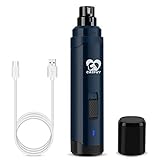
What You Actually Get
A typical cordless dog nail grinder includes a rechargeable handle, a rotary grinding head, one or more sanding bands or a diamond bit, and protective openings designed for different nail sizes. Most consumer models weigh roughly 2 to 5 ounces and measure about 5 to 7 inches long, so they are small enough to store in a grooming drawer or carry in a travel bag.
Many models offer two or three speed settings. Lower speeds are useful for puppies, small dogs, cats, and first sessions; higher speeds can reduce filing time on thick nails. Common consumer units use a small motor rated around 2 to 5 watts, though wattage alone does not tell you how effective or quiet a grinder will feel in use.
Expect a rechargeable battery, usually charged by USB. Depending on the model and speed, advertised operating time commonly falls somewhere between 2 and 6 hours per charge. That is more than enough for several short grooming sessions, but charging time and battery longevity vary considerably. A low-battery indicator is helpful because a slowing grinder can make the process take longer.
Some grinders include a built-in LED light. It may improve visibility around the nail, but it does not make the quick visible through every dark nail. A light is an aid, not a safety guarantee. You still need to remove small amounts and inspect the nail frequently.
Price is another reason grinders attract attention. Basic models generally cost about $15 to $30. For example, the Whisper Quiet Dog Nail Grinder Safe & Stress-Free for Sensitive Dogs Cats is listed at $22.49, while the Casfuy Dog Nail Grinder Upgraded is listed at $17.97. These prices make a grinder less expensive than several professional nail-trimming appointments, although quality, battery life, and motor consistency can differ between models.
Pros
- More control: You can remove a fraction of a millimeter at a time instead of committing to a full clip. That is especially useful for overgrown nails or dark nails.
- Smoother edges: Proper grinding can reduce sharp points that snag blankets, upholstery, and clothing.
- Lower risk of a dramatic mistake: Because material is removed gradually, it is often easier to stop before reaching the quick. It is still possible to overgrind, so slow handling remains essential.
- Useful for thick nails: A capable grinder can handle dense nails that are difficult to fit into small clippers.
- One tool for multiple pets: A speed-adjustable grinder can work for large dogs, small dogs, and cats when used with the correct opening or bit.
- Potentially less wrestling: Once a dog is accustomed to the vibration, short passes can be less startling than the sudden pressure and click of clippers.
- Convenient at home: A cordless unit avoids cords across the floor and can be used in a familiar, low-stress location.
Cons
- Noise and vibration: Even a model described as whisper-quiet produces a motor sound and a buzzing sensation. Sensitive dogs may need several days or weeks of conditioning.
- It takes longer: A complete trim may take 10 to 20 minutes, particularly when you are working in short sessions. A confident professional may clip the same nails faster.
- Heat can build up: Holding the grinder against one nail for too long can create uncomfortable heat. Use brief one- to three-second passes and touch the nail between passes.
- Dust and odor: Grinding creates nail dust and may produce a faint burnt smell if the bit is pressed too firmly. Work in an easy-to-clean area and wipe the tool afterward.
- Consumable parts wear out: Sanding bands become less effective and need replacement. Diamond bits may last longer but still require cleaning and eventual replacement.
- Battery dependence: A dead battery can interrupt grooming. A model that works only while charging may be inconvenient if the charging cable is short.
- Not completely foolproof: A grinder can still hit the quick, irritate the paw pad, or cause discomfort if used at the wrong angle.
Who Should Buy It
A grinder is a strong choice for owners who regularly maintain their dog’s nails at home, particularly if the nails are dark, thick, curved, or prone to sharp edges. It also makes sense if your dog dislikes the sudden action of clippers but can accept gentle, repetitive handling.
Choose a model with at least two speeds, a comfortable non-slip grip, replaceable sanding pieces, and a protective guard with openings appropriate for your pet’s nail size. A unit under about 5 ounces is easier to control during a long session. For a large dog with thick nails, prioritize a steady motor and a larger grinding surface over the smallest possible body.
Buyers with multiple pets may get especially good value. Even a $18 to $25 grinder can pay for itself after one or two avoided grooming visits, depending on local service prices. The savings are only real if you will use it consistently and your dog can learn to tolerate it.
Who Should Skip It
Skip a grinder, at least for now, if your dog snaps, thrashes, or cannot tolerate paw handling. Forcing the tool can create a lasting fear of grooming and increase the chance of injury. A professional groomer or veterinarian can help with severely overgrown nails, painful paws, anxiety, or a dog that cannot be safely restrained.
You may also prefer clippers if your dog stands calmly, has light-colored nails, and you want the fastest possible trim. Owners who groom only once or twice a year may not want to maintain a rechargeable device, clean nail dust, or replace sanding bands.
Cheaper Alternatives
| Option | Cost | Trade-off |
|---|---|---|
| Basic scissor-style dog nail clippers | $8–$15 | Fast and inexpensive, but less forgiving and more likely to leave sharp edges. |
| Guillotine-style nail clipper | $7–$14 | Compact and simple, but harder to control on thick or unusually shaped nails. |
| Manual nail file | $3–$10 | Quiet and low-risk, but slow and tiring for large dogs or heavily overgrown nails. |
| Professional nail trim | $15–$35 per visit | No equipment or training required, but the recurring cost adds up and travel may be stressful. |
| Veterinary nail trim | $20–$50 per visit | Appropriate for difficult or painful cases, but usually the most expensive routine option. |
FAQ
Is a dog nail grinder safer than clippers?
It can be easier to control, but it is not automatically safer. Grinding lets you remove small amounts and may reduce the chance of cutting deeply into the quick. However, prolonged contact can cause heat or friction, and a moving bit can catch skin or fur. Keep the tool moving, use short passes, and stop when the nail approaches the quick.
How do I introduce a grinder to a nervous dog?
Start with the grinder turned off. Reward your dog for looking at it, sniffing it, and allowing you to touch a paw. Later, run the tool several feet away for one or two seconds, then reward calm behavior. Gradually bring it closer over multiple sessions. At first, grind only one nail, or simply touch the rotating tool to the nail for a second. Ending before your dog becomes frightened is more productive than completing every nail in one sitting.
How often should I grind my dog’s nails?
Many dogs need maintenance every two to four weeks, but growth rate and exercise make the schedule different for each pet. If you hear nails clicking on hard floors or see them touching the ground while your dog stands, they may be overdue. Frequent, small trims are usually easier than waiting until the nails are long and the quick has extended forward.
Can I use a dog nail grinder on a cat?
Yes, provided the grinder has a low setting and you use a light touch. Cats have smaller, more delicate nails and may object strongly to vibration. Expose only one claw at a time, avoid the quick, and keep sessions very short. If your cat becomes distressed, stop and ask a veterinarian or experienced groomer for help.
Overall, a dog nail grinder is worth it for patient owners who want precision, smoother nails, and a reusable home-grooming tool. It is not the best answer for every pet, but with gradual training and short, gentle sessions, it can make routine nail care more manageable in 2026.




Write Your Review
No reviews yet. Be the first to share your experience!