
Key takeaways
What's inside
Long haired cat brush best choices depend on coat texture far more than coat length. A Persian and a Maine Coon are both long-haired, yet one mats within days and the other stays clear for a week, so the right tool and schedule differ considerably between them.
As an Amazon Associate we earn from qualifying purchases.




As an Amazon Associate we earn from qualifying purchases.
🛒 Best Price Today on Amazon
Prime members get fast, free shipping on everything above, plus member-only deals. New members get a 30-day free trial — cancel anytime.
Long Haired Cat Brush Best Matches by Coat Type
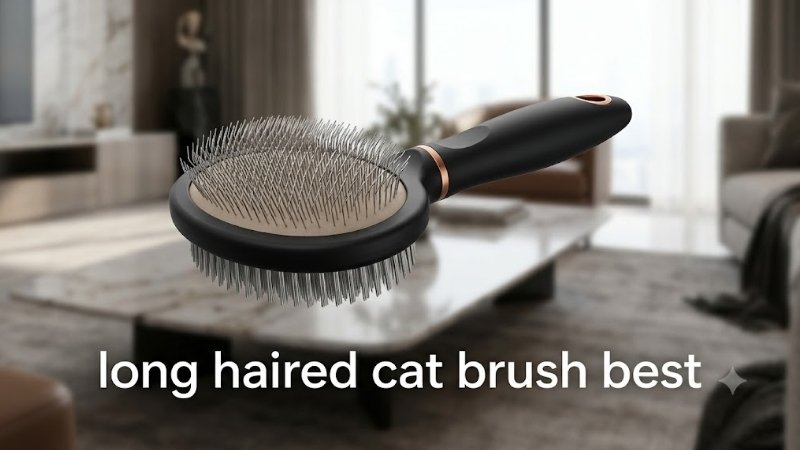
Breed is a useful shorthand, but the long haired cat brush best suited to your cat depends on whether the coat is cottony or silky and how dense the undercoat sits beneath it. Working that out for your own cat tells you both which tool to buy and how often you need to use it.
Cottony Coats Versus Silky Coats
Cottony coats mat fastest and need daily attention, so the long haired cat brush best suited to them is a comb used every evening. The hair is fine, dense and slightly matte, so individual strands catch on each other constantly, which is why Persians and some domestic longhairs develop knots in the armpits within two or three days of being left alone.
Silky coats behave far better. The hair is smoother and slides against itself rather than catching, so ragdolls and many Maine Coons stay clear for several days at a time, and the routine becomes maintenance rather than a race against matting.
Test it with your fingers rather than trusting the breed description. Run a hand backwards through the coat near the hindquarters, and if the hair feels like cotton wool and springs back into a tangle, treat the cat as high maintenance regardless of what its pedigree says.
What Each Breed Type Needs
Persians and similar dense coats need daily combing without exception. The undercoat is thick, the hair is cottony, and skipping two days regularly is how owners end up at a groomer having a badly matted cat clipped, which is stressful for everyone involved.
Maine Coons and Norwegian forest cats carry a semi-long double coat that is easier day to day but sheds heavily in spring and autumn. Two or three sessions a week is usually enough outside those periods, rising to daily through the seasonal moult.
Ragdolls sit somewhere in between with a silky coat and relatively little undercoat. Three sessions a week keeps most of them clear, with extra attention behind the ears and under the chin where even a silky coat will knot if it is consistently missed.
Building a Weekly Schedule
Rotating zones is what makes a long coat manageable. Combing behind the ears and under the chin one day, the armpits and chest the next, then the back legs and tail base, covers the whole cat across a week without ever demanding a long session.
Anchor the routine to something you already do. Grooming while the cat settles on your lap in the evening works far better than deciding to groom at a random moment, and cats accept a predictable ritual much more readily than an unexpected one.
Keep the tools where the routine happens. A comb in the drawer beside the sofa gets used every evening, whereas one stored upstairs in a grooming box turns a daily habit into something you keep intending to get around to.
Kittens, Seniors and Cats That Stop Grooming
Kittens should be handled long before the adult coat arrives. A long-haired kitten that accepts a comb at four months becomes a cat that tolerates daily grooming for life, and the coat it grows at eight or nine months will absolutely require that tolerance.
Senior cats need help with the areas they can no longer reach. Reduced flexibility means the hindquarters and base of the tail mat first, and a cat that suddenly stops grooming itself at all deserves a veterinary appointment rather than simply more brushing.
Overweight cats face the same problem for a different reason. Reduced flexibility means the same unreachable areas mat first, so a weight conversation with your vet often does as much for the coat as any change of tool would.
Top Picks: Long Haired Cat Brush Best Options for Every Coat
Every option in this long haired cat brush best lineup covers dense cottony coats, silkier ones or seasonal double coats. Most households need a comb plus one other tool, chosen according to whether the cat’s problem is matting, shedding volume or simply refusing to be groomed at all.
| Tool | Type | Best for | Frequency |
|---|---|---|---|
| Andis Pet Steel Comb | Steel comb | All long coats | Daily |
| FURminator for Cats, Long Hair | Deshedding edge | Seasonal moult | Weekly |
| JW Pet Gripsoft Cat Slicker | Slicker | Silky coats | Every other day |
| Safari Cat Shedding Comb | Shedding comb | Dense double coats | Twice weekly |
| KONG Cat ZoomGroom | Rubber brush | Reluctant cats | As tolerated |
Andis Pet Steel Comb
Whatever the breed, a steel comb is the tool that does the real work on a long coat. The teeth pass from skin to tip when the coat is clear and stop dead when it is not, which makes it both the grooming tool and the test of whether you have finished.
It removes very little loose hair by itself, so a shedding cat needs something else alongside it. The teeth also catch painfully on established mats, which need working loose carefully or handing over to a groomer with clippers instead.
FURminator deShedding Tool for Cats, Long Hair
Double-coated breeds through a seasonal moult produce more loose fur than a comb can keep up with. The cat-sized stainless edge pulls that undercoat out efficiently, and the ejector button keeps a short session moving rather than stopping to clear the head repeatedly.
It is easy to overuse on a cat, so keep it to once or twice weekly during a moult with light pressure. It is also the wrong tool for a cottony Persian coat, where a comb and slicker do a better job with far less risk to the skin.
JW Pet Gripsoft Cat Slicker Brush
Silky coats such as a ragdoll’s respond well to a cat-scaled slicker. The softer pins separate the hair and lift loose fur without the harshness of a dog brush, and the handle suits the short repeated sessions that most cats will actually sit through.
Pins still need a light touch on thin skin, particularly along the flanks and hindquarters. There is no self-cleaning mechanism either, so you will be pulling collected fur off the pad by hand between passes on a heavy-shedding cat.
Safari Cat Shedding Comb
Dense double coats benefit from a comb designed to pull undercoat rather than simply pass through. The alternating tooth lengths reach deeper than a standard comb, which suits Maine Coons and Siberians during the weeks when the coat is genuinely coming out.
It is rather less useful on a fine silky coat, where a standard comb gives better control. Like any comb it also catches on established mats, so those need dealing with before the tool goes anywhere near that section of coat.
KONG Cat ZoomGroom
Some long-haired cats simply object to metal, and rubber is the compromise. The soft nubs lift surface hair while feeling like firm stroking, which keeps grooming positive for a nervous cat and works well as the introduction tool for a long-haired kitten.
It does nothing for undercoat or mats, so it cannot carry a long-coat routine on its own. Collected hair also mats onto the rubber every few strokes, which means pausing regularly to pull it clear during a longer session.
Frequently Asked Questions
Owners of long-haired cats ask the same questions about breed differences, whether clipping is ever appropriate, and how to tell normal seasonal shedding apart from a coat that is genuinely getting out of hand.
Which long-haired breed is hardest to groom?
Persians, generally, because the cottony coat and dense undercoat mat faster than any other common type. The long haired cat brush best suited to that coat is a good steel comb used daily rather than any brush bought for shedding.
Should a long-haired cat ever be clipped?
A lion clip is sometimes the kindest option for a severely matted or elderly cat that can no longer groom itself. It is a reset rather than a routine, and a daily comb afterwards usually prevents the situation from repeating.
How do I know if shedding is excessive?
Heavier shedding in spring and autumn is normal. Bald patches, broken hair, a cat over-grooming one area or fur coming out in clumps when handled are not, and those warrant a veterinary appointment rather than a change of brush.
Do long-haired cats need more hairball care?
They swallow more fur than short-haired cats, so hairballs are more common. Regular grooming reduces that considerably, and frequent hairballs or repeated retching despite a good routine is worth discussing with your vet rather than managing at home indefinitely.
See More:
- Best robot vacuum dog hair
- Best robot vacuum cleaner for dog hair
- Best robotic vacuum cleaner for dog hair
- Best dog deshedding shampoo
Final Thoughts
The long haired cat brush best suited to your cat depends on whether the coat is cottony or silky and how much undercoat sits beneath it. Use a steel comb daily on dense coats, add a deshedding tool for seasonal moults, and rotate zones so no session ever runs long.




Write Your Review
No reviews yet. Be the first to share your experience!