
Best dog brush for beagles catches most owners out, because a beagle looks like a low-maintenance short-coated dog and sheds like something twice its size. The coat is short but dense and double-layered, which means the tools that suit a boxer or a bulldog only do half the job here.
Our top picks
 Swihauk Self Cleaning Slicker Brush
Release-bottom design helps clear collected hair with one press
Soft, round-tipped bristles are designed to avoid hurting the pet
Stainless steel construction is built for sturdy, long-term use
Large size may be less maneuverable for small pets or tight spots
Press-button cleaning mechanism adds a moving part that could wear over time

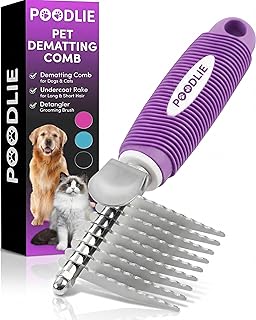

 SleekEZ Dog Brush for Shedding
Works across short, medium, and long coat lengths
Patented design grabs hair tips to reduce painful tugging
Doubles as a tool for removing pet hair from furniture and cars
5-inch size may be small for grooming large dogs quickly
Metal construction requires careful storage away from small children

 Short Hair Dog Brush for Detangling and
2-in-1 design pairs a silicone massage side with a bristle side
Boar bristle side is gentler for sensitive areas like the belly
Bamboo handle is shaped for an ergonomic, fatigue-reducing grip
Geared toward short-haired coats rather than long, matted fur
Boar bristle side needs regular cleaning to clear trapped hair

As an Amazon Associate we earn from qualifying purchases at no extra cost to you.
As an Amazon Associate we earn from qualifying purchases.
By Laura Simmons
🛒 Best Price Today on Amazon
Prime members get fast, free shipping on everything above, plus member-only deals. New members get a 30-day free trial — cancel anytime.
Start 30-Day Prime Free Trial →See Today’s Amazon DealsHow to Choose the Best Dog Brush for Beagles
The defining feature of a beagle coat is that it is short and dense at the same time. There is a genuine undercoat under that hard outer layer, and it releases heavily twice a year, which changes the tool list considerably compared with a genuinely single-coated breed. Density rather than length is the defining feature.
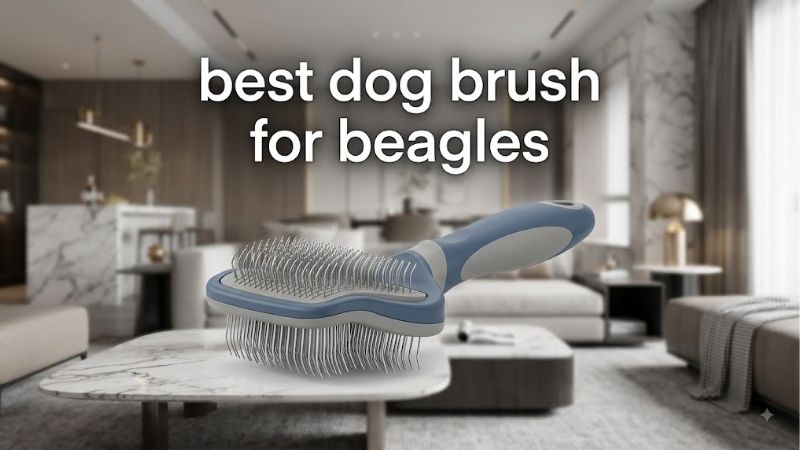
Short Coat, Real Undercoat
The best dog brush for beagles is rarely a long-toothed undercoat rake, because the topcoat is short and such a tool mostly passes through without engaging. What works instead is a short-toothed deshedding tool that reaches just far enough to release the dense layer, or a rubber curry used with enough pressure to lift it from below. Reach has to match coat depth, not coat length.
That combination is why beagle owners often end up with two tools rather than one. The rubber brush handles weekly maintenance comfortably, and a short-hair deshedding tool comes out during the spring and autumn coat changes when the volume genuinely justifies it. Two tools cover the year comfortably.
Do not reach for a long-pin slicker built for doodle coats. On a short dense coat the pins reach skin before they reach anything useful, and the result is an irritated dog and very little hair in the brush after ten minutes of effort. Long pins and short coats are a poor match.
Deshedding Tools and How Often to Use Them
Blade-style deshedding tools work by capturing loose hair with a fine-toothed edge, and on a beagle in full shed the volume they remove is genuinely startling. Choose the version sized for a short coat and matched to the dog’s body length rather than buying the largest available. Sizing affects comfort more than coverage.
They are cutting tools, so overuse damages the topcoat and can irritate skin. Once or twice a week during a coat change is plenty, and the moment the tool starts coming back mostly empty is the moment to stop rather than the moment to press harder. Emptiness is the signal to stop entirely.
Field Work, Ticks, and Skin Checks
Beagles were bred to work in undergrowth and most still behave like it, which means grooming is also a tick and grass-seed check. A fine-toothed comb run over the ears, neck, armpits, and between the toes finds things a hand simply misses on a dense coat. Comb work doubles as an early health check.
A flea comb doubles for this job, and the double-row versions catch more per pass. Dip the comb into water with a little detergent between strokes during flea season, and check the ear leathers carefully since they are a favourite attachment point on this breed. Check the ear leathers every single session.
Tick and flea pressure builds from March through May and now runs later into autumn as warm spells extend the season. Grooming supplies see their sharpest discounting around Prime Big Deal Days in early October, which lands conveniently before the winter coat change. Restocking early is a small, reliable saving.
Ears, Which Matter More Than the Coat
A beagle’s long drop ears restrict airflow, and grooming time is the natural moment to look inside them. Lift the leather, check for redness, odour, or discharge, and wipe the outer surface only rather than pushing anything down into the canal itself. Outer surface only, and let the dog shake.
Persistent head shaking, scratching at one ear, or a noticeable smell needs a veterinary appointment rather than a home remedy. Ear problems on drop-eared breeds progress quickly, and catching them during a weekly brush is one of the more useful things grooming actually does. Early detection beats any treatment product.
Top Picks: Six Tools for a Beagle Coat
The six tools below cover weekly maintenance, seasonal deshedding, and the field checks a beagle needs. The table lists type and job before the individual assessments, and every entry ends with a genuine drawback rather than a marketing caveat. No single best dog brush for beagles covers shedding, finishing, and field checks.
| Tool | Type | Job | Watch Out For |
|---|---|---|---|
| FURminator deShedding, Short Hair | Blade deshedder | Coat change season | Easy to overuse |
| KONG ZoomGroom | Rubber curry | Weekly maintenance | Small head |
| Safari Undercoat Rake, Single Row | Rotating pins | Dense patches | Long teeth on short coat |
| Frisco Bristle Brush | Bristle | Finishing and shine | Removes little hair |
| HandsOn Grooming Gloves | Rubber-tined gloves | Wriggly dogs | Sized per person |
| Safari Double Row Flea Comb | Fine metal comb | Tick and flea checks | Teeth can loosen |
FURminator deShedding Tool for Short Hair
During a spring or autumn coat change the best dog brush for beagles is this one, removing more dense undercoat per stroke than anything else on the list, and the release button clears the collected hair cleanly. Choose the short-hair version and the size matched to your beagle’s body length rather than the largest one available. Sizing to body length matters more than reach.
It is a cutting tool, so repeated passes over the same area thin the topcoat and irritate skin. Limit it to once or twice a week during the shed, stop when it comes back empty, and keep it out of the routine entirely for the rest of the year. Seasonal use makes one tool last for years.
KONG ZoomGroom
As a weekly best dog brush for beagles, the rubber nubs collect loose hair effectively on a short dense coat and cause no risk of scratching, which makes this the right weekly tool for a beagle. It works dry or wet, and using it to apply shampoo during a bath spreads product far more evenly than hands do. It doubles as a bath brush without extra cost.
The head is small, so a full-body session takes a few minutes longer than a wide brush would. Collected hair also needs pulling off by hand rather than lifting away in one piece, which is tedious during the heaviest weeks of a coat change. Clearing it outdoors saves the worst of that.
Safari Undercoat Rake, Single Row
Rotating tapered pins with rounded tips make this a comfortable tool for the denser patches along a beagle’s neck and hindquarters, where the undercoat sits thickest. Used lightly it reaches the layer a rubber brush lifts only partially, without any pulling on the coat. Rotation is what keeps it comfortable.
The teeth are longer than a short coat really needs, so much of each stroke does nothing and it is easy to apply too much pressure trying to compensate. On most beagles it is a supplementary tool rather than the primary answer to shedding. Keep it for the neck and hindquarters only.
Frisco Bristle Brush
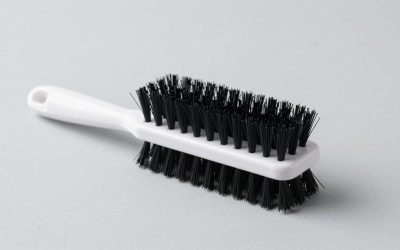
A bristle brush lays the outer coat flat and moves natural oils along the hair shaft, which is what produces the tight glossy finish a healthy beagle should have. Used after a rubber curry it turns a clean dog into a finished one in under two minutes. Finishing is quick and worth doing every time.
It removes almost no loose hair by itself, so it cannot be the only brush in the house. Owners who buy it expecting help with shedding are consistently disappointed, because finishing and deshedding are entirely separate jobs on this coat type. Buy it as the second tool rather than the first.
HandsOn All-in-One Grooming Gloves
Rubber tines across the palm let you groom a beagle that will not stand still, because the dog experiences the process as being stroked. They work wet or dry, and the shed hair clings to the gloves rather than scattering across the floor as you work. Less cleanup is a genuine everyday benefit.
They are sized to the person rather than the dog, so two people grooming means two pairs. They also remove less hair per pass than a dedicated rubber curry, and several owners report the rubber being stiff and awkward to clean thoroughly afterwards. Convenience buys consistency rather than volume.
Safari Double Row Flea Comb
The double row of tightly packed teeth catches what a single row misses, which matters on a working dog that comes home from long grass. It also finds grass seeds, scabs, and ticks early, and doubles as a useful loose-hair remover on short dense coats. It earns its place twice over on a working dog.
Owners consistently report teeth loosening where the metal meets the plastic handle, particularly after tapping it against a hard surface to clear it. Clear it in a cup of soapy water instead and the comb lasts several seasons rather than a single one. Tapping the handle is what kills these combs.
Frequently Asked Questions
These questions come up most often from owners surprised by the volume a beagle sheds, and from those working out how much of grooming time should go on health checks rather than the coat itself. The answers assume a healthy adult dog and a best dog brush for beagles used weekly.
Why does my beagle shed so much?
Because the coat is short but genuinely double-layered, with a dense undercoat that releases heavily twice a year. Short does not mean low-shedding, and the hair is stiff enough to weave into fabric, which makes the volume more noticeable than it would be on a longer coat. Stiff hair weaves into fabric remarkably well.
How often should I brush?
Once or twice a week with a rubber curry for most of the year, and every other day during the spring and autumn coat changes. Add a short-hair deshedding tool once or twice weekly during those peaks and drop it again once the volume falls away. Two peaks a year account for most of the work.
Do beagles need bathing often?
Every six to eight weeks is plenty unless the dog has found something unpleasant. Over-bathing strips oils and dulls the coat, and a rubber curry does more for shine than a bath does. Spot cleaning covers most of what a field day leaves behind. Spot cleaning protects the coat’s natural oils.
What should I check while brushing?
Ears first, then the armpits, between the toes, and along the belly for ticks and grass seeds. Grooming is the most reliable moment to catch those things early, and on a drop-eared breed the weekly ear check is arguably more valuable than the brushing itself. Drop ears restrict airflow year-round.
See More:
- Best smelling dog shampoo and conditioner
- Best dog mite shampoo
- Hartz Groomer’s Best Soothing Oatmeal Dog Shampoo
- Best professional dog nail grinder
- Best cat brush medium hair
Final Thoughts
The best dog brush for beagles is a rubber curry for weekly work, backed by a short-hair deshedding tool during the coat change and a fine comb for tick and grass-seed checks. Treat the ears as part of every session, since that habit catches problems long before they become expensive.



Write Your Review
No reviews yet. Be the first to share your experience!