
Best washer and dryer for pet hair is decided by filtration and drum action rather than by capacity alone, because loose hair has to be captured and flushed away rather than simply moved around the drum. This guide covers filters, cycles and habits, then compares five machines built for shedding households.
Our top picks


As an Amazon Associate we earn from qualifying purchases at no extra cost to you.
As an Amazon Associate we earn from qualifying purchases.
🛒 Best Price Today on Amazon
Prime members get fast, free shipping on everything above, plus member-only deals. New members get a 30-day free trial — cancel anytime.
How to Choose the Best Washer and Dryer for Pet Hair Households
Pet hair does not dissolve, and an ordinary wash cycle mostly relocates it from one item onto another. The best washer and dryer for pet hair combines a filter that actually traps hair, enough water action to lift it off fabric, and a drain path that carries it out of the machine.
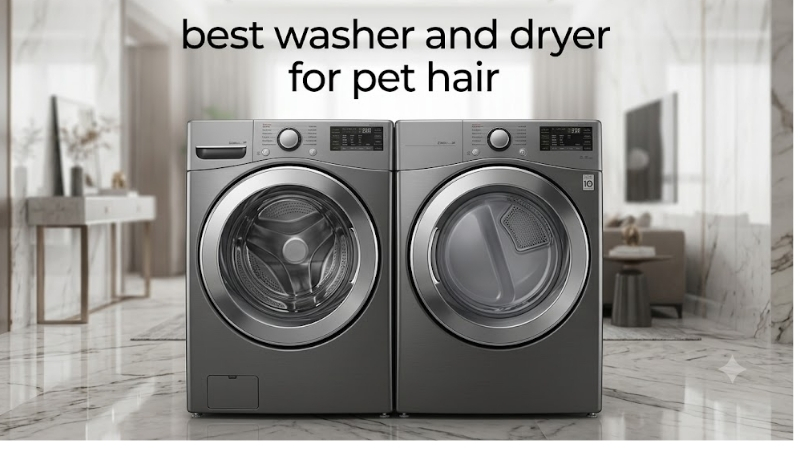
Pet Hair Filtration and Where the Hair Goes
Several manufacturers now build dedicated pet hair filters into the drum or the pump housing, and these make a genuine difference. Whirlpool and Maytag both market a pet system of this type, and the filter is a physical basket you remove and rinse rather than a software cycle.
Machines without a dedicated filter rely on the drain pump and a lint trap that may or may not exist. Front loaders in particular use very little water, which means hair that comes off a blanket has fewer places to go and often ends up redeposited onto the next item in the load.
Whatever machine you buy, the filter only works if you clean it. A pet hair basket clogged with three weeks of undercoat stops trapping anything and starts restricting flow, so build a rinse into the routine on the same day you change the bedding, and it will stay effective for years.
Drum Action, Capacity and Load Type
How the drum moves fabric decides how much hair is released before the water carries it anywhere, so the best washer and dryer for pet hair pairs a filter with a drum action that agitates bedding properly. Capacity matters here too, since a cramped drum simply cannot move water through a bulky cover.
Impeller top loaders move clothes against each other with a low-profile disc, which lifts hair well and treats a dog bed cover better than a traditional centre agitator does. Agitator machines clean aggressively but are harder on bulky bedding and can tangle long covers badly.
Capacity matters more in a pet household than most people expect. A drum around 4.5 to 5.2 cubic feet swallows a large dog bed cover, two blankets and a pile of towels in one load, and an overloaded machine cannot move water through fabric well enough to release any of the hair.
Steam, Sanitize and Allergen Cycles
Steam cycles loosen hair and dander from fibres before the main wash, which is why they appear on nearly every machine marketed at pet owners. Allergen and sanitize programmes run hotter than a normal wash, and some are certified to reduce common household allergens meaningfully.
Hot cycles are not for everything. Check the care label on dog bedding first, because high heat shrinks some covers and degrades waterproof membranes over time. A warm wash with a good filter usually beats a hot wash in a machine that has nowhere at all to put the hair it removes.
Dryer-Side Capture and Laundry Habits
The dryer does a surprising amount of the work. A twenty minute tumble on air-dry or low heat before washing shakes loose hair into the lint trap, and doing that first step consistently removes more hair than any single feature printed on the washer specification sheet will.
Wool or rubber dryer balls help agitate bedding and free trapped hair during the cycle. Clean the lint screen every load without exception, since a clogged screen forces damp air back through the fabric and leaves both the hair and the moisture more or less exactly where they started.
Top Picks: Five Machines for Shedding Households
The best washer and dryer for pet hair depends on whether you want a dedicated filter, a large drum or a compact all-in-one. These five cover the realistic range for a home laundry room, and each carries a genuine drawback rather than a repeat of the manufacturer’s own claims.
| Machine | Type | Pet feature | Best for |
|---|---|---|---|
| Whirlpool Pet Pro System | Top load impeller | Removable pet hair filter | Heavy shedders, bulky bedding |
| Maytag Pet Pro System | Top load impeller | Built-in filter and lint trap | Durability, large loads |
| LG Front Load with Allergiene | Front load | Steam allergen cycle | Dander and allergy households |
| Samsung Front Load with Steam | Front load | Steam and sanitize options | Efficiency plus hot cycles |
| GE Profile UltraFast Combo | Washer dryer combo | Single drum, vented options | Flats and small laundry spaces |
Whirlpool Pet Pro System
For most shedding households this is the closest thing to a best washer and dryer for pet hair straight out of the box, because the filtration here is physical rather than a marketing cycle name printed on a dial, and you can see exactly what it has caught after a single load of bedding.
The removable pet hair filter is the reason this machine appears on every shortlist. Hair that comes off bedding collects in a basket you can physically empty rather than disappearing into the plumbing, and seeing how much it catches after one dog bed cover is genuinely persuasive.
The impeller drum handles bulky covers well and the capacity swallows a large load. Drawbacks are noise on the spin cycle and the maintenance itself, because a filter nobody empties becomes a restriction rather than a feature within about a month in a heavy shedding household.
Maytag Pet Pro System
Maytag builds the same filtration idea into a machine known for lasting, which matters when a laundry runs several extra loads a week purely because of the dog. The lint trap and pet filter combination catches a striking volume of hair from blankets, towels and crate bedding.
It is a straightforward machine rather than a feature-rich one, so the cycle list is shorter than on some competitors at similar money. The filter needs the same discipline as any other, and the top-load format takes more floor space than a stackable front loading pair would.
LG Front Load with Allergiene Cycle
Steam is where front loaders earn their place in a pet household. The allergen cycle uses steam to loosen dander and hair from fibres before washing, which suits households where somebody reacts to the dog as much as it suits households that are simply tired of hair on everything.
Front loaders use less water, and that is a double-edged feature here. Efficiency is excellent, but there is less water to carry hair away, so an occasional hot maintenance wash and regular door seal cleaning become necessary to stop hair and residue building up around the gasket.
Samsung Front Load with Steam
Samsung’s steam and sanitize options cover the same ground with a slightly different interface, and the larger drum sizes take a full dog bed cover comfortably. Cycle times on the hotter programmes are long, which is worth knowing before you plan a whole laundry day around them.
The same front loader caveats apply, particularly around the rubber door seal where hair collects and needs wiping. Build quality complaints tend to focus on electronics rather than mechanics, so an extended warranty is worth pricing if the machine will be working hard weekly.
GE Profile UltraFast Combo
For a flat or a small utility cupboard, a washer dryer combo removes the need for two appliances entirely. Washing and drying happen in one drum, which suits households where a dog bed cover needs turning around quickly and there is nowhere sensible to stack a second machine.
Combos handle smaller loads than a separate pair, and drying a bulky bed cover takes considerably longer. There is also no separate dryer available for the pre-tumble trick described earlier, which is one of the more effective habits in the whole pet hair laundry routine.
Frequently Asked Questions
These four questions come up constantly from owners replacing a machine that has given up on dog bedding. The best washer and dryer for pet hair still needs the right habits standing behind it, because filtration and cycle choice only take a shedding household so far on their own.
Should I tumble bedding before washing it?
Yes, and it is the single most effective step available. Twenty minutes on air-dry or low heat shakes loose hair into the lint trap before water is involved, which means far less hair enters the washer and far less of it ends up being redeposited on the rest of the load.
Does vinegar or a special detergent help?
A cup of white vinegar in the rinse relaxes fibres and helps release hair, and it is cheap enough to be worth trying. Detergents marketed for pet odour mainly target smell rather than hair, so they solve a different problem from the one that most owners are actually describing.
Are front loaders or top loaders better for pet hair?
Top loaders with an impeller and a dedicated filter generally clear hair more effectively because more water moves through the load. Front loaders win on efficiency and steam cycles, and either works well provided you tumble first and clean the filter or the door seal regularly.
Can I wash a dog bed in a normal machine?
Removable covers usually wash fine, but check the label for temperature limits and waterproof layers. Whole beds with foam inserts can unbalance a drum badly and rarely dry properly, so a bed with a zip-off cover is the far more practical choice in any shedding household.
See More:
- Dog grooming shears best
- Best dog clippers for poodles
- Best dog clippers for doodles
- Best dog brush for poodle
- Best dog brush for great pyrenees
Final Thoughts
The best washer and dryer for pet hair pairs a dedicated filter or a strong steam cycle with a drum big enough for bedding, but the habits matter just as much as the hardware. Tumble first, clean the filter and lint screen every time, and use dryer balls, and the hair stops circulating around the house.







Write Your Review
No reviews yet. Be the first to share your experience!