
What is the best dog shampoo for fleas is a question with an uncomfortable answer: shampoo kills the fleas on the dog at that moment and does very little afterwards. This guide explains how these products actually work, where their limits sit, and what has to happen alongside them.
Our top picks


 Veterinary Formula Clinical Care Antiparasitic & Antiseborrheic
pH-balanced formula is designed to support dogs safely
Oatmeal and allantoin ingredients are included for gentle hydration
Coal tar and salicylic acid formula targets flakes and odor
Medicinal scent signals active ingredients but is not fragrance-free
Some initial flaking is expected as a normal part of use

As an Amazon Associate we earn from qualifying purchases at no extra cost to you.
As an Amazon Associate we earn from qualifying purchases.
🛒 Best Price Today on Amazon
Prime members get fast, free shipping on everything above, plus member-only deals. New members get a 30-day free trial — cancel anytime.
What Is the Best Dog Shampoo for Fleas Judged On
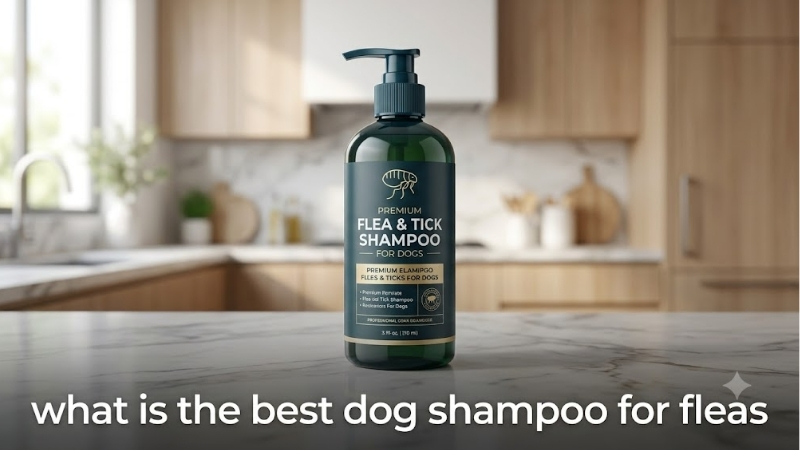
Flea shampoos are contact insecticides in a washing base, and they are judged on three things: which active ingredient they use, how safe that ingredient is for the animals in your household, and how honest the product is about having almost no residual effect once rinsed away.
Active Ingredients and How They Work
Most flea shampoos rely on pyrethrins, which are derived from chrysanthemum flowers, or on synthetic pyrethroids such as permethrin and etofenprox. All of them work on contact with adult fleas during the wash, disrupting the insect nervous system while the lather sits on the coat.
Some formulas add an insect growth regulator such as pyriproxyfen or methoprene, which interferes with eggs and larvae rather than adults. Others use d-limonene from citrus peel, which is milder and often chosen for puppies where the label permits it at that particular age.
What almost none of them provide is a residual barrier. Once the lather is rinsed away the protection ends, so a dog washed on Saturday can pick up fleas again from the carpet on Sunday, and that single fact shapes everything else in this guide from this point onward.
Safety Limits That Genuinely Matter
Safety, rather than potency, is where the question of what is the best dog shampoo for fleas is really decided, because these are insecticides and the margin between species is narrower than most packaging suggests. A product that suits one animal can seriously harm another in the same house.
Permethrin is highly toxic to cats, and this is the most important sentence on the page. A dog product containing it must never be used on a cat, and in a multi-pet household a freshly treated dog should be kept away from any cats until the coat is completely dry.
Age and weight limits exist for a reason. Many products state a minimum age of twelve weeks, some are restricted further, and small puppies are far more vulnerable to insecticide exposure than adults. Read the label rather than assuming a gentle-sounding product is universally safe.
Where Shampoo Sits Among the Alternatives
Modern prescription preventives, including the systemic isoxazoline tablets and the newer spot-on treatments, break the flea life cycle over weeks rather than minutes. Any honest answer to what is the best dog shampoo for fleas has to acknowledge that shampoo is the weakest link in that chain.
That does not make it useless. A bath physically removes fleas, flea dirt and irritation from a heavily infested dog immediately, which is genuinely valuable on the day you discover the problem, and it makes the dog considerably more comfortable while the real treatment starts working.
What Is the Best Dog Shampoo for Fleas for Your Dog
The right choice depends on the dog in front of you rather than on the strength of the formula. Age, other pets in the house, skin condition and whether the dog is already on a preventive all change which product makes sense, and whether one is needed at all.
Puppies, Seniors and Dogs With Skin Problems
Puppies below the labelled age should not be bathed in an insecticidal shampoo at all, and a veterinary practice can advise on what is appropriate instead. For very young puppies, combing with a fine flea comb and treating the environment is often the safer immediate approach.
Dogs with broken, inflamed or infected skin are a similar case. Flea allergy dermatitis leaves skin raw, and applying an insecticide to damaged skin increases absorption, so those dogs need a veterinary plan rather than a stronger product bought from a shelf on the same afternoon.
Multi-Pet Households and Cross-Contamination
Cats sharing a house with a treated dog are at risk from permethrin transfer through contact, shared bedding and grooming each other. Keep them separated until the dog is dry, wash your hands between animals, and never assume a product is interchangeable between species.
Every animal in the house needs treating at the same time, using species-appropriate products. Treating one dog while an untreated cat continues seeding the environment is the most common reason an infestation returns two weeks after everybody thought it had been dealt with.
Matching the Product to the Situation
The table below sets out the common situations and what each one calls for, which is a more useful way to answer what is the best dog shampoo for fleas than ranking bottles that all rely on the same handful of active ingredients at broadly similar concentrations anyway.
| Situation | What usually applies | Main caution |
|---|---|---|
| Adult dog, heavy visible infestation | Contact wash plus a veterinary preventive | No residual protection after rinsing |
| Puppy under the labelled age | Flea comb and environmental control | Insecticide age limits are strict |
| Cats in the same household | Species-specific products only | Permethrin is toxic to cats |
| Dog with raw or infected skin | Veterinary assessment first | Damaged skin increases absorption |
| Dog already on a preventive | Usually a plain gentle shampoo | Do not layer products unadvised |
How to Use a Flea Shampoo Properly
Technique changes the result considerably, and most of the disappointment with these products comes from a rushed bath rather than a weak formula. Three details do most of the work: where you start the lather, how long it stays on, and what happens in the house afterwards.
Start at the Neck and Work Backwards
Fleas move away from water, and a dog wet from the shoulders back will have every surviving flea running toward the face and ears. Lathering a collar of shampoo around the neck first blocks that escape route, which is a small detail that changes how effective the whole bath is.
Work the lather down to the skin in sections rather than across the surface of the coat, paying attention to the base of the tail, the groin and behind the ears where fleas concentrate. Keep everything well away from the eyes and rinse the face with plain water instead.
Contact Time and Rinsing
Nothing undermines a flea bath faster than rushing it, and the difference between a wasted afternoon and a genuinely effective wash usually comes down to the number of minutes the lather is allowed to sit against the skin before anybody reaches for the shower head.
Most labels ask for five to ten minutes of contact, and cutting that short is the single most common mistake. Set a timer, keep the coat wet during the wait, and use the time to comb through with a flea comb so that you can see exactly what is actually coming off the dog.
Rinse thoroughly afterwards, well past the point the water runs clear. Residue left in a dense coat causes irritation that owners then attribute to the fleas themselves, and a thorough rinse matters more with an insecticidal product than it does with an ordinary shampoo.
The Environment Is Most of the Problem
Roughly ninety five percent of a flea population lives in the environment as eggs, larvae and pupae rather than on the animal. Bathing the dog therefore addresses a small fraction of the problem, which is why infestations return so reliably when only the pet is treated.
Wash all bedding at sixty degrees, vacuum carpets, skirting boards and upholstery daily for a fortnight, and dispose of the vacuum contents outside the house each time. Pupae can survive for months and hatch in response to vibration, so persistence matters more than any single product.
Frequently Asked Questions
Four questions come up constantly once owners start looking into this properly, and the answers explain why the question of what is the best dog shampoo for fleas has such an unsatisfying answer when it is asked on its own, without the rest of the plan attached to it.
How often can I use a flea shampoo?
Follow the label, which typically allows use every one to two weeks at most. Frequent insecticidal bathing dries the coat and increases exposure without addressing the environment, so more baths is rarely the answer when fleas keep reappearing a few days after each one anyway.
Does flea shampoo prevent future fleas?
No. Protection ends when the lather is rinsed away, which is why a veterinary preventive that works over weeks is the part of the plan that actually stops reinfestation. Shampoo clears the fleas present on the day of the bath and nothing at all beyond that.
Can I use dog flea shampoo on my cat?
Never, unless the label specifically states it is safe for cats. Permethrin and related compounds found in many dog products are highly toxic to cats, and poisoning cases are common enough that veterinary practices see them regularly throughout flea season every single year.
My dog is still scratching after treatment. Why?
Flea allergy dermatitis can cause itching for weeks after the fleas are gone, since the reaction is to flea saliva rather than to the fleas themselves. Persistent scratching, hair loss, scabs or broken skin all warrant a veterinary appointment rather than yet another bath.
See More:
- Dog grooming shears best
- Best dog clippers for poodles
- Best dog clippers for doodles
- Best dog brush for poodle
- Best dog brush for great pyrenees
Final Thoughts
What is the best dog shampoo for fleas comes down to choosing an appropriate active ingredient for your dog’s age and household, using it with a proper contact time, and understanding that it clears today’s fleas and nothing more. Pair it with a veterinary preventive and a fortnight of serious environmental cleaning, and the infestation ends.


Write Your Review
No reviews yet. Be the first to share your experience!