
Key takeaways
- Limited space and modest daily volume: Compare compact models such as the Midmark M9 with the exact counter footprint, door clearance, and service access required. A smaller chamber is only a good fit if staff can process enough complete loads between patients.
- Many wrapped loads or varied instrument sets: Consider a compatible prevacuum model such as the Tuttnauer EZ11Plus. Vacuum-assisted air removal can be important for the load types supported by the device, but it does not make an incompatible instrument or packaging system safe to process.
- High turnover of smaller batches: The STATIM 6000B’s cassette format may suit a workflow that benefits from processing instruments in smaller batches. Compare the complete workflow—including loading, unloading, cooling, cleaning, and documentation—not just the sterilizer’s cycle time.
- Large, recurring loads: Compare the M11 and EZ11Plus by usable tray arrangement, cycle options, drying, and service coverage. If staff routinely wait for the sterilizer, adding capacity or a second unit may improve workflow more than buying a faster model with insufficient load capacity.
- Strict audit or tracking needs: Favor a model and software configuration that can retain or export cycle records in the format your practice needs. Confirm what is included, how long records remain available, and whether connectivity requires an added accessory or subscription.
The best autoclave steam sterilizers for dental office infection control depend on workload, load type, and documentation needs—not chamber size alone.
For many dental practices, a tabletop prevacuum sterilizer with validated instrument cycles, effective drying, and cycle-record export is the strongest all-around choice. A compact gravity-displacement unit can suit a small office with lighter loads, while a larger chamber or second sterilizer makes more sense when turnover is the bottleneck. Before buying, confirm that the exact model and cycle are cleared or authorized for your jurisdiction and compatible with the instruments and packaging you use.
The comparison below focuses on established product families: Midmark M11 and M9, Tuttnauer EZ11Plus and EZ10, and SciCan STATIM 6000B. Specifications can vary by configuration and market; verify current manufacturer documentation before purchasing.

18L Autoclave Sterilizer – Tabletop Class N High Pressure Steam Sterilizer Autoclave Machine with Digital Control, Fast Cycle & Secure Door Lock – for Tattoo, Dental, Beauty Salon & Lab
Included for 'Best Autoclave Steam Sterilizers for Dental Office Infection Control' because the listing specifies Fast Cycle & Secure Door Lock and for Tattoo, details this guide uses to compare options.
View on Amazon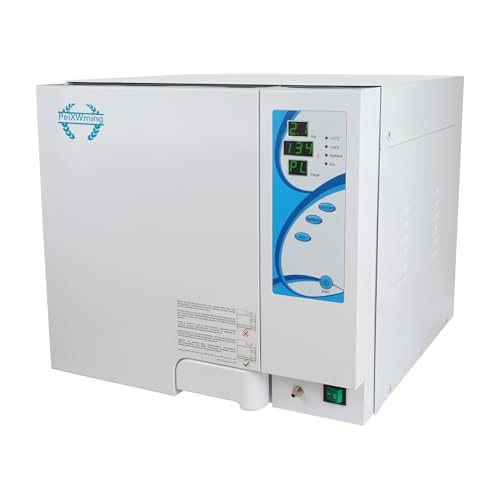
18L Autoclave Sterilizer with Drying Function, 1500W Tabletop Class N High Pressure Steam Sterilizer, 110V Autoclave Machine with Secure Door Lock, Automatic Drainage and Steam Exhaust (18L)
Included for 'Best Autoclave Steam Sterilizers for Dental Office Infection Control' because the listing specifies 1500W Tabletop Class N High Pressure Steam Sterilizer and 110V Autoclave Machine with Secure Door Lock, details this guide uses to compare options.
View on Amazon
22L LED Class N Steam Autoclave Sterilizer - 1800W Tabletop Full Automatic Autoclave for Dental/Medical Office Tools & Instruments
Included for 'Best Autoclave Steam Sterilizers for Dental Office Infection Control' as a relevant option in this category; details come from the product listing.
View on Amazon
Super Dental 14L 900W Autoclave Steam Sterilizer Medical Lab Equipment AC110V 3 Trays 121℃ High Temperature
Included for 'Best Autoclave Steam Sterilizers for Dental Office Infection Control' as a relevant option in this category; details come from the product listing.
View on AmazonQuick comparison for dental practices
| Model | Approximate chamber capacity | Typical cycle approach | Water and drying considerations | Best fit |
|---|---|---|---|---|
| Midmark M11 | 11 in diameter × 18 in deep; about 2.3 cu ft | Gravity displacement; cycle time depends on load, packaging, and selected exposure | Uses distilled or deionized water as specified by the manufacturer; drying is a separate part of the cycle | Higher-volume offices needing a larger tabletop chamber |
| Midmark M9 | 9 in diameter × 15 in deep; about 1.0 cu ft | Gravity displacement; generally suited to routine wrapped and unwrapped loads when the applicable cycle permits | Water quality and reservoir care matter; allow for the drying time required by the load | Smaller practices with limited counter space |
| Tuttnauer EZ11Plus | 11 in diameter × 18 in deep; about 2.3 cu ft | Vacuum-assisted cycles, with cycle options depending on configuration | Requires the specified water quality; vacuum-assisted air removal can support wrapped-load processing, but drying must still be checked | Practices processing varied or wrapped instrument loads |
| Tuttnauer EZ10 | 10 in diameter × 18 in deep; about 1.8 cu ft | Gravity displacement | Follow the model’s reservoir, drain, and drying instructions; capacity is between the common 9- and 11-inch formats | Offices wanting a mid-size gravity unit |
| SciCan STATIM 6000B | Large-format cassette; capacity is specified by the manufacturer in instrument-set terms, not as a conventional cylindrical chamber | Cassette-based steam cycles; cycle duration varies by load and cycle | Uses the specified water and cassette-care procedures; inspect loads for dryness before storage | Practices prioritizing frequent, smaller instrument batches |
Capacity figures are approximate and are not a promise of how many instrument packs fit. Tray layout, pouch orientation, load density, and the validated cycle determine usable throughput. Never select a cycle based only on its shortest advertised time.
Choose by the problem you need to solve
- Limited space and modest daily volume: Compare compact models such as the Midmark M9 with the exact counter footprint, door clearance, and service access required. A smaller chamber is only a good fit if staff can process enough complete loads between patients.
- Many wrapped loads or varied instrument sets: Consider a compatible prevacuum model such as the Tuttnauer EZ11Plus. Vacuum-assisted air removal can be important for the load types supported by the device, but it does not make an incompatible instrument or packaging system safe to process.
- High turnover of smaller batches: The STATIM 6000B’s cassette format may suit a workflow that benefits from processing instruments in smaller batches. Compare the complete workflow—including loading, unloading, cooling, cleaning, and documentation—not just the sterilizer’s cycle time.
- Large, recurring loads: Compare the M11 and EZ11Plus by usable tray arrangement, cycle options, drying, and service coverage. If staff routinely wait for the sterilizer, adding capacity or a second unit may improve workflow more than buying a faster model with insufficient load capacity.
- Strict audit or tracking needs: Favor a model and software configuration that can retain or export cycle records in the format your practice needs. Confirm what is included, how long records remain available, and whether connectivity requires an added accessory or subscription.
What matters beyond the headline cycle time
Drying and load release
A cycle is not finished operationally when the display says “complete” if the load is still wet or too hot to handle. Wet packaging can compromise storage, so follow the sterilizer and packaging manufacturers’ instructions for drying, cooling, and handling. Ask suppliers for validated cycle details using the load types your practice actually runs, including wrapped instruments and any applicable handpieces.
Instrument and packaging compatibility
Check each instrument’s instructions for use (IFU) for the permitted sterilization method, temperature, exposure time, and packaging. Dental handpieces, hollow instruments, cassettes, and delicate components can have specific requirements. The sterilizer’s cycle must match the instrument IFU and the packaging IFU; a chamber that physically fits a load is not proof that the load is compatible.
Records and compliance
Look for clear cycle identification, fault reporting, and a practical way to retain required records. Some systems provide digital cycle data; others may rely on printouts or separate tracking processes. Confirm whether records include the information your infection-prevention program requires and whether they can be linked to load contents or patient records. Follow applicable local regulations and guidance, including current CDC recommendations and any relevant national or state requirements. A feature list alone does not establish compliance.
Ownership costs and maintenance realities
Purchase price is only part of the cost. Tabletop dental sterilizers commonly range from several thousand dollars to well over $10,000, depending on chamber size, cycle technology, documentation features, installation, and service package. Obtain a written quote that separates the device, accessories, training, installation, warranty, and ongoing service.
Water quality is a recurring requirement, not a one-time setup detail. Use only the water type specified by the manufacturer; unsuitable water can contribute to deposits, faults, or shortened component life. Schedule reservoir cleaning, chamber and tray care, drain maintenance, and any filter or seal replacement as directed. Keep compatible detergents and cleaning tools on hand, and do not substitute household cleaners unless the manufacturer explicitly permits them.
Common wear points include door seals, filters, valves, and other components identified in the service schedule. Frequent errors include overloading trays, nesting items, blocking air or steam pathways, using the wrong pouch orientation, and interrupting a cycle before completion. These mistakes can lead to failed cycles, wet packs, reprocessing, and avoidable downtime. Ask about local service response times and parts availability before committing: a lower-priced unit can cost more if the office cannot get it repaired promptly.
A practical buying check before you order
- List the loads: Record how many wrapped and unwrapped loads the practice processes on a typical and peak day, and identify instruments with special IFUs.
- Measure the installation area: Check the unit’s dimensions, required clearances, electrical supply, ventilation, water handling, and drain requirements against the site and installation manual.
- Compare end-to-end time: Include loading, the validated cycle, drying, cooling, unloading, and documentation. Estimate capacity using the tray configuration you will actually use.
- Confirm validation and support: Request current regulatory documentation, cycle instructions, warranty terms, staff training, preventive-maintenance requirements, and service coverage for the exact model.
- Plan monitoring and records: Make sure the sterilizer fits the practice’s written infection-prevention and quality-assurance procedures. Use the monitoring methods and frequency required by applicable guidance and regulations.
Bottom line
For a small office, a compact gravity unit can be the sensible choice when its approved cycles fit the instrument mix and daily workload. For diverse wrapped loads, a prevacuum model such as the Tuttnauer EZ11Plus may be worth comparing closely with the Midmark M11. For frequent small batches, evaluate the SciCan STATIM 6000B cassette workflow against conventional chamber units. The best autoclave steam sterilizers for dental office infection control are the ones whose validated cycles match the practice’s instruments, whose drying and records fit its procedures, and whose maintenance and service needs the team can reliably meet.






Write Your Review
No reviews yet. Be the first to share your experience!