
Our Top Picks
 Best overall starting pointVeterinary Formula Clinical Care Antiseptic & Antifungal Shampoo16 Fl Oz (Pack of 1)2.38 x 2.28 x 8 inches1.15 poundsCheck on Amazon
Pros & cons
A paraben-, dye-, and soap-free formula marketed for scaly, greasy, and red skin.
- pH-balanced formula is designed to be paraben and soap free
- Suitable for use on both dogs and cats over 12 weeks
- Twice-weekly use schedule tapers to weekly for maintenance
- Requires a 5 to 10 minute soak for full effect
- Spot-checking a small area first is recommended
 Best chlorhexidine-focused pickDouxo S3 PYO Medicated Dog Shampoo with 3%6.7 oz0.4 poundsCheck on Amazon
Pros & cons
Contains 3% chlorhexidine and is marketed as an antibacterial and antiseptic treatment for dogs and cats.
- 3% chlorhexidine formula targets bacterial and yeast skin infections
- Free from soaps, sulfates, parabens, and phthalates
- Ophytrium ingredient is included to help soothe irritated skin
- 6.7 fl oz size is smaller than many comparable shampoo bottles
- Medicated formula suits specific conditions, not everyday washing
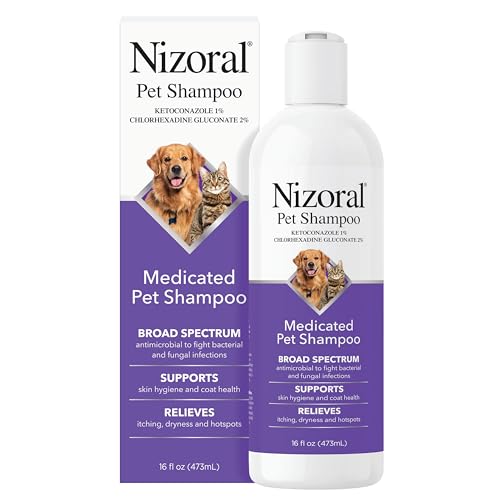 Best ketoconazole and chlorhexidine combinationNizoral Ketoconazole Pet Shampoo16 Ounce2.47 x 2.47 x 8.19 inches1.12 PoundsCheck on Amazon
Pros & cons
Combines 1% ketoconazole with 2% chlorhexidine gluconate for antifungal and antimicrobial support.
- Combines 1% ketoconazole with 2% chlorhexidine for stubborn skin issues
- Works across both dogs and cats in one formula
- Medicated formula targets hot spots and persistent irritation
- Recommended 2-3 times weekly use is more involved than everyday shampoo
- Medicated formula suits specific conditions, not daily washing
 Best moisturizing antibiofilm optionMiconaHex+Triz Shampoo for Dogs16 Fl Oz2.5 x 2.5 x 8 inches1 PoundsCheck on Amazon
Pros & cons
Marketed as an unscented, moisturizing, antibiofilm shampoo for dogs, cats, and horses.
- Unscented formula avoids added fragrance for sensitive animals
- Helps prevent and treat fungal skin across multiple species
- 16oz size covers more washes than the smaller bottle
- Listing provides limited detail on specific active ingredients
- Targeted antifungal formula is not meant for everyday-only washing
 Best for owners prioritizing soothing extrasPet Honesty Chlorhexidine Dog Shampoo Itchy Skin ReliefCheck on Amazon
Pros & cons
Combines chlorhexidine and ketoconazole with aloe and a formula advertised without sulfates, parabens, phthalates, alcohol, or artificial colors.
- Veterinary-strength formula is made without sulfates or parabens
- Aloe-based formula targets itchy and irritated skin
- Works for both dogs and cats in one bottle
- Medicated formula is more targeted than an everyday cleansing shampoo
- Listing does not specify bottle dimensions or weight
 Veterinary Formula Clinical Care Antiparasitic & Antiseborrheic Wash16 Oz2.38 x 2.28 x 8 inches1 poundsCheck on Amazon
Pros & cons
- pH-balanced formula is designed to support dogs safely
- Oatmeal and allantoin ingredients are included for gentle hydration
- Coal tar and salicylic acid formula targets flakes and odor
- Medicinal scent signals active ingredients but is not fragrance-free
- Some initial flaking is expected as a normal part of use
Choosing the best antifungal dog shampoo starts with identifying what is actually causing your dog’s skin problem. Itching, redness, odor, greasy skin, scaling, hair loss, and recurrent hot spots can be associated with yeast, bacteria, parasites, allergies, seborrhea, or another underlying condition. A medicated shampoo may support treatment when its active ingredients match the diagnosis, but a general-purpose wash is not a substitute for veterinary care.
This guide compares fourteen medicated options using the product information supplied by the manufacturers and the patterns commonly emphasized in verified owner feedback. The selection includes formulas built around chlorhexidine, ketoconazole, or combination approaches, along with options marketed for scaly, greasy, red, itchy, or odor-prone skin. The right choice depends on your veterinarian’s recommendation, your dog’s sensitivity to particular ingredients, and whether you need a shampoo alone or a shampoo-and-spray routine.
Veterinary Formula Clinical Care Antiseptic & Antifungal Shampoo, 16 oz
One of the home product options compared in this guide.
View on AmazonDouxo S3 PYO Medicated Dog Shampoo with 3% Chlorhexidine for Dogs – Antibacterial & Antiseptic Yeast Infection Treatment For Dogs & Cats, Clinically Proven, 6.7 fl oz
One of the home product options compared in this guide.
View on AmazonNizoral Ketoconazole Pet Shampoo, 16 Oz, Chlorhexidine, Dogs & Cats
One of the home product options compared in this guide.
View on Amazon
Veterinary Formula Clinical Care Antiseptic & Antifungal Shampoo + Spray
One of the home product options compared in this guide.
View on AmazonMiconaHex+Triz Shampoo for Dogs, Cats and Horses, 16 oz, Unscented
One of the home product options compared in this guide.
View on AmazonPet Honesty Chlorhexidine Dog Shampoo Itchy Skin Relief, Anti-Itch, 16oz
One of the home product options compared in this guide.
View on AmazonVeterinary Formula Clinical Care Antiparasitic & Antiseborrheic Wash, 16 oz
One of the home product options compared in this guide.
View on AmazonUpdated October 2026 – Strengths for the newer picks come from manufacturer and DailyMed label data, and we do not test any of these shampoos.
How do I compare different dog shampoos for antifungal properties? Read the active ingredient and its percentage on the label: miconazole or ketoconazole is the antifungal, chlorhexidine adds antibacterial action, and the comparison table later in this guide lines up every pick by strength, size, and what to verify. Match the choice to your veterinarian’s diagnosis, because even a well-chosen anti fungal medicated shampoo for dogs will not fix allergies or parasites.
Quick Answer: The Best Antifungal Dog Shampoos
- Best overall starting point: Veterinary Formula Clinical Care Antiseptic & Antifungal Shampoo — A paraben-, dye-, and soap-free formula marketed for scaly, greasy, and red skin.
- Best chlorhexidine-focused pick: Douxo S3 PYO Medicated Dog Shampoo — Contains 3% chlorhexidine and is marketed as an antibacterial and antiseptic treatment for dogs and cats.
- Best ketoconazole and chlorhexidine combination: Nizoral Ketoconazole Pet Shampoo — Combines 1% ketoconazole with 2% chlorhexidine gluconate for antifungal and antimicrobial support.
- Best for a multi-step care routine: Veterinary Formula Clinical Care Antiseptic & Antifungal Shampoo + Spray — Includes both a shampoo and spray for scaly, greasy, or red skin in dogs and cats.
- Best moisturizing antibiofilm option: MiconaHex+Triz Shampoo — Marketed as an unscented, moisturizing, antibiofilm shampoo for dogs, cats, and horses.
- Best for owners prioritizing soothing extras: Pet Honesty Chlorhexidine Dog Shampoo — Combines chlorhexidine and ketoconazole with aloe and a formula advertised without sulfates, parabens, phthalates, alcohol, or artificial colors.
Also covered in the product breakdowns below: Veterinary Formula Clinical Care Antiparasitic & Antiseborrheic Wash, Davis Miconazole Pet Shampoo, Pet MD Micoseb-CX, Curaseb Chlorhex 4%, Truseb Ketoconazole and Chlorhexidine Shampoo, Mal-A-Ket, CeraSoothe CHX+MC, and Vetnique Dermabliss. All 14 picks appear in the comparison table.
How We Researched This Guide
This is a research-based comparison, not a hands-on product test. We reviewed the product names, sizes, active-ingredient information, intended uses, formula claims, and available listing details shown for each candidate. We also considered practical selection issues that matter for medicated pet shampoos: whether a product combines antibacterial and antifungal ingredients, whether it is marketed for irritated or damaged skin, whether it has soothing or moisturizing features, and whether the package provides a shampoo-only or multi-product routine.
We did not independently verify veterinary diagnoses, perform laboratory testing, measure treatment performance, or claim that one formula cures every cause of canine itching. Product packaging, instructions, and ingredient lists can change, so check the current label before use. The Pet Honesty listing includes a customer rating; check recent owner reviews on the product page, but ratings are only one signal and do not establish that a product is appropriate for your dog’s condition.
The ranking is therefore best used as a shortlist for a conversation with your veterinarian. A veterinarian can distinguish fungal or yeast-related disease from allergies, parasites, bacterial infection, endocrine disease, or other causes that may require a different treatment plan.
How to Choose an Antifungal Dog Shampoo
1. Start With the Diagnosis, Not the Bottle
The most important buying decision is confirming what problem you are trying to treat. “Antifungal” is a useful description, but it does not explain every case of itching, odor, scaling, or redness. Dogs with allergies may scratch and develop secondary infections. Dogs with parasites may have inflamed skin that needs parasite control rather than a medicated shampoo alone. A greasy coat can occur with seborrhea, while hair loss or circular lesions can have several possible causes.
Ask your veterinarian what organism or condition is suspected and whether a medicated shampoo is appropriate. The answer may involve a skin examination, cytology, a fungal test, or another diagnostic step. This is especially important when the skin is painful, rapidly worsening, oozing, bleeding, or accompanied by lethargy.
Avoid choosing solely because a product promises itch relief or odor control. Those benefits may make bathing more comfortable, but they do not prove that the formula targets the cause of the problem. Also avoid switching among several medicated shampoos in quick succession. Doing so can make it difficult to identify what helped or what caused additional irritation.
2. Compare the Active Ingredients and Their Roles
Chlorhexidine is an antimicrobial ingredient commonly included in products intended for bacterial and yeast-related skin concerns. In the products compared here, it appears alone as the main highlighted ingredient in Douxo S3 PYO and alongside an antifungal ingredient in Nizoral and Pet Honesty. A combination may be useful when a veterinarian suspects that bacterial and fungal components are both involved, but more active ingredients do not automatically make a shampoo better for every dog.
Ketoconazole is an antifungal ingredient. Nizoral lists 1% ketoconazole with 2% chlorhexidine gluconate, while Pet Honesty’s listing description says its formula includes chlorhexidine and ketoconazole. Veterinary Formula Clinical Care Antiseptic & Antifungal Shampoo lists 1.0% ketoconazole with 0.2% benzethonium chloride on the maker’s page, so its antiseptic is benzethonium chloride rather than chlorhexidine. Check the current packaging for exact concentrations before purchasing.
MiconaHex+Triz is marketed around an antibiofilm and moisturizing approach, but the listing does not state its active-ingredient concentrations. Do not assume that two products with similar antifungal wording contain the same ingredients or strengths. Compare the current Drug Facts or ingredient panel with the treatment plan your veterinarian recommends.
3. Check Concentration Instead of Comparing Names
Ingredient concentration can matter, so look for the percentage on the current label rather than relying on a product title. Among these listings, Douxo S3 PYO identifies 3% chlorhexidine, and Nizoral identifies 1% ketoconazole plus 2% chlorhexidine gluconate. These figures are product-specific and should not be generalized to the other shampoos in the list.
For products where the listing does not show a concentration, check the bottle, package images, and manufacturer information before ordering. If your veterinarian specifies an ingredient or strength, verify that the product matches it. A shampoo that sounds similar but contains a different active ingredient may not be an appropriate substitute.
Also distinguish an active ingredient from a supporting ingredient. Aloe, moisturizers, fragrance, cleansing agents, and odor-control components may affect comfort or bathing experience, but they are not interchangeable with an antifungal or antimicrobial active. Read the full label, especially if your dog has reacted to a product before.
4. Consider the Skin Barrier and Irritation Risk
Infected or inflamed skin may be more reactive than healthy skin. A formula that is gentle for one dog may still cause irritation in another, so pay attention to the complete ingredient list and your dog’s history. Veterinary Formula Clinical Care is described as free from parabens, dyes, and soap. Pet Honesty is advertised without sulfates, parabens, phthalates, alcohol, and artificial colors, and its description highlights aloe.
MiconaHex+Triz is marketed as moisturizing and unscented, which may appeal to owners trying to limit fragrance or support a dry-feeling coat. Pet Honesty, by contrast, lists a light cucumber melon scent. A scented formula may help with odor perception, but fragrance can be an unnecessary variable for dogs with very sensitive skin. Choose according to your veterinarian’s advice and your dog’s known sensitivities.
Do not assume that “natural,” “clean,” or “soothing” wording means a product cannot irritate. Plant extracts and fragrance materials can also cause reactions. If your dog develops more redness, swelling, discomfort, hives, or worsening itch after a wash, rinse thoroughly and contact your veterinarian.
5. Follow Contact Time and Rinsing Instructions
Medicated shampoo needs adequate contact with the skin. The general guidance for this product category commonly refers to leaving a lather in place for about 10 minutes, but the bottle’s instructions and your veterinarian’s plan take priority. Rinsing immediately may remove the product before it has had the intended opportunity to work.
Apply the shampoo to the coat as directed, working it toward the skin without scrubbing aggressively over painful or broken areas. Keep it away from the eyes, mouth, and inside of the ears unless the label specifically says otherwise. Use lukewarm water, rinse thoroughly, and prevent your dog from licking the product while it is on the coat.
Do not extend contact time on your own in the hope of getting faster results. Longer is not automatically more effective and may increase irritation. Likewise, avoid using a stronger-looking formula more often than directed. Medicated bathing works best as a consistent routine rather than as a series of increasingly frequent baths.
6. Plan for Consistent Use and a Realistic Timeline
Skin conditions rarely resolve after one wash. General guidance for this category notes that many antifungal shampoos are used roughly two to three times weekly for about four weeks, but the correct schedule varies by product, diagnosis, severity, and any other treatment being used. Follow the label and your veterinarian rather than treating this frequency as a universal rule.
Keep a simple record of bath dates, visible changes, itch intensity, odor, redness, and any reaction. This can help your veterinarian decide whether the plan is working. Improvement may be gradual, and the underlying trigger may still need attention even when the coat looks better. Stopping as soon as odor decreases can allow the original problem to return.
At the other extreme, continuing a medicated shampoo indefinitely without veterinary review is not a good maintenance strategy. Schedule a follow-up if the condition is not improving within the timeframe your veterinarian gave you, if it repeatedly returns, or if new symptoms appear.
7. Decide Whether You Need Shampoo Alone or a Treatment Set
Most of the options in this comparison are shampoo products. Veterinary Formula Clinical Care Antiseptic & Antifungal Shampoo + Spray is different because the listing includes both a shampoo and a spray. A set may be convenient when a veterinarian recommends bathing plus localized follow-up care, but it also introduces another product whose instructions and ingredients must be checked.
Do not apply the spray to areas that the label excludes, and do not assume that a shampoo-and-spray bundle should replace a prescribed medication. Ask whether the spray is intended for the same condition, whether it should be used between baths, and whether it can be combined with flea, tick, allergy, or other topical treatments.
A shampoo-only product may be simpler for routine bathing, while a set may suit owners who need a more structured care process. The practical choice depends on the size and location of the affected areas, your dog’s tolerance for bathing, and the treatment plan from your veterinarian.
8. Check Size, Species, Age, and Household Practicalities
Package size affects how easily you can maintain the recommended schedule. The listed products range from the 6.7-fluid-ounce Douxo S3 PYO bottle to 16-ounce options such as Veterinary Formula Clinical Care, Nizoral, MiconaHex+Triz, and Pet Honesty. The smaller bottle may be easier to store or suitable for occasional use, while a larger bottle may be more practical for repeated full-body bathing or a larger dog. Actual usage depends on coat length, body size, and how much of the skin requires treatment.
Several products are described for both dogs and cats, and MiconaHex+Triz is listed for dogs, cats, and horses. That does not mean every animal should receive the same treatment schedule. Confirm species directions, age restrictions, and veterinary suitability before use. Puppies, kittens, pregnant animals, senior pets, and pets with extensive skin disease may need additional guidance.
Store the bottle according to its label and keep it away from children and pets when not in use. Avoid transferring medicated shampoo into an unlabeled container. If more than one animal in the household has symptoms, seek veterinary advice rather than sharing a treatment plan automatically; different animals may have different diagnoses or sensitivities.
Quick Reference: Common Ingredients on Medicated Dog Shampoo Labels
Medicated shampoo labels can be hard to compare at a glance. This table explains the ingredient names you will see most often in this category and how they are usually described. It is a reading aid for labels, not a treatment guide, so use it alongside your veterinarian’s instructions.
| Ingredient | How labels usually describe it | Typical label strength | Where it appears in this guide |
|---|---|---|---|
| Chlorhexidine gluconate | Antiseptic or antimicrobial | Often 2% to 4% | Douxo S3 PYO, Curaseb, Nizoral, Pet Honesty, Truseb, Mal-A-Ket, Vetnique Dermabliss, CeraSoothe CHX+MC, combination formulas |
| Ketoconazole | Antifungal | Often 1% | Veterinary Formula Clinical Care Antiseptic & Antifungal, Nizoral, Pet Honesty, Truseb, Mal-A-Ket, Vetnique Dermabliss |
| Miconazole nitrate | Antifungal | Often 2% | Davis Miconazole, Pet MD Micoseb-CX, MiconaHex+Triz, CeraSoothe CHX+MC |
| Tris-EDTA | Supporting ingredient marketed for antibiofilm action | Varies by brand | MiconaHex+Triz |
| Salicylic acid and sulfur | Antiseborrheic, used for scaling and flaking | Varies by brand | Veterinary Formula Clinical Care Antiparasitic & Antiseborrheic Wash (salicylic acid and sulfur); check other labels |
| Aloe, oatmeal, ceramides, moisturizers | Soothing or skin-barrier support, not antifungal actives | Not usually listed as a percentage | Various formulas as supporting ingredients |
When two products share an ingredient, compare the percentage and the full ingredient list rather than the name on the front of the bottle. If your veterinarian names a specific ingredient and strength, match that exactly.
Mistakes to Avoid When Buying and Using Medicated Dog Shampoo
- Treating without a diagnosis: Itch and odor can have causes that antifungal shampoo will not address.
- Choosing by scent alone: A pleasant fragrance can improve the bathing experience but does not establish antifungal effectiveness.
- Ignoring the active-ingredient panel: Verify the current ingredients and concentrations instead of assuming products with similar names are interchangeable.
- Rinsing too quickly: Follow the stated contact time, which is often around 10 minutes for medicated shampoos, unless your veterinarian gives different instructions.
- Using it too frequently: More baths can dry or irritate skin. Follow the label and treatment plan.
- Failing to rinse thoroughly: Residue can contribute to discomfort and scratching after the bath.
- Getting shampoo in the eyes or mouth: Use care around the face and follow label directions for sensitive areas.
- Stopping when odor improves: Surface improvement does not necessarily mean the underlying condition is resolved.
- Combining products casually: Ask your veterinarian before pairing a medicated shampoo with another topical, spray, or flea and tick treatment.
- Overlooking recurrence: Repeated flare-ups may indicate allergies, parasites, environmental triggers, or another condition that needs investigation.
Detailed product breakdowns
1. Veterinary Formula Clinical Care Antiseptic & Antifungal Shampoo, 16 oz
Veterinary Formula Clinical Care Antiseptic & Antifungal Shampoo is a straightforward medicated wash for dogs with skin that appears scaly, greasy, or red. The product description emphasizes relief for those visible skin concerns and identifies a formula that is free from parabens, dyes, and soap. Those characteristics may matter when a dog’s skin is already irritated and a basic cleanser could be uncomfortable or overly drying.
Veterinary Formula’s own product page lists 1.0% ketoconazole and 0.2% benzethonium chloride as the actives, for dogs and cats, with directions to leave it on for 5 to 10 minutes, rinse well, and use it twice weekly until irritation subsides. It does not contain chlorhexidine, and retail listings do not repeat these details, so confirm them on the bottle you receive. A product described as antiseptic and antifungal should not be treated as a diagnosis; similar-looking redness, scaling, grease, odor, and itching can have different causes.
- Key specifications: 16-ounce bottle; antiseptic and antifungal shampoo; 1.0% ketoconazole and 0.2% benzethonium chloride per the maker; labeled for dogs and cats; intended to help alleviate scaly, greasy, and red skin; free from parabens, dyes, and soap.
- Strengths: The product is positioned for several common-looking skin complaints rather than a single symptom. Its stated absence of parabens, dyes, and soap may appeal to owners trying to limit unnecessary irritants. The larger bottle size may also be practical for a treatment plan that requires repeated bathing, although the label’s usage directions should determine how long the bottle lasts.
- Trade-offs: Its antiseptic is benzethonium chloride rather than chlorhexidine, so it will not match a veterinarian’s request for a chlorhexidine shampoo. The maker’s page gives no age limit and the formula contains fragrance, so ask your veterinarian before using it on a puppy or a dog with very sensitive skin.
- Best for: Owners looking for a larger-size medicated shampoo for a dog with scaly, greasy, or red skin, particularly when a paraben-, dye-, and soap-free formula is a priority.
- Skip or verify first if: Your veterinarian has prescribed a particular active ingredient, your dog has a known sensitivity to a medication, or the affected pet is a puppy, cat, or has open lesions. Confirm the label’s species, age, and use instructions before applying it.
Check the Veterinary Formula Clinical Care Antiseptic & Antifungal Shampoo on Amazon
2. Douxo S3 PYO Medicated Dog Shampoo with 3% Chlorhexidine
Douxo S3 PYO Medicated Dog Shampoo is built around 3% chlorhexidine and is described as an antibacterial and antiseptic yeast-infection treatment for dogs and cats. The listing also calls it clinically proven. That combination makes it a candidate for owners whose veterinarian has identified a skin problem involving bacterial or yeast-related concerns and specifically wants a chlorhexidine-based wash.
The available data does not explain the full ingredient list, whether the formula contains additional skin-conditioning ingredients, how long it should remain on the coat, or how frequently it should be used. Those details are especially important with medicated shampoos because correct application and sufficient contact time are part of the treatment process. The product description names both dogs and cats, but buyers should still check the current label for species-specific directions and precautions.
- Key specifications: 6.7-fluid-ounce size; 3% chlorhexidine; antibacterial and antiseptic positioning; described for yeast-infection treatment; labeled for dogs and cats; the listing states that it is clinically proven.
- Strengths: The principal active and its concentration are clearly identified, making it easier to discuss with a veterinarian than a product whose active ingredients are not disclosed in the listing. Its dog-and-cat positioning may be convenient for households with both species. The antibacterial and antiseptic claims may also suit cases where bacterial involvement is part of the concern, rather than a purely fungal-looking problem.
- Trade-offs: Chlorhexidine is not automatically the right choice for every itchy or inflamed dog. The smaller stated bottle size may be less convenient for frequent bathing or for treating a large dog, depending on the veterinarian’s directions. The listing does not state whether the formula includes moisturizing or barrier-support ingredients, nor does it provide age restrictions or application instructions.
- Best for: Owners seeking a clearly identified 3% chlorhexidine shampoo for a dog or cat when a veterinarian has recommended antibacterial, antiseptic, or yeast-related topical care.
- Skip or verify first if: Your pet has reacted to chlorhexidine before, the diagnosis is uncertain, or you need a shampoo aimed at a specific fungus without antibacterial positioning. Verify eye-avoidance instructions, contact time, treatment frequency, and suitability for young animals with the label or veterinarian.
Check Douxo S3 PYO Medicated Dog Shampoo on Amazon
3. Nizoral Ketoconazole Pet Shampoo with Chlorhexidine
Nizoral Ketoconazole Pet Shampoo combines 1% ketoconazole with 2% chlorhexidine gluconate. The listing presents it as an antifungal and antimicrobial treatment for dogs and cats, with additional positioning around skin health and odor control. A combined formula can be useful when a veterinarian suspects that both fungal or yeast-related organisms and bacteria may be contributing to a pet’s skin or odor problem.
Unlike products whose listings leave the medication unspecified, this shampoo identifies both active ingredients and their concentrations. Even so, the listing does not state recommended contact time, bathing frequency, age limits, full inactive-ingredient list, or whether it includes a moisturizer. Buyers should not infer that odor alone confirms a fungal infection; persistent odor can accompany several skin and ear conditions and may require veterinary assessment.
- Key specifications: 16-ounce size; 1% ketoconazole; 2% chlorhexidine gluconate; antifungal and antimicrobial positioning; intended for dogs and cats; described for skin health and odor control.
- Strengths: The dual-active design provides both ketoconazole and chlorhexidine in one shampoo. The concentrations are stated clearly, which helps owners compare the product with a veterinarian’s recommendation. The larger bottle may be useful for repeated treatment, and the odor-control positioning may appeal to owners dealing with a noticeably malodorous coat while the underlying skin issue is addressed.
- Trade-offs: Two active ingredients can be a benefit when both are appropriate, but they also make this a poor choice for casually experimenting with an undiagnosed rash. The listing does not provide enough information to judge how gentle the formula is for dry or sensitive skin. Nizoral is better known as a human anti-dandruff brand, and the listing does not name who makes this pet product, so confirm the seller and the label before buying. It also does not explain whether the product’s odor-control claim is based on masking fragrance, antimicrobial action, or both.
- Best for: Dogs or cats whose veterinarian has recommended a shampoo containing both 1% ketoconazole and 2% chlorhexidine gluconate, particularly when skin odor is part of the presentation.
- Skip or verify first if: Your pet has known sensitivity to either active, has very dry or damaged skin, or has not been evaluated for the cause of the symptoms. Confirm the label’s species and age directions, eye precautions, contact time, and expected treatment schedule.
Check Nizoral Ketoconazole Pet Shampoo on Amazon
4. Veterinary Formula Clinical Care Antiseptic & Antifungal Shampoo + Spray
This Veterinary Formula Clinical Care option combines a shampoo and spray for antiseptic and antifungal care. The product description says the set is intended for scaly, greasy, or red skin in dogs and cats. Having two topical formats may be useful when an owner needs a wash for broader coat coverage and a spray for targeted areas between baths, but the appropriate routine should come from the product label or veterinarian.
The retail listing does not spell out what the set contains. Veterinary Formula’s separate product pages list its shampoo at 1.0% ketoconazole with 0.2% benzethonium chloride and its spray at 0.5% chlorhexidine gluconate, with the spray applied twice daily for one week and then once daily for a second week, and the maker describes the spray for dogs and cats over 12 weeks old. Confirm that the set you receive matches those labels, and ask your veterinarian before combining the two in one treatment plan.
- Key specifications: Combined shampoo-and-spray format; antiseptic and antifungal positioning; maker lists shampoo actives of 1.0% ketoconazole and 0.2% benzethonium chloride and a spray active of 0.5% chlorhexidine gluconate; described for dogs and cats; intended for scaly, greasy, or red skin.
- Strengths: The two-format approach may provide more flexibility than a shampoo alone. A bath can cover larger areas, while a spray may be more practical for localized areas or for use between scheduled washes if the directions allow it. The product is positioned for both dogs and cats, which may suit a multi-pet household.
- Trade-offs: The shampoo and spray use different actives (ketoconazole with benzethonium chloride versus chlorhexidine), so the set may not match a veterinarian’s preferred single active. Spray application can also create a risk of accidental contact with the eyes, mouth, or irritated open skin unless the label specifically permits use in those areas.
- Best for: Owners who want a coordinated shampoo-and-spray format for a dog or cat with scaly, greasy, or red skin after confirming the products’ ingredients and directions.
- Skip or verify first if: You need one specific active ingredient, are treating a puppy or kitten, or plan to apply the spray to broken skin or near the face. Verify the contents of the set against the maker’s labels, the species and age limits, the spray schedule, contact precautions, and whether both products should be used in the same treatment plan.
Check the Veterinary Formula Clinical Care Antiseptic & Antifungal Shampoo + Spray on Amazon
5. MiconaHex+Triz Shampoo for Dogs, Cats, and Horses, 16 oz
MiconaHex+Triz Shampoo is labeled for dogs, cats, and horses and is described as antibiofilm and moisturizing. The product is unscented, which may be appealing to owners who want to avoid adding fragrance to an already irritated coat or who prefer not to cover skin odor with a scented product. Its multi-species positioning can also be convenient for households or facilities caring for different animals.
The listing does not state the active ingredients, concentrations, antifungal claims, treatment indications, or recommended schedule. The product name alone should not be used to assume a particular medication or strength. Buyers should read the current label to determine what “antibiofilm” means in the product’s intended use, whether it is appropriate for a veterinarian-diagnosed fungal condition, and how its moisturizing claims fit the pet’s skin needs.
- Key specifications: 16-ounce size; intended for dogs, cats, and horses; described as antibiofilm and moisturizing; unscented; packaging may vary. Dechra’s published label lists 2% miconazole nitrate and 2% chlorhexidine gluconate with Tris-EDTA, so confirm the same on your bottle.
- Strengths: The unscented format may be preferable for pets or owners sensitive to fragrance. The moisturizing positioning may be helpful when a treatment routine needs to avoid leaving the coat and skin feeling excessively dry, though the specific conditioning ingredients are not stated. The product’s stated use across three species offers household versatility.
- Trade-offs: The listing does not identify the active medication or concentration, so buyers cannot reliably compare it with a veterinarian’s recommendation. “Antibiofilm” does not by itself establish that the shampoo is the correct treatment for every fungal or yeast condition. Packaging may vary, so the label and ingredient panel should be checked when the item arrives.
- Best for: Owners seeking an unscented, moisturizing shampoo with antibiofilm positioning for a dog, cat, or horse, provided the current label matches the veterinarian’s intended use.
- Skip or verify first if: You need a confirmed ketoconazole, chlorhexidine, or miconazole concentration, or if the animal’s diagnosis requires a specific antifungal. Verify the active ingredients, species directions, age restrictions, contact time, and whether the current packaging represents the same formula described in the listing.
Check the 16-ounce MiconaHex+Triz Shampoo on Amazon
6. Pet Honesty Chlorhexidine Dog Shampoo for Itchy Skin
Pet Honesty Chlorhexidine Dog Shampoo is a 16-ounce medicated shampoo positioned for itchy and irritated skin in dogs and cats. The listing feature information says it contains chlorhexidine and ketoconazole, includes soothing aloe, and is made without sulfates, parabens, phthalates, alcohol, or artificial colors. It is also described as helping with inflammation, hot spots, coat shine, and odors associated with bacteria and fungus. The listing identifies a light cucumber-melon scent and states that the products are made in the United States by an NASC member company.
The feature copy describes the formula as veterinary strength but does not provide the concentrations of chlorhexidine or ketoconazole. It also does not supply contact time, treatment frequency, age restrictions, or the exact directions for use on hot spots and other irritated areas. The listing includes a “number one chlorhexidine shampoo” statement based on third-party Stackline Atlas data, but that marketing claim should not be treated as proof that the shampoo is the best match for an individual dog.
- Key specifications: 16-ounce bottle; brand Pet Honesty; chlorhexidine and ketoconazole; labeled for dogs and cats; aloe; free from sulfates, parabens, phthalates, alcohol, and artificial colors according to the listing copy; light cucumber-melon scent; described for itchy skin, odors, hot spots, and irritated or inflamed skin; check recent owner reviews on the product page for the current rating.
- Strengths: The ingredient exclusions are clearly stated and may appeal to owners seeking a formula without several common cosmetic additives. Aloe is included as a soothing ingredient, while the two named medications provide both antibacterial and antifungal positioning. The 16-ounce size is practical for repeated bathing, and the dog-and-cat labeling may be useful in a multi-pet home. The scent may help owners who prefer a fresher-smelling coat after treatment.
- Trade-offs: A cucumber-melon scent is not ideal for every sensitive pet or owner, especially when an unscented option is preferred. The concentrations of the two active ingredients are not provided in the available data, making direct strength comparisons impossible. Claims about healing, inflammation, and hot spots should not replace diagnosis, particularly because hot spots can worsen quickly or result from an underlying allergy, parasite, or infection.
- Best for: Owners seeking a dog-and-cat shampoo with chlorhexidine, ketoconazole, aloe, and a broad list of excluded ingredients, especially when odor and itchy, irritated skin are part of the concern and a scented formula is acceptable.
- Skip or verify first if: Your pet reacts to chlorhexidine, fragrance, or any listed ingredient, or if you need a precise medication concentration. Confirm the current label, age and species directions, eye precautions, contact time, and whether the product is appropriate for open or heavily inflamed lesions.
Check Pet Honesty Chlorhexidine Dog Shampoo on Amazon
7. Veterinary Formula Clinical Care Antiparasitic & Antiseborrheic Wash
Veterinary Formula Clinical Care Antiparasitic & Antiseborrheic Wash is a 16-ounce product aimed at antiparasitic and antiseborrheic care. That positioning distinguishes it from the explicitly antiseptic and antifungal products higher in this guide: it may be more relevant when a veterinarian is evaluating parasites or seborrheic skin changes rather than a straightforward fungal infection. Greasy or flaky skin can have multiple causes, so the product’s intended category is an important part of the selection decision.
The maker lists 2.0% salicylic acid, 1.0% micronized sulfur, and 0.6% coal tar as the actives. Because of the coal tar it is a dogs-only wash that the maker says is not safe for cats, and it is formulated for dogs 12 weeks and older. Directions call for leaving it on for 10 to 15 minutes and using it 2 to 3 times per week, then reducing frequency as the skin improves. None of these actives is an azole antifungal, and the wash is not a substitute for veterinarian-directed parasite control, so ask your veterinarian before using it alongside a topical or oral parasite product.
- Key specifications: 16-ounce size; antiparasitic and antiseborrheic wash; 2.0% salicylic acid, 1.0% micronized sulfur, and 0.6% coal tar per the maker; dogs only, 12 weeks and older.
- Strengths: Its stated focus may suit a different problem profile from a conventional antifungal shampoo. Owners dealing with greasy, flaky, or seborrheic-looking skin can use the product category as a prompt to discuss parasite and seborrhea causes with a veterinarian rather than assuming every coat problem is fungal. The 16-ounce size may be practical for repeated washing if the label calls for it.
- Trade-offs: This is not the right choice when a veterinarian has requested an antifungal active, because none of its actives is an azole antifungal or chlorhexidine. It is for dogs only because of the coal tar, and combining it with another parasite treatment without professional guidance could create an unsuitable regimen.
- Best for: Owners whose veterinarian is investigating parasitic or seborrheic skin problems and who want a 16-ounce wash after confirming its active ingredients and approved use.
- Skip or verify first if: You are looking specifically for ketoconazole, chlorhexidine, or miconazole, or if the dog has an undiagnosed rash. Verify the age restriction, the 10 to 15 minute contact time, and compatibility with existing flea and tick products before applying it, and keep it away from cats.
Check Veterinary Formula Clinical Care Antiparasitic & Antiseborrheic Wash on Amazon
8. Davis Miconazole Pet Shampoo, 12 oz — Best for a Budget Miconazole Formula

Davis Miconazole Pet Shampoo, 12 Oz
One of the home product options compared in this guide.
View on AmazonDavis Miconazole Pet Shampoo is built around a single, well-known antifungal ingredient: miconazole nitrate, listed on the label at 2%. That makes it a different option from the chlorhexidine-led and ketoconazole-led formulas above, and a useful one to know about if your veterinarian specifically names miconazole as the ingredient they want you to use.
It sits in the budget tier for the 12-ounce bottle, which matters when a routine calls for repeated baths over several weeks. Because it is a single-active formula, it does not include an added antiseptic such as chlorhexidine. Whether that is an advantage or a gap depends entirely on what your veterinarian is targeting, so confirm the plan before choosing it over a combination product. As with every product here, check the current label for species directions, age limits, contact time, and the full ingredient list.
Pros
- Clearly labeled 2% miconazole nitrate
- Low cost per bath for repeated use
- Simple single-active formula that is easy to match to a vet’s instructions
Cons
- No added chlorhexidine for owners who were advised to use a combination formula
- Smaller 12-ounce bottle may not last long with a large or long-coated dog
9. Pet MD Micoseb-CX Topical Shampoo, 12 oz — Best for a Miconazole and Chlorhexidine Pairing
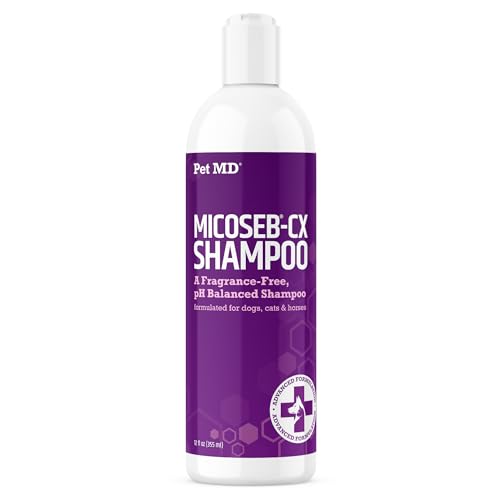
Pet MD Micoseb-CX Topical Shampoo for Dogs, Cats, & Horses - 12oz
One of the home product options compared in this guide.
View on AmazonPet MD Micoseb-CX pairs miconazole with chlorhexidine, the same general ingredient approach that many veterinary-channel shampoos use. It is labeled for dogs, cats, and horses, which can be convenient in multi-pet households, though each animal still needs its own diagnosis and directions. Check the current label for the exact percentages of each active, since that is what you should compare against your veterinarian’s recommendation.
The appeal here is price. It is one of the more budget-friendly options for a 12-ounce bottle, often less than vet-clinic shampoos built on a similar pairing, including the MiconaHex+Triz options earlier in this list. MiconaHex+Triz adds a Tris-EDTA component and an unscented, moisturizing positioning that this formula does not emphasize, so the two are not identical. If your vet is happy with a miconazole and chlorhexidine shampoo and has no preference about the extras, this is a cost-conscious way to follow that plan.
Pros
- Combines an antifungal and an antiseptic ingredient in one bottle
- Labeled for dogs, cats, and horses
- Mid-to-budget price for a combination formula
Cons
- Concentrations need to be confirmed on the current label
- Lacks the Tris-EDTA and moisturizing positioning of MiconaHex+Triz
10. Curaseb Chlorhex 4% Shampoo, 8 oz — Best for the Highest Listed Chlorhexidine Strength
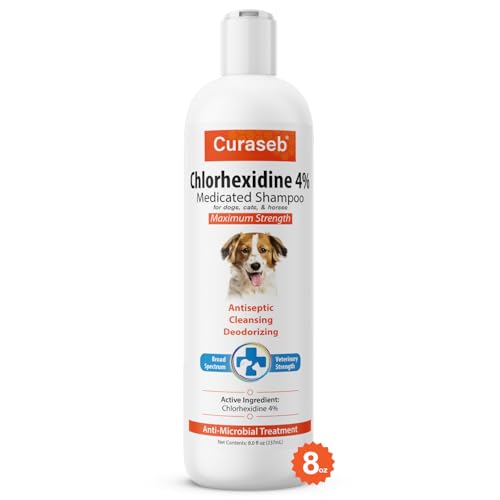
Curaseb Chlorhex 4% Shampoo for Dogs & Cats, Vet Strength Formula, 8oz
One of the home product options compared in this guide.
View on AmazonCuraseb Chlorhex 4% is a chlorhexidine-focused shampoo marketed as a vet-strength formula for dogs and cats. The listed 4% concentration is higher than the 3% in Douxo S3 PYO and the 2% in the Nizoral combination formula, which makes it the strongest chlorhexidine option in this guide by label percentage.
A higher percentage is not automatically better. Chlorhexidine is an antiseptic rather than a dedicated antifungal, and a stronger concentration may be more than some dogs with sensitive or broken skin need. This product makes the most sense when a veterinarian has specifically suggested a 4% chlorhexidine wash, or when it is used alongside a separate antifungal product they recommend. Curaseb also sells formulas that add ketoconazole, so read the bottle carefully to make sure you are ordering the version your vet intended. It is a budget-friendly pick for the 8-ounce size.
Pros
- Highest listed chlorhexidine concentration in this comparison
- Labeled for both dogs and cats
- Affordable entry point to a stronger antiseptic wash
Cons
- No dedicated antifungal ingredient in this version
- Small 8-ounce bottle and a stronger formula that may not suit sensitive skin
11. Truseb Ketoconazole and Chlorhexidine Shampoo, 16 oz – Best for a Ketoconazole-Chlorhexidine Formula With Aloe

Truseb Topical Ketoconazole and Chlorhexidine Shampoo for Dogs, Cats, and Horses with Aloe - 16 oz (Ketoconazole & Chlorhexidine Shampoo, 16 oz)
One of the home product options compared in this guide.
View on AmazonTruseb is a ketoconazole-plus-chlorhexidine shampoo from Pet Health Pharma, aimed at owners whose veterinarian suggested that two-active combination and who want a stated bathing schedule on the label.
- 1% ketoconazole and 2% chlorhexidine gluconate on the DailyMed label
- Labeled for dogs, cats, and horses; listing mentions aloe
- Label directions: leave on 5 to 10 minutes, then rinse well
- Label schedule: 2 to 3 times a week for the first 4 weeks, then once weekly or as your vet directs
- Fragrance appears among the inactive ingredients
Pros: Both actives and their strengths are published; the schedule is spelled out; 16 oz suits repeated baths.
Cons: Fragrance and preservatives may bother very sensitive skin; some retail listings show the strengths differently, so check the bottle.
Skip it if your dog reacts to chlorhexidine or fragrance, or your vet wants miconazole.
12. Mal-A-Ket Shampoo, 8 oz – Best for a Clinic-Style Ketoconazole Formula

Mal-A-Ket Shampoo for Dogs and Cats, 8 oz
One of the home product options compared in this guide.
View on AmazonMal-A-Ket is a Dechra veterinary-channel shampoo, a fit for a dog whose clinic already uses it and who needs a ketoconazole-chlorhexidine option in a small bottle.
- 1% ketoconazole, 2% chlorhexidine, and 2% acetic acid per Dechra’s detailer
- Acetic acid is included to support the ketoconazole
- Listing sells it for dogs and cats; Dechra also lists horses
- Directions: 5 to 10 minutes of contact, then rinse well
- Typical start: 2 to 4 times weekly for 4 weeks, then weekly or as your vet directs
Pros: Clear label strengths; familiar to many clinics; compact bottle for a small dog.
Cons: 8 oz runs out fast on a large dog; chlorhexidine allergic reactions are rare but reported.
Skip it if you need a bigger bottle or a fragrance-free formula.
13. CeraSoothe CHX+MC Antiseptic Shampoo, 16 oz – Best for Miconazole and Chlorhexidine With Ceramides

CeraSoothe® CHX+MC Antiseptic Shampoo for Dogs, Cats & Horses – Skin Cleansing with Chlorhexidine & Miconazole 16 oz
One of the home product options compared in this guide.
View on AmazonCeraSoothe CHX+MC pairs the two actives with ceramides and oat extract, so it suits a dog with dry, easily irritated skin whose vet wants miconazole rather than ketoconazole.
- 2% chlorhexidine gluconate and 2% miconazole nitrate
- Ceramides (EOP, EOS, NP) and oat kernel extract among the inactive ingredients
- Labeled for dogs, cats, and horses
- Label directions: leave on for 10 minutes and rinse with cool water
- Label schedule: 2 to 3 baths a week until symptoms subside, or as your vet directs
Pros: Same actives as other miconazole-chlorhexidine picks plus skin-barrier ingredients; clear directions.
Cons: Fragrance is listed; do not confuse it with the separate CeraSoothe CHX, which has 4% chlorhexidine and no miconazole.
Skip it if your vet wants ketoconazole or you need an unscented product.
14. Vetnique Dermabliss Medicated Shampoo – Best for a Soap-Free Ketoconazole-Chlorhexidine Wash

Vetnique Dermabliss Medicated Cat & Dog Shampoo, Chlorhexidine Ketoconazole
One of the home product options compared in this guide.
View on AmazonVetnique Dermabliss is a soap-free ketoconazole-chlorhexidine shampoo for dogs and cats, suited to owners who want a mid-priced alternative to clinic brands.
- 2% chlorhexidine gluconate and 1% ketoconazole per the maker and DailyMed
- Soap-free; labeled for dogs and cats
- Directions: lather and keep on the skin for 5 to 10 minutes
- Use 2 to 3 times weekly until symptoms subside, or as your vet directs
- Maker offers matching wipes for between-bath spot care
Pros: Published strengths; simple directions; wipes available for small areas.
Cons: Fragrance and isothiazolinone preservatives are on the ingredient list; bottle sizes vary by listing.
Skip it if your dog is sensitive to preservatives or fragrance.
Antifungal Dog Shampoo Comparison
These products differ in active ingredients, intended skin concerns, size, and included accessories. The available product information does not provide complete ingredient lists, directions, age limits, contact times, or veterinary-use instructions for every option, so check the current product listing and packaging before choosing. A veterinarian should diagnose the cause of persistent itching, odor, redness, scaling, hair loss, or sores before you begin medicated treatment.
| Product | Known active ingredients or formula details | Stated uses or benefits | Size | Best suited to | What to check |
|---|---|---|---|---|---|
| Veterinary Formula Clinical Care Antiseptic & Antifungal Shampoo | 1.0% ketoconazole and 0.2% benzethonium chloride (per the maker’s page) | Helps alleviate scaly, greasy, and red skin; free from parabens, dyes, and soap | 16 oz | Owners seeking a straightforward medicated shampoo for visible scaling, greasiness, or redness | Fragrance and skin sensitivity, age limits, and the 5 to 10 minute contact time on the maker’s label |
| Douxo S3 PYO Medicated Dog Shampoo | 3% chlorhexidine | Antibacterial and antiseptic support for yeast infection treatment in dogs and cats; described as clinically proven | 6.7 fl oz | Owners specifically looking for a chlorhexidine-based antibacterial and antiseptic wash | Whether the product is appropriate for your dog’s diagnosed condition, full directions, contact time, and cautions for irritated skin |
| Nizoral Ketoconazole Pet Shampoo | 1% ketoconazole and 2% chlorhexidine gluconate | Antifungal and antimicrobial support for skin health and odor control | 16 oz | Owners seeking a combined ketoconazole-and-chlorhexidine formula | Species suitability, veterinary directions, contact time, frequency, and whether the odor or skin problem matches the diagnosed condition |
| Veterinary Formula Clinical Care Antiseptic & Antifungal Shampoo + Spray | Shampoo: 1.0% ketoconazole and 0.2% benzethonium chloride; spray: 0.5% chlorhexidine gluconate (per the maker’s pages) | Complete shampoo and spray care for scaly, greasy, or red skin in dogs and cats | Check listing | Owners who want a coordinated wash-and-spray format rather than shampoo alone | Whether your set matches the maker’s labels, package sizes, the spray schedule, and precautions |
| MiconaHex+Triz Shampoo | Antibiofilm and moisturizing formula; specific active ingredients are not available in the listing | For dogs, cats, and horses; unscented; packaging may vary | 16 oz | Owners who prioritize an unscented, moisturizing formula for a multi-species household | Active ingredients, species-specific directions, contact time, age restrictions, and current packaging details |
| Pet Honesty Chlorhexidine Dog Shampoo | Chlorhexidine and ketoconazole are identified in the listing; exact concentrations are not stated | Itch relief, support for irritated skin and hot spots, odor reduction associated with bacteria and fungus, and coat-cleaning support | 16 oz | Owners seeking a combined medicated shampoo with aloe and a light cucumber-melon scent | Exact active concentrations, complete directions, scent sensitivity, age limits, and veterinary advice for hot spots or inflamed skin |
| Veterinary Formula Clinical Care Antiparasitic & Antiseborrheic Wash | 2.0% salicylic acid, 1.0% micronized sulfur, and 0.6% coal tar (per the maker’s page); dogs only | Designed for antiparasitic and seborrheic washing support | 16 oz | Owners whose veterinarian has identified a parasite-related or seborrheic concern rather than a straightforward fungal problem | Whether it treats the diagnosed issue, that it is not for cats, the 10 to 15 minute contact time, and compatibility with other parasite products |
| Davis Miconazole Pet Shampoo | 2% miconazole nitrate (single active, per label) | Antifungal-only formula; no added antiseptic | 12 oz | Owners whose veterinarian named miconazole specifically | Species and age directions, contact time, whether an added antiseptic is needed |
| Pet MD Micoseb-CX Topical Shampoo | Miconazole and chlorhexidine; confirm percentages on the label | Combination antifungal and antiseptic for dogs, cats, and horses | 12 oz | Cost-conscious buyers following a miconazole-plus-chlorhexidine plan | Exact concentrations, directions, and species labeling |
| Curaseb Chlorhex 4% Shampoo | 4% chlorhexidine (no dedicated antifungal in this version) | Vet-strength antiseptic wash for dogs and cats | 8 oz | Owners whose veterinarian suggested a 4% chlorhexidine wash | Sensitivity to chlorhexidine, need for a separate antifungal, contact time |
| Truseb Ketoconazole and Chlorhexidine Shampoo | 1% ketoconazole and 2% chlorhexidine gluconate (per DailyMed label) | Combination shampoo with aloe for dogs, cats, and horses | 16 oz | Buyers wanting a ketoconazole-chlorhexidine formula with a stated schedule | Scent and preservative sensitivity, directions, species labeling |
| Mal-A-Ket Shampoo | 1% ketoconazole, 2% chlorhexidine, 2% acetic acid | Veterinary-channel combination shampoo for dogs, cats, and horses | 8 oz | Owners whose clinic recommended the Dechra formula | Veterinary directions, contact time, size for the dog |
| CeraSoothe CHX+MC Antiseptic Shampoo | 2% chlorhexidine gluconate and 2% miconazole nitrate, with ceramides | Miconazole-chlorhexidine shampoo with skin-barrier ingredients | 16 oz | Dogs that need a miconazole-chlorhexidine pairing with ceramides | Directions (10-minute contact on the label), species labeling, scent |
| Vetnique Dermabliss Medicated Shampoo | 2% chlorhexidine and 1% ketoconazole (per maker and DailyMed) | Soap-free medicated shampoo for dogs and cats | 16 oz | Owners wanting a soap-free ketoconazole-chlorhexidine option | Fragrance and preservative sensitivity, directions, frequency |
Best Antifungal Dog Shampoo by Active Ingredient
Sorting the picks by label ingredient makes it easier to match the shampoo to your veterinarian’s plan.
- 2% miconazole nitrate alone: Davis Miconazole Pet Shampoo.
- Miconazole plus chlorhexidine (2% each): MiconaHex+Triz Shampoo, CeraSoothe CHX+MC Antiseptic Shampoo, and Pet MD Micoseb-CX Topical Shampoo (confirm its percentages on the label).
- Ketoconazole 1% plus chlorhexidine 2%: Truseb Ketoconazole and Chlorhexidine Shampoo, Vetnique Dermabliss Medicated Shampoo, Mal-A-Ket Shampoo, and Nizoral Ketoconazole Pet Shampoo. Pet Honesty Chlorhexidine Dog Shampoo uses the same pair without stated strengths.
- Chlorhexidine only: Douxo S3 PYO Medicated Dog Shampoo (3%) and Curaseb Chlorhex 4% Shampoo (4%).
Best Pick by Need
Best for scaly, greasy, or red skin
The Veterinary Formula Clinical Care Antiseptic & Antifungal Shampoo is the most direct match based on its stated purpose: helping alleviate scaly, greasy, and red skin. Its listing description also identifies a formula free from parabens, dyes, and soap. The maker lists 1.0% ketoconazole and 0.2% benzethonium chloride, so it is an antifungal-plus-antiseptic wash without chlorhexidine. Confirm the directions on the bottle before use.
Best for a combined ketoconazole and chlorhexidine formula
Nizoral Ketoconazole Pet Shampoo lists 1% ketoconazole and 2% chlorhexidine gluconate. That makes it the clearest choice for a buyer whose veterinarian has recommended both an antifungal and antimicrobial approach. The listing describes support for skin health and odor control, but it should not be selected solely because a dog smells unusual; odor can have several causes.
Best for a 3% chlorhexidine formula
Douxo S3 PYO Medicated Dog Shampoo identifies 3% chlorhexidine and is described as an antibacterial and antiseptic yeast-infection treatment for dogs and cats. It is a relatively small 6.7-fl-oz package compared with the 16-oz options in this group, so confirm that the quantity and directions fit your dog’s treatment plan.
Best for shampoo-plus-spray care
The Veterinary Formula Clinical Care Antiseptic & Antifungal Shampoo + Spray is the only listed option that combines a shampoo and spray in one product presentation. This format may appeal to owners who want a bathing product plus a topical companion product, but Veterinary Formula’s spray lists 0.5% chlorhexidine gluconate with a two-week starting schedule, so check that your set’s label matches and follow your veterinarian’s plan for how often to use it.
Best for an unscented formula
MiconaHex+Triz is identified as unscented and moisturizing, and it is marketed for dogs, cats, and horses. Dechra’s published label lists 2% miconazole nitrate and 2% chlorhexidine gluconate with Tris-EDTA, but the retail listing does not repeat those details, so verify that the formula matches your veterinarian’s recommendation before using it for a fungal or yeast concern.
Best for owners seeking aloe and odor support
Pet Honesty’s listing identifies aloe, chlorhexidine, and ketoconazole, and describes support for itchy or irritated skin, hot spots, and odors associated with bacteria and fungus. It also has a light cucumber-melon scent. That scent may be appealing to some households but less suitable for dogs or owners who prefer unscented products, so consider that trade-off.
Best when the concern may be parasitic or seborrheic
Veterinary Formula Clinical Care Antiparasitic & Antiseborrheic Wash is not presented simply as an antifungal shampoo. It is the better category match when a veterinarian has identified parasites or seborrhea as part of the problem. The maker lists salicylic acid, micronized sulfur, and coal tar, and says it is for dogs only. Do not assume that an antiparasitic wash treats every fungal infection.
Best for a ketoconazole and chlorhexidine shampoo with a stated schedule
Truseb Ketoconazole and Chlorhexidine Shampoo publishes 1% ketoconazole, 2% chlorhexidine gluconate, and a 4-week bathing schedule on its label. Vetnique Dermabliss Medicated Shampoo is the soap-free alternative with the same strengths.
Best for a miconazole and chlorhexidine pairing with ceramides
CeraSoothe CHX+MC Antiseptic Shampoo combines 2% miconazole nitrate and 2% chlorhexidine gluconate with ceramides, while MiconaHex+Triz Shampoo adds Tris-EDTA to the same two actives.
Best for a clinic-style formula in a small bottle
Mal-A-Ket Shampoo from Dechra pairs 1% ketoconazole with 2% chlorhexidine and 2% acetic acid in an 8-ounce bottle, which suits small dogs and short courses.
Care and Setup Tips
- Get the diagnosis first. Itching, redness, odor, scaling, greasy fur, and hair loss can arise from fungal, bacterial, parasitic, allergic, or other skin problems. A medicated shampoo chosen for the wrong cause may delay appropriate care.
- Compare the active ingredient, not just the product name. The available products include chlorhexidine, ketoconazole, miconazole, benzethonium chloride, and salicylic acid with sulfur and coal tar. Read the current label to confirm the ingredient and concentration.
- Prepare before wetting your dog. Have the shampoo, towels, a nonslip bathing surface, and a way to keep the product away from the eyes and mouth ready beforehand. A calm, organized bath reduces the chance of rushing the application.
- Follow the label’s contact time. Do not rinse immediately unless the instructions say to. Conversely, do not leave a medicated product on longer than directed. The correct contact time and bathing frequency depend on the individual formula.
- Rinse thoroughly. Residue can be uncomfortable on already irritated skin. Pay attention to areas where shampoo may collect, including skin folds, between the toes, under the collar, and around the tail.
- Keep the eyes and ears protected. Avoid the eyes and prevent shampoo from entering the ear canal. Ask your veterinarian how to handle facial or ear-area lesions instead of improvising with a full-body wash.
- Dry completely but gently. Use towels and a comfortable, low-stress drying method. Avoid vigorous rubbing over sore areas, and do not use high heat directly on irritated skin.
- Track the response. Note changes in itching, odor, redness, scaling, and new lesions. Contact your veterinarian if symptoms worsen, spread, or fail to improve according to the recommended treatment plan.
- Check household and environmental instructions. Some skin conditions can recur when the underlying trigger is not addressed. Ask your veterinarian whether bedding, grooming tools, collars, or other pets require attention.
- Do not combine medicated products casually. Using multiple shampoos, sprays, ointments, or parasite treatments without guidance can increase irritation or create an unsuitable combination. Confirm compatibility with your veterinarian.
Frequently Asked Questions
How do I know whether my dog needs antifungal shampoo?
You usually cannot identify the cause from appearance alone. Redness, itching, scaling, greasy skin, odor, and hair loss may be associated with several different conditions. A veterinarian can help determine whether a fungal, yeast, bacterial, parasitic, allergic, or other problem is present and whether a medicated shampoo is appropriate.
Is chlorhexidine an antifungal ingredient?
Chlorhexidine is an antimicrobial ingredient and is used in products described as antibacterial or antiseptic. Several options here pair it with an antifungal ingredient, such as ketoconazole. Do not assume that every chlorhexidine shampoo has the same coverage; check the exact formula and follow veterinary guidance.
What is the difference between ketoconazole and chlorhexidine?
The products in this guide identify ketoconazole as an antifungal ingredient and chlorhexidine as an antimicrobial or antiseptic ingredient. Some formulas combine both to address more than one microbial concern. The most suitable choice depends on the diagnosis, the product’s concentration, and your veterinarian’s instructions.
Can I use these shampoos on a puppy?
Do not assume that a medicated shampoo is suitable for every age. The listings do not provide age limits for all of these options. Read the current label and ask your veterinarian before treating a puppy, especially one with broken, inflamed, or widespread skin.
Can I use a dog antifungal shampoo on my cat?
Only use a product on a cat when the label specifically permits it and your veterinarian agrees. Some products in this comparison mention dogs and cats, while others are presented primarily for dogs or for dogs, cats, and horses. Species directions and safe application practices can differ.
Should I choose a scented or unscented shampoo?
An unscented option such as the listed MiconaHex+Triz formula may suit households that want to avoid added fragrance. Pet Honesty’s listing identifies a light cucumber-melon scent, which may help mask unpleasant odors but may not suit every dog. Fragrance preference should come after matching the medically appropriate active ingredient.
Is shampoo alone enough to treat recurring skin problems?
Not necessarily. A shampoo may support the skin and coat, but recurring symptoms can reflect an unresolved infection, allergy, parasite exposure, environmental issue, or another underlying condition. If the problem keeps returning, ask your veterinarian to reassess the diagnosis and complete treatment plan.
What should I do if my dog seems more irritated after a bath?
Rinse thoroughly and stop using the product until you have spoken with your veterinarian, particularly if your dog develops increased redness, swelling, pain, hives, or other concerning signs. Keep the product container or listing information available so the ingredients can be reviewed. Seek prompt veterinary care for severe or rapidly worsening reactions.
Can I use a human antifungal or dandruff shampoo on my dog?
It is not a good substitute. Human shampoos are formulated for human skin pH, and some contain fragrances, concentrations, or additives that are not intended for pets. A shampoo labeled for dogs also comes with species-specific directions for contact time and frequency. If you are tempted to use a human product because of an ingredient name, ask your veterinarian for a pet-labeled equivalent instead.
What should I do if my dog licks the shampoo during or after a bath?
Medicated shampoos are for external use, so try to limit licking. Keep the lather away from the mouth, distract your dog during the contact time with a lick mat or a helper, and rinse thoroughly. Some owners use a cone or a light T-shirt until the coat is dry. If your dog swallows a noticeable amount or seems unwell afterward, contact your veterinarian or a pet poison helpline and have the bottle handy.
Do I need a prescription for an antifungal dog shampoo?
Many medicated dog shampoos, including the ones in this guide, are sold over the counter. Some veterinary formulas are sold mainly through clinics, and oral or prescription-strength treatments always require a veterinarian. Even when no prescription is required, a veterinary diagnosis is the best way to know whether a shampoo with these ingredients fits your dog’s problem.
Can a fungal skin problem spread to people or other pets?
Some can. Ringworm, for example, is a fungal infection that can pass between animals and people, while many yeast-related skin problems are not considered contagious in the same way. Because they can look similar, ask your veterinarian what they suspect. If ringworm is a possibility, ask about household hygiene, washing bedding, and whether other pets need to be checked, and talk to your own doctor if anyone in the home develops skin changes.
Can I keep using the shampoo after my dog’s skin clears up?
Some veterinarians recommend occasional maintenance baths for dogs with recurring problems, while others prefer switching back to a gentle everyday shampoo. The right answer depends on what caused the original flare. Ask your veterinarian for a specific maintenance schedule rather than continuing a medicated routine indefinitely on your own.
How do I compare different dog shampoos for antifungal properties?
Compare the named active ingredient and its percentage on the label, since ketoconazole, miconazole, and chlorhexidine do different jobs and product names alone say little. Miconazole and ketoconazole are azole antifungals, while chlorhexidine is mainly antibacterial. Veterinary dermatology reviews have reported the most supporting evidence for a miconazole plus chlorhexidine shampoo against Malassezia yeast, with ketoconazole plus chlorhexidine a common alternative. After the actives, compare contact time, species labeling, bottle size, and cost per bath.
Which anti fungal medicated shampoo for dogs is the best choice?
The best anti fungal medicated shampoo for dogs is the one whose active ingredient matches your vet’s diagnosis, most often miconazole or ketoconazole paired with chlorhexidine. For miconazole, start with MiconaHex+Triz Shampoo, CeraSoothe CHX+MC Antiseptic Shampoo, or Pet MD Micoseb-CX Topical Shampoo. For ketoconazole, compare Truseb Ketoconazole and Chlorhexidine Shampoo, Vetnique Dermabliss Medicated Shampoo, and Mal-A-Ket Shampoo.
Can antifungal medicated shampoo cause hives on a pug if fungus is not the problem?
Yes, any medicated shampoo can irritate skin or trigger an allergic reaction whether or not a fungal problem is present. Stop using it, rinse well, and call your vet if you see hives, swelling, or worsening redness. Pugs and other flat-faced breeds have skin folds that stay damp, so ask your vet before treating facial folds with a medicated wash.
Does an antifungal or chlorhexidine-based shampoo help persistent skin odor in dogs?
It can when yeast or bacteria are driving the odor, but persistent odor also comes from allergies, ear infections, seborrhea, or anal gland problems, so the cause needs a vet check. If yeast or bacteria are confirmed, a shampoo with the right active ingredient used at the labeled contact time is a reasonable part of the plan.
Is Nizoral pet shampoo the same as human Nizoral?
Not necessarily. Nizoral is a human anti-dandruff brand, while the pet listing in this guide is a separate 1% ketoconazole and 2% chlorhexidine product whose maker the listing does not name. Do not substitute the human shampoo without asking your vet.
What is the difference between miconazole and ketoconazole shampoo for dogs?
Both are azole antifungals that work against yeast such as Malassezia, and vets often pair either one with chlorhexidine. Dog labels typically show miconazole at 2% and ketoconazole at 1%, so compare the full formula and your vet’s preference rather than the percentage alone.
Final Verdict
The best antifungal dog shampoo is the one that matches your dog’s diagnosed skin problem and can be used correctly and consistently. Nizoral Ketoconazole Pet Shampoo stands out for clearly listing 1% ketoconazole with 2% chlorhexidine gluconate. Douxo S3 PYO is the clearest choice for a 3% chlorhexidine formula, while the Veterinary Formula Clinical Care Antiseptic & Antifungal Shampoo is the most direct match for the stated concerns of scaly, greasy, or red skin. Pet Honesty adds aloe, a combined chlorhexidine-and-ketoconazole formula, and a light scent; MiconaHex+Triz emphasizes an unscented, moisturizing, antibiofilm format; and the shampoo-and-spray set suits buyers who want a coordinated topical routine.
Before placing an order, verify the active ingredients, species coverage, age restrictions, contact time, treatment frequency, and current package contents. If the diagnosis is uncertain, or if symptoms are painful, widespread, recurring, or worsening, consult a veterinarian rather than trying several medicated shampoos in succession.


Write Your Review
No reviews yet. Be the first to share your experience!