
Key takeaways
- Detangling product: A dematting cream or spray lubricates the hair so tools glide through with far less pulling.
- A dematting tool: A mat remover like the Pets First Professional Pet Mat Remover or an easy tangle cutter slices knots gently.
- An undercoat rake or comb: A double-sided rake helps loosen and separate the surrounding hair once the mat starts to break up.
A tight mat is more than an eyesore, it’s a genuine source of pain. As loose hair tangles and tightens against the skin, it pulls with every movement, traps moisture that can cause hot spots, and hides irritation underneath. The instinct to just yank it out only makes things worse. With a gentle, methodical approach and the right products, you can remove most mats at home without hurting your dog.
This guide walks through why mats form, the tools that make removal painless, a step-by-step method, and when a mat is best left to a professional. Patience is the real secret: the slower and gentler you go, the more comfortable the whole process is for your dog.
Our top picks


 GoPets 2-in-1 Deshedding & Dematting Comb &
- Our dual-sided pet grooming tool combines a 12-blade…
- Capture loose undercoat and remove tangles before they…
- COMFORTABLE, GENTLE & STRESS-FREE GROOMING


 Docrok Pet Grooming Combo
2-in-1 rake and comb combo covers dematting and deshedding in one set
Soft, protective edges are designed to avoid hurting the pet
Stainless steel teeth and TPR handle add durability and comfort
Geared toward medium and long-haired coats, less so short fur
Combo tools need periodic cleaning to clear trapped hair

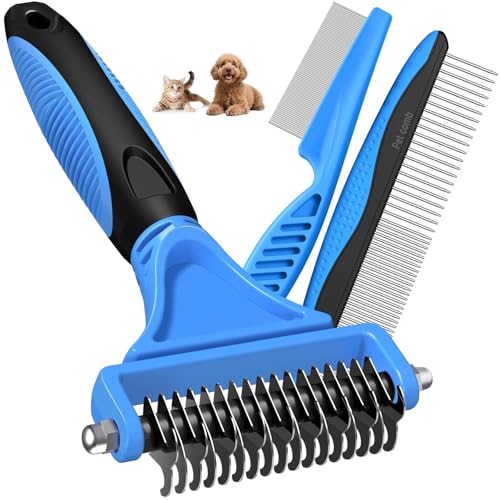 3PCS Pet Grooming Rake & Metal Comb
- 【3PCS Pet Grooming Kit】Dog Deshedding Brush that makes…
- 【Undercoat Rake】Our undercoat rake is perfect for de-shedding…
- 【2-in-1 Comb】Wide side for knotting, smoothing and modeling,…
As an Amazon Associate we earn from qualifying purchases at no extra cost to you.
⚡ Save on Your Next PC — Amazon Prime
Prime members get fast free shipping on the systems above, plus early access to Prime Day & Black Friday PC deals. New members get a 30-day free trial.
Watch: How to Remove Mats from Your Dog’s Fur Without Pain — Video Review
Why Mats Form and Where to Look
Mats develop where hair experiences friction and moisture: behind the ears, in the armpits, around the collar, on the belly, and near the sanitary area. Loose undercoat that isn’t brushed out weaves into surrounding hair and tightens over time. Checking these high-friction zones regularly lets you catch mats while they’re still loose and easy to work out rather than tight against the skin.
Gather the Right Tools
- Detangling product: A dematting cream or spray lubricates the hair so tools glide through with far less pulling.
- A dematting tool: A mat remover like the Pets First Professional Pet Mat Remover or an easy tangle cutter slices knots gently.
- An undercoat rake or comb: A double-sided rake helps loosen and separate the surrounding hair once the mat starts to break up.
The Painless Step-by-Step Method
Start by applying a detangling product, such as a leave-in dematting cream you let sit for a couple of minutes, directly onto the mat. Then hold the base of the hair firmly between the mat and the skin so any pulling stops at your fingers, not the skin. Work from the outer edge of the mat inward with short strokes of a dematting tool, teasing the knot apart in small pieces rather than forcing through it all at once. Take breaks and reward your dog throughout.
Knowing When to Stop
Some mats are simply too far gone for safe home removal. If a mat is tight against the skin, covers a large area, or your dog reacts with pain, stop and call a groomer or vet. They can safely shave the mat with clippers, since cutting a tight mat with scissors risks slicing the skin folded up beneath it. There’s no shame in outsourcing a severe mat; it’s the safest choice.
Preventing Future Mats
The best mat treatment is prevention. Brush and comb your dog regularly, paying extra attention to friction zones, and keep a detangling spray in your kit for quick touch-ups. Bathing without brushing first can actually set mats tighter, so always de-tangle before water. Consistent maintenance is quicker, cheaper, and far kinder than tackling a coat full of tight knots.
Tips
- Never bathe a matted dog before removing mats; water shrinks and tightens them.
- Use your fingers to gently pick apart loose mats before reaching for any tool.
- Keep sessions short and positive so your dog doesn’t come to dread grooming.
- Work in good lighting so you can see the skin and avoid catching it in the tool.
Frequently Asked Questions
Can I just cut a mat out with scissors?
It’s risky. Mats pull the skin up into the knot, so scissors can easily nick it. If a mat must be cut, use clippers that slide flat against the skin, or let a professional handle tight ones.
Does dematting cream actually work?
Yes. Products like a leave-in dematting cream lubricate the hair shafts so the mat loosens and tools slide through with much less pulling. Applying it and waiting a couple of minutes before working the mat makes a noticeable difference.
How do I keep my dog calm during dematting?
Go slowly, take frequent breaks, and reward calm behavior with treats and praise. Working in short sessions rather than one long ordeal keeps stress low and prevents your dog from associating grooming with discomfort.
How often should I brush to prevent mats?
For mat-prone coats, brush several times a week or daily. Focus on friction areas behind the ears, under the legs, and around the collar, where mats form fastest, and comb through to confirm you’ve reached the skin.
Conclusion
Removing mats without pain comes down to lubrication, a gentle grip that protects the skin, and patient work from the outside of the knot inward. Use a detangling product and a proper dematting tool, know when a mat is too severe for home removal, and lean on regular brushing to prevent them altogether. Treat your dog’s comfort as the priority and grooming stays a bonding routine rather than a battle.

Write Your Review
No reviews yet. Be the first to share your experience!