
Key takeaways
What's inside
Best in show pet grooming is mostly preparation, not product. Conformation handlers spend far more time on coat condition, drying technique and lighting than on any single tool. This roundup covers the six pieces of equipment that make the biggest difference, and what each one costs you in practice.
As an Amazon Associate we earn from qualifying purchases.




As an Amazon Associate we earn from qualifying purchases.
🛒 Best Price Today on Amazon
Prime members get fast, free shipping on everything above, plus member-only deals. New members get a 30-day free trial — cancel anytime.
What Separates Best in Show Pet Grooming From a Home Trim
The gap between a competent home groom and best in show pet grooming is rarely the haircut. It is coat condition built over months, drying technique that sets the coat standing correctly, and a working setup that lets you see what you are doing. These four areas account for most of the difference.
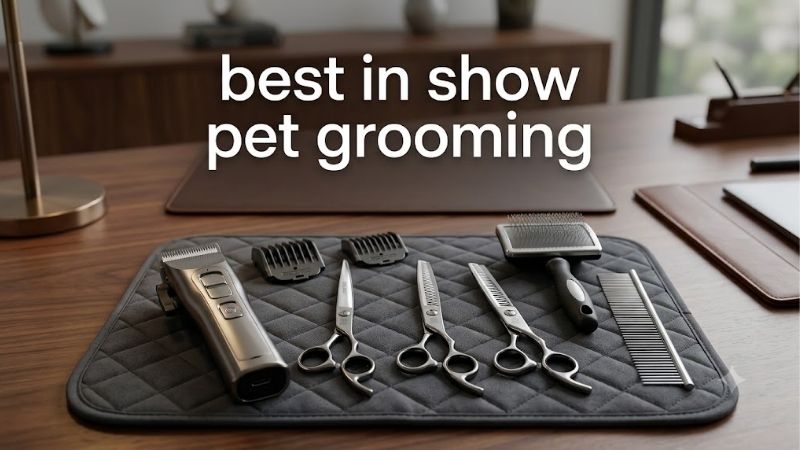
Coat Condition Built Over Months, Not Days
Ring-standard coat is grown, not created on the day. Handlers protect coat length by brushing with the correct tool for the texture, avoiding anything that strips or breaks hair, and conditioning regularly so the shaft does not snap during brushing. Damage done in one careless session takes months to grow out.
This is why best in show pet grooming standards treat aggressive deshedding tools with caution on coated breeds. A blade-edged tool that cuts loose undercoat also thins the guard coat that gives a dog its outline, which is exactly what a judge assesses. Pin brushes and combs are preferred for a reason.
Brushes and Combs That Do Not Break Coat
A properly made slicker with fine, flexible pins set in a soft cushion lifts loose hair without snapping the shaft. Cheap slickers use stiff pins in a hard backing, which scratches skin and breaks coat. The difference is visible within a few weeks on a long-coated breed, and it is why best in show pet grooming budgets go into brushes before clippers.
Steel combs do the checking work. A comb with fine teeth at one end and coarse at the other is how you find tangles that a brush glided over, and it is the tool that tells you whether the coat is genuinely brushed through to the skin rather than only on the surface.
Drying Technique and Coat Volume
High-velocity drying is what makes a coat stand. Forcing water out of the coat rather than evaporating it lifts each hair away from the skin, dramatically shortens drying time and reveals tangles you would otherwise clip straight over. Cage drying alone cannot produce the same volume, which is why best in show pet grooming setups always include a force dryer.
Technique matters as much as the machine. Work the nozzle close and move constantly, follow the direction the coat should lie, and never aim into ears or eyes. Introduce the noise gradually, because a dog that panics at a force dryer will never stand still long enough for the finish work.
Table, Lighting and Working Position
Working position is the most overlooked variable. A stable grooming table at the right height stops you crouching, keeps the dog’s outline at eye level so you can see the shape you are cutting, and lets you step back and assess. Even lighting from both sides removes the shadows that hide unevenness.
Premium grooming equipment tends to discount hardest around Prime Day in mid-year and Prime Big Deal Days in October. High-ticket items like tables and force dryers are where those events actually save meaningful money, and buyers in the under-35 bracket increasingly buy the premium version once rather than replacing budget equipment twice.
Top Picks: 6 Tools for Show-Standard Results
These six cover what best in show pet grooming actually demands: coat preparation, drying, cutting and the working setup. None of them is a shortcut, and every one rewards technique more than it rewards spending.
| Tool | Category | Role | Notes |
|---|---|---|---|
| Chris Christensen Big G Slicker | Brush | Coat lifting | Flexible pins, soft cushion |
| Chris Christensen Buttercomb | Comb | Tangle checking | Fine and coarse ends |
| High-velocity force dryer | Dryer | Volume and drying | Variable speed preferred |
| Curved grooming shears | Shears | Outline and finish | 7 to 7.5 in typical |
| Andis Excel 5-Speed | Clipper | Body and detail | 2,500-4,500 SPM, 12.5 oz |
| Adjustable grooming table | Setup | Working position | Non-slip top, arm |
Chris Christensen Big G Slicker Brush
The large-format slicker that professional handlers reach for on coated breeds. Long, fine, flexible pins set in a soft cushion reach through a deep coat to the skin without the pin tips digging in, and the wide head covers a large dog far faster than a standard slicker.
It is expensive for a brush, and its size makes it clumsy on small dogs and detail areas, where a smaller slicker works better. Flexible pins also bend permanently if you force them through a genuine mat rather than working the mat out first.
Chris Christensen Buttercomb
The checking tool. Fine teeth at one end and coarser teeth at the other let you verify that a coat is brushed through to the skin, and the smooth, rounded tooth tips glide rather than catching, which matters when you are combing the same dog daily in the weeks before a show.
It does not remove coat efficiently and is not meant to; using it as a primary brush is slow and frustrating. The price is high relative to a basic steel comb, and the benefit is entirely in tooth finish and consistency rather than in any additional function.
High-Velocity Force Dryer
The single biggest jump in finish quality after the brush. Forcing water out of the coat lifts hair away from the skin, cuts drying time substantially, and blows loose undercoat clear in the process. Look for genuinely variable speed rather than a two-position switch, so you can work near the face safely.
They are loud, which is the main obstacle: many dogs need weeks of gradual desensitising before they tolerate one. Higher-powered units also generate heat through motor friction, so keep the nozzle moving and never hold it in one place against the skin.
Curved Grooming Shears
Curved shears in the 7 to 7.5-inch range do the outline work: feet, topline blend, head shape and the finishing pass that removes clipper lines. Quality steel holds an edge through months of daily use, and a proper tension screw lets you set the resistance to your own hand.
They demand real practice and are unforgiving of a shaky hand, so a first attempt often looks worse than leaving the clipper finish alone. They also need professional sharpening rather than home touch-ups, and dropping them once on a hard floor can end the pair.
Andis Excel 5-Speed Clipper
A variable-speed clipper is what lets you use one machine for both a nervous dog’s face and a dense body. Five speeds from 2,500 to 4,500 SPM, a 4×4 blade drive delivering around 25 percent more blade torque, 12.5 ounces of weight and a 14-foot cord cover the full range of ring preparation.
It is corded, and higher speeds build blade heat quickly on dense coat, so a second blade and coolant spray are practical necessities rather than accessories. Andis recommends periodic blade drive replacement under heavy use, which adds a small ongoing cost.
Adjustable Grooming Table
The least glamorous purchase and one of the most useful. A stable table with a non-slip top at the correct height stops back strain, holds the dog steady enough for fine work, and brings the outline to eye level so you can actually see the shape you are creating.
Tables are bulky, heavy and awkward to store in a small home, and a grooming arm should never be used to leave a dog unattended even for a moment. Cheaper folding models can flex under a large dog, which undermines the whole point of having one.
Frequently Asked Questions
These four questions come from owners moving from routine home grooming towards best in show pet grooming standards, usually before a first outing.
Do I Need Show-Grade Tools for a Pet Dog?
Not for a pet clip, but the brushes and combs are worth it regardless. A slicker that does not break coat and a comb that does not catch make weekly maintenance faster and less unpleasant for the dog, which is the main reason owners keep up with it at all.
How Far in Advance Should I Prepare a Coat?
Coat condition is a months-long project, not a weekend one. Serious preparation typically starts eight to twelve weeks out, with regular conditioning, careful brushing and no aggressive deshedding. Bathing and full drying happen close to the day, and final trimming last of all.
What Is the Most Common Beginner Mistake?
Clipping a coat that is not fully dry and fully brushed out. Damp or tangled coat makes the blade skip, dulls it quickly and produces a visibly uneven finish. Preparation genuinely accounts for more of the result than the cutting does.
Can I Achieve These Results Without a Force Dryer?
You can get close on a short coat, but not on a long or double one. Towel and cage drying leave the coat lying flat, which hides both tangles and the volume a judge is looking for. If you buy one high-ticket item on this list, this is usually the one that changes the most.
See More:
- Best way to get rid of dog hair in car
- Best vacuum for hard floors and dog hair
- Best dog clippers for golden doodle
- Best small dog nail clipper
- Best dog clippers for yorkies
Final Thoughts
Best in show pet grooming comes down to coat condition, drying technique and a working setup that lets you see what you are doing, with the actual cutting tools mattering less than most buyers expect. A slicker that does not break coat, a comb that checks your work, a force dryer and a stable table will improve results more than any upgrade to the clipper itself.




Write Your Review
No reviews yet. Be the first to share your experience!