
Key takeaways
Best dog nail files for a household with more than one dog are rarely a single purchase. A Chihuahua’s nail and a Rottweiler’s nail need different abrasives entirely, and senior nails behave differently again. This guide covers grit selection, sets and the consumables that keep them working.
Our top picks


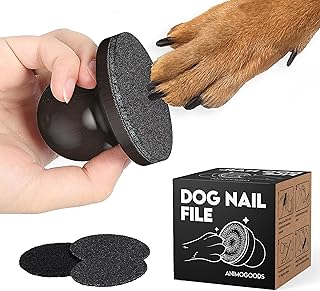

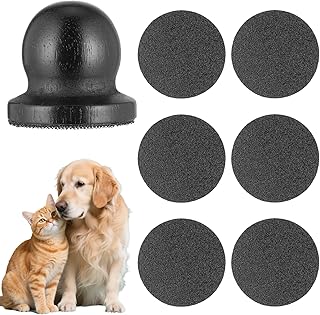

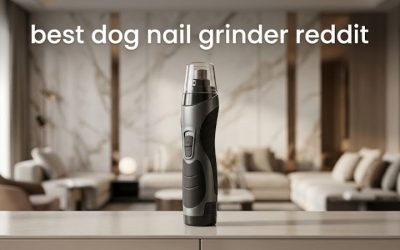
 Whisper-Quiet Dog Nail Grinder 50% More Powerful
- Item Package Dimensions L x W x H: 8.46 x 3.15 x 1.65 inches
- Target Audience Keyword: Dogs
- Warranty Description: 2-Year Warranty
As an Amazon Associate we earn from qualifying purchases at no extra cost to you. Ratings are shown as listed on Amazon.
As an Amazon Associate we earn from qualifying purchases.
🛒 Best Price Today on Amazon
Prime members get fast, free shipping on everything above, plus member-only deals. New members get a 30-day free trial — cancel anytime.
How to Build a Set of the Best Dog Nail Files
Buying one file and expecting it to suit every dog is the usual mistake, and it is why the best dog nail files are normally bought as a small set rather than one at a time. Nail thickness varies enormously by breed, age changes texture, and an abrasive matched to one dog will either skate uselessly across another’s nail or take off far too much. A small set solves it cheaply.
Matching Grit to Nail Thickness
Coarse abrasives around 60 grit remove material fast and suit thick nails, while finer abrasives near 120 grit smooth the edge and suit thin or brittle ones. Most rotary grinder sanding bands ship in both, and the sensible routine is coarse to shorten, fine to finish. Owning both grits is what turns a single tool into the best dog nail files setup for a mixed household.
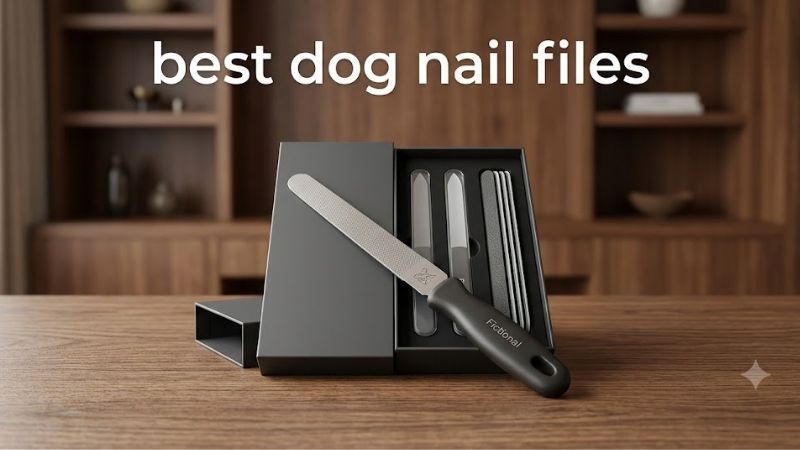
Manual files follow the same logic. A diamond-coated file is the coarse workhorse, a dog-specific metal file sits in the middle, and an etched glass file is the finishing tool. Owning all three costs less than a single grinder and covers every nail in a mixed household.
Thin Toy-Breed Nails Against Thick Large-Breed Nails
Nails on toy breeds are often under 3 mm across and sit close to a visible quick, so they need fine abrasives and very short passes. Coarse grit on a nail that thin removes too much in a single stroke and roughens the edge into a shape that snags fabric.
Large-breed nails can be several times that thickness and simply defeat fine abrasives. On those, the best dog nail files are diamond-coated or a grinder with fresh coarse bands, and a fine tool used alone will feel like it is doing nothing at all after five minutes of effort.
Brittle, Senior and Damaged Nails
Older dogs often develop drier, more brittle nails that chip and split under coarse abrasives. A finer grit and a lighter touch prevent the flaking that makes an edge catch, and filing rather than clipping is usually kinder on a nail that is already prone to splitting.
A cracked or split nail is a veterinary matter rather than a filing one. Bleeding, obvious pain when the toe is touched, swelling around the nail bed or a nail that has partly torn away all need professional attention rather than a home tool.
Consumables, Replacements and Storage
Sanding bands are the running cost people forget. They clog with nail dust and stop cutting long before they look worn, and a grinder that feels like it has lost power usually just needs a fresh band. Buying a multipack of both grits at the outset avoids the tool sitting unused.
Manual files last differently. Diamond files run for years, dog-specific metal files for a long time with occasional brushing out, and emery boards for a session or two. Keep the whole set with styptic powder in one box, because a tool you have to hunt for is a tool you skip.
Top Picks: 6 Files, Sets and Consumables
The best dog nail files work as a system rather than as rivals, so these six form a complete kit instead of six competing options. A household with two or three dogs of different sizes will realistically use four of them.
| Item | Grit / Type | Suits | Lifespan |
|---|---|---|---|
| Dremel 7300-PT | 6,500 / 13,000 RPM | All sizes | Years |
| Sanding band multipack | 60 and 120 grit | Grinder users | Consumable |
| Diamond-coated file | Coarse bonded | Thick nails | Years |
| Coastal Pet Safari Nail File | Medium metal | Medium breeds | Long |
| Czech glass nail file | Fine etched | Thin, brittle nails | Long if not dropped |
| Emery board multipack | Coarse paper | Puppies, travel | Session or two |
Dremel 7300-PT Cordless Pet Nail Grinder
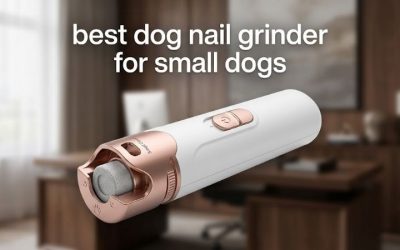
In a multi-dog household the grinder earns its place on time alone. Two speeds at roughly 6,500 and 13,000 RPM cover a toy breed on the low setting and a large breed on the high one, and the guard limits nail exposure so you cannot take too much in one pass.
It is louder than any manual file, which rules it out for sound-sensitive dogs. Battery life is adequate rather than generous across three dogs in one session, and it is useless without a stock of sanding bands, which is a cost buyers consistently overlook.
Sanding Band Multipack (60 and 120 Grit)
The least interesting purchase on this list and the one that determines whether the grinder works. Bands clog with nail dust within a few paws, and a clogged band polishes rather than cuts, which is why owners think their grinder has failed after a month.
Fit matters: bands are sized to the mandrel, so a generic multipack may not seat properly on every grinder. Cheaper bands also shed abrasive faster, which means more frequent changes even though the pack looked like better value.
Diamond-Coated Metal File
The manual tool for thick nails. Bonded diamond grit cuts through large-breed nail where paper abrasives skate, and because the abrasive is bonded rather than glued it keeps cutting for years instead of sessions. In a household with a big dog it is the file that gets used most.
It removes material quickly enough that a few careless strokes take more than intended, and it leaves a rough edge that needs a finer finishing pass. On toy-breed nails it is simply too aggressive to use with confidence.
Coastal Pet Safari Nail File
The middle-of-the-set file, coarser than any human tool and gentler than diamond, shaped for working around a paw. For medium breeds it is often the only file needed, and it is cheap enough to keep a second one in a travel bag without thinking about it.
It loads with nail dust and needs brushing out during a session or the cut rate drops. On genuinely thick nails it is slow, and the plain handle is uncomfortable across four paws on a dog that will not stay still.
Czech Glass Nail File
The finishing tool, and the right choice for brittle senior nails. Etched glass leaves a smoother edge than any other abrasive here, which is what stops a freshly shortened nail catching on bedding, and it cuts gently enough not to flake a dry nail.
It is slow on anything thick and will not shorten a neglected nail in reasonable time. Glass also breaks if dropped on tile, and these are made for human nails, so treat one as the last step in a routine rather than the whole routine.
Coarse Emery Board Multipack
Disposable, cheap and genuinely useful for puppies, whose nails are thin enough that a coarse board removes plenty. Keeping a handful in a travel bag or car means a quick tidy-up is always possible without carrying anything that needs charging.
Dog nail wears them out fast, and a single board rarely completes four adult paws. They achieve nothing on thick nails and generate more loose dust than bonded abrasives, so they are a supplement rather than a primary tool.
Frequently Asked Questions
These four cover the practical questions about the best dog nail files that come up once a household is trimming several dogs with different nail types.
Can I Use One File for Every Dog in the House?
You can, but you will do a worse job on the extremes. A medium metal file handles most dogs adequately; a toy breed will get a rougher edge than it should and a large breed will take three times as long. Two files cover the range for very little money.
How Often Should I Replace Sanding Bands?
Whenever the cut rate drops noticeably, which on a large dog can be every session or two. Bands clog rather than wear out visibly, so judging by appearance is misleading. If the grinder feels underpowered, change the band before assuming the tool is failing.
Should I Finish With a Finer Grit?
Yes, and it takes under a minute. A coarse abrasive leaves a rough edge that snags carpet, bedding and clothing, and a light pass with a fine file or a 120-grit band smooths it. It is the step that owners skip and then wonder why nails catch on everything.
Do I Still Need Clippers?
For maintenance, no. For shortening genuinely long nails, clippers do the bulk faster and more comfortably than any file, with filing then keeping them there. The best dog nail files work as a maintenance system rather than as a rescue tool for neglected nails.
See More:
- Best way to get rid of dog hair in car
- Best vacuum for hard floors and dog hair
- Best dog clippers for golden doodle
- Best small dog nail clipper
- Best dog clippers for yorkies
Final Thoughts
The best dog nail files for a mixed household are a small set rather than one tool: something coarse and bonded for thick nails, a medium metal file for everyday work, and a fine glass file to finish. Add a multipack of sanding bands if you run a grinder, keep everything in one box with styptic powder, and the routine survives contact with reality.


Write Your Review
No reviews yet. Be the first to share your experience!