
Key takeaways
Best dog nail grinder with quick sensor searches usually start after a bad experience with clippers, and it is worth knowing what these sensors actually are before buying. Most are bright LED illumination rather than electronic detection, and understanding that changes how you use them.
Our top picks


 Whisper Quiet Dog Nail Grinder Safe &
- Product Group: Pet Products
- Binding: Misc.

 Petsaunter Dog Nail Grinder
- Item Package Dimensions L x W x H: 8.27 x 3.46 x 1.85 inches
- Item Dimensions LxWxH: 6.69 x 1.34 x 1.38 inches
- Target Audience Keyword: dogs
 Candure Whisper Quiet Dog Nail Grinder with
- 6 Adjustable Speeds: The Candure Dog Nail Grinder…
- 360 LED Light: Equipped with a bright front…
- USB Type-C Rechargeable: Built with a 14500 lithium…

As an Amazon Associate we earn from qualifying purchases at no extra cost to you. Ratings are shown as listed on Amazon.
As an Amazon Associate we earn from qualifying purchases.
🛒 Best Price Today on Amazon
Prime members get fast, free shipping on everything above, plus member-only deals. New members get a 30-day free trial — cancel anytime.
What the Best Dog Nail Grinder with Quick Sensor Actually Does
The quick is the blood vessel and nerve running inside the nail, and cutting it hurts and bleeds. Tools marketed with quick sensors almost always work by shining a bright light through the nail so you can see where that vessel ends, rather than by detecting anything electronically.
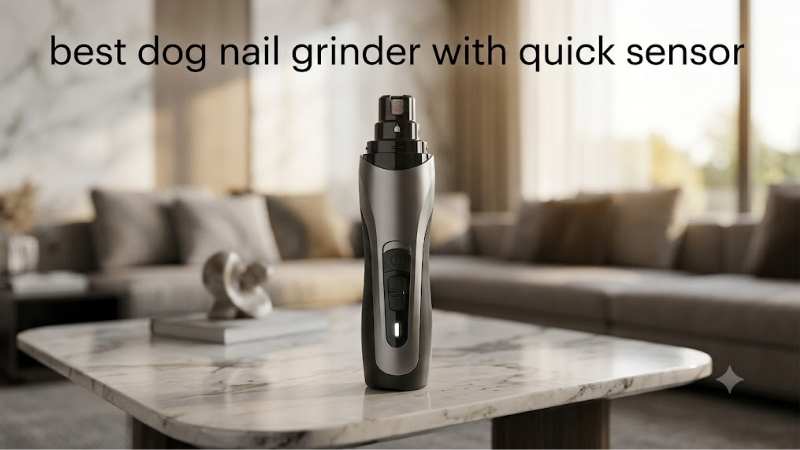
LED Illumination Versus Electronic Detection
A strong LED positioned behind or beside the nail makes the quick visible as a darker shadow inside the translucent shell. On pale nails this works well, and it is the technology behind the great majority of products sold as having a sensor of any kind at this price point.
On genuinely black nails the light penetrates far less, and honest expectations matter here. Illumination helps a little on dark nails but does not solve the problem, which is why the grinding technique described below matters more for those dogs than any feature on the packaging.
True electronic quick detection is not a mainstream consumer technology, whatever the listing implies. Treat the sensor language as marketing for an LED, judge the tool on its motor, its grit and its noise instead, and the purchase decision becomes much more straightforward.
Why Grinding Beats Clipping for Nervous Dogs
Once you set the marketing aside, the best dog nail grinder with quick sensor is worth buying for the grinding action itself, and that gradual action suits a frightened dog far better than any clipper does, because nothing about it involves a sudden committed cut through the nail.
Grinding removes material gradually, so there is no single moment where you commit to a cut that might hit the quick. That difference matters enormously for a dog that has been quicked before, because the fear usually attaches to the snap of the clipper rather than to the process.
The finish is also kinder. A ground nail is rounded rather than left with the sharp edge a clipper produces, which is better for wooden floors, furniture and legs, and it reduces the snagging that causes torn nails on long-coated dogs running over rough ground outdoors.
Reading the Nail and Grinding Safely
Take a little at a time and watch the cut surface rather than the light. As you approach the quick, a pale oval appears in the centre of the nail end, and that oval is the reliable signal to stop, on pale nails and black nails alike, regardless of what any sensor suggests.
Grind in short bursts of two or three seconds per nail rather than holding the tool in place, because friction generates heat quickly and a hot nail is uncomfortable. Keep long coat well away from the rotating head, and keep styptic powder within reach in case you go too far.
Noise, Vibration and Building Tolerance
Noise decides whether the best dog nail grinder with quick sensor ever gets used twice, because a dog frightened on the first attempt will remember it clearly, and rebuilding that tolerance afterwards takes weeks of patient work rather than a couple of days.
Grinders are noisier than clippers and they vibrate, which is why introducing one gradually matters more than any specification. Run it across the room during meals for a few days, then touch it switched off to each paw, then do one nail and stop, building up over a fortnight.
Nails need shortening every three to four weeks for most dogs, and short frequent sessions keep the quick receding so the nail can be kept shorter over time. A dog that will accept two nails calmly is more useful than one that tolerates a full set once and then hides afterwards.
Top Picks: Five Grinders Compared Honestly
The best dog nail grinder with quick sensor is really the one with a decent motor, a usable LED and low enough noise for your dog. These five cover that range, and each entry says plainly what the light does and does not achieve, alongside its other genuine limitations.
| Grinder | Light | Notable feature | Best for |
|---|---|---|---|
| Casfuy Dog Nail Grinder | LED ring | Two speeds, three ports | Small to medium dogs |
| Dremel 7300-PT | None | Strong motor, proven design | Large dogs, thick nails |
| oneisall Nail Grinder | LED | Low noise, cordless | Nervous dogs and puppies |
| Dremel PawControl 7760 | None | Guard attachment, variable speed | Controlled grinding |
| Boshel Nail Clippers | Safety guard | Clipper with quick guard | Quick trims between grinds |
Casfuy Dog Nail Grinder
This is the product most people find when searching the category, and the LED ring around the head is the reason. It genuinely helps on pale nails, the two speeds cover most dogs, and the three port openings let you choose how much of the nail is exposed to the grinding wheel.
Power is modest, so very thick nails on a large breed take patience and the tool can bog down. The light does far less on black nails than the marketing implies, and anyone buying it specifically for a dog with dark nails should expect to rely on reading the cut surface instead.
Dremel 7300-PT
Plenty of groomers would argue this is the best dog nail grinder with quick sensor searches should end at, despite having neither a light nor any sensor claim attached to it anywhere on the box, because motor torque and reliability matter more in practice than illumination does.
No light, no sensor claims, and it remains the tool most groomers and many veterinary nurses actually use. The motor has enough torque for thick nails on a large breed, the two-speed control is adequate, and the design has been around long enough that spare bands are easy to find.
It is noisier than the quiet consumer grinders, which matters for a nervous dog and makes the gradual introduction described earlier essential rather than optional. Without illumination you are reading the nail surface as you go, which is the correct method but takes practice to trust.
oneisall Nail Grinder
Low noise is the reason to choose this one, and for an anxious dog that single quality outweighs most other specifications. It runs quietly enough that many dogs accept it after a few short sessions, and the cordless format keeps a trailing cable out of the way during them.
Torque is limited, so it suits small and medium dogs far better than large breeds with thick nails. The LED helps modestly on pale nails and very little on dark ones, so treat it as a small convenience rather than the feature you are paying for when you compare options.
Dremel PawControl 7760
The guard attachment is the useful part here, since it holds the nail at a consistent angle and limits how much can be removed in one pass. For owners who lack confidence, that mechanical limit does more for safety than any light does, because it removes the guesswork from the depth.
Variable speed helps you start slow and build up as the dog settles. There is no illumination at all, the guard needs cleaning regularly as dust builds up inside it, and the whole unit costs more than the LED-equipped consumer grinders that dominate most of the search results.
Boshel Dog Nail Clippers
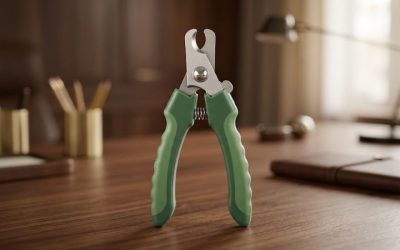
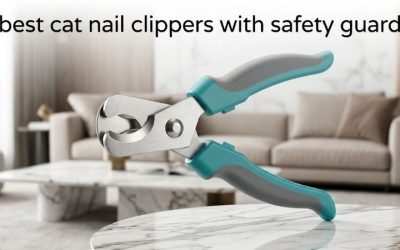
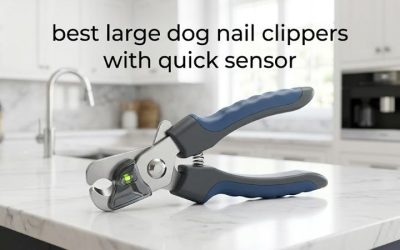
Not every job needs a grinder, and a decent clipper still belongs in the kit for quick tidy-ups between sessions. The safety guard limits how much nail passes through the blade, and the sharp stainless cuts cleanly rather than crushing, which is what causes most splitting.
Clippers leave a sharp edge that a grinder would round off, and the snap is exactly what frightens dogs who have been quicked before. Use them for small maintenance trims on a confident dog, and let the grinder handle the dogs and the nails where precision matters more.
Frequently Asked Questions
Four questions come up constantly, and the first one is the reason most people search this category at all. The best dog nail grinder with quick sensor is chosen on motor strength and noise as much as on the light itself, which is what these four answers are really about.
Do quick sensors actually work?
They are bright LEDs rather than sensors, and on pale nails the illumination genuinely helps you see the quick as a shadow. On black nails the benefit is small, so reading the cut surface for the pale oval remains the reliable method regardless of what the packaging claims.
How do I trim black nails safely?
Take very small amounts and check the cut end after each pass. A chalky white ring appears first, then a small pale or grey oval in the centre as you approach the quick, and that oval is the signal to stop work on that nail and move on to the next one instead.
What do I do if I hit the quick?
Stay calm, apply styptic powder or cornflour with firm pressure for a minute or two, and stop the session there. Keep an eye on the nail for the rest of the day, and contact your veterinary practice if the bleeding does not stop or if the toe looks swollen afterwards.
How often should nails be ground?
Every three to four weeks for most dogs, taking a little each time. Frequent small sessions encourage the quick to recede, which lets the nail be kept shorter over the following months, whereas one long session every few months keeps the quick long and makes each trim riskier.
See More:
- Dog grooming shears best
- Best dog clippers for poodles
- Best dog clippers for doodles
- Best dog brush for poodle
- Best dog brush for great pyrenees
Final Thoughts
The best dog nail grinder with quick sensor is worth buying for the grinder rather than the sensor, because the light is an LED that helps on pale nails and does little on dark ones. Choose on motor strength and noise, grind in short bursts, watch for the pale oval, and keep styptic powder nearby.

Write Your Review
No reviews yet. Be the first to share your experience!