
Key takeaways
- Table of Contents 7 sections 10 min read 1 Quick Verdict 2 Side by Side 3 Where Aluminum Wins 4 Where Stainless Grooming Table Wins 5 Cost Over 5 Years 6 Which One for Your Home 6.1 Small apartment 6.2…
What's inside
Choosing between an aluminum vs stainless grooming table is less about finding the “strongest” metal and more about matching the table to your home, dog, storage space, and grooming routine. A small apartment owner may value a lightweight table that can be carried into a closet, while a multi-dog household may prefer a heavier platform that stays planted during brushing, nail trimming, and drying.
Both materials can support safe at-home grooming when the table has a stable base, a non-slip surface, a secure grooming arm, and properly adjusted restraints. The meaningful differences are weight, corrosion resistance, appearance, long-term stability, and price. Aluminum usually favors portability and easier storage. Stainless steel generally favors rigidity, a premium appearance, and frequent use.
As an Amazon Associate we earn from qualifying purchases at no extra cost to you. Product prices and availability are accurate as of the date shown and are subject to change.


Quick Verdict
Choose an aluminum grooming table if you need to move the table often, live in a smaller home, or groom one small or medium dog occasionally. Aluminum tables are typically lighter and easier to carry, though they may flex more and can feel less planted when a large or restless dog shifts its weight.
Choose a stainless grooming table if stability, longevity, and a solid working feel matter most. Stainless steel frames are usually heavier and can cost more, but they are well suited to large breeds, multiple pets, wet grooming, and households that plan to keep the table set up for years.
For many homes, the best choice is a folding table with a non-slip top and adjustable arm rather than a permanently installed professional table. In 2026, typical home-use models measure about 30 to 48 inches long, 18 to 24 inches wide, and 28 to 36 inches high. Always compare the table’s weight capacity with your dog’s weight, not just the tabletop dimensions.
Side by Side
| Factor | Aluminum Grooming Table | Stainless Grooming Table |
|---|---|---|
| Comfort | Lightweight to reposition; may transmit more movement | More stable under shifting dogs; typically feels more substantial |
| Durability | Resists rust but can dent or scratch more easily | Excellent resistance to rust, stains, and everyday wear |
| Price range | About $80–$250 for many folding home models | About $110–$400 for folding or heavier home models |
| Maintenance | Wipe clean; inspect joints, fasteners, and surface damage | Wipe clean; occasional polishing can preserve the finish |
| Space needed | Often easier to carry and store in a closet or car | Needs more effort to move; may be better left assembled |
| Look | Functional, lightweight, and often matte or painted | Professional-looking, bright, and generally more substantial |
| Resale | Good if the frame and folding hardware remain straight | Often attractive to buyers seeking a long-lasting, professional-style table |
| Best for | Small spaces, occasional grooming, and owners who carry equipment | Large dogs, frequent grooming, wet work, and long-term use |
Where Aluminum Wins
The main advantage of aluminum is portability. A folding aluminum table may weigh roughly 15 to 30 pounds, depending on its length, frame design, arm, and accessories. That is considerably easier to lift from a closet, carry upstairs, or load into a vehicle than a heavier steel-based table. If grooming happens in the kitchen, garage, patio, or laundry room, the ability to relocate the table can matter more than maximum rigidity.
Aluminum also resists rust naturally, making it practical for homes where the table may be exposed to water, damp towels, or humid storage. It does not mean the entire table is waterproof: hinges, screws, cables, and the grooming arm may use other metals that need drying and inspection. Still, an aluminum frame is a sensible choice for occasional baths followed by brushing and trimming.
Storage is another strong point. A compact folding model may fit behind a door or beneath a bed when folded, although owners should measure the folded dimensions rather than assuming every table stores compactly. A 36-inch table can be easier to manage in a tight room than a 42-inch platform, especially when the grooming arm is removed.
Aluminum can also keep the total purchase price down. For comparison, household aluminum foil products such as the 12-inch Reynolds Wrap Heavy Duty 50-square-foot roll at $5.97 and the 12-inch Everyday Strength 200-square-foot roll at $15.99 are inexpensive because foil is a thin disposable material. A grooming table is a completely different product: its price comes from the structural frame, bracing, tabletop, hardware, and safety equipment, not simply from the metal itself.
The tradeoff is that aluminum is softer than stainless steel. A thin or lightly braced frame may dent if dropped, and a table can feel less steady when a dog turns, backs up, or pulls against a noose. Look for wide feet, locking braces, reinforced corners, and a stated weight capacity. A non-slip tabletop is just as important as the frame material because traction helps reduce nervous movement.
Where Stainless Grooming Table Wins
Stainless steel is usually the better choice for stability and repeated use. Its greater density adds weight, helping the table stay in place when a dog shifts during brushing or nail care. That extra mass is useful for large breeds, senior dogs that need more handling, and pets that are unfamiliar with grooming.
Stainless steel also suits wet environments and frequent cleaning. A smooth stainless frame can be wiped down after each session, and surface stains are generally easier to remove than from painted or scratched finishes. It is not maintenance-free: standing water, trapped hair, and harsh chlorine-based cleaners can still damage finishes or hardware. Dry the table, particularly around joints and fasteners, after bathing or heavy cleaning.
Many stainless tables have a more professional appearance. That can matter if the table stays in a mudroom, utility area, or dedicated grooming corner. A heavier frame may also feel more secure when using an adjustable H-frame arm and two nooses, provided the restraints are used according to the manufacturer’s instructions and never left unattended.
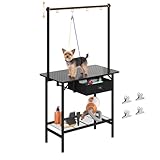
Current home-use examples show how features affect pricing. A 36-inch Baohe foldable table with a stainless steel frame, non-slip top, adjustable H-frame arm, two nooses, tool caddy, and mesh tray is listed at $112.99. A 42-inch Lyromix foldable table with arms, nooses, and a mesh tray is listed at $124.99. Those prices illustrate why shoppers should compare complete specifications rather than judging by metal type alone: length, accessories, bracing, and folding hardware all influence value.
The disadvantages are weight and space. A stainless table may weigh around 25 to 50 pounds or more, making stairs and frequent setup less convenient. The frame can also occupy more room when folded. If you choose stainless steel for a small home, measure the storage location, doorway, and clear working area before ordering.
Cost Over 5 Years
Purchase price is only part of the cost. A folding aluminum table priced at $100 to $200 may be the economical option for a household that grooms once or twice a month. A stainless table priced at $125 to $300 may cost more initially but can make sense when it is used weekly, exposed to moisture, or shared by several pets.
Allow approximately $10 to $30 over five years for replacement grooming loops, noose components, non-slip mat care, or small hardware, although costs vary by design. A table stored outdoors, left wet, or overloaded may need parts sooner regardless of its frame material. Conversely, a dry indoor table may need little beyond routine cleaning.
Do not overlook time and convenience. If an aluminum table is used more often because it is easy to retrieve, it may deliver better value than a heavier stainless table that stays packed away. If a stainless table prevents wobbling and makes each session faster, its higher upfront price may be justified. The most economical table is the one that remains safe, usable, and stable throughout the period you own it.
Which One for Your Home
Small apartment
Aluminum is usually the practical pick. Choose a folding model around 30 to 36 inches long if your dog fits comfortably and the tabletop leaves enough room for safe handling. Prioritize folded dimensions, table weight, locking legs, and a grooming arm that can be removed for storage. A 42-inch platform may offer more working room but can be difficult to maneuver around furniture.
Family with kids and pets
Stainless steel has the edge if the table will serve multiple dogs or be used often. Its added stability can reduce movement during grooming, while the easy-to-clean surface is helpful in a busy household. Store the table where children cannot climb on it, and never leave a dog restrained on the table without direct supervision.
Rental home
Either material can work, but aluminum is often easier for renters who need to protect floors and avoid dedicating a permanent area. Use a washable mat beneath the feet, keep the table indoors after use, and select a folding design that does not require wall mounting. Stainless steel is a good alternative if the table will remain in a utility room and portability is less important.
Long-term home
Stainless steel is generally the stronger long-term investment when you groom frequently or expect to care for multiple dogs over many years. Select a frame with replaceable hardware, a durable non-slip top, and a weight rating comfortably above your largest dog’s weight. Aluminum remains a sound choice if regular storage and easy lifting are more important than maximum stability.
FAQ
Is aluminum or stainless steel safer for a grooming table?
Neither material is automatically safer. Stability, non-slip traction, locking legs, a properly adjusted arm, and active supervision matter more. Choose a table rated well above your dog’s weight and avoid using damaged restraints or bent frames.
Does stainless steel rust?
Stainless steel is highly resistant to rust, but it is not completely immune. Salt, standing water, abrasive cleaners, and neglected hardware can cause staining or corrosion. Wipe the table dry after wet grooming and follow the manufacturer’s cleaning instructions.
How big should a home grooming table be?
The dog should be able to stand naturally without hanging over the edges. Small dogs may fit on a 30- to 36-inch table, while larger breeds may need 42 inches or more. Confirm the usable tabletop area, not just the advertised outside dimensions.
Can I use a grooming table outdoors?
Occasional outdoor use is possible if the table is placed on a level, dry surface and brought inside afterward. Avoid leaving aluminum or stainless tables exposed to rain, direct sun, and freezing conditions. Dry all hardware and inspect the feet before the next grooming session.





Write Your Review
No reviews yet. Be the first to share your experience!