
Key takeaways
- No noise number, no measurement distance, and repeated use of “whisper quiet” as the only evidence.
- Speed settings are listed, but RPM, battery capacity, charging time, and runtime are missing.
- The grinding wheel wobbles, the guard rattles, or the body becomes hot during a short unloaded test.
- There is no clear information about replacement heads, charging cables, returns, or warranty coverage.
- The LED is presented as a safety guarantee. It improves visibility but cannot identify the quick on every dark nail.
- The tool is too heavy to hold steadily or has a smooth, narrow handle that slips during grooming.
What's inside
- Decide These 3 Things First
- Size: Match the Grinder to the Paw
- Material: Check the Parts That Touch Your Hand and Dog
- Construction: Reduce Vibration, Heat, and Noise
- Comfort and Performance: Controls Matter More Than Speed Counts
- Price Tiers: What You Get for Your Money
- Warranty: Protect the Battery and Motor
- Delivery and Assembly: Test It Before the First Paw
- Spec Checklist
- Red Flags
- FAQ
Buying a dog nail grinder by sound alone is a mistake. “Whisper-quiet” is common marketplace language, but it does not tell you how loud the motor is at the paw, whether the pitch is irritating, or how much vibration travels through the handle. A grinder can also be quiet yet underpowered, forcing you to hold it against one nail for too long.
- Decide These 3 Things First
- Size: Match the Grinder to the Paw
- Material: Check the Parts That Touch Your Hand and Dog
- Construction: Reduce Vibration, Heat, and Noise
- Comfort and Performance: Controls Matter More Than Speed Counts
- Price Tiers: What You Get for Your Money
- Warranty: Protect the Battery and Motor
- Delivery and Assembly: Test It Before the First Paw
- Spec Checklist
- Red Flags
- FAQ
Other shoppers focus on the highest speed, the number of LED lights, or the longest feature list. Those details matter less than a steady motor, a comfortable grip, a suitable grinding port, and a return policy that lets you test the tool around a nervous dog. This dog nail grinder buying guide noise level comparison focuses on what actually affects daily grooming in 2026, including realistic price ranges and the specifications worth checking before you buy.
As an Amazon Associate we earn from qualifying purchases at no extra cost to you. Product prices and availability are accurate as of the date shown and are subject to change.


Decide These 3 Things First
- Your dog’s nail size and temperament: Small dogs and cats generally need a narrow grinding port and low speed. Large dogs with thick, dark nails need more usable power and a wider opening. If your dog fears buzzing appliances, sound and vibration should outrank maximum speed.
- Your grooming routine: Occasional users may prefer a simple rechargeable grinder or a clipper-and-grinder combination. If you trim every 1 to 3 weeks, prioritize replaceable grinding heads, a battery that lasts at least 2 hours per charge, and controls you can operate without looking away from the paw.
- Your acceptable noise level: Look for a published decibel rating, but treat it as a comparison point rather than a guarantee. Ask whether the measurement was taken at 6 inches, 12 inches, or farther away. A practical target is approximately 35 to 50 dB at close range; anything above roughly 60 dB may be more difficult for noise-sensitive dogs, especially when vibration is also strong.
Size: Match the Grinder to the Paw
A compact grinder is easier to control around toy breeds, cats, and narrow nails. Look for a body approximately 5 to 7 inches long, weighing about 4 to 8 ounces, with a small or medium grinding port. A port that is too large can expose more of the nail than you intend to remove.
For medium and large dogs, a grinder around 6 to 8 inches long and 6 to 12 ounces may provide a steadier grip. The tool should still fit comfortably in one hand. Heavy models can become tiring during a full-paw session, while extremely light models may transfer more vibration into your fingers.
Port design is more important than advertised pet-size labels. A covered port with separate openings for small, medium, and large nails helps limit accidental contact. Open grinding wheels can work well for experienced users, but they require a slower hand and a clear view of the quick.
Material: Check the Parts That Touch Your Hand and Dog
Most affordable grinders use ABS or similar plastic for the housing. That is acceptable if the shell feels rigid, the buttons do not rattle, and the battery compartment closes securely. Soft-touch rubber or silicone panels can improve control, particularly when your hands are damp or your dog is moving.
The grinding surface may be diamond-coated, tungsten-carbide, ceramic, or a replaceable sanding band. A diamond-coated wheel is common because it removes material gradually and can last through repeated grooming. Ceramic surfaces may feel smoother and generate less heat, but the exact performance depends on motor speed and pressure.
Avoid relying on vague phrases such as “professional-grade metal” without a description of the contact surface. The listing should identify the abrasive material, explain whether replacement heads are available, and state whether the included caps or guards are washable. Never submerge a rechargeable grinder unless the manufacturer specifically gives it an immersion rating; wipe the housing instead.
Construction: Reduce Vibration, Heat, and Noise
Noise is produced by the motor, the abrasive surface, and loose components. A well-constructed grinder has a motor mounted securely inside the housing, a balanced wheel, and a guard that does not buzz when the tool is running. Look for a product description that separates motor noise from vibration claims, even if it does not provide a formal decibel test.
For a home tool, approximately 35 to 50 dB is a useful target when measured close to the grinder. Treat “under 40 dB” claims cautiously unless the listing explains the test conditions. Phone sound-meter apps can help you compare models at home, but they are not laboratory instruments and may vary by phone.
Heat is another construction issue. A grinder used continuously against a thick nail can become warm. Choose a model with a stated overheat or automatic shutoff feature, and work in short passes of 2 to 4 seconds per nail. Stop immediately if the nail or grinding head feels hot. A quiet motor is not automatically a safe motor if it removes material too aggressively.
Comfort and Performance: Controls Matter More Than Speed Counts
Two to three useful speed levels are often better than six poorly spaced settings. A low setting around 5,000 to 7,000 revolutions per minute can help beginners and nervous pets, while a higher setting around 8,000 to 12,000 RPM may be useful for thick nails. Confirm the actual range because some listings advertise speed levels without publishing RPM.
Choose a grinder with a one-button start, tactile speed controls, and a light that can be switched off if it distracts your dog. An LED can help illuminate a dark nail, but it does not reveal the quick with certainty. It should be treated as a visibility aid, not a substitute for gradual filing.
Battery capacity is commonly listed in milliamp-hours. A 500 to 1,000 mAh battery is a reasonable range for a compact cordless tool, provided charging takes no more than about 2 to 3 hours. USB charging is convenient, but check whether the package includes a wall adapter. A non-slip grip and noise that rises gradually when the tool starts can make a bigger difference than an extra speed setting.
Price Tiers: What You Get for Your Money
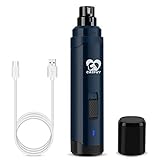
Budget, $15 to $25: Expect a basic rechargeable grinder, one or two speeds, a plastic housing, and one or more grinding ports. The Casfuy Dog Nail Grinder Upgraded is listed at $17.97, while the Grimgrow Ultra-Quiet Dog Nail Grinder is listed at $18.99. These products can be sensible starter choices, but verify battery details, replacement-head availability, and the meaning of “quiet.”
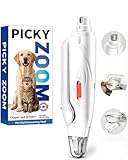
Midrange, $25 to $45: This tier may add multiple speed settings, a brighter work light, a better grip, extra heads, or a clipper-and-grinder design. The Picky zoom 2-in-1 Dog & Cat Nail Clippers and Grinder with LED Light is listed at $26.97. Combination tools are convenient, although their added parts can create more opportunities for loose hinges or difficult cleaning.
Premium, $45 to $90 or more: A higher price should buy measurable improvements: a documented noise rating, better vibration control, a replaceable battery or readily available charging system, stronger warranty support, and replacement abrasives. Do not pay a premium merely for six speed buttons or decorative lighting.
The Candure Whisper Quiet grinder is listed at $15.89 despite its six speeds, rechargeable design, LED light, and extra grinding head. That illustrates why feature counts alone are a poor value measure. Compare construction, support, and return terms before assuming a low-priced model is a bargain.
Warranty: Protect the Battery and Motor
Look for at least a 30-day return period and a written warranty of 6 to 12 months. The warranty should cover motor failure, charging faults, and defective buttons—not only damage on arrival. Battery capacity naturally declines, so check whether the battery itself is covered and whether the manufacturer sells replacement charging cables or heads.
Save the receipt, packaging, and model number. For a grinder under $25, a complicated warranty process may cost more time than the tool is worth. For a $50 or higher purchase, responsive customer service and accessible replacement parts become much more important.
Delivery and Assembly: Test It Before the First Paw
Most nail grinders require little assembly, but you may need to install a grinding head, fit a guard, or remove a protective film from the LED. Confirm that every head clicks firmly into place and that the wheel spins without wobbling. A loose wheel can increase both sound and vibration.
When the package arrives, charge the unit fully and run it for 30 seconds away from your dog. Listen for rattling, scraping, pulsing, or an inconsistent pitch. Check whether the charging indicator works and whether the included accessories match the listing. Introduce the sound gradually: let your dog sniff the switched-off tool, then run it several feet away before touching a nail.
Spec Checklist
| Spec | Budget | Mid | Premium |
|---|---|---|---|
| Typical price | $15–$25 | $25–$45 | $45–$90+ |
| Noise target | About 45–60 dB; verify test distance | About 40–50 dB | About 35–45 dB with documented testing |
| Weight | 4–10 ounces | 5–12 ounces | 6–14 ounces |
| Speed control | 1–2 settings | 2–4 settings | 3–6 settings with published RPM |
| Battery | 500–800 mAh; 1–2 hours claimed use | 600–1,000 mAh; 2–3 hours claimed use | 800–2,000 mAh or replaceable battery |
| Grinding surface | One fixed or basic diamond head | Diamond or ceramic head plus spare | Replaceable, balanced heads with parts support |
| Warranty | 30-day return; 3–6 months preferred | 30-day return; 6–12 months | 30-day return; 12 months or more |
Red Flags
- No noise number, no measurement distance, and repeated use of “whisper quiet” as the only evidence.
- Speed settings are listed, but RPM, battery capacity, charging time, and runtime are missing.
- The grinding wheel wobbles, the guard rattles, or the body becomes hot during a short unloaded test.
- There is no clear information about replacement heads, charging cables, returns, or warranty coverage.
- The LED is presented as a safety guarantee. It improves visibility but cannot identify the quick on every dark nail.
- The tool is too heavy to hold steadily or has a smooth, narrow handle that slips during grooming.
FAQ
How quiet should a dog nail grinder be?
A grinder around 35 to 50 dB at close range is a reasonable target, but pitch and vibration matter just as much. Ask how the manufacturer measured the sound. Introduce any tool gradually, because a familiar 50 dB motor may bother a dog less than a sharper, rattling motor advertised as quieter.
Is a nail grinder better than dog nail clippers?
Neither is universally better. Clippers remove length quickly, while a grinder smooths edges and allows gradual removal. A clipper-and-grinder combination can be useful, but it may be bulkier and harder to clean. For dark nails or anxious owners, gradual grinding can provide more control.
What speed should beginners use?
Start with the lowest setting and use brief 2- to 4-second passes. Touch only the tip, inspect the nail, and repeat. Increase speed only if the grinder stalls or the nail is especially thick. Stop before reaching the quick, and never press hard enough to create heat.
How often should dog nails be trimmed?
Many dogs need attention every 1 to 3 weeks, but growth and activity vary. Nails should not click loudly on hard floors or force the toes upward. Frequent, small sessions are usually easier on both dog and owner than waiting until the nails are substantially overgrown.




Write Your Review
No reviews yet. Be the first to share your experience!