
Key takeaways
- Much faster drying: A dense-coated dog that stays damp for hours may dry in a fraction of that time with strong airflow. Exact results depend on coat length, humidity, towel drying, and the dryer’s airflow.
- Better undercoat care: Forced air can lift loose hair and help expose tangles before they become mats. It is particularly useful for breeds with thick double coats, such as Huskies, Golden Retrievers, German Shepherds, and Bernese Mountain Dogs.
- Less rubbing with towels: Vigorous towel drying can tangle long hair and create friction. Airflow is often gentler on a carefully brushed coat.
- Cleaner, more comfortable baths: Removing moisture from the skin and undercoat can help prevent the clammy feeling dogs dislike after bathing. It also reduces the amount of wet hair left on floors and furniture.
- Useful for year-round grooming: A dryer is valuable after muddy walks, swimming, rainy outings, and medicated baths—not just for occasional full grooming sessions.
- Lower long-term grooming costs: If you bathe your dog at home every few weeks, a $75 to $100 dryer can potentially pay for itself compared with repeated professional drying or full grooming appointments.
- Adjustable control: Variable speed and temperature let you start gently around the face, legs, and ears, then increase airflow for the body when your dog is comfortable.
What's inside
The Short Answer
Yes—professional dog dryers are worth it if you regularly bathe a thick-coated, long-haired, double-coated, or nervous dog and can use the dryer safely. The one condition is that you need enough space, patience, and tolerance for noise to introduce it gradually; otherwise, a towel, air-drying, or a modest human-style blow dryer used on a cool setting may be a better fit.
For most owners, “professional” does not have to mean a $300 grooming-shop machine. In 2026, practical home grooming dryers commonly cost about $75 to $200. They can reduce drying time, push water out of dense undercoats, and make brushing easier. But they are loud, bulky, and powerful enough to frighten or irritate a dog if used carelessly.
As an Amazon Associate we earn from qualifying purchases at no extra cost to you. Product prices and availability are accurate as of the date shown and are subject to change.

What You Actually Get
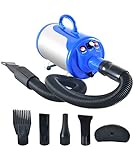
A professional dog dryer is usually a forced-air machine rather than a traditional warm blow dryer. It uses a motor to produce a high-volume stream of air through a flexible hose and nozzle. Instead of merely warming the coat, it separates the hair and physically pushes water away from the skin.
Most home models have adjustable speed and temperature controls. A useful range is roughly 1,500 to 3,800 watts, although wattage alone does not tell you how effective or quiet a dryer will be. Some listings also use horsepower ratings, such as 5.2HP, but those numbers are not always directly comparable between brands. Focus on adjustable airflow, controllable heat, nozzle options, and the manufacturer’s safety instructions.
Expect a compact dryer to weigh approximately 8 to 18 pounds, with a hose commonly measuring about 4 to 6 feet. That is manageable to store in a laundry room or garage, but it is not a small bathroom appliance. Check the product dimensions before buying if you live in an apartment or plan to keep it on a shelf.
Two examples in this price category are the SHELANDY Groomer Partner Pet Hair Force Dryer with Heater, listed at $75.99, and a 5.2HP/3,800W pet grooming dryer with adjustable speed, temperature control, and three nozzles, listed at $89.99. These prices show why many owners consider a home dryer instead of paying for professional grooming after every bath. They also illustrate why specifications deserve scrutiny: more power can mean faster drying, but it can also mean more noise and a steeper learning curve.
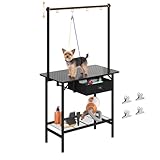
Common attachments include a wide air spreader for the body, a narrow nozzle for directing airflow, and a round or concentrated nozzle for difficult areas. A stand or hanger can be useful when you need both hands for brushing, though it may add cost and storage requirements.
Pros
- Much faster drying: A dense-coated dog that stays damp for hours may dry in a fraction of that time with strong airflow. Exact results depend on coat length, humidity, towel drying, and the dryer’s airflow.
- Better undercoat care: Forced air can lift loose hair and help expose tangles before they become mats. It is particularly useful for breeds with thick double coats, such as Huskies, Golden Retrievers, German Shepherds, and Bernese Mountain Dogs.
- Less rubbing with towels: Vigorous towel drying can tangle long hair and create friction. Airflow is often gentler on a carefully brushed coat.
- Cleaner, more comfortable baths: Removing moisture from the skin and undercoat can help prevent the clammy feeling dogs dislike after bathing. It also reduces the amount of wet hair left on floors and furniture.
- Useful for year-round grooming: A dryer is valuable after muddy walks, swimming, rainy outings, and medicated baths—not just for occasional full grooming sessions.
- Lower long-term grooming costs: If you bathe your dog at home every few weeks, a $75 to $100 dryer can potentially pay for itself compared with repeated professional drying or full grooming appointments.
- Adjustable control: Variable speed and temperature let you start gently around the face, legs, and ears, then increase airflow for the body when your dog is comfortable.
Cons
- Noise can be a deal-breaker: High-powered pet dryers often sound closer to a shop vacuum than a quiet hair dryer. A sensitive dog may need several short training sessions before tolerating it.
- They take up space: A 10- to 18-pound machine, hose, nozzles, and cord need a dry storage area. They are not ideal if you have nowhere to secure the equipment away from children and pets.
- Improper heat can burn skin: Never assume “warm” is safe at close range. Keep the nozzle moving, use the lowest effective heat, and check the air on your hand frequently. Cool or room-temperature airflow is often the safest choice.
- Airflow can be uncomfortable: A concentrated jet aimed at the eyes, ears, nose, or genitals can cause distress or injury. Use a wider nozzle and indirect airflow around sensitive areas.
- Not a substitute for brushing: A dryer can reveal mats, but it cannot safely remove severe matting. Trying to blast through compacted mats may hurt your dog or hide skin problems.
- Results require technique: You may need one person to steady the dog while another operates the dryer during early sessions. A powerful machine does not automatically make grooming easy.
- Electrical and maintenance concerns: Use the dryer on a dry, stable surface and keep water away from the motor and plug. Hair and dust should be removed from intake screens as directed by the manual.
Who Should Buy It
A professional dog dryer makes sense for owners who bathe their dog at home at least once or twice a month, especially when the dog has a dense, curly, long, or water-resistant coat. It is also a strong choice for multi-dog households, owners of show or competition dogs, and anyone whose dog frequently swims or gets muddy.
Look for variable speed, adjustable heat, a flexible hose, at least two useful nozzles, and a stable base. A model in the $75 to $150 range is often enough for routine home grooming. Spend more if you need quieter operation, a stand, a longer warranty, or more durable construction. Before buying, measure your storage area and confirm that your electrical outlet can safely handle the machine’s requirements.
Buyers should also be willing to train the dog. Let your dog sniff the switched-off dryer, reward calm behavior, and then run it several feet away for a few seconds. Gradually move closer over multiple sessions. Stop if your dog shows panic, tries to escape, pants excessively, or becomes aggressive.
Who Should Skip It
Skip a professional dryer if your dog has a short, thin coat and dries quickly with one or two towels. The extra expense and storage may not improve your routine enough to justify the purchase.
It may also be the wrong choice for dogs with severe noise sensitivity, heart or respiratory issues, open wounds, or serious skin irritation unless your veterinarian approves the setup. Dogs that cannot be safely restrained or calmly handled should be dried by a qualified groomer rather than exposed to a powerful machine at home.
If you bathe your dog only a few times a year, put the money toward a professional grooming visit instead. A groomer can also identify mats, parasites, hot spots, and skin abnormalities that may be missed during a rushed home bath.
Cheaper Alternatives
| Option | Cost | Trade-off |
|---|---|---|
| Absorbent microfiber towels | $10–$30 | Inexpensive and quiet, but dense coats can remain damp for hours and towels may tangle long hair. |
| Air-drying in a warm, draft-free room | $0 | Works for short coats, but is slow and less practical in cool or humid conditions. |
| Human hair dryer on cool, low airflow | $20–$80 | Smaller and familiar, but usually has less volume, may overheat, and should never be used with hot air close to the skin. |
| Self-service dog wash dryer | $10–$30 per visit | No storage or maintenance, but repeated visits can cost more than a home dryer and may stress some dogs. |
| Professional grooming appointment | $50–$150 or more | Convenient and thorough, but ongoing appointments cost substantially more than home drying. |
FAQ
Are professional dog dryers safe?
They can be safe when used with low heat, moving airflow, and supervision. Keep the nozzle away from the eyes, ear canals, nose, and sensitive skin. Do not leave a dog unattended with the dryer running, and stop immediately if your dog appears distressed or overheated.
Can I use a professional dryer on a puppy?
Yes, but begin with brief, quiet introductions rather than using full power after the first bath. Let the puppy hear the dryer from a distance, reward calm behavior, and use gentle airflow on the body. Avoid directing air at the face, and ask your veterinarian or groomer for guidance if the puppy is very young or medically fragile.
Does a dog dryer remove mats?
No. It may separate loose hair and reveal mats, but it does not replace brushing or professional dematting. Never force a high-speed nozzle into a tight mat. Severe mats can pull the skin and may need to be clipped out by a groomer.
Is a dog dryer worth it for a short-haired dog?
Usually not, unless the dog swims often, dislikes towel drying, or needs frequent baths. For most short-haired dogs, a couple of absorbent towels and a warm room are enough. The value increases significantly with coat density, bathing frequency, and the number of dogs in your household.




Write Your Review
No reviews yet. Be the first to share your experience!