
Key takeaways
What's inside
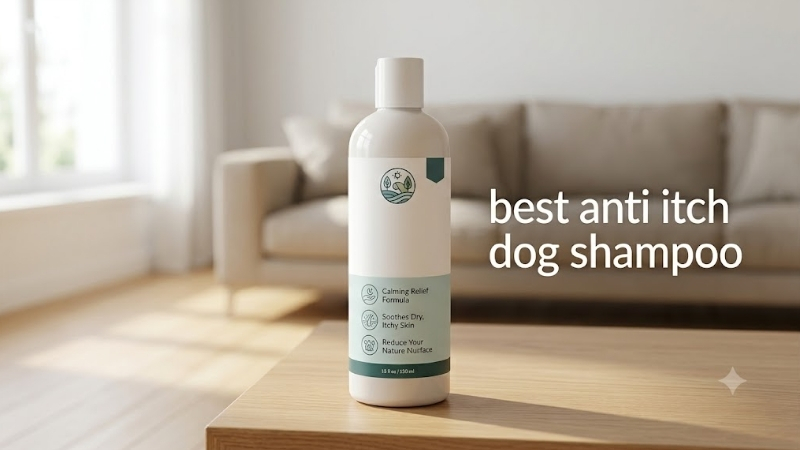
Best anti itch dog shampoo usually gets searched after the gentle oatmeal bottle has already failed. That normally means the itch is being driven by something an ordinary wash cannot reach, so this guide covers the stronger tier and how to use it safely alongside your vet.
As an Amazon Associate we earn from qualifying purchases.


As an Amazon Associate we earn from qualifying purchases.
🛒 Best Price Today on Amazon
Prime members get fast, free shipping on everything above, plus member-only deals. New members get a 30-day free trial — cancel anytime.
How to Choose the Best Anti Itch Dog Shampoo for a Real Flare
There is a clear line between a soothing grooming shampoo and the best anti itch dog shampoo for a genuine flare, and crossing it should be a deliberate decision rather than an upgrade you make out of frustration. These four points cover when the stronger tier is appropriate and how to get results from it.
The First Few Days of a Flare
Speed matters when a dog starts scratching hard, because self-trauma makes everything considerably worse. A lukewarm bath rinses off whatever is irritating the skin and cools the surface, and cool water alone often reduces the frantic scratching enough to stop the dog breaking the skin.
Stop the dog making it worse while you work out the cause. A soft recovery collar for a few days, keeping nails short, and covering a favourite chewing spot all prevent the licking and biting that turns simple irritation into an infected hot spot within about forty-eight hours.
Book the veterinary appointment early rather than working through products in sequence. Fleas, allergies, yeast and bacterial infection all look similar from the outside, and three weeks of experimenting with different bottles is three weeks an uncomfortable dog spends scratching for no good reason.
Medicated Actives and What They Target
Chlorhexidine is the most common antibacterial active in the best anti itch dog shampoo formulas sold over the counter, and it is frequently paired with an antifungal such as miconazole or ketoconazole. That combination targets the bacteria and yeast that colonise damaged skin and keep the itch cycle going.
Ophytrium, ceramides and similar barrier ingredients appear in veterinary-line products alongside the actives. They support the skin barrier rather than killing anything, which matters because a dog whose barrier is compromised will keep reacting to things a healthy dog would ignore entirely.
Anti-itch actives such as pramoxine work differently again, reducing the itch sensation directly. They break the scratch cycle without treating any cause, which makes them a useful short-term measure while a diagnosis is being made rather than a solution on their own.
Contact Time and Course Length
Medicated shampoos fail most often because they are rinsed off too soon. Ten minutes of contact is typical, which feels long with a wet dog in the tub, but the actives need that time on the skin to work and anything less is close to washing with plain water.
Set a timer rather than guessing at it. Ten minutes feels considerably longer when a wet dog is shifting about in the bath, and most owners who think they waited long enough have actually rinsed at around four.
These products are also used in courses rather than indefinitely. Twice weekly for two to three weeks is a common pattern, and continuing beyond that on skin that no longer needs it causes dryness, which produces a fresh round of itching for a different reason.
What Not to Do
Human hydrocortisone creams, tea tree oil applied neat and homemade vinegar rinses all turn up in advice online and all carry real risks. Concentrated essential oils are toxic to dogs, and steroid creams applied without a diagnosis can make certain infections considerably worse.
Bathing more often is not the answer either. Beyond the frequency on the label, extra washing strips the oils holding moisture in the skin, and a dog washed three times a week with a strong medicated product will usually be itchier by the end of the month.
Do not stop a prescribed course early either. Skin often looks settled before the underlying infection has cleared, and stopping at that point is one of the most common reasons a flare returns within a fortnight of finishing.
Top Picks: Best Anti Itch Dog Shampoo Options for Stubborn Cases
Four of the five in this best anti itch dog shampoo lineup are medicated and belong in a conversation with your vet rather than an impulse purchase. The gentle option is included as the baseline you return to once a flare has settled and the skin needs maintaining rather than treating.
| Shampoo | Type | Key actives | Use |
|---|---|---|---|
| Dechra MiconaHex+Triz | Medicated | Miconazole, chlorhexidine | Vet-directed course |
| Douxo S3 PYO | Veterinary line | Chlorhexidine, ophytrium | Vet-directed course |
| Davis Miconazole | Medicated | Miconazole | Yeast-driven itch |
| TropiClean OxyMed Medicated | Over the counter | Oatmeal, salicylic acid | Flaky, itchy coats |
| Earthbath Hypo-Allergenic | Gentle baseline | Aloe, glycerin | Between flares |
Dechra MiconaHex+Triz Shampoo
This is a mainstream veterinary choice for skin where both yeast and bacteria are involved. Miconazole and chlorhexidine work together on the surface organisms that keep an itch cycle running, and the formula is designed for the repeated use a proper course requires.
It is a treatment rather than a grooming product, so speak to your vet before starting and follow the contact time exactly. Repeated use on skin that does not need it causes dryness, and it will do nothing at all if the underlying trigger is fleas.
Douxo S3 PYO Shampoo
Vets reach for this when the skin barrier itself is the problem as well as the bacteria on it. Chlorhexidine handles the microbial side while ophytrium supports the barrier, which is what makes it a common part of longer-term management for recurrent skin disease.
It is the most expensive option here by a clear margin and the bottles are small for a large dog. It also works best on a schedule your vet sets rather than as an occasional rescue wash when the scratching gets noticeably worse.
Davis Miconazole Shampoo
Where the problem is clearly yeast rather than bacteria, a single-active product is the cleaner choice. This one is straightforward, widely available and priced sensibly for the number of baths a proper course needs on a medium or large dog.
Identifying yeast correctly is the difficulty, since a musty smell and greasy skin point that way but a vet can confirm it in minutes. Using an antifungal against a bacterial problem simply delays the treatment the dog actually needs.
TropiClean OxyMed Medicated Shampoo
This is the strongest option here that does not require a veterinary conversation first. The combination of colloidal oatmeal with salicylic acid lifts flaking and calms irritation, which suits a dog with dry, itchy, scaly skin rather than an active infection.
It is a clear step below the true medicated products, so a genuine infection will not respond to it. The contact time is also lengthy and the consistency thick, which means more rinsing than lighter formulas, particularly through a dense undercoat.
Earthbath Hypo-Allergenic Fragrance Free Shampoo
Once a flare has settled, the goal changes from treating to not provoking. This soap-free, fragrance-free formula cleans without stripping, removes the most common irritant from the equation, and is mild enough to use through the months between flare-ups.
It contains no active ingredients, so it does nothing during a genuine flare. Cleaning power is also deliberately gentle, which means a muddy outdoor dog will need two lathers before the coat is properly clean.
Frequently Asked Questions
Owners reaching for the stronger tier usually want to know whether these products need a prescription, how long a course should actually run, and how to tell whether the shampoo is working or the itch is simply moving somewhere else.
Do medicated shampoos need a prescription?
Many are sold over the counter, which does not make any of them casual purchases. The best anti itch dog shampoo for your dog depends on whether the problem is bacterial, fungal, parasitic or allergic, and only a vet can tell you which you are dealing with.
How long should a course last?
Two to three weeks of twice-weekly bathing is a common pattern, then a review. If there is no improvement after three weeks of correct use with full contact time, the diagnosis rather than the product is usually what needs revisiting.
Can I use it alongside flea treatment?
Usually yes, but check the timing with your vet, since some spot-on treatments need the coat left unwashed for a day or two either side. Bathing too soon after application can reduce how well the flea product works.
Is it working if the itching moves?
Not necessarily, and the pattern is a clue. Itching that shifts around the body often points to an allergic cause rather than a localised infection, which needs a different approach entirely, so mention that pattern to your vet rather than continuing the same course.
See More:
- Best robot vacuum dog hair
- Best robot vacuum cleaner for dog hair
- Best robotic vacuum cleaner for dog hair
- Best dry dog shampoo
Final Thoughts
The best anti itch dog shampoo for a stubborn flare is usually a medicated one used as a short course with full contact time, chosen with your vet rather than guessed at. Cool the skin early, stop the self-trauma, and return to a gentle formula once things settle.


Write Your Review
No reviews yet. Be the first to share your experience!