
Vet’s Best Allergy Itch Relief Dog Shampoo is one of the most widely stocked anti-itch washes in the category, which makes the ingredient list worth reading carefully rather than assuming. This guide breaks down what is actually in the bottle, how to use it properly, and how five alternatives compare on the same job.
Our top picks


 Pet Honesty Chlorhexidine Cat & Dog Seasonal
Veterinary-strength formula is made without sulfates or parabens
Aloe-based formula targets itchy and irritated skin
Works for both dogs and cats in one bottle
Medicated formula is more targeted than an everyday cleansing shampoo
Listing does not specify bottle dimensions or weight

 Veterinary Formula Clinical Care Antiseptic & Antifungal
pH-balanced formula is designed to be paraben and soap free
Suitable for use on both dogs and cats over 12 weeks
Twice-weekly use schedule tapers to weekly for maintenance
Requires a 5 to 10 minute soak for full effect
Spot-checking a small area first is recommended

As an Amazon Associate we earn from qualifying purchases at no extra cost to you.
As an Amazon Associate we earn from qualifying purchases.
By Laura Simmons
Persistent itching is a veterinary matter. Shampoo can wash away allergens and soothe irritated skin, but it does not diagnose or treat an underlying condition. If your dog has been scratching for several weeks, book an appointment before working through another shelf of bottles.
🛒 Best Price Today on Amazon
Prime members get fast, free shipping on everything above, plus member-only deals. New members get a 30-day free trial — cancel anytime.
Start 30-Day Prime Free Trial →See Today’s Amazon DealsHow to Judge Vet’s Best Allergy Itch Relief Dog Shampoo and Its Rivals
Anti-itch shampoos fall into two broad camps: botanical soothers that calm irritation and wash allergens off the coat, and medicated formulas that target a specific skin problem under veterinary direction. Knowing which camp a bottle sits in prevents most of the disappointment owners report with this category.
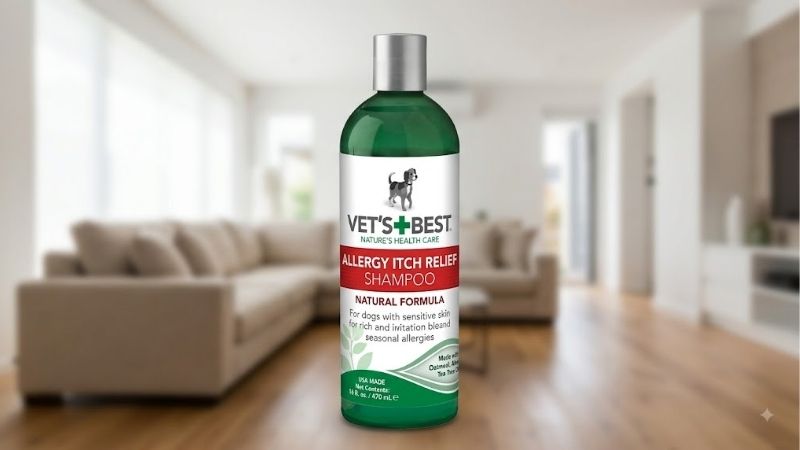
What the Ingredient List Actually Contains
Vet’s Best Allergy Itch Relief Dog Shampoo is built on d-limonene from citrus rind extract, citronella oil, panthenol, aloe vera leaf juice, lavender oil, vitamin E, tea tree leaf oil, neem seed oil, citric acid, and oat kernel meal. It is a botanical blend rather than a medicated one, and the label says so plainly.
Oat kernel meal is the soothing component most owners are actually buying, and it sits at the end of the list. Aloe and panthenol support that, while the citrus and tea tree elements provide the cleaning and the distinctive scent that divides opinion more than anything else in the bottle.
Tea tree oil is worth understanding before you buy. It is present at low concentration in pet formulas, but it is not something to use on cats, and owners of dogs that have reacted to essential oils before should discuss it with a veterinarian rather than assume natural means risk-free.
Contact Time, Which Most Owners Get Wrong
Vet’s Best Allergy Itch Relief Dog Shampoo instructs users to lather and massage for three to five minutes so the product reaches the skin rather than sitting on the coat. That is a long time with a wet dog, and rushing it is by far the most common reason this shampoo underperforms expectations. Set a timer rather than trusting your sense of elapsed time.
The label also states the shampoo can be used as often as necessary without drying the skin, and that it will not affect topical flea and tick control products. That second point matters, because soap-based shampoos frequently do strip spot-on treatments and shorten their protection.
Soothing Versus Medicated Formulas
Botanical formulas like this one wash allergens off the coat and calm mild irritation. They do not treat infection, yeast overgrowth, or an established allergy, and cycling through three or four soothing shampoos is the classic way owners delay a diagnosis that would resolve things far faster.
Medicated options containing chlorhexidine, ketoconazole, or hydrocortisone exist for those situations and belong on veterinary advice. If your dog has hot spots, hair loss, a yeasty smell, or itching that returns within a day of bathing, that is the conversation to have rather than a shopping decision.
Demand for itch products peaks from March through May as pollen rises and again in early autumn, and discounting is deepest around Prime Big Deal Days in early October. With veterinary costs climbing, buying ahead of allergy season is a small saving that compounds across a year.
Scent, Residue, and Rinsing
The herbal spa fragrance blend is the most polarising element. Some owners find it clean and clinical; others find the citronella and tea tree combination medicinal enough that they will not use it in a small bathroom. It is noticeably stronger on application than after drying. Try it once before committing to a large bottle.
Rinse thoroughly regardless of which bottle you choose, since residue left in the armpits, groin, and behind the ears is a common cause of itching that appears a day or two after bath day. Vet’s Best advises repeating the wash if necessary and keeping the dog warm until dry. Chilling after a bath is a real risk on a wet dog.
Top Picks: Vet’s Best Against Five Alternatives
The comparison below places the Vet’s Best bottle alongside five alternatives spanning gentle botanicals, oxygenated anti-itch formulas, and vet-directed medicated washes. The table lists key actives and best fit before the individual assessments and their drawbacks. No single alternative to vet’s best allergy itch relief dog shampoo covers every kind of itching.
| Product | Key Actives | Size | Best For |
|---|---|---|---|
| Vet’s Best Allergy Itch Relief | Oatmeal, d-limonene, tea tree | 16 oz | Seasonal allergen washing |
| earthbath Oatmeal & Aloe | Colloidal oatmeal, aloe | 16 oz | Dry, mildly itchy skin |
| Vet’s Best Hot Spot Shampoo | Aloe, chamomile | 16 oz | Localised irritation |
| TropiClean OxyMed Anti-Itch | Colloidal oatmeal | 20 oz | Soap-free deep soothing |
| Wahl Dry Skin & Itch Relief | Oatmeal | 24 oz | Multi-dog value |
| Douxo S3 PYO Medicated | 3% chlorhexidine | 6.7 fl oz | Vet-directed use |
Vet’s Best Allergy Itch Relief Dog Shampoo
Vet’s Best Allergy Itch Relief Dog Shampoo suits a dog whose itching flares seasonally with pollen or after time in long grass, where the main benefit is washing allergens off the coat rather than treating skin. It is widely stocked, veterinarian formulated, safe to use frequently, and compatible with topical flea and tick treatments.
The essential oil content is the honest drawback: tea tree, citronella, and lavender are not universally well tolerated, it should never be used on cats, and the scent is medicinal to many noses. It also soothes rather than treats, so persistent itching still needs a veterinary opinion.
earthbath Oatmeal & Aloe Shampoo
For a dog with dry, mildly itchy skin and no clear allergic trigger, this is the gentler starting point. Organic aloe vera and colloidal oatmeal with no sulfates, parabens, soap, gluten, or synthetic dyes make it the easiest formula here to tolerate, and it rinses quickly because it is soap-free.
It is a comfort wash rather than an allergy product, so on a dog reacting to pollen it will do less than the Vet’s Best formula. The modest lather also leads owners to use far more than needed, which pushes the real cost per bath above the sticker price. Diluting it slightly stretches the bottle considerably.
Vet’s Best Hot Spot Dog Shampoo
Built around aloe and chamomile rather than citrus and tea tree, this is the option from the same brand for dogs with localised irritation, rashes, and areas they will not stop licking. The gentler botanical profile also makes it a reasonable choice if the Allergy formula proved too strong.
Hot spots that are weeping, spreading, or painful need veterinary attention rather than a shampoo, and no wash resolves the underlying cause of persistent licking. The 16 oz bottle also empties quickly if you are bathing frequently during a bad flare. Buying two bottles at once is often the cheaper route.
TropiClean OxyMed Anti-Itch Shampoo
A soap-free oatmeal formula in a larger 20 oz bottle, this is the practical alternative for owners who want soothing without essential oils in the mix. It lathers well for a soap-free product, rinses cleanly, and the fragrance is far milder than the Vet’s Best herbal blend.
It is a soothing wash rather than a treatment, and on a dog with an active infection it will achieve very little. Availability is also less consistent than the mainstream brands, which is frustrating when you need a replacement mid-flare. Order ahead rather than waiting until the bottle is empty.
Wahl USA Dry Skin & Itch Relief Shampoo
At 24 oz this is comfortably the best cost per bath here, which matters when a dog is being washed weekly through allergy season. The oatmeal formula suits general dryness and the coconut lime verbena scent is fresher than most medicated-smelling alternatives. Scent matters more than owners expect on a weekly wash.
The bottle is bulky over a tub and the fragrance is stronger on application than the label implies. For a dog with genuinely reactive skin, a fragrance-light natural formula is a safer choice than a value-sized bottle with a noticeable scent profile. Match the fragrance load to the dog, not to the budget.
Douxo S3 PYO Medicated Shampoo
A 6.7 fl oz clinical formula with 3 percent chlorhexidine, this is what a veterinarian may recommend when itching has developed into a bacterial or yeast problem. Used as directed with proper contact time it is far more targeted than any botanical wash in this comparison. Targeted actives work where botanicals simply cannot.
It is drying, clinical in scent, expensive per ounce, and unsuitable for routine bathing. Buying it speculatively for a dog that simply has seasonal itching usually damages the skin barrier further, so it belongs in the cupboard only after a proper diagnosis. Speculative medicated purchases usually make things worse.
Frequently Asked Questions
These questions come up most often from owners partway through an allergy season, particularly around how frequently the shampoo can be used and what the tea tree content actually means in practice. The answers assume you are using vet’s best allergy itch relief dog shampoo on a healthy adult dog.
How often can I use this shampoo?
The label states it can be used as often as necessary without drying the skin, which in practice means weekly or even twice weekly during a bad flare. Watch for increased flaking or dullness, and if either appears, extend the interval and speak to your veterinarian. Flaking is the signal to slow down rather than push on.
Is the tea tree oil safe?
At the low concentrations used in pet shampoos it is generally considered acceptable for dogs, but it should never be used on cats, and dogs that have previously reacted to essential oils are better served by a formula without them. Ask your vet if you are unsure. Natural does not automatically mean well tolerated.
Will it wash off my dog’s flea treatment?
Vet’s Best states that it will not affect topical flea and tick control products, which is a genuine advantage over soap-based shampoos. If you have just applied a spot-on treatment, check that product’s own guidance on bathing intervals as well. Spot-on labels often specify a waiting period of their own.
My dog is still itching. What now?
Stop changing shampoos and book a veterinary appointment. Persistent itching usually has a cause a wash cannot address, and repeatedly trying new bottles delays the diagnosis. Bring a note of what you have already used, since that history is genuinely useful to the vet. Photographs of the skin between flares help as well.
See More:
- Best smelling dog shampoo and conditioner
- Best dog mite shampoo
- Hartz Groomer’s Best Soothing Oatmeal Dog Shampoo
- Best professional dog nail grinder
- Best cat brush medium hair
Final Thoughts
Vet’s Best Allergy Itch Relief Dog Shampoo does what it claims for seasonal allergen washing, provided you give it the three to five minutes of contact time the label asks for. If the essential oils are a concern, TropiClean OxyMed or earthbath cover similar ground, and persistent itching belongs with a vet.
Write Your Review
No reviews yet. Be the first to share your experience!