
Key takeaways
What's inside
Best vacuum for hardwood floors and dog hair is a whole-home question rather than a hard-floor one. Almost nobody has timber throughout with nothing on it, so the machine has to move between boards, area rugs and a hallway runner without you stopping to swap heads at every doorway. Finish type decides what else you can add.
As an Amazon Associate we earn from qualifying purchases.


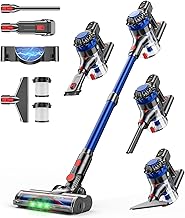


As an Amazon Associate we earn from qualifying purchases.
🛒 Best Price Today on Amazon
Prime members get fast, free shipping on everything above, plus member-only deals. New members get a 30-day free trial — cancel anytime.
How to Choose the Best Vacuum for Hardwood Floors and Dog Hair
Mixed flooring is the constraint that decides everything. The best vacuum for hardwood floors and dog hair has to seal against timber without scattering fur, agitate a rug enough to release embedded hair, and do both without you stopping to change hardware.
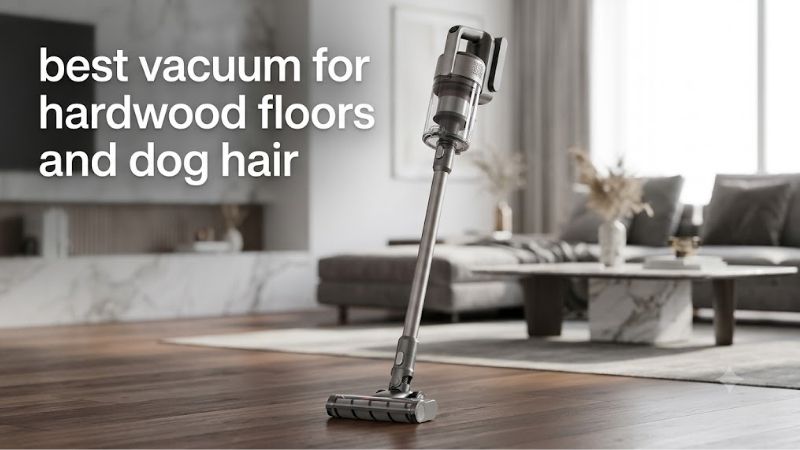
One Head or Two: The Transition Problem
Dual-roller designs solve this directly. Shark’s DuoClean arrangement pairs a soft front roller for hard floors with a bristle roller behind it for carpet, so a single head handles the transition from boards to rug mid-stroke without any intervention.
Dyson takes the opposite approach, supplying separate Fluffy and de-tangling Motorbar heads that you swap. The results on each surface are excellent, but in a house with a rug in every room the swapping becomes the reason a vacuum ends up used on the wrong setting.
Automatic power adjustment covers a lot of this. Machines that sense floor type and debris volume raise suction on a rug and drop it on timber, which is exactly the behaviour you want when the surface changes every few metres.
Rug edges are the awkward part nobody mentions. A powered head can catch a loose rug border and pull it, and on a thin rug over timber the machine tends to ride up rather than cross cleanly. Approaching an edge at an angle rather than head-on avoids most of that.
Finish Type and What It Tolerates
Modern polyurethane-sealed floors are robust and tolerate a damp mop or a wet-dry machine without complaint. Oiled, waxed and older shellac finishes are far less forgiving, and putting a wet cleaner on one is how a floor develops cloudy patches that need refinishing.
Check what you actually have before buying anything that puts water on the floor. If you are unsure, a dry vacuum plus a barely damp microfibre mop is the safe route, and it handles the paw-print film that a dry machine leaves behind on any finish.
Engineered boards add another consideration. The wear layer on a floating engineered floor is thin, and standing water at the joins can lift it, so wet cleaning on those should be minimal moisture and quickly dried rather than a saturated pass.
Wet-Dry Machines, Robots, and Whether You Need Them
Wet-dry floor cleaners have become the default upgrade for hard-floor homes with pets, vacuuming and washing in one pass. They handle muddy paw prints and drool marks that a dry vacuum cannot, and they are genuinely faster than vacuuming and mopping separately.
Robots cover the other end, running daily on hard floors so the surface hair never accumulates. The realistic setup for most mixed-floor homes is a robot doing frequency, a cordless or upright doing depth on rugs, and a wet machine only if the finish allows it.
Running Costs, Seasonality, and Buying Windows
Price the whole ownership rather than the purchase. Bagged canisters carry a consumable bill, cordless machines eventually need a battery, robots need dock bags, and wet-dry cleaners need solution and roller replacements. Over three years those differences outweigh most of the sticker gap.
The seasonal load is predictable. September and October bring the autumn coat change and November to January brings wet, salted, muddy paws, so a mixed-floor home sees its heaviest demand across that whole stretch rather than in one burst.
That is also when the category discounts. Prime Big Deal Days in early October and Black Friday on 27 November are the deepest cuts of the year on floor care, and buying just ahead of the autumn shed rather than during it is the difference between choosing and settling.
Top Picks: Best Vacuum for Hardwood Floors and Dog Hair
These six span dry vacuums, wet-dry machines and a robot, because the best vacuum for hardwood floors and dog hair depends heavily on how much rug you have and what your floor finish tolerates. Each entry names a real drawback.
| Model | Type | Best For |
|---|---|---|
| Shark Vertex DuoClean AZ2002 | Upright | Best all-round mixed floors |
| Dyson V15s Detect Submarine | Cordless, wet roller | Vacuum and wash in one |
| Bissell CrossWave Pet Pro | Wet-dry multi-surface | Muddy paws |
| Miele Complete C3 Cat & Dog | Bagged canister | Allergy households |
| Tineco Floor One S7 Pro | Wet-dry hard floor | Sealed floors only |
| eufy X10 Pro Omni | Robot vacuum and mop | Daily maintenance |
Shark Vertex DuoClean AZ2002
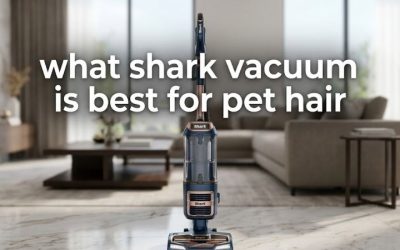
The most practical single machine for a mixed-floor house. The DuoClean head runs a soft roller and a bristle roller together, so it moves from timber to an area rug without a swap, and the lift-away design lets you carry the canister to stairs and upholstery.
It is bulky to store and heavier than a cordless for a quick pass, which means it tends to be used weekly rather than daily. Owners also report hair collecting near the top of the dust bin rather than in the brushrolls, which is an odd place to have to clear.
Dyson V15s Detect Submarine
The cordless that adds a wet roller head to the standard Detect line-up, so one machine vacuums the boards and then washes them without a second appliance. The Fluffy and Motorbar heads cover timber and rugs, and the wet head handles the film a dry vacuum leaves behind.
The wet head has a small water capacity and needs rinsing after every use, which adds a chore rather than removing one. It is also expensive, and the wet function is unsuitable for waxed or oiled floors regardless of how good the rest of the machine is.
Bissell CrossWave Pet Pro
Built for exactly the mess a dog makes on a hard floor. It vacuums and washes simultaneously, with a pet-specific brushroll and a filter designed to trap hair before it reaches the dirty water tank, which is what stops the whole thing clogging on the first pass.
It is not a substitute for a proper vacuum on rugs, where its wet function is unusable and its dry pickup is weak. The two-tank system also needs emptying, rinsing and drying after every session or it develops a smell quickly.
Miele Complete C3 Cat & Dog
The premium bagged canister, and the right answer for an allergy household with mixed floors. It pairs a parquet floorhead for timber with a turbo brush for rugs, and the sealed bagged system means captured dander stays captured at disposal.
It is the most expensive machine here by some distance, weighs a great deal, and requires you to swap floorheads at every surface change. Bags are a permanent running cost that a bagless machine does not carry.
Tineco Floor One S7 Pro
A wet-dry hard floor cleaner with automatic dirt sensing that raises water and suction where the floor needs it, plus self-cleaning of the roller in the dock. On a sealed timber floor with a dog, it does in one pass what vacuuming and mopping do in three.
It is a hard-floor machine only, so it cannot replace a vacuum in a house with rugs. It is also strictly unsuitable for waxed, oiled or unsealed timber, and the roller and filter are consumables that need replacing on a schedule.
eufy X10 Pro Omni
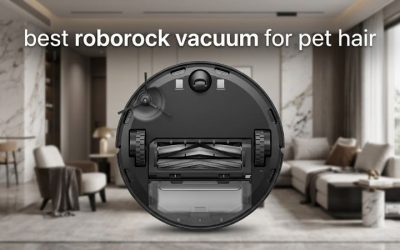
The daily maintenance layer. Strong suction, auto-detangling brush design and a dock that washes and dries the mop pad mean surface hair on hard floors never gets the chance to accumulate, which is most of the battle in a shedding household.
It will not deep clean a rug, and it misses edges and low-clearance furniture the way all robots do. The dock is large, and mopping on it carries the same finish restrictions as any wet system, so check your floor before enabling it.
Frequently Asked Questions
These come up most often from owners choosing the best vacuum for hardwood floors and dog hair in a house that is not entirely one surface.
Do I need a separate machine for rugs?
Not if you buy a dual-roller upright or a cordless with both heads supplied. You do need a separate one if you buy a hard-floor-only wet cleaner, which is why those work best as a second machine rather than a first.
Is a wet-dry cleaner safe on my floor?
On a modern polyurethane-sealed floor, generally yes. On oiled, waxed or unsealed timber, no. If you do not know which you have, test in a hidden corner or stick to a dry vacuum and a barely damp microfibre mop instead.
How often should I vacuum with a shedding dog?
Every day or two on hard floors, because loose fur has nothing holding it and simply drifts. Rugs need two or three times a week. Frequency matters more on timber than power does, which is why robots suit this flooring so well.
Bagged or bagless for a mixed-floor home?
Bagged if anyone reacts to dander, since emptying a bin releases captured particles back into the air. Bagless is cheaper to run and perfectly adequate otherwise. Either way, empty or change outdoors during a heavy shed.
See More:
- Best nail grinder for big dogs
- Best nail grinder for large dogs
- Best vacuum for dog hair on rugs
- Best Roomba for dog hair
- Best dog hair broom
Final Thoughts
The best vacuum for hardwood floors and dog hair is the one that crosses from timber to rug without you thinking about it. A dual-roller head removes the main friction, a wet machine is worth adding only if your finish tolerates it, and a robot handling daily frequency does more for a hard-floor home than any single upgrade in suction.

Write Your Review
No reviews yet. Be the first to share your experience!