
Our Top Picks
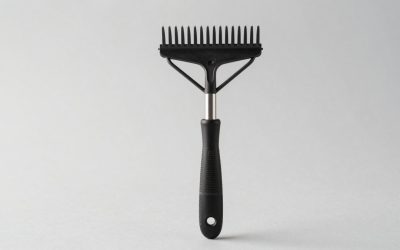
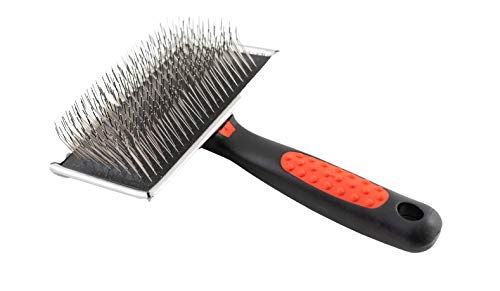 Paw Brothers Professional Grade Extra Long Slicker BrushLarge7 x 4.5 x 1 inches0.27 poundsCheck on Amazon
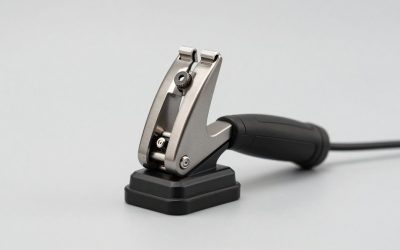
 Andis 65730 Stainless-Steel Comb for Knots7 1/2 Inch2.5 x 10.5 x 0.5 inches0.2 poundsCheck on Amazon
Last updated: October 2026. Disclosure: this guide contains affiliate links, and we may earn a commission from qualifying purchases at no extra cost to you.
Quick answer: No dog truly never sheds, but low-shedding breeds drop far less hair around the house. The trade-off is grooming: curly, wavy or silky coats trap loose hair, so they need brushing every one to three days, a bath about every four to six weeks, and a trim or professional groom roughly every four to eight weeks. Skip that routine and the coat mats instead of shedding.
What “doesn’t shed” really means
All dogs lose some hair, and none are truly hypoallergenic. A “non-shedding” dog usually has hair that grows continuously, like human hair, rather than fur that sheds in seasonal cycles. Dead hairs still fall out, but they often stay caught in the coat instead of landing on your sofa. That is why a low-shedding dog can look tidy on the floor and still be a handful at the brushing table.
Allergies deserve a careful note. People react mainly to proteins in a dog’s dander, saliva and urine, not to the hair itself. A low-shedding breed may spread less dander through the air, but it is not guaranteed to suit someone with allergies. If allergies matter in your household, spend time with the specific dog before committing.
Quick facts
- Low-shedding does not mean low-maintenance. Coats that hold loose hair need regular brushing.
- Single-coated dogs usually shed less than double-coated dogs.
- If grooming slips, trapped hair forms mats, and a matted dog will shed heavily when the mats are finally removed.
- Stress, poor nutrition and some health problems can increase shedding, so a sudden change deserves a vet check.
Choose by coat type, not just by breed
Two dogs that both “don’t shed” can need completely different care. The coat type decides your brush, your bath schedule and how often a groomer sees the dog.
| Coat type | Example breeds | Brushing | Professional grooming or trimming | Main risk |
|---|---|---|---|---|
| Curly or woolly | Poodles, Bichon Frise, Portuguese Water Dog | Every 1 to 3 days with a slicker brush and comb | Often every 4 to 6 weeks | Tight mats close to the skin |
| Long and silky | Maltese, Shih Tzu, Yorkshire Terrier, Afghan Hound | Daily for a long coat; shorter cuts need less | Many owners choose a short cut for easier upkeep | Tangles behind ears, under legs, at the collar |
| Wiry or broken | Airedale and Cairn Terriers, Giant Schnauzer | Weekly, with a comb to check for tangles | Hand-stripping or clipping a few times a year | Soft, faded coat if only clipped |
| Short and smooth | Whippet, Basenji, smooth Dachshund | Weekly brush, with occasional baths | Rarely needed | Dry skin if over-bathed |
| Hairless or powderpuff | Chinese Crested | Gentle care of skin; brush the powderpuff coat | As needed | Sun sensitivity and skin care |
Popular low-shedding breeds and what grooming they need
Small breeds
- Poodles (toy and miniature): tightly curled hair that traps loose strands. Plan on regular professional grooming, frequent brushing and a coat check for knots.
- Bichon Frise: daily brushing and professional grooming every 4 to 6 weeks keep the cotton-like coat from tangling.
- Maltese: a long, silky coat that needs daily brushing, though many owners choose a shorter puppy cut.
- Shih Tzu: usually clipped shorter for easier care. If you keep a longer coat, expect daily line brushing.
- Yorkshire Terrier: fine, silky hair that tangles easily, particularly if kept long.
- Havanese: weekly brushing can keep visible shedding close to zero, but long coats still tangle.
Medium and larger breeds
- Standard Poodle: the same coat as its smaller cousins on a bigger frame, which means more coat to brush and more cost at the groomer.
- Portuguese Water Dog: a curly or wavy coat that needs regular brushing and clipping.
- Airedale and Cairn Terriers: wiry coats that do not mat or tangle easily, but they need professional hand-stripping a few times a year.
- Giant Schnauzer: a wiry coat with moderate to high needs, including stripping or clipping.
- Whippet: a fine, thin coat with almost no undercoat, which means very little grooming.
- Afghan Hound: a long, silky coat that needs serious brushing.
Easiest to groom
If grooming time is your main concern, short-coated options like the Basenji and smooth-coated Dachshund need only a weekly brush and occasional baths. Hairless breeds such as the Chinese Crested trade coat care for skin care. Doodle crosses can vary widely, because puppies may inherit either parent’s coat. Ask the breeder or rescue about the actual coat of the individual dog.
Your weekly grooming routine
This simple schedule fits most low-shedding dogs. Adjust it for coat length and lifestyle.
| Task | How often | Notes |
|---|---|---|
| Quick coat check for knots | Almost daily | Behind the ears, armpits, collar line, tail base |
| Full brush and comb | Every 1 to 3 days (daily for long silky coats) | Brush to the skin, not just the top layer |
| Bath | About every 4 to 6 weeks or when dirty | Brush out tangles before the bath |
| Trim or professional groom | About every 4 to 8 weeks | Curly coats are often at the shorter end of that range |
| Nail trim | Every 3 to 4 weeks | Avoid cutting the quick |
| Ear check and cleaning | Weekly | Hairy ears trap moisture |
| Tooth brushing | Several times a week | Use dog toothpaste only |
The tools you actually need
| Tool | What it does | Best for |
|---|---|---|
| Slicker brush | Removes loose hair and small tangles from the top and middle of the coat | Curly, wavy and silky coats |
| Stainless steel comb | Checks that the brush reached the skin and finds hidden knots | All long or curly coats |
| Detangling spray | Adds slip so knots separate with less pulling | Mats, long coats, doodles |
| Clippers and guard combs | Keep the coat at a manageable length | Poodles and similar cuts |
| Rounded-tip scissors | Tidy the face, feet and sanitary areas | Any coat |
| Nail clippers or grinder | Maintain nail length | Every dog |
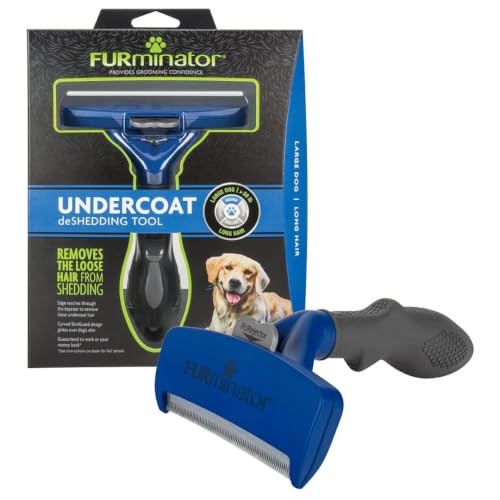
| Deshedding tool (limited use) | Pulls loose undercoat on double-coated types | Wiry or mixed coats; not for silky coats |
Not sure which brush suits your dog? Our guide to the best dog grooming brushes compares the main types, and the best deshedding dog brush roundup helps if your dog has a mixed or double coat.
How to brush a low-shedding coat the right way
- Start with a dry, clean coat. Brushing a dry coat is easier, and bathing a tangled dog usually makes mats tighter.
- Mist lightly with a detangling spray. A little slip helps the brush glide.
- Use line brushing. Part the hair horizontally to expose the skin, brush the hair below the part from the roots out, then release the next layer. Work from the feet and legs up through the belly and armpits, then the back.
- Comb through every section. If the comb snags, there is a knot the brush skipped.
- Handle knots gently. Hold the hair at the base so you do not pull the skin, tease small knots apart with your fingers, and work from the outside edges of the knot toward the center.
- Check friction spots. Behind the ears, under the collar or harness, the armpits and the tail are the usual trouble areas.
- Finish with a reward. Keep sessions short and positive, especially with puppies.
When a mat is too tight
If a mat is tight against the skin, do not cut it out with scissors. The skin can fold into the mat, and a slip can cause a serious cut. A groomer or vet can safely shave it out. Skin that looks red, raw or smells bad under a mat should be checked by a vet.
Bathing and drying
Brush first, then bathe in warm water with a shampoo made for dogs. Rinse thoroughly, because leftover shampoo can leave the coat dull and the skin itchy. A conditioner helps long and curly coats stay soft and detangle more easily. Dry the coat well, ideally by combing while you dry, because a damp coat that dries in a tangle is a recipe for new mats.
Over-bathing can dry the skin, so stick to roughly the schedule above unless your vet advises otherwise.
Clipping at home or using a groomer
Many owners clip a low-shedding dog at home between professional visits. Others rely on a groomer for the full cut and handle brushing themselves. Clipping a curly coat requires a clean, completely dry, brushed-out coat. Going over a matted coat with clippers can pull and injure the skin.
If you want to try it, start with the paws and the sanitary area, use the right blade or guard for the coat, and take breaks. Our best dog clippers for poodles guide is a good starting point for curly-coated breeds. Wiry-coated terriers are a different case: clippers soften the coat over time, so talk to a groomer about stripping if you care about the texture.
Common grooming mistakes with low-shedding dogs
| Mistake | What can happen | Better approach |
|---|---|---|
| Brushing only the top layer | Mats form close to the skin | Line brush all the way to the skin and check with a comb |
| Bathing before detangling | Water tightens knots | Brush out tangles first |
| Skipping grooming appointments | The coat becomes matted and may need shaving | Book repeat visits when you leave the groomer |
| Using a deshedding tool on silky hair | Can damage the coat and irritate the skin | Use a slicker brush and comb |
| Assuming no shedding means no allergens | Dander can still trigger reactions | Spend time with the dog first; talk to your doctor |
| Cutting out mats with scissors | Risk of cutting the skin | Use a groomer or vet for tight mats |
| Over-bathing | Dry, itchy skin | Bathe about every 4 to 6 weeks unless dirty |
Which low-shedding dog fits your lifestyle?
Use this chooser to match the grooming workload to the time you actually have. “Time” here means weekly grooming minutes, not the breed’s popularity.
| Your situation | Coat to look for | Example breeds | What to plan for |
|---|---|---|---|
| Little time, want simple upkeep | Short and smooth | Whippet, Basenji, smooth Dachshund | Weekly brush, occasional bath, nail and ear care |
| Happy to brush most days | Curly or silky | Poodle, Bichon, Maltese, Havanese | Daily or every-other-day brushing and regular groomer visits |
| Prefer a short, practical cut | Silky coat kept clipped | Shih Tzu, Yorkshire Terrier, Maltese | A trim every 4 to 8 weeks; the cut is easier but brushing still matters |
| Want a larger dog | Wiry or curly | Standard Poodle, Giant Schnauzer, Airedale, Portuguese Water Dog | More coat per session, bigger tools and longer groomer appointments |
| Allergy concerns in the household | Any, tested first | Varies by person | Spend time with the specific dog and speak with your doctor |
| Prefer minimal coat but extra skin care | Hairless | Chinese Crested | Gentle skin care and protection from sun and cold |
Face, feet, ears and sanitary areas
Low-shedding dogs often grow hair in places that cause trouble. A quick tidy of these spots between full grooms prevents most hygiene problems.
- Face and eyes: long hair around the eyes can irritate them and hold tear residue. Wipe the area gently and use rounded-tip scissors only when the dog is calm and still. If you are unsure, leave this to a groomer.
- Ears: hair in the ear can trap moisture and wax. Check weekly, and call your vet if you see redness, a bad smell, discharge or head shaking.
- Feet: hair between the pads collects debris and can make floors slippery. Trim it level with the pads, working carefully and keeping the dog still.
- Sanitary area: a short trim keeps the area clean. Use clippers or blunt scissors with great care, or leave it to a groomer.
- Beard and mustache: wash and dry after meals if the hair gets messy, because damp facial hair can hold odor.
Puppies, seniors and seasonal care
Puppies
Start early. Brush gently for a minute or two, handle the ears, paws and mouth often, and let the puppy hear the clippers before the first trim. Short, positive sessions make adult grooming much easier. Puppy coats often change as the adult coat grows in, so brushing may need to increase around that time because tangles can form quickly.
Senior dogs
Older dogs may find long standing sessions uncomfortable. Break grooming into shorter sessions, use non-slip footing, and support the hindquarters. Report new lumps, skin changes or sore spots to your vet. Joint stiffness can also make it harder for older dogs to keep themselves clean, so an extra sanitary trim may help.
Seasonal care
- Summer: a shorter cut can help comfort, but do not shave to the skin without advice from a groomer, because the coat also protects against sun and heat.
- Winter: a slightly longer coat can add warmth, but keep brushing consistent because damp, snowy conditions create mats, especially on legs and bellies.
- Wet weather: dry the legs and belly after walks and comb them out, since mud and moisture make tangles tighter.
Planning your time and budget honestly
A low-shedding dog usually shifts the work from vacuuming to grooming. Before you commit to a breed, think about these points:
- Time: a few short brushing sessions a week, plus a longer weekly check of ears, nails and teeth.
- Groomer visits: regular appointments every four to eight weeks are a normal ongoing cost for curly and silky coats, and larger dogs generally cost more to groom than small ones.
- Tools: a basic kit of a brush, comb, detangling spray, nail clippers and a gentle shampoo covers most needs. Clippers are optional if you use a groomer.
- Backup plan: if you are ill or travelling, a missed week can start mats, so arrange who will brush the dog.
Keeping your home tidy anyway
- Vacuum once or twice a week, since even low-shedding dogs drop some hair and dander.
- Wash dog beds and blankets regularly.
- Brush the dog outdoors or on an easy-to-clean surface.
- Keep your tools clean so old hair and product residue do not end up back in the coat.
Grooming tools to consider
You do not need a big kit. These three cover most low-shedding coats.
Slicker brush with a long handle
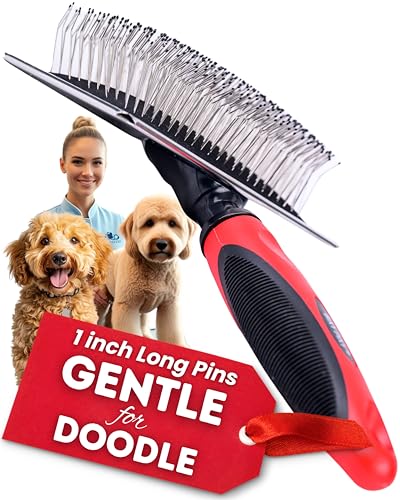
This professional-grade slicker brush has an ergonomic handle and is listed for removing loose undercoat and tangles. It suits curly, wavy and silky coats where hair is trapped in the coat. The limitation is that fine pins can scratch the skin if you press hard, so use light pressure and brush in sections.
Paw Brothers Professional Grade Extra Long Slicker Brush - Ergonomic Handle, Removes Loose Undercoat and Tangles for Dogs
One of the home product options compared in this guide.
View on AmazonStainless steel dematting comb
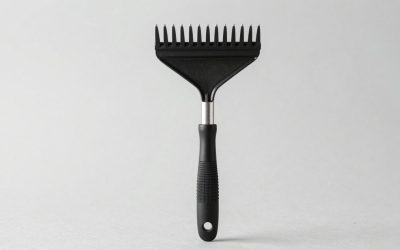
This lightweight stainless steel comb is listed for knots, mats and loose hair, and it works as the check tool after brushing. It fits small and medium dogs, and it is easy to keep in a grooming bag. The limitation is that it is not a clipper replacement, so a tight mat close to the skin still needs professional help.
Andis 65730 Stainless-Steel Comb for Knots, Mats & Loose Hair Removal - Effective Dematting Tool, Comfortable, Lightweight, Portable & Safe for Dogs, Cats & Pets – Silver, 7-1/2-Inch
One of the home product options compared in this guide.
View on AmazonLeave-in detangling spray
This leave-in detangler and conditioner is listed for dematting and for all coat types, including doodles. A light mist adds slip so knots separate with less pulling. The limitation is that it adds scent and some residue, so use only as much as you need and rinse thoroughly at bath time.

TropiClean Dog Detangler Spray Dematting, Leave in Conditioner, Perfect for Doodles & All Coat Types, Sweet Refreshing Scent, Made in The USA, 16 oz.
One of the home product options compared in this guide.
View on AmazonWhen to see a vet or professional groomer
- See a vet if you notice red, raw, flaky or smelly skin, bald patches, constant scratching, ear discharge, or a sudden change in shedding or coat quality. These can point to allergies, infections, parasites or other health problems, and they need professional diagnosis.
- See a groomer for severe mats, a coat that is too tangled to brush out, hand-stripping for wiry breeds, or if you are not confident with clippers.
- Ask your vet before using any medicated shampoo or supplement for the coat.
Frequently asked questions
Which dogs shed the least?
Breeds with continuously growing hair, such as Poodles, Bichon Frise, Maltese, Shih Tzu, Yorkshire Terriers and Havanese, shed the least around the house, along with short-coated breeds like the Whippet and Basenji. Individual dogs vary.
Are there any dogs that truly never shed?
No. All dogs lose some hair, and even hairless breeds shed skin cells. “Non-shedding” really means very low visible shedding.
Are non-shedding dogs hypoallergenic?
No dog is truly hypoallergenic. Allergies are mostly triggered by proteins in dander, saliva and urine, so a low-shedding dog may cause fewer symptoms for some people but not for everyone.
How often should I brush a low-shedding dog?
Brush every one to three days, and daily for long silky coats. Regular brushing prevents mats because the loose hair stays in the coat until you remove it.
How often should a non-shedding dog go to the groomer?
Most need a trim or groom every four to eight weeks. Poodle and Bichon-type coats are usually at the shorter end of that range, and wiry terriers may need stripping a few times a year.
Do I need a deshedding tool for a non-shedding dog?
Usually not. A slicker brush and a steel comb do most of the work. A deshedding tool is mainly for double-coated or wiry-mixed coats and can damage silky hair.
Why is my non-shedding dog suddenly shedding?
Stress, diet, season changes, skin problems and some health conditions can increase shedding. If the change is sudden, comes with itching or bald patches, or does not settle down, check with your vet.
Is a low-shedding dog a good choice if I do not like grooming?
Not always. Low-shedding coats often take more grooming time, not less. If you want minimal upkeep, consider a short-coated breed or plan to budget for regular professional grooming.
Wrap-up
Dogs that do not shed much are not dogs that need no care. Match the breed to your time and budget, build a short routine around brushing, combing and scheduled trims, and use a groomer or vet when the coat or skin is beyond what you can fix at home. A little regular effort keeps the coat healthy, the house cleaner and the dog comfortable.



Write Your Review
No reviews yet. Be the first to share your experience!