
A poodle’s dense, curly coat is beautiful but famously prone to matting. Because the hair grows continuously and curls back on itself, loose strands don’t shed out; they weave into the surrounding curls and tighten into mats close to the skin. The single most important tool for preventing that is the right comb, used regularly, and no other grooming purchase pays off faster for a poodle or doodle owner.
This roundup covers the comb styles that work best on curly coats, how to match teeth spacing and length to your dog’s specific coat, and detailed picks ranging from classic greyhound combs to poodle-specific rakes. Get the comb right and your brushing sessions become faster, gentler, and far more effective.
Our top picks


 POODLIE Poodle Pet Dog Grooming Rake| Dematting
- Power Source: Manual
- Hair Type: Thick
- Material Type: Stainless Steel


 The Doodle Brush Metal Dog Combs for
- Made with stainless steel teeth, our metal dog…
- No matter the breed, our metal comb for…
- Say goodbye to pulling and tugging during grooming

As an Amazon Associate we earn from qualifying purchases at no extra cost to you.
⚡ Save on Your Next PC — Amazon Prime
Prime members get fast free shipping on the systems above, plus early access to Prime Day & Black Friday PC deals. New members get a 30-day free trial.
Watch: Choosing the Right Grooming Comb for Your Poodle’s Coat — Video Review
How to Choose
- Tooth length: Curly and doodle coats need long teeth that reach the skin, where mats actually start, rather than skimming the surface.
- Dual spacing: A greyhound-style comb with both wide and fine teeth lets you tackle loose tangles first, then finish and check for missed knots.
- Material and build: Stainless steel teeth glide better and resist bending; an ergonomic or wooden handle reduces hand fatigue on long sessions.
- Rake vs. comb: A rake with pinned rows lifts loose undercoat efficiently, while a straight comb is best for finishing and precision work around the face and legs.
- Coat stage: Puppies transitioning to adult coat mat quickly and benefit from daily combing with a fine finishing comb.
The Best Picks Reviewed
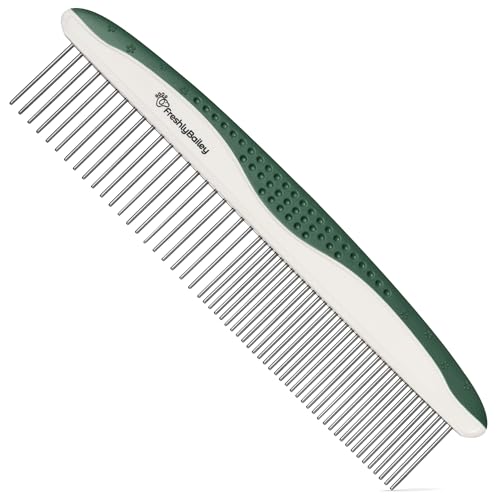
Greyhound Comb for Dogs (Dual Teeth Metal Comb)
The classic greyhound comb is the workhorse of professional poodle grooming for good reason. Its dual wide-and-fine teeth handle everything from initial detangling to a final coat check in one tool. At around $15 it is an affordable, do-everything starting point that many groomers reach for daily.
Ryan’s Pet Supplies Paw Brothers Poodle Comb
This professional-grade comb pairs stainless steel teeth with an ergonomic wooden handle, and its extra-long teeth are designed to reach deep into thick curly coats. Around $18, it doubles as a dematting comb, making it a strong pick for owners managing a full, show-length coat.
POODLIE Poodle Pet Dog Comb (Long & Short Teeth)
Purpose-built for poodles, this metal comb combines long and short stainless steel teeth to remove matted hair and knots on both dense body coat and finer leg feathering. At about $11 it is a budget-friendly, breed-specific option that handles daily maintenance well.
POODLIE Poodle Pet Dog Grooming Rake
When loose undercoat is the problem, this two-row pin rake gently lifts tangled and shedding hair without dragging. Priced near $14, it complements a straight comb nicely: use the rake to clear the bulk, then the comb to finish and confirm the coat is mat-free.
The Doodle Brush Metal Dog Comb
Aimed squarely at doodle and poodle-mix coats, this finishing comb at roughly $19 is built for the wavy-to-curly textures those crosses produce. It shines as the final step in a routine, catching small knots the wider tools miss and leaving a smooth, even finish.
Frequently Asked Questions
How often should I comb my poodle?
Aim for a thorough comb-through several times a week, and ideally daily for a full-length coat or a puppy in coat change. Curly coats mat quickly, so consistency prevents the painful, tight mats that require shaving.
What’s the difference between a comb and a slicker brush for poodles?
A slicker brush fluffs the coat surface and removes light debris, but it can skip over the base where mats form. A comb reaching the skin is what actually confirms the coat is tangle-free, so most owners use both.
My comb keeps snagging. Am I doing it wrong?
Snagging usually means you’ve hit a mat. Stop, hold the hair near the skin to protect it, and work the knot loose gently with the wide teeth or a dematting tool before continuing with the fine teeth.
Do I need different combs for the body and the face?
One good dual-tooth comb can cover most of the dog, but many owners keep a smaller fine comb for delicate areas like the face, ears, and paws where precision matters more than coverage.
Final Thoughts
For a poodle, the comb is not an accessory; it is the core preventive tool that keeps mats from ever forming. A versatile greyhound comb suits most owners, while a dedicated rake plus a finishing comb gives you a complete system for a full coat. Choose stainless steel teeth long enough to reach the skin, comb often, and work gently, and your poodle’s signature curls will stay soft, healthy, and mat-free.

Write Your Review
No reviews yet. Be the first to share your experience!