
Key takeaways
- Using a bare blade for the whole beard: A T-blade is designed mainly for edges and detail work. It can remove far more hair than expected, especially when used against the grain.
- Confusing a guard number with millimeters: A #2 guard is approximately 6 mm, not 2 mm. Always check the actual measurement printed on the attachment.
- Starting too short: Facial hair cannot be put back after it is cut. Begin with a #3 or #2 if you are uncertain, then step down.
- Ignoring the direction of growth: Hair can grow sideways, downward, or in swirls along the jaw. Trimming every area in the same direction may produce uneven patches.
- Trimming a wet beard: Water weighs hair down and can make it seem longer. Trim clean, dry hair unless the manufacturer specifically allows wet use.
- Forgetting the guard profile: A bulky attachment may not fit comfortably beneath the nose or around the mouth. Use a narrow detail head for those areas.
- Expecting one length to create a finished shape: Most polished beards use at least two lengths: one for the main beard and one or two shorter settings for the neck, cheeks, and sideburns.
The Short Answer
For most face trimming, start with a #1 or #2 guard, which leaves approximately 1/8 inch to 1/4 inch of hair (3 to 6 mm). Choose a #0 or #0.5 setting for very short stubble, sharp edges, and neckline cleanup. Use a #3 or #4 guard when you want to preserve a fuller beard while removing bulk.
The best size depends on your goal, hair texture, and how evenly you want the finished beard to look. A bare T-blade or zero-gap blade is useful for outlining, but it is usually too close for trimming an entire beard unless you want an extremely short shadow. For a natural, low-risk trim, begin with a longer guard than you think you need and make a second pass with a shorter one.
Our top picks
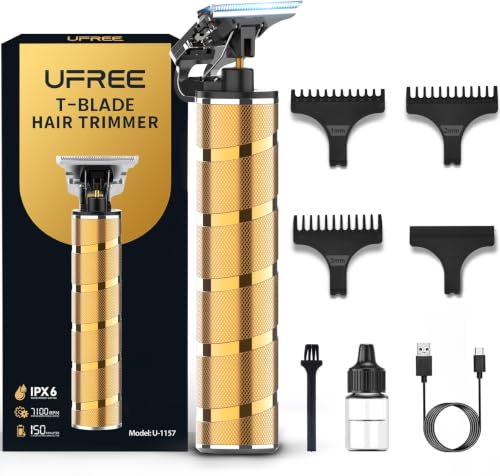
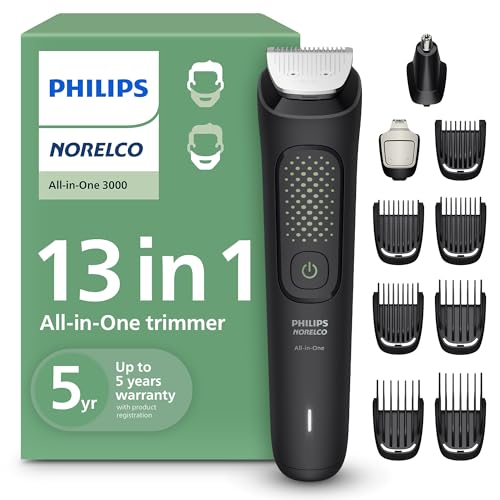

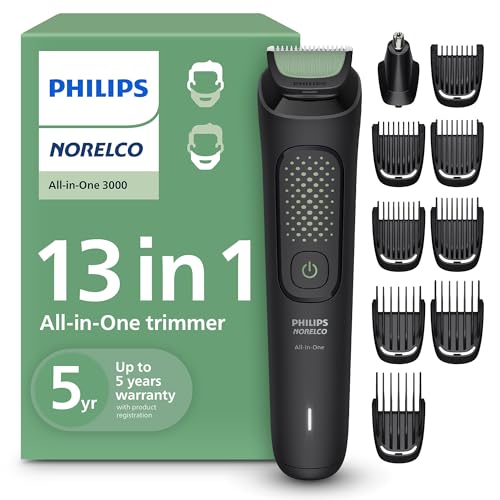
As an Amazon Associate we earn from qualifying purchases at no extra cost to you. Ratings are shown as listed on Amazon.
Standard Sizes
Clipper guard numbers refer to the approximate hair length left behind. The exact result can vary slightly by trimmer brand, blade angle, beard density, and whether the blade is adjustable. The measurements below are standard guide lengths, not guaranteed finished beard lengths.
| Blade or guard size | Approximate cutting length | Best use for face trimming |
|---|---|---|
| Uncovered or zero-gap T-blade | 0 to 1/32 in (0 to 0.5 mm) | Sharp lines, mustache edges, cheek lines, and neckline detailing |
| #0 | 1/16 in (1.5 mm) | Very short stubble and close beard maintenance |
| #0.5 | 3/32 in (2 mm) | Short stubble with a little more coverage than a bare blade |
| #1 | 1/8 in (3 mm) | Short boxed beards, even stubble, and mustache trimming |
| #1.5 | 3/16 in (4.5 mm) | Light beard shaping and blending between short lengths |
| #2 | 1/4 in (6 mm) | Short-to-medium beards and removing bulk without going too close |
| #3 | 3/8 in (10 mm) | Fuller beards, longer sideburns, and preserving visible texture |
| #4 | 1/2 in (13 mm) | Longer beards that need an even overall length |
For a typical short beard, a #1 or #2 is the most useful starting point. A #1 leaves a neat, close appearance, while a #2 provides more softness and helps prevent the face from looking overly bare. If your beard grows in unevenly, the #2 may create a more consistent result because it does not expose every thin patch as clearly.
Adjustable blades add another layer of control. Depending on the model, the lever may change the exposed blade length by roughly 1/32 to 1/8 inch (0.5 to 3 mm). These settings are helpful for fading sideburns, blending the beard into the haircut, and making small corrections around the jaw.
How to Measure Your Space
- Decide the target length. Look at your current beard and choose whether you want stubble, a short beard, or a fuller shape. Use the table above to select a starting guard.
- Measure the trimmer head. Check the width of the cutting head and the guard opening. Most face trimmers have a head roughly 1 to 1 1/2 inches wide, but a narrower head is easier to control around the nose and mouth.
- Check the guard markings. Do not assume every attachment uses the same numbering system. Some kits label attachments in millimeters, while others use numbers or simple length marks.
- Measure your beard at its longest areas. Pulling the hair straight can make it appear longer than it will after trimming. Let the beard lie naturally, then compare the thickest areas with the planned guard.
- Allow for hair direction. Trimming against the grain removes more hair than trimming with the grain. For an even result, make the first pass with the grain and use an against-the-grain pass only if you need a closer cut.
- Test a small area. Try the chosen size under the jaw or on one sideburn before trimming your entire face. This gives you a chance to move up to a longer guard.
- Confirm clearance around the lips and nose. The guard should glide without catching skin. For tight areas, use a smaller detail attachment or remove the guard only for outlining.
By Room or Use Case
For Short Stubble
Choose a #0, #0.5, or #1 guard for stubble between approximately 1.5 and 3 mm. A #0 setting creates a close shadow and requires frequent upkeep, often every day or two. A #1 guard is more forgiving and usually works well for a uniform, low-maintenance look.
For a Short Boxed Beard
A #1 or #2 is generally the best face-trimming size. Use the selected guard over the cheeks, chin, and jaw, then switch to a bare T-blade for the cheek and neckline edges. If the jaw looks too heavy, blend the lower neck with a #1 while keeping the chin and sideburns at #2.
For a Medium or Full Beard
Use a #3 or #4 guard to remove stray length while keeping fullness. If your beard is longer than 1/2 inch, standard guards may not be sufficient; look for attachments marked 16 mm, 19 mm, or more. Trim gradually, because longer facial hair often curls and can look shorter after it is washed and dried.
For Mustaches
A #1 or #2 guard can even out a mustache, but the bare blade is better for detailing the upper lip. Comb the mustache downward, trim the hairs that extend over the lip, and avoid pushing the blade too deeply into the corners of the mouth. A narrow T-blade gives better visibility than a wide hair-clipper blade.
For Sideburns and Blending
Start with the beard length, then reduce the sideburns one size at a time. For example, use a #2 on the beard, #1.5 through the lower sideburn, and a #1 near the ear. An adjustable lever is useful here because it lets you make subtle transitions without a visible step.
For Sensitive Skin
Choose a guarded #1 or #2 instead of a zero-gap blade. A guard keeps the cutting teeth slightly away from the skin and reduces the chance of scraping or pulling. Rounded, comfort-tip attachments can also be helpful, although they may be less precise for sharp line work.
Basic all-in-one trimmers commonly cost about $20 to $35, while kits with more guards, waterproof construction, or additional detail heads often range from $30 to $60. For example, entry-level Ufree beard trimmers are often listed around $20 to under $30, while Philips Norelco All-in-One 3000 kits commonly fall near under $30 to under $30. These prices describe typical retail listings and can change with color, seller, and promotions. Many compact models use rechargeable batteries and motors in the general 5- to 10-watt range, but the wattage is not always published and should not be treated as a direct measure of cutting performance.
Common Sizing Mistakes
- Using a bare blade for the whole beard: A T-blade is designed mainly for edges and detail work. It can remove far more hair than expected, especially when used against the grain.
- Confusing a guard number with millimeters: A #2 guard is approximately 6 mm, not 2 mm. Always check the actual measurement printed on the attachment.
- Starting too short: Facial hair cannot be put back after it is cut. Begin with a #3 or #2 if you are uncertain, then step down.
- Ignoring the direction of growth: Hair can grow sideways, downward, or in swirls along the jaw. Trimming every area in the same direction may produce uneven patches.
- Trimming a wet beard: Water weighs hair down and can make it seem longer. Trim clean, dry hair unless the manufacturer specifically allows wet use.
- Forgetting the guard profile: A bulky attachment may not fit comfortably beneath the nose or around the mouth. Use a narrow detail head for those areas.
- Expecting one length to create a finished shape: Most polished beards use at least two lengths: one for the main beard and one or two shorter settings for the neck, cheeks, and sideburns.
FAQ
What size clipper blade is best for face trimming?
A #1 or #2 guard is the best general starting point. Choose #1 for approximately 3 mm stubble and #2 for approximately 6 mm of beard length. Use a bare T-blade only for edging and close detail work.
What blade size should I use for a 3-day beard?
Try a #0.5 or #1 guard, leaving about 2 to 3 mm (3/32 to 1/8 inch). Because growth rates differ, the same setting may look like a two-day beard on one person and a four-day beard on another.
Can I use hair-clipper guards on my beard?
Usually, yes, if the guards are made for that specific clipper and fit securely. Hair clippers often have wider heads, so they may be less convenient around the nose and lips. Never force an incompatible guard onto a trimmer.
Should I trim my beard with or against the grain?
Trim with the grain first to remove length gently and reduce irritation. If you need a closer finish, make a second, careful pass against the grain using the same guard or one size shorter. On sensitive skin, staying with the grain is usually the safer choice.



Write Your Review
No reviews yet. Be the first to share your experience!